18 Double Elimination PDF Template

18 Double Elimination PDF Template

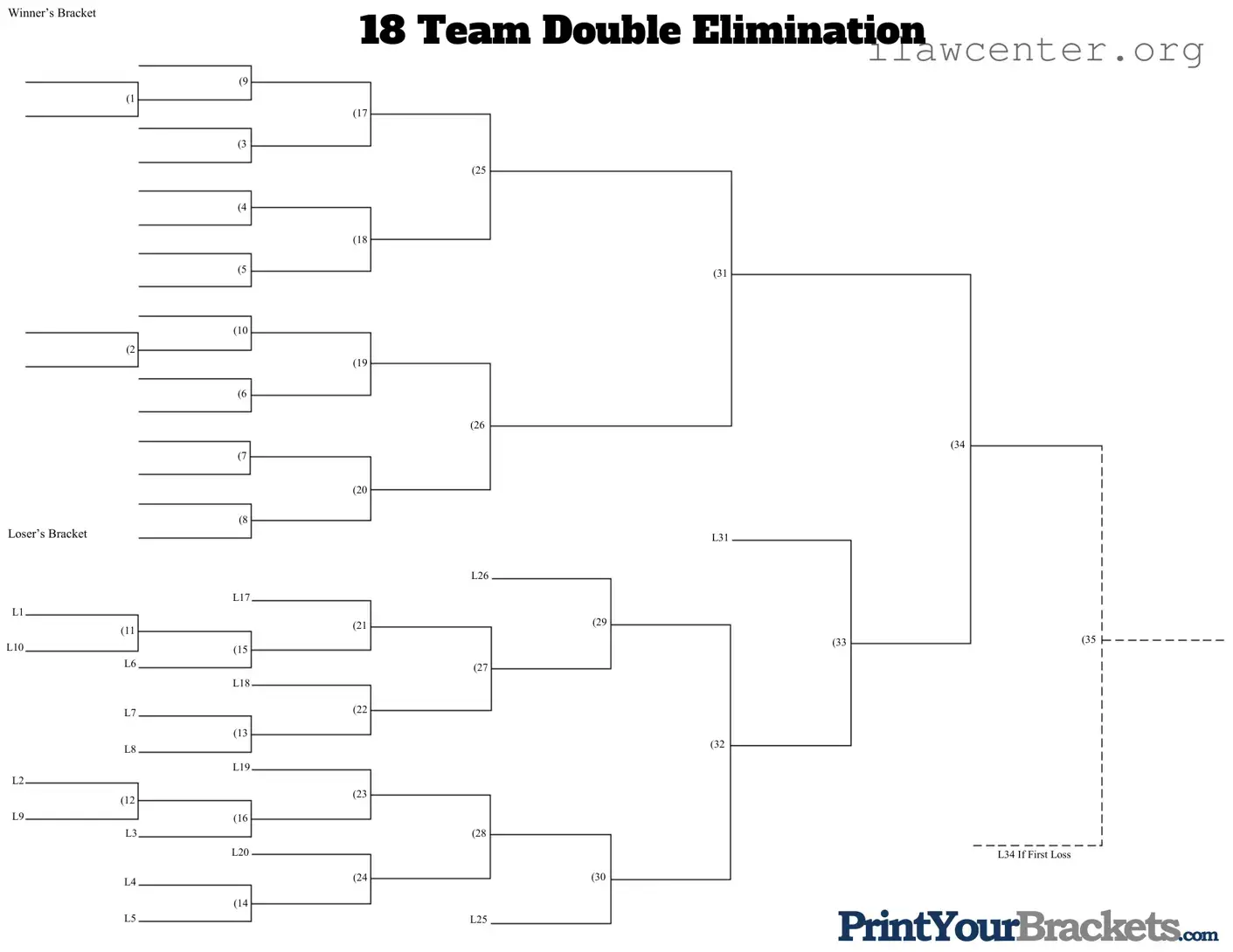
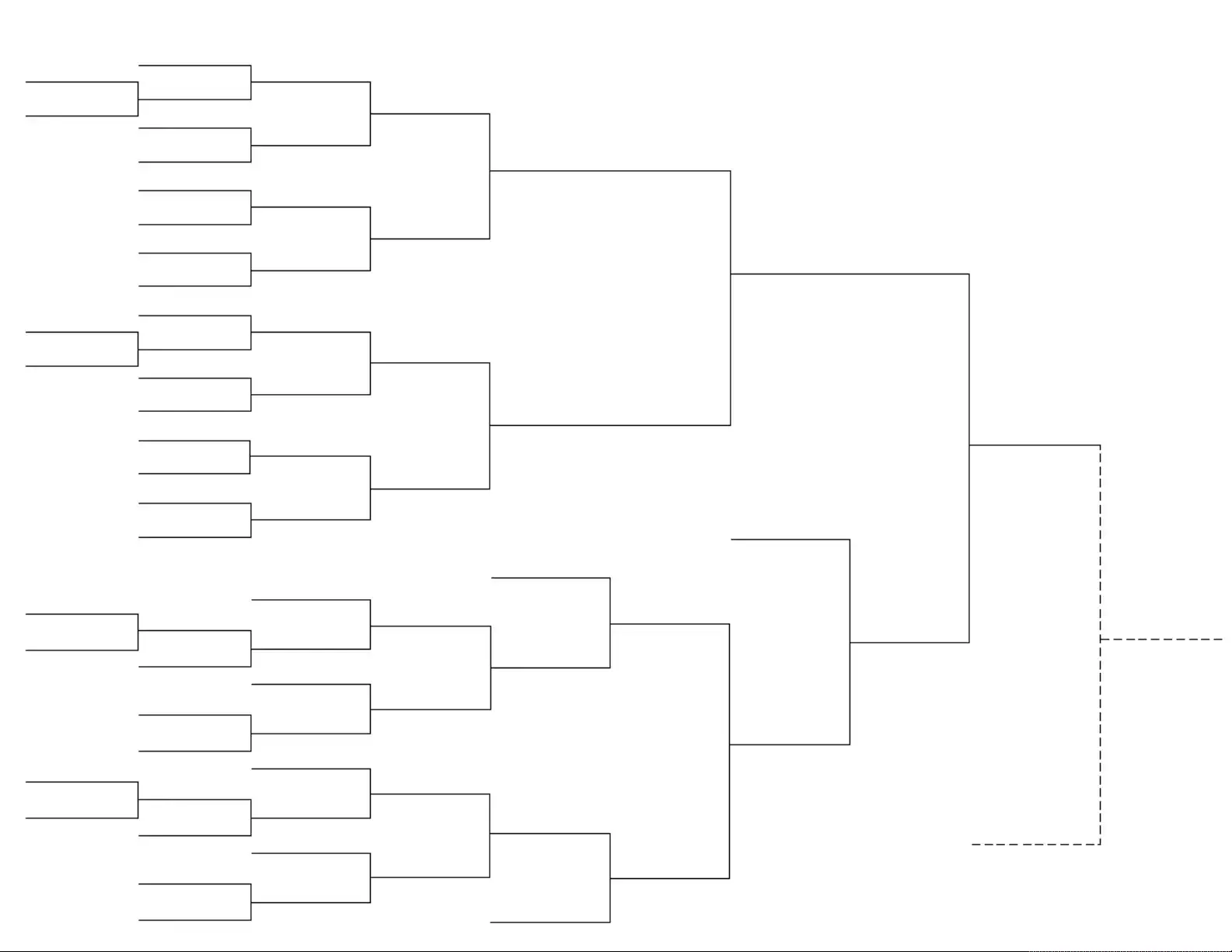
The 18 Double Elimination form is a structured document used to organize and track the progress of teams in a tournament format where each team must lose twice before being eliminated. This form includes both a winner’s bracket and a loser’s bracket, ensuring that every team has a fair chance to compete. For seamless tournament management, consider filling out the form by clicking the button below.

Article Guide

The 18 Double Elimination form is a popular structure used in tournaments to ensure that every team has a fair chance to compete, even after a loss. This format is designed to allow teams to remain in the competition until they lose two matches, promoting a more engaging and extended experience for both players and spectators. At the heart of this structure lies the Winner’s Bracket, where teams initially compete, and the Loser’s Bracket, which accommodates those who have faced defeat. The layout of the brackets is crucial; it determines the progression of teams through the tournament. With 18 teams participating, the form organizes matches in a way that balances competition and excitement, while also providing clear pathways for teams to advance. Understanding the flow of the brackets, including how teams move from the Winner’s to the Loser’s Bracket, is essential for both organizers and participants. This format not only enhances the competitive spirit but also ensures that each match contributes to the overall outcome of the tournament.

18 Double Elimination Preview

(1
(4
(3
(5
(6
(10
(15
(7
(11
(8
(16
(14
(17
(19
(18
Winner’s Bracket
Loser’s Bracket
L1
L10
L9
L3
L5
L18
L19
(20
(21
(13
(23
(31
(27
(29
(33
(34
(32
(30
(25
(35
(24
(28
(26
L17
L26
L25
L31
L6
L7
L8
L34 If First Loss
(9
L20
(22
(2
(12
L2
L4
PrintYourBrackets.
com
18 Team Double Elimination

File Properties

Fact Name Description
Format Type This is an 18 Team Double Elimination tournament format.
Brackets The tournament consists of a Winner's Bracket and a Loser's Bracket.
Advancement Teams advance through the Winner's Bracket until they lose, after which they move to the Loser's Bracket.
Finals Structure The final match is typically played between the last remaining team in the Winner's Bracket and the last remaining team in the Loser's Bracket.
State-Specific Laws Governing laws may vary by state; check local regulations for details.
Loss Conditions A team is eliminated from the tournament after their second loss.

Instructions on Utilizing 18 Double Elimination

Completing the 18 Double Elimination form is essential for organizing your tournament effectively. Follow these steps carefully to ensure all necessary information is captured accurately.

  1. Start by entering the names of the teams participating in the tournament. Write each team's name in the designated spaces provided for the WINNER’S BRACKET.
  2. Next, fill in the corresponding team numbers next to each team name. Ensure that the numbers are in the correct order as indicated on the form.
  3. Proceed to the LOSER’S BRACKET section. Here, you will need to input the results of the matches as they occur. Use the team numbers to track which teams have lost.
  4. As teams lose, fill in the appropriate L1, L2, L3, etc., in the LOSER’S BRACKET to represent their elimination status. Keep this updated throughout the tournament.
  5. Monitor the WINNER’S BRACKET closely. If a team has their first loss, indicate this by marking the corresponding slot with an “IF FIRST LOSS” notation.
  6. Continue updating both brackets after each match. This will help keep the tournament organized and allow participants to follow their progress.
  7. Once all matches are completed, double-check the form for accuracy. Ensure all team names and results are correctly recorded.

After filling out the form, you will have a clear view of the tournament's progress. Keep this document handy, as it will serve as a crucial reference throughout the event.

Important Facts about 18 Double Elimination

What is the purpose of the 18 Double Elimination form?

The 18 Double Elimination form is designed to organize and track the progress of teams in a tournament format. This structure allows teams to compete until they lose two matches, ensuring that each team has multiple opportunities to succeed. The format promotes fairness and excitement throughout the tournament.

How does the winner's bracket work?

The winner's bracket is where teams compete after their initial matches. If a team wins, they continue to advance in this bracket. However, if a team loses, they move to the loser's bracket. This system allows teams that perform well to have a clearer path to the championship, while still giving others a chance to compete for the title.

What happens if a team loses in the loser's bracket?

If a team loses in the loser's bracket, they are eliminated from the tournament. This means they will not have another chance to compete. It is crucial for teams to perform well in both brackets to stay in the tournament and have a shot at winning.

How are match pairings determined?

Can a team come back to win after losing a match?

Yes, a team can still win the tournament after losing a match. If they lose in the winner's bracket, they can continue competing in the loser's bracket. If they win all subsequent matches in the loser's bracket, they have the opportunity to face the winner of the winner's bracket in the final match.

What is the significance of the "first loss" in the tournament?

The "first loss" indicates the point at which a team transitions from the winner's bracket to the loser's bracket. This loss is significant because it changes a team's path in the tournament. It emphasizes the importance of each match, as a single loss can alter a team's chances of winning the championship.

How is the final match structured in a double elimination tournament?

The final match typically features the last remaining team from the winner's bracket and the last team standing from the loser's bracket. If the team from the loser's bracket wins, a second match may be held to determine the overall champion, as the winner's bracket team has not yet lost twice.

What should teams keep in mind while participating in this format?

Teams should focus on consistent performance and teamwork. Each match is critical, and maintaining a positive attitude can greatly impact outcomes. Additionally, teams should be aware of the rules regarding match pairings and the implications of wins and losses, as this knowledge will help them navigate the tournament effectively.

Common mistakes

Filling out the 18 Double Elimination form can be tricky. Many individuals make common mistakes that can lead to confusion or disqualification. Understanding these pitfalls can help ensure a smoother process.

One frequent error is neglecting to properly label the teams. Each team should have a unique identifier, and failing to do so can cause mix-ups during the tournament. It's essential to double-check that each team is clearly marked in both the Winner’s and Loser’s brackets.

Another mistake involves incorrect placement of teams in the brackets. Teams that win or lose must be recorded in the right section. For instance, a winning team should progress in the Winner’s bracket, while a losing team should be moved to the Loser’s bracket. Misplacing teams can disrupt the flow of the tournament.

Some people forget to track the number of losses. In a double elimination format, a team is eliminated after two losses. Failing to keep accurate records of each team’s losses can lead to premature eliminations or unfair advantages.

In addition, using unclear or illegible handwriting can lead to misunderstandings. If tournament officials cannot read a team’s name or score, it may result in incorrect placements or scores being recorded. Clear, legible writing is crucial for accurate communication.

Another common mistake is not following the correct order of matches. Each round must follow a specific sequence, and skipping ahead or mixing up matches can create chaos. Ensure that the match order is adhered to as outlined in the form.

People also often overlook the importance of double-checking scores. After each match, scores should be recorded promptly and accurately. Incorrect scores can affect the standings and lead to disputes later in the tournament.

Some individuals fail to account for byes in the tournament. If a team does not have an opponent, it should be clearly marked as a bye. Neglecting to indicate byes can lead to confusion about which teams are advancing.

Finally, submitting the form late is a common oversight. Timeliness is critical in tournament settings. Ensure that the completed form is submitted by the specified deadline to avoid any complications.

By being aware of these common mistakes, participants can fill out the 18 Double Elimination form more effectively, leading to a more organized and enjoyable tournament experience.

Documents used along the form

The 18 Double Elimination form is a critical document used in organizing tournaments where teams have the opportunity to compete twice before being eliminated. Alongside this form, several other documents and forms are commonly utilized to ensure smooth operations and effective communication. Below is a list of these essential documents, each serving a specific purpose in the tournament management process.

  • Team Registration Form: This document collects essential information about each participating team, including team name, roster, and contact details. It ensures that all teams are officially registered for the tournament.
  • Match Schedule: A detailed schedule outlining the timing and locations of each match. This document helps teams know when and where they need to compete.
  • Score Sheet: Used to record the results of each match, this sheet provides a clear record of scores and outcomes for future reference and standings updates.
  • Bracket Sheet: This visual representation of the tournament structure displays how teams progress through the winner's and loser's brackets, making it easy to track advancement.
  • Rules and Regulations Document: This outlines the specific rules governing the tournament, including eligibility, gameplay rules, and conduct expectations. It ensures all participants understand the guidelines.
  • Referee Assignment Sheet: This document assigns referees to specific matches, ensuring that each game has the necessary officiating for fair play.
  • Feedback Form: After the tournament, this form gathers input from teams and participants about their experiences, helping organizers improve future events.
  • Incident Report Form: In case of any disputes or issues during the tournament, this form allows for documentation of incidents for review and resolution.

These documents work together to create a structured and organized tournament environment. Each plays a vital role in ensuring that all participants have a fair and enjoyable experience throughout the competition.

Similar forms

The 18 Double Elimination form is a useful tool for organizing tournaments. It shares similarities with several other documents used in competitive settings. Here are ten documents that resemble the 18 Double Elimination form:

  • Single Elimination Bracket: Like the double elimination format, this bracket organizes teams into a tournament structure but allows only one loss before elimination.
  • Round Robin Schedule: This document outlines matches where each team competes against every other team, ensuring all teams have equal opportunity for play.
  • Swiss System Pairing: Similar to the double elimination format, this system pairs teams based on their performance, allowing teams to compete against others of similar skill levels over multiple rounds.
  • Pool Play Format: Teams are divided into groups where they compete in a series of matches. The top teams advance, akin to the progression seen in double elimination.
  • Challenge Ladder: Teams can challenge others for their position in a ranking system, promoting competition similar to the elimination aspect of the double elimination format.
  • Knockout Stage Bracket: This format features teams competing in elimination rounds, similar to the final stages of a double elimination tournament.
  • League Standings Document: This document tracks team performance over a season, allowing for a cumulative assessment much like the overall results in a double elimination format.
  • Consolation Bracket: Teams that lose early can still compete for placement, reflecting the second chance aspect of double elimination.
  • Score Sheet: This document records match results, which is crucial for tracking progress in both double elimination and other tournament formats.
  • Seeding List: Teams are ranked before the tournament begins, influencing matchups and similar to how initial placements are determined in a double elimination format.

Dos and Don'ts

When filling out the 18 Double Elimination form, it’s important to follow certain guidelines to ensure accuracy and clarity. Here are some dos and don’ts to keep in mind:

  • Do double-check all team names and numbers for accuracy before submitting the form.
  • Do clearly indicate the winners and losers in their respective brackets.
  • Don't leave any sections blank; every part of the form should be filled out completely.
  • Don't use abbreviations or shorthand that might confuse the readers of the form.

By following these guidelines, you can help ensure that the tournament runs smoothly and that all teams are properly accounted for.

Misconceptions

Understanding the 18 Double Elimination format can be challenging, and several misconceptions often arise. Here’s a list of common misunderstandings about this tournament structure:

  • Misconception 1: The winner's bracket is the only important part of the tournament.
  • While the winner's bracket is crucial, teams in the loser's bracket still have a chance to compete for the championship. Losing a match doesn’t eliminate a team; it simply moves them to a different bracket.

  • Misconception 2: A team must win every match to win the tournament.
  • This is not true. A team can lose one match and still win the tournament by coming from the loser's bracket, provided they win all subsequent matches.

  • Misconception 3: The loser's bracket is for weaker teams.
  • The loser's bracket includes teams that have lost only one match. Many strong teams end up in this bracket, and it can lead to exciting matchups.

  • Misconception 4: Teams are eliminated after their first loss.
  • In a double elimination format, teams are only eliminated after their second loss. This allows for more opportunities to compete.

  • Misconception 5: The final match is always between two undefeated teams.
  • The final can involve a team from the winner's bracket and a team from the loser's bracket. If the team from the loser's bracket wins, a second match may be necessary to determine the champion.

  • Misconception 6: All matches in the winner's bracket are played before any in the loser's bracket.
  • Matches in both brackets are played simultaneously, depending on the schedule. This allows for a more dynamic tournament flow.

  • Misconception 7: The seeding of teams is irrelevant in double elimination.
  • Seeding can impact matchups and the path a team takes through the brackets. Higher-seeded teams often face lower-seeded teams initially, which can influence the tournament outcome.

  • Misconception 8: Double elimination is more complicated than single elimination.
  • While it may seem more complex, many find double elimination easier to follow once they understand the format. It provides a fairer chance for teams to compete.

  • Misconception 9: All tournaments using double elimination follow the same rules.
  • Rules can vary between tournaments, including match lengths and tie-breaking procedures. Always check the specific tournament rules for clarity.

Key takeaways

When utilizing the 18 Double Elimination form, there are several key points to keep in mind to ensure clarity and effectiveness. Below is a list of important takeaways:

  • Understand the structure: The form is divided into two main brackets - the Winner's Bracket and the Loser's Bracket.
  • Each team competes until they lose twice, which determines their placement in the brackets.
  • Fill in team names clearly to avoid confusion during the tournament.
  • Ensure accurate tracking of wins and losses for each team to maintain the integrity of the tournament.
  • Use the provided numbering system to identify matchups easily.
  • Be aware that teams in the Loser's Bracket have a chance to re-enter the tournament after their first loss.
  • Keep the form updated after each match to reflect the current standings.
  • Double-check all entries for accuracy to prevent any potential disputes.
  • Familiarize yourself with the match progression to anticipate upcoming games.
  • Maintain clear communication with all teams regarding their current status in the brackets.

By following these guidelines, you can effectively manage the 18 Double Elimination form and ensure a smooth tournament experience for all participants.