4 Point Inspection PDF Template

4 Point Inspection PDF Template

The 4-Point Inspection Form is a crucial document used to assess the condition of a property’s roof, electrical, HVAC, and plumbing systems. This form helps insurance companies evaluate the insurability of a property based on the findings of a Florida-licensed inspector. To ensure a smooth process, it’s important to fill out the form accurately and completely.

Get started by filling out the form below!

Article Guide

The 4 Point Inspection form serves as a crucial tool in assessing the overall condition of a property for insurance purposes. This comprehensive document focuses on four key systems: the roof, electrical, HVAC, and plumbing. Each section requires detailed information, including the age of the systems, their current condition, and any visible hazards. For example, the electrical section prompts the inspector to note the type of wiring, any remediation efforts, and the overall safety of the system. Similarly, the HVAC section assesses whether the heating and cooling systems are functioning properly and if they have been serviced recently. The plumbing section examines for leaks and the condition of various fixtures, while the roof section evaluates its materials and any signs of damage. Accompanying photographs are mandatory, ensuring that all aspects of the inspection are visually documented. This form must be completed by a licensed Florida inspector, who certifies the accuracy of the information provided. Understanding the importance of the 4 Point Inspection form can help homeowners and agents alike navigate the insurance landscape more effectively.

4 Point Inspection Preview

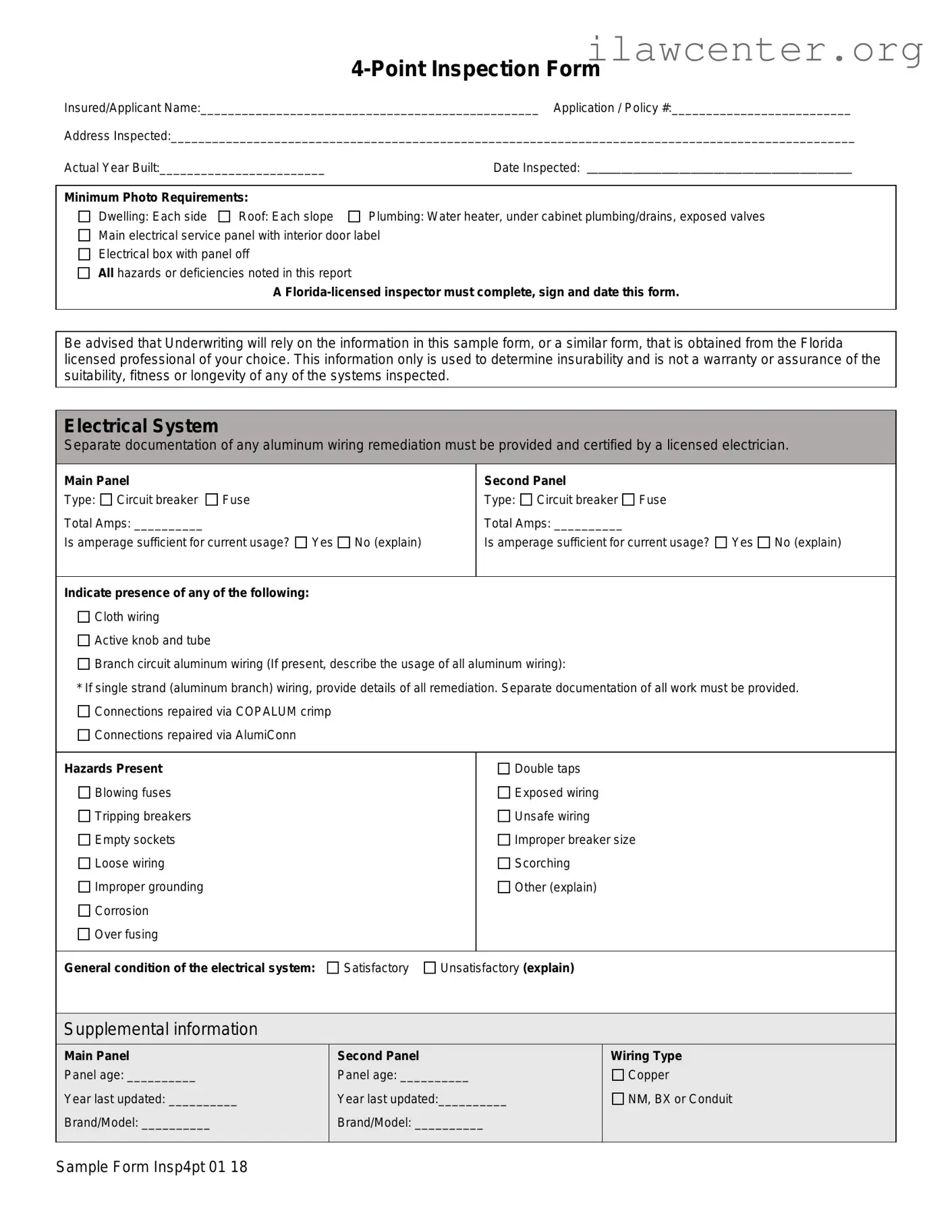
4-Point Inspection Form
S
ample Form Insp4pt 01 18
Insured/Applicant Name:_________________________________________________ Application / Policy #:__________________________
Address Inspected:___________________________________________________________________________________________________
Actual Year Built:________________________ Date Inspected:
______________________________________________
Minimum Photo Requirements:
Dwelling: Each side Roof: Each slope Plumbing: Water heater, under cabinet plumbing/drains, exposed valves
Main electrical service panel with interior door label
Electrical box with panel off
All hazards or deficiencies noted in this report
A Florida-licensed inspector must complete, sign and date this form.
Be advised that Underwriting will rely on the information in this sample form, or a similar form, that is obtained from the Florida
licensed professional of your choice. This information only is used to determine insurability and is not a warranty or assurance of the
suitability, fitness or longevity of any of the systems inspected.
Electrical System
Separate documentation of any aluminum wiring remediation must be provided and certified by a licensed electrician.
Main Panel
Type: Circuit breaker Fuse
Total Amps: __________
Is amperage sufficient for current usage? Yes No (explain)
Second Panel
Type: Circuit breaker Fuse
Total Amps: __________
Is amperage sufficient for current usage? Yes No (explain)
Indicate presence of any of the following:
Cloth wiring
Active knob and tube
Branch circuit aluminum wiring (If present, describe the usage of all aluminum wiring):
* If single strand (aluminum branch) wiring, provide details of all remediation. Separate documentation of all work must be provided.
Connections repaired via COPALUM crimp
Connections repaired via AlumiConn
Hazards Present
Blowing fuses
Tripping breakers
Empty sockets
Loose wiring
Improper grounding
Corrosion
Over fusing
Double taps
Exposed wiring
Unsafe wiring
Improper breaker size
Scorching
Other (explain)
General condition of the electrical system: Satisfactory Unsatisfactory (explain)
Supplemental information
Main Panel
Panel age: __________
Year last updated: __________
Brand/Model: __________
Second Panel
Panel age: __________
Year last updated:__________
Brand/Model: __________
Wiring Type
Copper
NM, BX or Conduit
4-Point Inspection Form
Sample Form Insp4pt 01 18
HVAC System
Central AC: Yes No
Central heat: Yes No
If not central heat, indicate primary heat source and fuel type: _________________________________
Are the heating, ventilation and air conditioning systems in good working order? Yes No (explain)
Date of last HVAC servicing/inspection: ______________
Hazards Present
Wood-burning stove or central gas fireplace not professionally installed? Yes No
Space heater used as primary heat source? Yes No
Is the source portable? Yes No
Does the air handler/condensate line or drain pan show any signs of blockage or leakage, including water damage to the surrounding area?
Yes No
Supplemental Information
Age of system: _____________
Year last updated: _____________
(Please attach photo(s) of HVAC equipment, including dated manufacturer’s plate)
Plumbing System
Is there a temperature pressure relief valve on the water heater? Yes No
Is there any indication of an active leak? Yes No
Is there any indication of a prior leak? Yes No
Water heater location: _______________________________________________
General condition of the following plumbing fixtures and connections to appliances:
Satisfactory Unsatisfactory N/A
Dishwasher
Refrigerator
Washing machine
Water heater
Showers/Tubs
Satisfactory Unsatisfactory N/A
Toilets
Sinks
Sump pump
Main shut off valve
All other visible
If unsatisfactory, please provide comments/details (leaks, wet/soft spots, mold, corrosion, grout/caulk, etc.).
Supplemental Information
Age of Piping System:
_____ Original to home
_____ Completely re-piped
_____ Partially re-piped
(Provide year and extent of renovation in the comments below)
Type of pipes (check all that apply)
Copper
PVC/CPVC
Galvanized
PEX
Polybutylene
Other (specify)
4-Point Inspection Form
Sample Form Insp4pt 01 18
Roof (With photos of each roof slope, this section can take the place of the Roof Inspection Form.)
Predominant Roof
Covering material: __________
Roof age (years): __________
Remaining useful life (years): __________
Date of last roofing permit: __________
Date of last update: __________
If updated (check one):
Full replacement
Partial replacement
% of replacement: __________
Overall condition:
Satisfactory
Unsatisfactory (explain below)
Secondary Roof
Covering material: __________
Roof age (years): __________
Remaining useful life (years): __________
Date of last roofing permit: __________
Date of last update: __________
If updated (check one):
Full replacement
Partial replacement
% of replacement: __________
Overall condition:
Satisfactory
Unsatisfactory (explain below)
Any visible signs of damage / deterioration?
(check all that apply and explain below)
Cracking
Cupping/curling
Excessive granule loss
Exposed asphalt
Exposed felt
Missing/loose/cracked tabs or tiles
Soft spots in decking
Visible hail damage
Any visible signs of leaks? Yes No
Attic/underside of decking Yes No
Interior ceilings Yes No
Any visible signs of damage / deterioration?
(check all that apply and explain below)
Cracking
Cupping/curling
Excessive granule loss
Exposed asphalt
Exposed felt
Missing/loose/cracked tabs or tiles
Soft spots in decking
Visible hail damage
Any visible signs of leaks? Yes No
Attic/underside of decking Yes No
Interior ceilings Yes No
Additional Comments/Observations (use additional pages if needed):
All 4-Point Inspection Forms must be completed and signed by a verifiable Florida-licensed inspector.
I certify that the above statements are true and correct.
Inspector Signature Title License Number Date
Company Name License Type Work Phone
4-Point Inspection Form
Sample Form Insp4pt 01 18
Special Instructions: This sample 4-Point Inspection Form includes the minimum data needed for Underwriting to
properly evaluate a property application. While this specific form is not required, any other inspection report submitted
for consideration must include at least this level of detail to be acceptable.
Photo Requirements
Photos must accompany each 4-Point Inspection Form. The minimum photo requirements include:
Dwelling: Each side
Roof: Each slope
Plumbing: Water heater, under cabinet plumbing/drains, exposed valves
Open main electrical panel and interior door
Electrical box with the panel off
All hazards or deficiencies
Inspector Requirements
To be accepted, all inspection forms must be completed, signed and dated by a verifiable Florida-licensed professional. Examples
include:
A general, residential, or building contractor
A building code inspector
A home inspector
Note: A trade-specific, licensed professional may sign off only on the inspection form section for their trade. (e.g., an electrician may
sign off only on the electrical section of the form.)
Documenting the Condition of Each System
The Florida-licensed inspector is required to certify the condition of the roof, electrical, HVAC and plumbing systems. Acceptable
Condition means that each system is working as intended and there are no visible hazards or deficiencies.
Additional Comments or Observations
This section of the 4-Point Inspection Form must be completed with full details/descriptions if any of the following are noted on the
inspection:
Updates: Identify the types of updates, dates completed and by whom
Any visible hazards or deficiencies
Any system determined not to be in good working order
Note to All Agents
The writing agent must review each 4-Point Inspection Form before it is submitted with an application for coverage. It is the agent’s
responsibility to ensure that all rules and requirements are met before the application is bound. Agents may not submit applications
for properties with electrical, heating or plumbing systems not in good working order or with existing hazards/deficiencies.

File Properties

Fact Name Description
Purpose The 4 Point Inspection Form assesses the condition of four key systems: roof, electrical, HVAC, and plumbing.
Insured Information It requires the insured or applicant's name, application or policy number, and the address of the inspected property.
Photo Requirements Minimum photos include each side of the dwelling, each slope of the roof, and key plumbing and electrical components.
Florida Licensing A licensed inspector in Florida must complete, sign, and date the form for it to be valid.
Electrical System Details The form collects detailed information about the electrical system, including panel types and any remediation of aluminum wiring.
HVAC System Assessment It evaluates the HVAC systems, checking for operational status and signs of blockage or leakage.
Plumbing System Check The form assesses plumbing fixtures for leaks and overall condition, requiring information on pipe types and age.
Roof Condition It requires details about the roof's covering material, age, and any visible damage or leaks.
Special Instructions The form includes specific instructions for photo documentation and the minimum data needed for underwriting evaluation.
Agent Responsibilities Agents must review the form to ensure all requirements are met before submitting it with an application for coverage.

Instructions on Utilizing 4 Point Inspection

Completing the 4 Point Inspection form is an essential step in the property evaluation process. This form requires detailed information about various systems within a property, including electrical, plumbing, HVAC, and roofing. After gathering the necessary information and completing the form, it will be ready for submission to the relevant parties.

  1. Begin by entering the Insured/Applicant Name at the top of the form.
  2. Fill in the Application / Policy # to associate the inspection with the correct application.
  3. Provide the Address Inspected, ensuring it is complete and accurate.
  4. Indicate the Actual Year Built of the property.
  5. Record the Date Inspected to document when the inspection took place.
  6. Gather and attach the required photos of the dwelling, roof, plumbing, and electrical systems as specified in the form.
  7. For the Electrical System section, document the type of main and second panels, their total amps, and any issues present.
  8. Evaluate the general condition of the electrical system and provide details if it is unsatisfactory.
  9. In the HVAC System section, indicate whether central AC and heating are present and assess their working condition.
  10. Detail any hazards associated with the HVAC system and provide supplemental information, including the age of the system.
  11. For the Plumbing System, answer questions regarding leaks and the condition of plumbing fixtures.
  12. Specify the type and age of pipes, noting if any renovations have occurred.
  13. In the Roof section, provide details about the roof covering material, age, and overall condition, as well as any visible damage or leaks.
  14. Complete the Additional Comments/Observations section, using extra pages if necessary to include all relevant information.
  15. Finally, ensure that the form is signed and dated by a verifiable Florida-licensed inspector, including their title, license number, company name, and work phone.

Important Facts about 4 Point Inspection

What is a 4 Point Inspection Form?

The 4 Point Inspection Form is a document used primarily in Florida to evaluate the condition of four critical systems in a home: the roof, electrical system, HVAC (heating, ventilation, and air conditioning), and plumbing. This form is essential for insurance underwriting and helps determine whether a property is insurable based on its condition.

Who needs to complete the 4 Point Inspection Form?

A licensed inspector in Florida must complete the 4 Point Inspection Form. This can be a general contractor, home inspector, or building code inspector. The inspector must sign and date the form, certifying that the information provided is accurate and complete.

What information is required on the form?

The form requires details about the property, including the insured's name, application or policy number, and the address of the inspected property. Additionally, it collects specific information about the roof, electrical system, HVAC, and plumbing, including their conditions, ages, and any visible hazards or deficiencies.

What are the minimum photo requirements for the inspection?

Photos must accompany the 4 Point Inspection Form. The minimum requirements include images of each side of the dwelling, each slope of the roof, the water heater, under-cabinet plumbing, exposed valves, and the main electrical panel with the interior door label. Photos should clearly show the condition of these systems.

Why is a 4 Point Inspection important for insurance?

Insurance companies use the 4 Point Inspection to assess the risk associated with insuring a property. The condition of the roof, electrical, HVAC, and plumbing systems can significantly impact the likelihood of claims. A thorough inspection helps ensure that the property meets safety standards and is less likely to experience issues that could lead to costly claims in the future.

What happens if deficiencies are found during the inspection?

If any deficiencies or hazards are identified, the inspector must document them on the form. It is crucial to address these issues before submitting the inspection for insurance coverage. Insurance agents cannot submit applications for properties with systems that are not in good working order or that have existing hazards.

How does the inspection affect the insurability of a property?

The findings from the 4 Point Inspection directly influence the insurability of a property. If all systems are found to be in acceptable condition, the property is more likely to be insured. However, if significant issues are noted, the insurance company may deny coverage or require repairs before issuing a policy.

Can a homeowner choose their inspector?

Yes, homeowners can select their own Florida-licensed inspector to complete the 4 Point Inspection Form. It is essential that the chosen inspector is reputable and experienced, as their assessment will play a crucial role in the insurance underwriting process.

What should be done if an inspector is unable to certify the systems?

If an inspector cannot certify that the systems are in good working order, it is advisable to address the identified issues promptly. Homeowners may need to hire qualified professionals to make necessary repairs or upgrades before seeking insurance coverage.

Common mistakes

When filling out the 4 Point Inspection form, individuals often make several common mistakes that can lead to delays or issues with their insurance applications. One frequent error is leaving out critical information, such as the insured/applicant name or the application/policy number. This information is essential for identifying the property and ensuring that the inspection is linked to the correct application.

Another common mistake involves the photo requirements. Many applicants forget to include the necessary photos of the dwelling, roof, plumbing, and electrical systems. Each section requires specific images to provide a complete view of the property’s condition. Failing to include these can result in the form being rejected.

People sometimes overlook the importance of detailing the general condition of each system. When the form indicates "satisfactory" or "unsatisfactory," it is crucial to provide explanations for any unsatisfactory ratings. Without this information, underwriters may not fully understand the issues present, which can affect the insurability of the property.

Inaccuracies in documenting the age of systems can also pose a problem. Applicants may guess or estimate ages instead of providing accurate information. This can lead to complications, as underwriters rely on precise data to assess the risk associated with insuring the property.

Another area where mistakes occur is in the section regarding hazards present. Individuals may fail to check all applicable boxes or provide necessary explanations. It's important to be thorough, as any hazards noted can significantly impact the evaluation process.

Some applicants neglect to include the signature of a Florida-licensed inspector. This is a critical requirement for the form to be considered valid. Without a signature, the form cannot be processed, and the application may be delayed.

Additionally, individuals may not properly document any aluminum wiring remediation. If aluminum wiring is present, specific details about remediation efforts must be provided. Omitting this information can raise red flags during the underwriting process.

Lastly, not reviewing the form for completeness before submission can lead to oversight of minor details that could cause major issues. Agents must ensure that all sections are filled out correctly and that all required documents are attached. This final review can save time and prevent unnecessary complications in the application process.

Documents used along the form

The 4-Point Inspection Form is a crucial document used primarily in Florida to assess the condition of four essential systems in a property: the roof, electrical, HVAC, and plumbing systems. In addition to this form, several other documents and forms are often utilized to provide a comprehensive evaluation and to support the underwriting process. Below is a list of these documents along with a brief description of each.

  • Roof Inspection Form: This document provides detailed information about the condition of the roof, including materials used, age, and any signs of damage. It may include specific recommendations for repairs or replacements.
  • Electrical Inspection Report: This report focuses solely on the electrical systems of the property. It documents the condition of wiring, panels, and any potential hazards, ensuring compliance with safety standards.
  • HVAC Inspection Report: This form assesses the heating, ventilation, and air conditioning systems. It includes information on the age of the systems, their operational status, and any maintenance performed.
  • Plumbing Inspection Report: This document evaluates the plumbing systems in the property. It details the condition of pipes, fixtures, and any signs of leaks or water damage, which are critical for determining insurability.
  • Insurance Application Form: This form collects essential information about the property and the applicant. It serves as a basis for underwriting decisions and must be completed accurately to avoid delays in coverage.
  • Disclosure Statement: This document outlines any known issues or defects in the property. It is important for transparency and helps ensure that the insurer has all relevant information when evaluating the risk.

These documents, when used alongside the 4-Point Inspection Form, create a thorough picture of the property's condition. This comprehensive approach assists insurers in making informed decisions regarding coverage and helps protect both the insurer and the insured from potential risks.

Similar forms

  • Home Inspection Report: Similar to the 4-Point Inspection Form, a home inspection report evaluates the overall condition of a property, including the roof, plumbing, electrical, and HVAC systems. Both documents require a licensed professional to assess and certify the condition of these systems.
  • Roof Inspection Report: This document focuses specifically on the roof's condition, including materials, age, and any signs of damage. Like the 4-Point Inspection Form, it often includes photos and requires a professional assessment.
  • Electrical Inspection Report: This report details the electrical system's condition, including wiring, panels, and any hazards. Both forms require documentation of any deficiencies and necessitate a licensed electrician's signature.
  • HVAC Inspection Report: Similar to the HVAC section of the 4-Point Inspection, this report assesses the heating, ventilation, and air conditioning systems. It includes information on system age, service history, and any visible issues.
  • Plumbing Inspection Report: This document evaluates the plumbing system, including pipes, fixtures, and potential leaks. Both reports require a thorough inspection and documentation of the system's condition.
  • Insurance Underwriting Report: Like the 4-Point Inspection Form, this report provides necessary details for underwriting insurance applications. It assesses property conditions to determine insurability.
  • Property Condition Assessment (PCA): A PCA evaluates the physical condition of a property, similar to the 4-Point Inspection. It includes assessments of major systems and components, often for commercial properties.
  • Real Estate Disclosure Statement: This document requires sellers to disclose known issues with a property. While it serves a different purpose, both documents aim to inform potential buyers about the property's condition.
  • Maintenance Inspection Report: This report focuses on the ongoing maintenance needs of a property. Similar to the 4-Point Inspection, it identifies any issues that require attention and documents the current condition of major systems.
  • Environmental Assessment Report: While primarily focused on environmental hazards, this report can overlap with the 4-Point Inspection by identifying issues that may affect the property's insurability and safety.

Dos and Don'ts

When completing the 4 Point Inspection form, attention to detail is crucial. Here are some guidelines to follow and avoid:

  • Do ensure all sections are filled out completely. Missing information can delay the underwriting process.
  • Do include clear, labeled photos for each required area. Visual documentation supports the written findings.
  • Do have a Florida-licensed inspector sign and date the form. This validates the inspection and meets regulatory requirements.
  • Do provide detailed descriptions of any hazards or deficiencies found. Clarity helps in understanding the condition of the property.
  • Don't submit the form without verifying that all systems are in good working order. This can lead to application rejection.
  • Don't ignore the minimum photo requirements. Each side of the dwelling and all specified systems must be documented visually.

Misconceptions

  • Misconception 1: The 4-Point Inspection form guarantees insurability.

    Many people believe that completing this form will automatically ensure that their property is insurable. In reality, the information provided is used by underwriters to assess risk, but it does not guarantee coverage.

  • Misconception 2: Any inspector can complete the form.

    Some assume that any inspector can fill out the 4-Point Inspection form. However, it must be completed by a Florida-licensed inspector. This requirement ensures that the evaluation meets state standards.

  • Misconception 3: The form is only about the roof.

    While the roof is an important component, the 4-Point Inspection covers four critical systems: the roof, electrical, HVAC, and plumbing. Each system must be assessed for its condition and safety.

  • Misconception 4: Photos are optional.

    Some people think that submitting photos with the inspection form is not necessary. In fact, the form has minimum photo requirements that must be met to provide a complete assessment of the property.

  • Misconception 5: The form replaces a full home inspection.

    Many believe that the 4-Point Inspection can serve as a substitute for a comprehensive home inspection. However, it is designed specifically for insurance purposes and may not cover all aspects of a property's condition.

Key takeaways

Key Takeaways for Using the 4 Point Inspection Form:

  • The form must be filled out by a Florida-licensed inspector, who will also sign and date it.
  • All required photos must be included, capturing each side of the dwelling, each slope of the roof, and key plumbing and electrical components.
  • Underwriting relies heavily on the information provided in this form to assess insurability, so accuracy is crucial.
  • Inspectors must document any visible hazards or deficiencies in the electrical, HVAC, plumbing, and roof systems.
  • Supplemental information about the age and condition of each system should be provided to give a comprehensive overview.
  • Agents are responsible for reviewing the completed form to ensure compliance with all requirements before submission.
  • Any system not in good working order or with existing hazards cannot be submitted for coverage.
  • Additional comments or observations should be detailed in the form to clarify any issues found during the inspection.