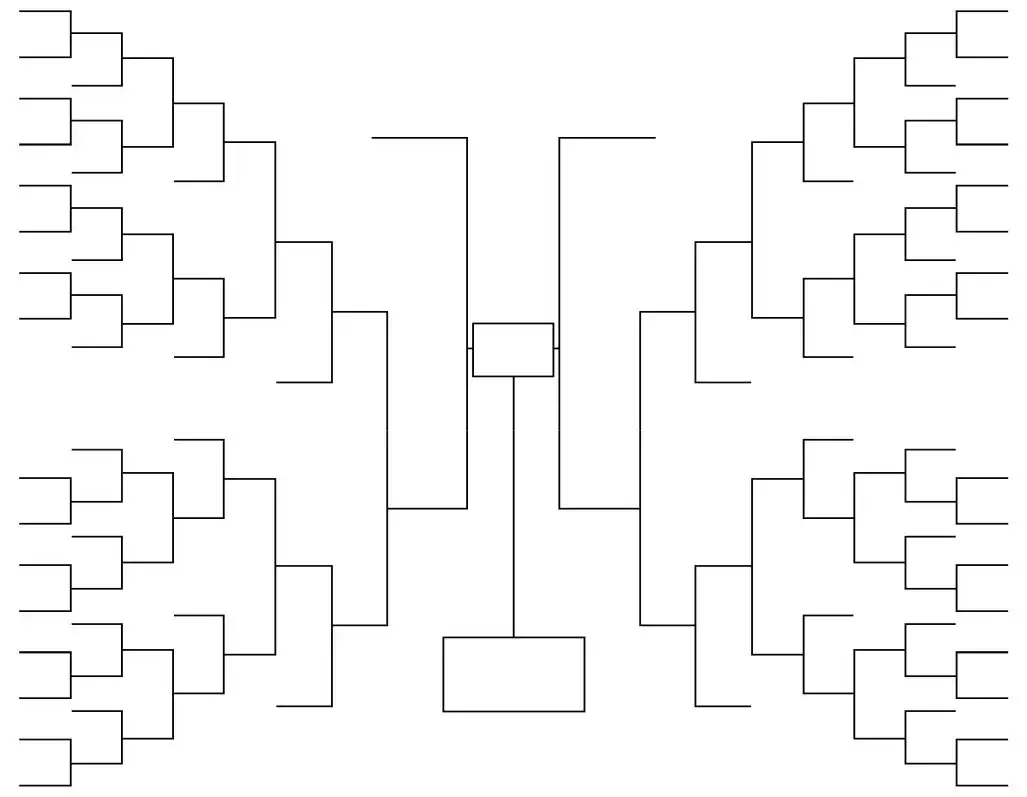
64 Team Double Elimination Bracket PDF Template

64 Team Double Elimination Bracket PDF Template

A 64 Team Double Elimination Bracket is a tournament format that allows teams to compete in a way that gives them a second chance, even after a loss. This structure ensures that each team has the opportunity to play until they have lost twice, making it a fair and exciting way to determine a champion. To get started, fill out the form by clicking the button below.

Article Guide

The 64 Team Double Elimination Bracket form is an essential tool for organizing and managing competitive tournaments, whether in sports, gaming, or other competitive events. This format allows teams to compete in a structured manner, ensuring that each team has the opportunity to play at least two matches before being eliminated from the tournament. With a total of 64 teams, the bracket is designed to facilitate a fair competition while keeping the excitement alive until the very end. Each team will navigate through a series of rounds, where they must win to advance, but even in the event of a loss, they still have a chance to come back through the losers' bracket. This unique structure not only enhances the competitive spirit but also engages fans and participants alike. Understanding how to effectively use this bracket form can significantly impact the tournament's success, from scheduling matches to determining the eventual champion.

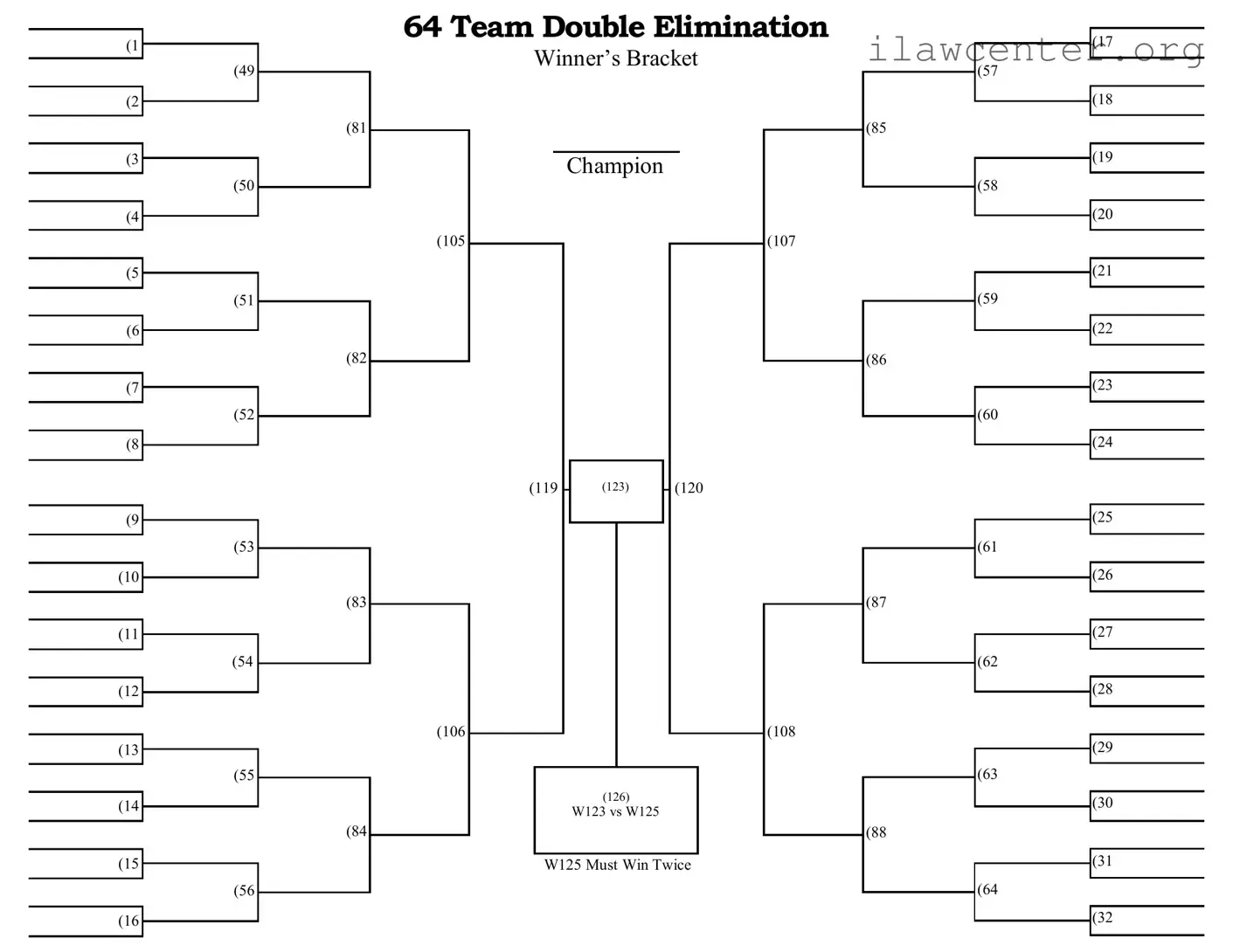
64 Team Double Elimination Bracket Preview

(1

64 Team Double Elimination

(17

Winner’s Bracket

(49

(57


(2


RACKETS


(18


(81


(85

(3


Champion


(19

(50


(58

(4


(20


(105


(107


(5


(21

(51


(59

(6


(22


(82


B

(86

(7


(23


(52


(60

(8


OUR


(24

(54


(120


(62


(119

(123)


(9


(25

(53

Y


(61

(10


(26


(83


(87

(11


(27

RINT(56


(64

(12


(28

(13


(106


(108

(29

(55


(63

P


(126)


(30

(14


W123 vs W125


(84


(88

(15


W125 Must Win Twice


(31


(16


(32

L9

(33

L10(65

Loser’s Bracket

L25

(41

(73L26


L49


RACKETS


L57

L11


(89


(93

L27


(34


(42

L12


(66


(97


L120


L119


(101

(74

L28


L50


L85


L81

L58

L13


L29


(35


(43

L14


(67


(109


(111

(75

L30


L51


L59

L15


(90


(94

L31


(36


B


(44

L16


(68


(98


(113

(115

(102

(76

L32


L52


L86


(121

(124)

(122


L82

L60


L105


L107


L53


L87


L83

L61


L1


(69


(99

Y


(103

(77

L17


(37


(118


(45


(117


(91


(95


L2


OUR


L18


L54


L62


RINT


L3


(70


(110


(112

(78

L19


(38


(46

L4


L88


L84

L20


L55


(114


(116


L63

L5


(71


(100


(104

(79

L21

P


(125)


(47


(39


W124 vs L123


(92


(96


L6


L106


L108

L22


L56


L64


Loser’s Bracket Final


L7


(72


(80

L23


(40


PrintYourBrackets.com


(48

L8


L24


File Properties

Fact Name Description
Structure A 64-team double elimination bracket allows each team to lose twice before being eliminated from the tournament.
Rounds The tournament typically consists of multiple rounds, including a winner's bracket and a loser's bracket.
Advancement Teams that win in the winner's bracket continue to advance, while those that lose drop into the loser's bracket.
Finals Format The final match often features the last remaining team from the winner's bracket against the last remaining team from the loser's bracket.
State-Specific Laws Each state may have specific regulations governing tournaments, including licensing, age restrictions, and safety protocols.

Instructions on Utilizing 64 Team Double Elimination Bracket

Once you have the 64 Team Double Elimination Bracket form in front of you, it’s time to fill it out carefully. Each step is important to ensure that the tournament runs smoothly. Follow these instructions to complete the form accurately.

  1. Start with the title section at the top of the form. Write the name of the tournament and the date it will take place.
  2. Next, locate the team entry section. List all 64 teams participating in the tournament. Be sure to include their full names for clarity.
  3. Move on to the bracket layout. Each team will need to be placed in the appropriate position based on the seeding. Fill in the matchups according to the tournament rules.
  4. As you fill out the bracket, leave space for scores. You will need to record the outcomes of each match as the tournament progresses.
  5. Check for any additional sections, such as notes or special rules. Fill these out as necessary, ensuring that all relevant information is included.
  6. Finally, review the entire form for accuracy. Make sure all team names, matchups, and scores are correct before submitting it for use during the tournament.

With the form completed, you are now ready to move forward with organizing the tournament. Keep the filled-out bracket handy for easy reference as the matches unfold.

Important Facts about 64 Team Double Elimination Bracket

What is a 64 Team Double Elimination Bracket?

A 64 Team Double Elimination Bracket is a tournament format where each team must lose twice before being eliminated. This means that even if a team loses in the early rounds, they still have a chance to compete for the championship by winning their subsequent matches. This format is popular in various sports and competitions, ensuring that the best teams have multiple opportunities to showcase their skills.

How does the double elimination format work?

In a double elimination tournament, teams are placed in a main bracket and a losers' bracket. When a team loses a match in the main bracket, they drop down to the losers' bracket. Teams in the losers' bracket can continue to compete, but if they lose again, they are eliminated from the tournament. The last team remaining in the losers' bracket faces the team from the main bracket in a final match, which can determine the overall champion.

How are teams seeded in the bracket?

Teams are typically seeded based on their performance in previous tournaments, rankings, or through a random draw. Seeding helps to ensure that stronger teams do not face each other in the early rounds, allowing for a more balanced competition. The specific seeding method can vary depending on the tournament's organizing body.

What happens if a team runs out of players?

If a team runs out of eligible players due to injuries, disqualifications, or other reasons, they may be forced to forfeit their matches. Depending on the tournament rules, this could lead to automatic elimination from the bracket. It's essential for teams to have a sufficient roster and to communicate any issues to tournament officials promptly.

Can a team lose in the winners' bracket and still win the tournament?

Yes, a team can lose in the winners' bracket and still have a chance to win the tournament. If they lose, they move to the losers' bracket and must win every match from that point forward to reach the finals. If they win the losers' bracket, they will face the team that remains in the winners' bracket. To win the championship, they must defeat that team, potentially forcing a second match if they have one loss against them.

How long does a 64 Team Double Elimination Tournament usually take?

The duration of the tournament can vary widely based on factors such as the number of matches scheduled per day, the length of each match, and the availability of venues. Generally, a 64 team double elimination tournament may take several days to complete, especially if matches are played back-to-back. Organizers should plan accordingly to ensure that the tournament runs smoothly and stays on schedule.

Is there a way to track the progress of the tournament?

Yes, most tournaments provide a way to track progress, either through a printed bracket or an online platform. These resources typically display match results, upcoming matches, and the current standings of each team. Keeping track of the bracket helps teams and fans stay informed about the tournament's progression and upcoming matchups.
Common mistakes

Filling out a 64 Team Double Elimination Bracket can be an exciting yet challenging task. However, many people make common mistakes that can lead to confusion or errors in the tournament. One frequent error is not understanding the structure of the bracket itself. A double elimination format means that a team must lose twice before being eliminated. This concept is crucial to grasp before starting to fill out the bracket.

Another mistake often made is neglecting to track the winners and losers correctly. Each match affects the next round, and failing to update the bracket properly can lead to mismatches or incorrect pairings. It’s essential to keep a clear record of which teams advance and which teams drop to the lower bracket. Keeping a separate note can help in maintaining clarity.

Some individuals also overlook the importance of checking for potential conflicts in scheduling. With 64 teams, matches can happen simultaneously, and players need to be aware of when they are expected to compete. If a team is scheduled to play in two places at once, it creates a logistical nightmare. Double-checking the match times can prevent these issues.

Finally, many people forget to consider the impact of byes. In a large tournament, some teams may not play in the first round due to an uneven number of participants. Failing to account for byes can lead to confusion later in the tournament. It's wise to review the bracket and ensure that every team has a fair chance to compete.

Documents used along the form

When organizing a tournament using a 64 Team Double Elimination Bracket, several other forms and documents can enhance the overall management and experience. These documents help streamline operations, ensure clear communication, and maintain organization throughout the event. Below are some commonly used forms that complement the bracket.

  • Team Registration Form: This document collects essential information from each participating team, such as team name, roster, and contact details. It ensures that all teams are officially registered and helps in organizing the tournament effectively.
  • Match Schedule: A detailed schedule outlines when and where each match will take place. This document helps participants and spectators know the timing of games, facilitating better attendance and planning.
  • Score Sheet: Used during each match, the score sheet records the results of the games. It provides a clear record of scores, which is crucial for updating the bracket and determining team standings.
  • Rules and Regulations Document: This document outlines the specific rules governing the tournament, including gameplay rules, eligibility criteria, and conduct expectations. It ensures that all participants are aware of the guidelines and helps maintain fairness.
  • Feedback Form: After the tournament, this form collects feedback from players, coaches, and spectators. Gathering insights on their experiences can help improve future events and address any concerns that arose during the tournament.

Utilizing these forms alongside the 64 Team Double Elimination Bracket can significantly enhance the organization and execution of the tournament. Each document serves a unique purpose, contributing to a smoother and more enjoyable experience for everyone involved.

Similar forms

  • Single Elimination Bracket: Similar to the double elimination format, this document outlines matchups in a tournament. However, once a team loses, they are eliminated from the competition entirely, unlike the double elimination format where teams have a second chance.
  • Round Robin Schedule: This document organizes matches so that each team plays every other team. It ensures comprehensive competition, contrasting with the knockout nature of the double elimination bracket.
  • Swiss System Tournament: This format pairs teams with similar records in each round. While the double elimination bracket focuses on elimination, the Swiss system allows teams to continue competing regardless of wins or losses.
  • Pool Play Format: In this document, teams are divided into smaller groups, competing within their pool. The top teams advance, similar to how teams in a double elimination bracket can lose once and still progress.
  • Challenge Ladder: This document allows participants to challenge each other for rankings. Like the double elimination bracket, it incorporates the element of ongoing competition after a loss.
  • Playoff Bracket: This document outlines the final stages of a tournament, determining the champion. It shares the elimination aspect with the double elimination bracket but typically does not allow for a second chance.
  • League Table: This document ranks teams based on their performance over a season. While it does not involve direct elimination, it provides a structured way to determine standings, akin to the progression in a double elimination format.

Dos and Don'ts

When filling out the 64 Team Double Elimination Bracket form, it's important to follow specific guidelines to ensure accuracy and clarity. Here’s a list of things to do and avoid:

  • Do read the instructions carefully before starting.
  • Do double-check the team names for spelling errors.
  • Do fill in all required fields completely.
  • Do use clear, legible handwriting or type the information.
  • Do ensure that the matchups follow the correct format.
  • Don't leave any sections blank unless specified.
  • Don't use abbreviations that may confuse others.
  • Don't forget to indicate the winners of each match.
  • Don't overwrite or cross out information; use a new form instead.
  • Don't submit the form without reviewing it for errors.

By adhering to these guidelines, you can help ensure that the bracket is filled out correctly and is easy to understand for all participants.

Misconceptions

Understanding the 64 Team Double Elimination Bracket can be challenging. Here are ten common misconceptions that people have about this format:

  1. Every team must lose twice to be eliminated. Many believe that a team can be eliminated after just one loss. In a double elimination format, a team must lose two matches to be eliminated from the tournament.
  2. There are only two brackets. Some think there are only two brackets, one for winners and one for losers. While there are two main brackets, the structure can include multiple rounds within each bracket.
  3. Teams that lose in the winners bracket are out. This is incorrect. A team that loses in the winners bracket moves to the losers bracket, giving them a second chance.
  4. The final match is always between the last two teams in the winners bracket. This is a misconception. The final match can involve a team from the losers bracket if they defeat the team from the winners bracket.
  5. All matches are played in a single day. People often think the tournament can be completed in one day. In reality, a 64 team double elimination tournament usually spans several days due to the number of matches.
  6. Seeding does not matter. Some may believe that all teams have an equal chance. Seeding can impact matchups and is important for determining which teams face each other in the early rounds.
  7. Teams cannot re-enter the winners bracket. This is false. A team that loses in the winners bracket can still compete in the losers bracket and has a chance to return to the final match.
  8. There is no advantage to being in the winners bracket. This is misleading. Teams in the winners bracket have the advantage of only needing to lose once, while teams in the losers bracket must win every match to stay in the tournament.
  9. All teams play the same number of games. This is not true. The number of games played varies based on whether a team stays in the winners bracket or moves to the losers bracket.
  10. Once a team is in the losers bracket, they have no chance of winning. This is incorrect. Teams in the losers bracket can still win the tournament by defeating all remaining opponents.

By addressing these misconceptions, participants can better understand how the 64 Team Double Elimination Bracket operates.

Key takeaways

When using the 64 Team Double Elimination Bracket form, keep these key points in mind:

  1. Understand the format: A double elimination bracket allows teams to lose once before being eliminated.
  2. Fill in team names: Clearly write the names of all 64 teams participating in the bracket.
  3. Match scheduling: Schedule matches in a way that allows for adequate rest between games.
  4. Track results: Record the outcome of each match promptly to maintain an accurate bracket.
  5. Use clear markings: Use distinct symbols to indicate winners and losers for easy reference.
  6. Plan for tie-breakers: Have a system in place for resolving ties, if applicable.
  7. Keep it accessible: Ensure that all teams have access to the bracket for updates and results.
  8. Review rules: Familiarize yourself with the rules governing double elimination tournaments.
  9. Be flexible: Be prepared to adjust the schedule if unforeseen circumstances arise.