Act 221 Disclosure PDF Template

Act 221 Disclosure PDF Template

The Act 221 Disclosure form is a document required by Illinois law for the resale of condominium and townhome units. It provides essential information regarding the financial condition of the condominium association, including assessments, pending lawsuits, and anticipated capital expenditures. Understanding this form is crucial for potential buyers to make informed decisions about their prospective property.

To fill out the form, please click the button below.

Article Guide

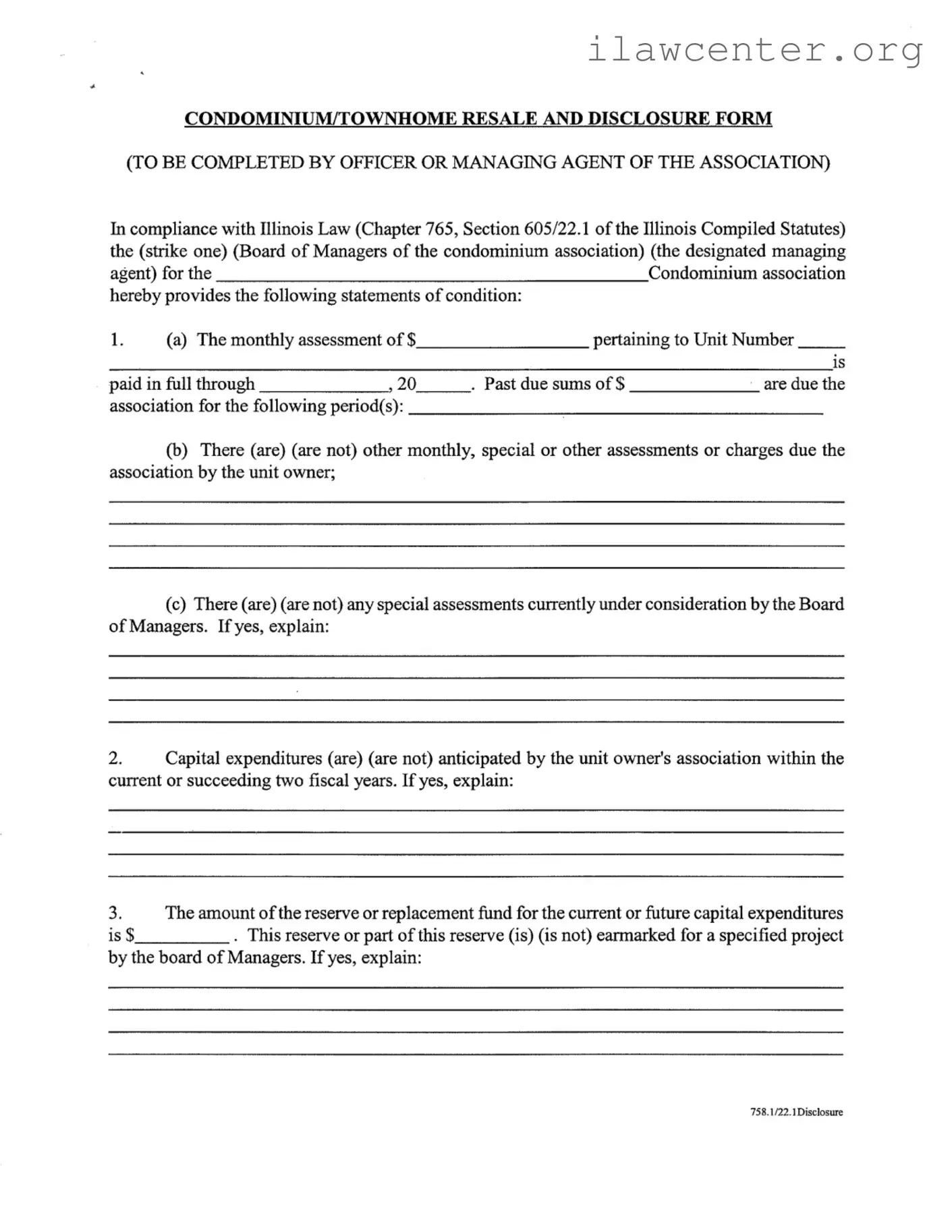
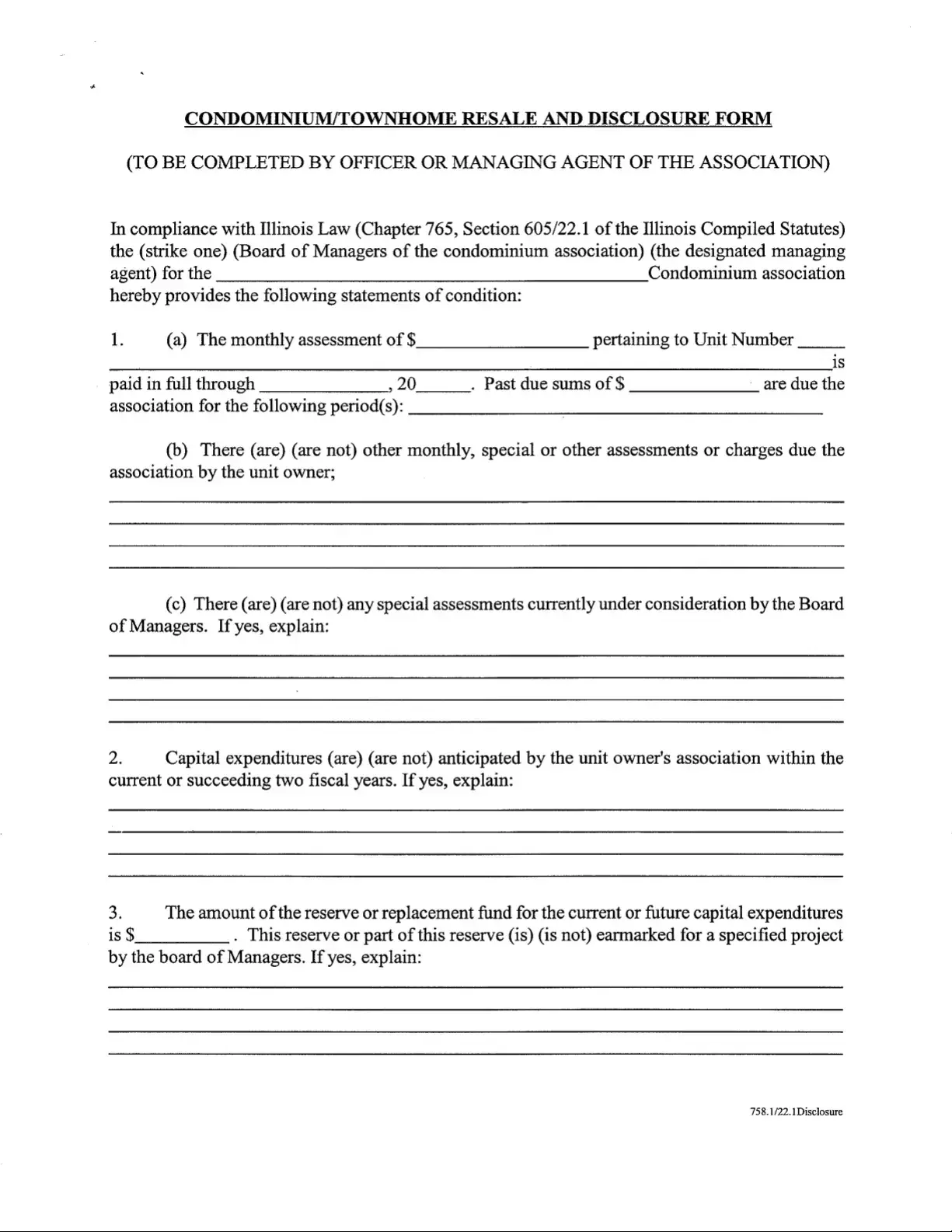
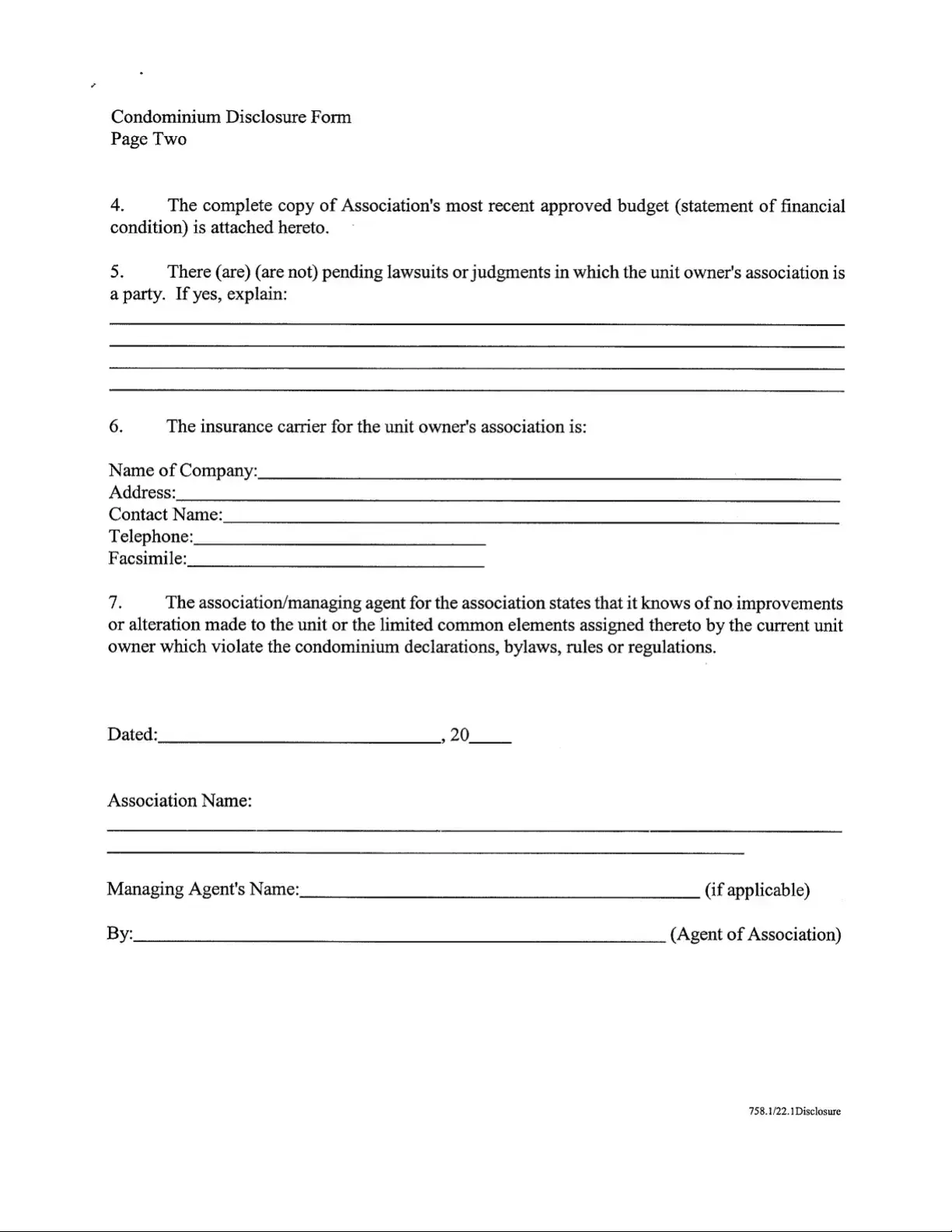
The Act 221 Disclosure form serves as a crucial document in the resale of condominiums and townhomes in Illinois, ensuring that potential buyers receive essential information about the property and its associated association. This form is completed by an officer or managing agent of the condominium association and complies with Illinois law, specifically Chapter 765, Section 605/22.1 of the Illinois Compiled Statutes. Key components of the form include details about the monthly assessments, any past due sums, and the status of special assessments. It also addresses anticipated capital expenditures and outlines the reserve or replacement fund available for future projects. Buyers will find attached the most recent approved budget of the association, providing insight into its financial health. Additionally, the form discloses any pending lawsuits or judgments involving the association, along with information about the insurance carrier covering the unit owner's association. Lastly, it confirms that no alterations have been made to the unit that violate existing declarations, bylaws, or regulations, ensuring transparency and protecting the interests of all parties involved.

Act 221 Disclosure Preview

File Properties

Fact Name Details
Governing Law The Act 221 Disclosure form is governed by Chapter 765, Section 605/22.1 of the Illinois Compiled Statutes.
Purpose This form is designed to inform potential buyers about the financial and legal status of a condominium or townhome association.
Monthly Assessments The form requires disclosure of whether monthly assessments for a specific unit are paid in full.
Special Assessments It indicates whether there are any pending special assessments under consideration by the Board of Managers.
Capital Expenditures The form asks if any capital expenditures are anticipated within the current or next two fiscal years.
Reserve Fund It requires information about the reserve or replacement fund and whether it is earmarked for a specific project.
Pending Lawsuits The form must disclose any pending lawsuits or judgments involving the unit owner's association.
Insurance Information Contact details for the insurance carrier of the unit owner's association must be provided.
Compliance with Declarations The managing agent must confirm that no improvements violate the condominium's declarations, bylaws, or regulations.

Instructions on Utilizing Act 221 Disclosure

Completing the Act 221 Disclosure form is a crucial step in ensuring transparency and compliance with Illinois law. After filling out this form, it will be submitted to the appropriate parties to provide them with essential information regarding the condominium or townhome association. Follow these steps carefully to ensure accuracy and completeness.

  1. Begin by identifying whether you are completing the form on behalf of the Board of Managers of the condominium association or the designated managing agent.
  2. Fill in the Unit Number for which the disclosure is being made.
  3. State whether the monthly assessment is paid in full through the specified date, and if not, indicate the past due sums and the period(s) they cover.
  4. Indicate whether there are or are not other monthly, special, or other assessments due by the unit owner.
  5. Specify if there are or are not any special assessments currently under consideration by the Board of Managers. If there are, provide an explanation.
  6. State whether capital expenditures are anticipated within the current or succeeding two fiscal years. If so, provide details.
  7. Fill in the amount of the reserve or replacement fund for current or future capital expenditures, and indicate if this reserve is earmarked for a specified project.
  8. Attach a complete copy of the Association's most recent approved budget (statement of financial condition).
  9. State whether there are or are not pending lawsuits or judgments involving the unit owner's association. If there are, provide an explanation.
  10. Provide the name and address of the insurance carrier for the unit owner's association, along with the contact name, telephone number, and facsimile number.
  11. Confirm that you know of no improvements or alterations made to the unit or the limited common elements that violate the condominium declarations, bylaws, rules, or regulations.
  12. Finally, include the Association Name, Managing Agent’s Name (if applicable), and the signature of the Agent of the Association.

Important Facts about Act 221 Disclosure

What is the purpose of the Act 221 Disclosure form?

The Act 221 Disclosure form serves to inform potential buyers about the financial and legal status of a condominium or townhome association. This form is completed by the officer or managing agent of the association and provides essential information regarding monthly assessments, special assessments, capital expenditures, and pending lawsuits. It ensures that prospective owners have a clear understanding of the association's current condition and any potential financial obligations they may incur.

What information is included in the Act 221 Disclosure form?

The form includes several critical statements regarding the unit's financial standing. It outlines whether the monthly assessments are paid in full, any past due amounts, and if there are any special assessments currently under consideration. Additionally, it provides details about anticipated capital expenditures, the reserve or replacement fund status, and any pending lawsuits involving the association. A complete copy of the association's most recent approved budget is also attached to give a comprehensive overview of its financial health.

Who completes the Act 221 Disclosure form?

The Act 221 Disclosure form is completed by an officer or managing agent of the condominium or townhome association. This individual is responsible for ensuring that the information provided is accurate and up-to-date. By having a designated person complete the form, it helps maintain accountability and transparency within the association, allowing potential buyers to make informed decisions.

How does the Act 221 Disclosure form affect potential buyers?

For potential buyers, the Act 221 Disclosure form is a crucial tool in evaluating a property. It provides insights into the financial obligations they may face, including monthly assessments and any upcoming special assessments. Understanding the association's legal standing and financial health can significantly influence a buyer's decision. By reviewing this form, buyers can assess the risks associated with the property and determine if it aligns with their financial goals.

Common mistakes

Filling out the Act 221 Disclosure form can be straightforward, but many people make common mistakes that can lead to confusion or delays. One frequent error is failing to provide complete information regarding the monthly assessments. It's essential to indicate whether the assessments are paid in full and to specify any past due amounts. Omitting this information can create misunderstandings about the financial status of the unit.

Another mistake occurs when individuals neglect to clarify the status of special assessments. The form requires the respondent to state whether there are any special assessments currently under consideration. If this section is left blank or filled out incorrectly, it may mislead potential buyers about the financial obligations they might face.

In addition, many people overlook the importance of detailing anticipated capital expenditures. The form asks whether any capital expenditures are expected within the next two fiscal years. Failing to provide this information or not giving a clear explanation can lead to unexpected costs for new owners, which could have been anticipated.

Another area where errors often happen is in reporting the reserve or replacement fund. It's crucial to accurately state the amount of this fund and whether it is earmarked for specific projects. Misrepresenting this information can lead to serious financial implications for both the association and the unit owner.

Finally, individuals sometimes forget to include information about pending lawsuits or judgments involving the association. This part of the form is critical for potential buyers, as it can affect their decision to purchase. Leaving it blank or providing vague responses can lead to distrust and potential legal issues down the line.

Documents used along the form

The Act 221 Disclosure form is an essential document for buyers and sellers involved in condominium or townhome transactions in Illinois. It provides critical information about the financial and legal status of the property, ensuring that all parties are well-informed before proceeding. Alongside this form, several other documents are often utilized to facilitate a smooth transaction. Here are five key documents that are commonly used in conjunction with the Act 221 Disclosure form:

  • Condominium Association Bylaws: These are the rules and regulations governing the operation of the condominium association. They outline the rights and responsibilities of unit owners, including restrictions on property use and guidelines for meetings and voting.
  • Current Budget of the Association: This document details the financial plan for the association, including income from assessments and expenditures for maintenance, repairs, and improvements. A review of the budget helps potential buyers understand the financial health of the association.
  • Reserve Study Report: A reserve study evaluates the condition of common elements and estimates future repair and replacement costs. This report helps ensure that the association has sufficient funds set aside for future expenses, providing peace of mind to prospective buyers.
  • Meeting Minutes: These records from recent association meetings offer insight into ongoing issues, decisions made, and the general atmosphere of the community. Reviewing minutes can reveal potential concerns or upcoming changes that may affect residents.
  • Insurance Certificate: This document confirms the insurance coverage held by the condominium association. It provides details about the policy, including coverage limits and types of insurance, ensuring that the property and its owners are adequately protected.

Understanding these additional documents can significantly enhance the buying or selling experience. Each document plays a vital role in providing transparency and safeguarding the interests of all parties involved in a condominium transaction.

Similar forms

The Act 221 Disclosure form serves as an important document for prospective buyers in a condominium or townhome setting. It provides essential information about the financial and legal status of the association. Several other documents share similarities with this form, as they also aim to inform potential buyers about various aspects of property ownership. Below is a list of seven documents that are similar to the Act 221 Disclosure form:

  • Seller's Disclosure Statement: This document outlines known issues with the property, such as structural problems or past repairs, similar to how the Act 221 form details the financial condition of the association.
  • Property Condition Disclosure: This form provides information about the physical state of the property, including any defects, akin to the Act 221's focus on the condition of the unit and common areas.
  • Homeowners Association (HOA) Disclosure: This document informs buyers about the rules and regulations of the HOA, much like the Act 221 form communicates the association's financial obligations and assessments.
  • Lead-Based Paint Disclosure: Required for homes built before 1978, this form informs buyers of potential lead hazards, paralleling the Act 221 form's role in disclosing potential risks associated with the property.
  • Property Title Report: This report details the ownership history and any liens against the property, similar to how the Act 221 form addresses pending lawsuits and financial obligations of the association.
  • Closing Disclosure: This document summarizes the final loan terms and closing costs, providing a financial overview that complements the financial information found in the Act 221 Disclosure form.
  • Condominium Bylaws: These rules govern the operation of the condominium association and its members, similar to how the Act 221 form outlines specific assessments and financial responsibilities.

Dos and Don'ts

When filling out the Act 221 Disclosure form, it is essential to follow specific guidelines to ensure accuracy and compliance. Here are ten things to do and not do during this process:

  • Do read the entire form carefully before starting.
  • Do provide accurate information regarding monthly assessments and any past due sums.
  • Do disclose any pending lawsuits or judgments involving the association.
  • Do attach the most recent approved budget to the form.
  • Do ensure that all contact information for the insurance carrier is complete and correct.
  • Don't leave any sections blank; fill out all applicable fields.
  • Don't provide misleading information about capital expenditures or reserves.
  • Don't ignore special assessments that may be under consideration.
  • Don't forget to sign and date the form before submission.
  • Don't rush through the process; take your time to ensure everything is accurate.

Misconceptions

Understanding the Act 221 Disclosure form is crucial for anyone involved in the condominium or townhome market. However, several misconceptions can lead to confusion. Below are five common misunderstandings about this important document.

  1. All assessments are paid in full. Many believe that the form guarantees that all financial obligations are settled. In reality, the form only indicates whether the monthly assessment is current, and it may not reflect any past due amounts or other charges.
  2. The form is only for the seller's benefit. Some think the disclosure form serves solely the interests of the seller. However, it is designed to protect both buyers and sellers by providing essential information about the property and the association's financial health.
  3. Pending lawsuits do not affect property value. A common belief is that if there are pending lawsuits, they have no bearing on the value of the property. In fact, such legal issues can significantly impact a buyer’s decision and the overall marketability of the unit.
  4. Capital expenditures are always a negative sign. Many assume that anticipated capital expenditures indicate poor management. While they can signal financial strain, they may also represent necessary improvements that enhance property value and community standards.
  5. Disclosure forms are standardized and uniform. Some individuals think that all Act 221 Disclosure forms are identical. In reality, the specifics can vary significantly between different associations, reflecting their unique circumstances and financial situations.

By addressing these misconceptions, individuals can approach the Act 221 Disclosure form with a clearer understanding, leading to more informed decisions in the real estate market.

Key takeaways

When filling out and using the Act 221 Disclosure form, there are several important points to keep in mind. Here are some key takeaways:

  • Understand the Purpose: This form is designed to provide important information about the condominium or townhome, ensuring transparency for potential buyers.
  • Complete All Sections: Make sure to fill out every part of the form accurately. Incomplete forms can lead to misunderstandings or delays in the sale process.
  • Monthly Assessments: Clearly state the status of monthly assessments for the unit. Indicate if they are paid in full or if there are any outstanding amounts.
  • Special Assessments: Be aware of any special assessments that may be pending. If there are any, provide a detailed explanation to inform potential buyers.
  • Capital Expenditures: Disclose if any capital expenditures are anticipated in the near future. This information is crucial for buyers to understand potential future costs.
  • Reserve Funds: Provide details about the reserve or replacement fund. Buyers should know if any part of this fund is earmarked for specific projects.
  • Pending Lawsuits: Disclose any pending lawsuits involving the association. Transparency in this area can significantly impact a buyer's decision.
  • Insurance Information: Include the name and contact details of the insurance carrier for the association. This helps buyers understand coverage and potential liabilities.

By following these guidelines, you can ensure that the Act 221 Disclosure form serves its intended purpose, providing clarity and confidence to potential buyers.