Fillable Adoption Letter of Recommendation Document

Fillable Adoption Letter of Recommendation Document

The Adoption Letter of Recommendation form serves as a crucial document in the adoption process, providing insights into the character and suitability of prospective adoptive parents. This form is typically completed by friends, family, or professionals who can attest to the applicant's ability to provide a loving and stable home. If you're ready to take the next step in your adoption journey, fill out the form by clicking the button below.

Article Guide

When considering adoption, prospective parents often need to gather various documents to support their application. One crucial component is the Adoption Letter of Recommendation form. This form serves as a testament to the character and suitability of the adoptive parents, providing insights from individuals who know them well. Typically, the form requires input from friends, family, or professionals who can speak to the applicants’ parenting abilities, emotional stability, and commitment to providing a loving home. The recommendations should highlight the applicants' strengths, values, and experiences that make them ideal candidates for adoption. It's important that the letters are heartfelt and specific, as they play a significant role in the decision-making process. A well-crafted recommendation can help paint a positive picture of the prospective parents, ultimately influencing the outcome of their adoption journey.

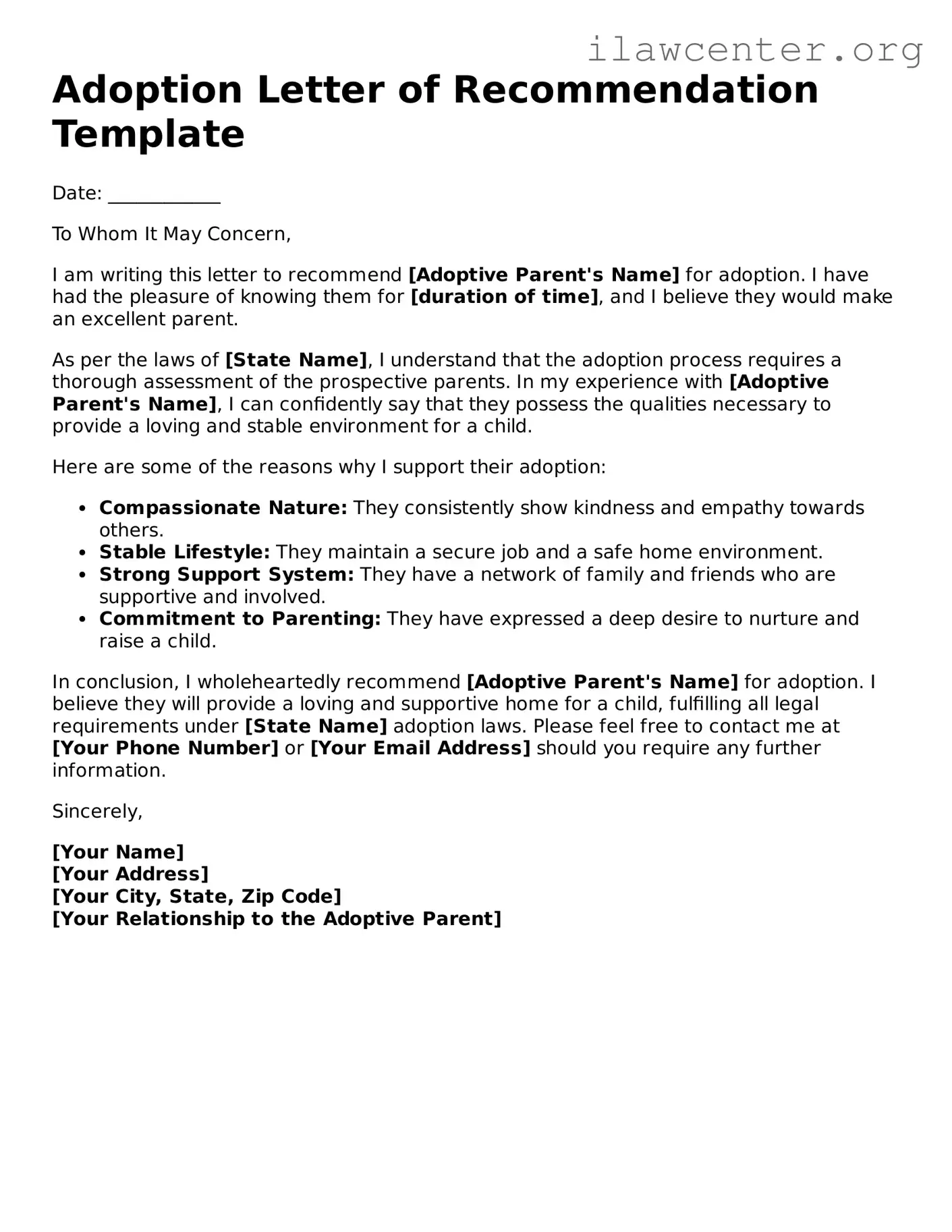
Adoption Letter of Recommendation Preview

Adoption Letter of Recommendation Template

Date: ____________

To Whom It May Concern,

I am writing this letter to recommend [Adoptive Parent's Name] for adoption. I have had the pleasure of knowing them for [duration of time], and I believe they would make an excellent parent.

As per the laws of [State Name], I understand that the adoption process requires a thorough assessment of the prospective parents. In my experience with [Adoptive Parent's Name], I can confidently say that they possess the qualities necessary to provide a loving and stable environment for a child.

Here are some of the reasons why I support their adoption:

  • Compassionate Nature: They consistently show kindness and empathy towards others.
  • Stable Lifestyle: They maintain a secure job and a safe home environment.
  • Strong Support System: They have a network of family and friends who are supportive and involved.
  • Commitment to Parenting: They have expressed a deep desire to nurture and raise a child.

In conclusion, I wholeheartedly recommend [Adoptive Parent's Name] for adoption. I believe they will provide a loving and supportive home for a child, fulfilling all legal requirements under [State Name] adoption laws. Please feel free to contact me at [Your Phone Number] or [Your Email Address] should you require any further information.

Sincerely,

[Your Name]
[Your Address]
[Your City, State, Zip Code]
[Your Relationship to the Adoptive Parent]

PDF Form Characteristics

Fact Name Description
Purpose The Adoption Letter of Recommendation form is designed to provide insights into the character and suitability of prospective adoptive parents.
Confidentiality Information provided in the form is typically kept confidential and only shared with relevant authorities involved in the adoption process.
Eligibility Individuals who know the prospective adoptive parents well, such as friends, family, or colleagues, are often encouraged to complete this form.
State-Specific Forms Many states have their own specific versions of the Adoption Letter of Recommendation form, governed by local adoption laws.
Governing Laws For example, in California, the relevant laws include the California Family Code, sections 8500-8530, which outline the adoption process.
Submission Process The completed form is usually submitted to the adoption agency or court overseeing the adoption proceedings.
Impact on Adoption The recommendations provided in the form can significantly influence the decision-making process regarding the adoption application.

Instructions on Utilizing Adoption Letter of Recommendation

After receiving the Adoption Letter of Recommendation form, you will need to complete it accurately to support the adoption process. The following steps will guide you through filling out the form effectively.

  1. Begin by entering your full name in the designated space at the top of the form.
  2. Provide your current address, including city, state, and zip code.
  3. Fill in your phone number and email address to ensure you can be contacted if needed.
  4. State your relationship to the individual or family seeking adoption. Be specific about how long you have known them.
  5. In the next section, describe the qualities and characteristics that make the individual or family suitable for adoption.
  6. Share any relevant experiences you have had with the individual or family that demonstrate their readiness for adoption.
  7. Sign and date the form at the bottom to validate your recommendation.

Once the form is completed, it should be submitted according to the instructions provided with the adoption application. Ensure that all information is accurate and reflects your honest opinion.

Important Facts about Adoption Letter of Recommendation

What is an Adoption Letter of Recommendation form?

An Adoption Letter of Recommendation form is a document that provides a written endorsement of an individual or couple who are seeking to adopt a child. This letter typically comes from a trusted source, such as a family member, friend, or professional who can speak to the prospective adoptive parents' character, values, and ability to provide a loving home.

Who should write the recommendation letter?

The recommendation letter should ideally come from someone who knows the prospective adoptive parents well. This could be a close friend, family member, co-worker, or even a community leader. The key is that the writer has a good understanding of the parents' qualities and can provide a heartfelt and honest assessment of their suitability for adoption.

What should be included in the letter?

A strong recommendation letter should include specific examples that illustrate the character and parenting abilities of the prospective adoptive parents. It should touch on their values, lifestyle, and any relevant experiences that demonstrate their readiness to provide a nurturing environment for a child. Additionally, the letter should express the writer's confidence in the parents' ability to offer love and support.

How long should the letter be?

While there is no strict length requirement, a recommendation letter typically ranges from one to two pages. This allows enough space for the writer to convey their thoughts clearly while remaining concise. The focus should be on quality over quantity—making each word count is essential.

Is there a specific format for the letter?

While there is no rigid format, the letter should generally begin with a formal greeting and an introduction of the writer. It should then move into the body, where the writer shares their observations and experiences with the prospective adoptive parents. Finally, a strong conclusion that reiterates the writer's support and confidence in the parents is crucial. Including contact information for follow-up can also be beneficial.

Can the letter be handwritten?

Yes, a handwritten letter can add a personal touch and demonstrate sincerity. However, it’s essential that the handwriting is legible. If the writer prefers, typing the letter is perfectly acceptable and often easier to read. Ultimately, the content and heartfelt nature of the letter are what matter most.

How important is this letter in the adoption process?

The recommendation letter can play a significant role in the adoption process. It helps social workers and adoption agencies assess the character and readiness of the prospective adoptive parents. A well-written letter can provide valuable insights that may help in the approval process, making it an important component of the overall application.

Can multiple letters be submitted?

Yes, submitting multiple recommendation letters can be beneficial. Each letter can provide different perspectives and highlight various strengths of the prospective adoptive parents. However, it’s essential to ensure that all letters are from credible sources who can provide meaningful insights, rather than simply gathering letters from anyone.

What if the writer is not local?

It is perfectly acceptable for a writer to be located outside the immediate area of the prospective adoptive parents. What matters most is the quality of the relationship and the insights the writer can provide. In some cases, a letter from someone with a different perspective or background can be even more valuable, as it may highlight unique qualities of the parents.
Common mistakes

When filling out an Adoption Letter of Recommendation form, individuals often overlook important details that can affect the overall quality of their recommendation. One common mistake is failing to provide specific examples of the prospective adoptive parents’ qualities. General statements about their character may not paint a complete picture. Instead, including anecdotes or specific instances can greatly enhance the letter's impact.

Another frequent error is not addressing the correct recipient. Sometimes, people forget to check who the letter should be directed to, which can lead to confusion or even rejection of the application. Ensuring that the letter is personalized and addressed properly can make a significant difference.

Many recommenders also struggle with using overly formal language. While professionalism is important, a letter that reads like a legal document can feel impersonal. A warm, conversational tone can better convey the genuine feelings about the adoptive parents.

Additionally, some individuals neglect to include their qualifications for writing the recommendation. It is vital to establish credibility. A brief introduction explaining the relationship to the adoptive parents can help the reader understand the context and weight of the recommendation.

Another common mistake is not being honest. While it may be tempting to embellish qualities, honesty is crucial in adoption recommendations. If there are concerns or areas where the prospective parents may need support, it is better to address these thoughtfully rather than gloss over them.

People often forget to proofread their letters. Spelling errors or grammatical mistakes can detract from the message and make the recommendation appear less credible. Taking the time to review the letter can help ensure clarity and professionalism.

Moreover, some recommenders fail to respect confidentiality. It’s important to be mindful of what personal information is shared, especially if it involves sensitive topics. Always ask for permission before including details that may not be public knowledge.

Another mistake is not following the format requested by the adoption agency. Some agencies may have specific guidelines or sections that need to be addressed. Ignoring these requirements can lead to an incomplete recommendation.

Lastly, individuals sometimes underestimate the importance of timeliness. Submitting the letter late can delay the adoption process. It’s essential to be aware of deadlines and plan accordingly to ensure that the letter arrives on time.

Documents used along the form

When considering adoption, various forms and documents are required to ensure a smooth process. Each document serves a specific purpose, helping to establish the suitability of the adoptive parents and the welfare of the child. Below is a list of common documents often used alongside the Adoption Letter of Recommendation form.

  • Adoption Application: This form collects essential information about the prospective adoptive parents, including their personal details, background, and reasons for wanting to adopt.
  • Home Study Report: Conducted by a licensed social worker, this report assesses the living conditions, emotional readiness, and overall suitability of the adoptive parents.
  • Background Check Authorization: This document allows authorities to conduct criminal background checks on the prospective parents to ensure the safety of the child.
  • Financial Statement: Adoptive parents provide a detailed overview of their financial situation, demonstrating their ability to support a child.
  • Medical History Form: This form outlines the physical and mental health history of the adoptive parents, ensuring they are fit to care for a child.
  • References List: Prospective parents compile a list of personal references who can vouch for their character and parenting abilities.
  • Consent to Adopt: This document is signed by the biological parents (if applicable) to relinquish their parental rights and consent to the adoption process.
  • Post-Adoption Contact Agreement: If there is an agreement for ongoing contact with the biological family, this document outlines the terms of that arrangement.
  • Adoption Placement Agreement: This legal document details the terms under which the child will be placed with the adoptive family, including any conditions that must be met.

These documents collectively contribute to a comprehensive understanding of the adoption process, ensuring that all parties involved are prepared for the responsibilities that adoption entails. Proper documentation helps facilitate a successful adoption experience, prioritizing the best interests of the child.

Similar forms

The Adoption Letter of Recommendation form shares similarities with several other documents that serve to provide support or endorsement in various contexts. Below is a list of nine documents that are comparable to the Adoption Letter of Recommendation form, along with explanations of their similarities:

  • Character Reference Letter: This document is often requested when an individual needs to demonstrate their personal qualities or character traits to a third party, similar to how an adoption letter highlights the suitability of an individual for adopting a child.
  • Employment Reference Letter: Similar in purpose, this letter supports a job applicant by affirming their qualifications and work ethic, much like how an adoption recommendation affirms a prospective parent’s ability to provide a loving home.
  • College Recommendation Letter: This type of letter is written to endorse a student’s application to a college or university. It shares the same goal of showcasing an individual’s strengths and capabilities, akin to the adoption letter's focus on parenting qualities.
  • Personal Statement: While this document is typically written by the individual themselves, it serves to express personal motivations and qualifications. Like the adoption letter, it provides insight into the individual's readiness for a significant commitment.
  • Foster Care Reference Letter: This letter supports individuals seeking to become foster parents. It highlights their qualifications and suitability, paralleling the intent of the adoption letter to evaluate parental readiness.
  • Mentor Recommendation Letter: When someone seeks a mentor or coaching opportunity, this letter serves to validate their skills and character. It is similar in that it aims to recommend someone for a role that involves guidance and support.
  • Volunteer Reference Letter: This document endorses a person’s commitment and abilities in a volunteer context. Like the adoption letter, it emphasizes the individual’s dedication to helping others.
  • Professional Certification Recommendation: Often required for specific professional designations, this letter attests to an individual’s qualifications and character, much like the adoption letter does for prospective parents.
  • Legal Guardian Reference Letter: When someone is seeking to become a legal guardian, this letter supports their application by highlighting their parenting capabilities, similar to the adoption letter's purpose of endorsing adoptive parents.

Dos and Don'ts

When filling out the Adoption Letter of Recommendation form, it is essential to approach the task with care and consideration. Here are four important things to keep in mind:

  • Do provide honest and accurate information. Your insights will help the adoption agency understand the applicant better.
  • Do focus on the applicant's strengths. Highlight their qualities that make them suitable for adoption.
  • Don't include irrelevant personal opinions. Stick to factual observations and experiences related to the applicant's parenting abilities.
  • Don't rush the process. Take the time to reflect on your relationship with the applicant and the impact they will have on a child's life.

Being mindful of these guidelines will ensure that your recommendation is both effective and meaningful.

Misconceptions

Adoption can be a complex process, and the Letter of Recommendation form often comes with its own set of misunderstandings. Here are ten common misconceptions about this important document:

  1. Only close friends can write the letter.

    While it's beneficial to have someone who knows you well, letters can also be written by colleagues or acquaintances who can speak to your character and suitability as a parent.

  2. The letter must be lengthy.

    A concise letter that clearly addresses your strengths and parenting qualities is often more effective than a lengthy one filled with unnecessary details.

  3. It must be notarized.

    Notarization is typically not required for the Letter of Recommendation. However, some agencies may have specific requirements, so it's best to check.

  4. Letters can only be written in formal language.

    While professionalism is important, a personal touch and authentic voice can make the letter more impactful.

  5. All letters are the same.

    Each letter should be tailored to reflect the unique relationship between the writer and the prospective adoptive parent, highlighting specific qualities and experiences.

  6. One letter is sufficient.

    Many adoption agencies recommend obtaining multiple letters to provide a well-rounded view of your character and parenting potential.

  7. The letter needs to be perfect.

    While it should be well-written, minor errors are usually acceptable. The sincerity of the message is what truly matters.

  8. Letters can only address parenting skills.

    While parenting skills are important, letters can also discuss your values, lifestyle, and community involvement, providing a fuller picture of who you are.

  9. There is a specific format that must be followed.

    While some guidelines may exist, there is no strict format. Each writer can express their thoughts in a way that feels comfortable to them.

  10. Letters are not important.

    In reality, these letters can play a significant role in the adoption process, offering insights into your character that other documents may not provide.

Understanding these misconceptions can help prospective adoptive parents navigate the adoption process more effectively. Clear communication and authenticity in the Letter of Recommendation can make a substantial difference.

Key takeaways

When filling out and using the Adoption Letter of Recommendation form, keep the following key takeaways in mind:

  1. Ensure that the form is filled out completely. Missing information can delay the adoption process.
  2. Choose recommenders who know you well. Their insights will provide a clearer picture of your readiness for adoption.
  3. Be honest in your responses. Authenticity helps build trust with the adoption agency.
  4. Ask for feedback from your recommenders before submitting. Their input can strengthen the recommendation.
  5. Provide context about your relationship with the recommender. This helps the agency understand their perspective.
  6. Keep the tone positive and supportive. Highlight your strengths and readiness to be a parent.
  7. Follow any specific instructions provided by the adoption agency regarding the form. Each agency may have different requirements.
  8. Submit the form on time. Timeliness is crucial in the adoption process.
  9. Retain a copy of the completed form for your records. This can be useful for future reference.