Fillable Affidavit of Death Document

Fillable Affidavit of Death Document

The Affidavit of Death form is a legal document used to officially declare that an individual has passed away. This form is often required to settle estates, transfer property, or manage financial accounts. If you need to fill out the Affidavit of Death, click the button below to get started.

Article Guide

The Affidavit of Death form serves as an essential legal document used to establish the fact of an individual's passing, particularly in matters involving the transfer of assets or the settling of an estate. This form is typically completed by a close relative or another individual who can provide firsthand knowledge of the decedent's death. It includes crucial details such as the deceased person's full name, date of birth, date of death, and the place where the death occurred. Additionally, the affidavit may require the affiant to affirm their relationship to the deceased, thereby lending credibility to the information provided. Once completed, the form is often notarized to ensure its authenticity and may be submitted to various entities, such as banks, insurance companies, or probate courts, to facilitate the administration of the deceased’s estate. Understanding the nuances of this document is vital for those navigating the often-complex processes that follow a death, as it helps to clarify ownership and rights concerning the deceased's property and financial affairs.

Affidavit of Death Preview

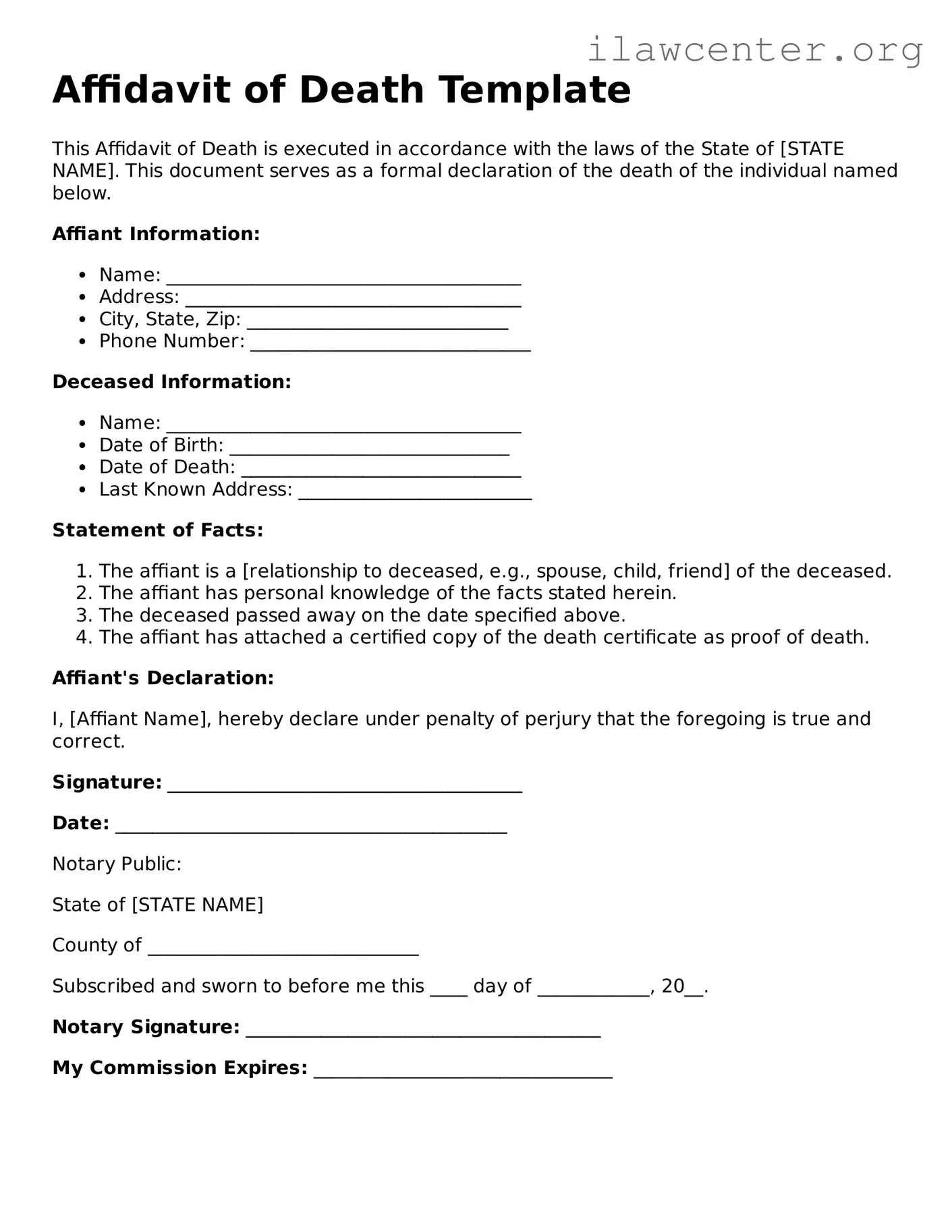
Affidavit of Death Template

This Affidavit of Death is executed in accordance with the laws of the State of [STATE NAME]. This document serves as a formal declaration of the death of the individual named below.

Affiant Information:

  • Name: ______________________________________
  • Address: ____________________________________
  • City, State, Zip: ____________________________
  • Phone Number: ______________________________

Deceased Information:

  • Name: ______________________________________
  • Date of Birth: ______________________________
  • Date of Death: ______________________________
  • Last Known Address: _________________________

Statement of Facts:

  1. The affiant is a [relationship to deceased, e.g., spouse, child, friend] of the deceased.
  2. The affiant has personal knowledge of the facts stated herein.
  3. The deceased passed away on the date specified above.
  4. The affiant has attached a certified copy of the death certificate as proof of death.

Affiant's Declaration:

I, [Affiant Name], hereby declare under penalty of perjury that the foregoing is true and correct.

Signature: ______________________________________

Date: __________________________________________

Notary Public:

State of [STATE NAME]

County of _____________________________

Subscribed and sworn to before me this ____ day of ____________, 20__.

Notary Signature: ______________________________________

My Commission Expires: ________________________________

PDF Form Characteristics

Fact Name Description
Purpose The Affidavit of Death form serves to legally declare the death of an individual, often used to settle estates or transfer property titles.
State-Specific Forms Each state may have its own version of the Affidavit of Death form, which must comply with local laws governing probate and estate matters.
Governing Law In California, for example, the form is governed by the California Probate Code, specifically sections related to the administration of estates.
Notarization Most states require the Affidavit of Death to be notarized to ensure the authenticity of the signature and the validity of the document.

Instructions on Utilizing Affidavit of Death

Once you have the Affidavit of Death form in hand, it's important to complete it accurately. This document will need to be submitted to the appropriate authorities. Follow the steps below to ensure that the form is filled out correctly.

  1. Begin by entering the full name of the deceased in the designated section.
  2. Provide the date of death. Ensure this is the official date as recorded on the death certificate.
  3. Include the place of death, specifying the city and state.
  4. Fill in your full name as the affiant, along with your address and contact information.
  5. Indicate your relationship to the deceased. This could be a spouse, child, sibling, etc.
  6. Sign the form in the presence of a notary public. This step is crucial for the affidavit to be valid.
  7. Have the notary public complete their section, which usually includes their signature and seal.

After completing the form, make copies for your records. Then, submit the original to the required agency or court as directed.

Important Facts about Affidavit of Death

What is an Affidavit of Death?

An Affidavit of Death is a legal document that provides proof of an individual's death. It is often used to settle estates, transfer property, or access bank accounts of the deceased. This document typically includes details such as the deceased's full name, date of death, and sometimes the place of death. It serves as an official statement that can help facilitate various legal processes following a death.

Who can complete an Affidavit of Death?

How do I obtain an Affidavit of Death form?

What information is required on the Affidavit of Death?

Is the Affidavit of Death legally binding?

Common mistakes

Completing the Affidavit of Death form can be a sensitive and challenging task, especially during a time of loss. Many individuals make common mistakes that can lead to delays or complications in the legal process. Awareness of these pitfalls can help ensure that the form is filled out correctly and efficiently.

One frequent error is failing to provide accurate personal information about the deceased. This includes not only their full name but also their date of birth and date of death. Omitting or misrepresenting these details can lead to confusion and may even invalidate the affidavit.

Another common mistake is neglecting to sign the affidavit in the appropriate section. The form often requires signatures from multiple parties, including witnesses or notaries. Missing a signature can render the document incomplete, causing unnecessary delays in the processing of the estate.

Some individuals overlook the requirement for a notary public. Many states mandate that the affidavit be notarized to be considered legally binding. Failing to have the document notarized can lead to complications in validating the affidavit.

Inaccurate descriptions of the relationship to the deceased can also pose issues. It is essential to clearly state your relationship, whether you are a spouse, child, sibling, or other family member. Misrepresentation can lead to questions about your authority to file the affidavit.

Additionally, individuals may forget to include necessary supporting documents. Often, the affidavit must be accompanied by a death certificate or other legal documents. Without these, the affidavit may not be accepted, resulting in further delays.

Rushing through the form is another mistake that can have serious consequences. Taking the time to read the instructions carefully and double-checking all entries can prevent errors that might otherwise complicate the process.

Finally, some people fail to keep copies of the completed affidavit. Retaining a copy is crucial for personal records and may be necessary for future legal proceedings. Without a copy, individuals may find themselves in a difficult position if questions arise later.

By being mindful of these common mistakes, individuals can navigate the process of completing the Affidavit of Death with greater ease and confidence. Attention to detail and careful preparation can help ensure that the form serves its intended purpose effectively.
Documents used along the form

When dealing with the Affidavit of Death form, there are several other documents that may be necessary to complete the process. These forms help clarify the situation and ensure that all legal requirements are met. Here are four common documents often used alongside the Affidavit of Death:

  • Death Certificate: This official document confirms the individual’s passing. It is typically issued by the state or local government and is essential for legal and administrative purposes.
  • Will: If the deceased left a will, this document outlines their wishes regarding the distribution of their assets. It is crucial for settling the estate and determining how the deceased wanted their belongings handled.
  • Letters Testamentary: This document is issued by a probate court. It gives the executor the authority to manage the deceased’s estate according to the will. It is important for the executor to have this document to act on behalf of the estate.
  • Trust Documents: If the deceased had a trust, these documents detail the terms of the trust and how assets should be managed or distributed. They are vital for ensuring that the trust is administered correctly.

These documents work together to provide a clear picture of the deceased's wishes and help facilitate the legal processes that follow a death. Having them ready can make the transition smoother for everyone involved.

Similar forms

The Affidavit of Death form serves a specific purpose in legal proceedings, primarily to declare the death of an individual. Several other documents share similarities with this form in terms of their function and usage. Below is a list of nine such documents:

  • Death Certificate: This official document is issued by a government authority and provides proof of an individual's death, including details such as the date, location, and cause of death.
  • Will: A legal document that outlines how a person's assets should be distributed upon their death. It often includes a declaration of the individual's death, similar to an affidavit.
  • Trust Document: This establishes a trust, which can include provisions for the management of assets after a person's death, thereby requiring confirmation of that death.
  • Letters Testamentary: Issued by a probate court, this document grants authority to an executor to manage the deceased’s estate, confirming the individual’s death as part of the process.
  • Small Estate Affidavit: Used in some states, this document allows heirs to claim a deceased person's assets without going through formal probate, relying on the declaration of death.
  • Affidavit of Heirship: This document identifies heirs of a deceased person and may require an affidavit to confirm the death and the relationship of the heirs to the deceased.
  • Claim for Death Benefits: Often used to claim insurance or pension benefits, this form requires proof of death, similar to the Affidavit of Death.
  • Survivorship Agreement: This document outlines how assets will be transferred upon the death of one party, necessitating proof of death to enact the agreement.
  • Change of Beneficiary Form: This form allows for the designation of new beneficiaries upon the death of the original beneficiary, often requiring documentation of that death.

Each of these documents plays a crucial role in managing the affairs of the deceased and ensuring that their wishes are honored. Understanding their similarities can help navigate the legal landscape during a difficult time.

Dos and Don'ts

When filling out the Affidavit of Death form, it’s essential to approach the process carefully. Here are some important dos and don’ts to keep in mind:

  • Do read the instructions thoroughly before starting.
  • Do provide accurate information about the deceased.
  • Do sign the affidavit in the presence of a notary public.
  • Do include the date of death and any relevant details.
  • Do keep a copy of the completed affidavit for your records.
  • Don't leave any sections blank; fill in all required fields.
  • Don't use vague language; be clear and specific.
  • Don't rush through the form; take your time to ensure accuracy.
  • Don't forget to check for any local requirements or variations.

Misconceptions

The Affidavit of Death form is a legal document that serves to establish the fact of a person's death. However, several misconceptions about this form can lead to confusion. Below is a list of common misunderstandings:

  • It is only necessary for probate proceedings. Many believe that the Affidavit of Death is only required in probate cases. In reality, it can be used in various contexts, such as transferring assets or settling accounts.
  • Anyone can fill out the form. While it may seem straightforward, the Affidavit of Death should be completed by someone with knowledge of the deceased's death, often a family member or legal representative.
  • The form must be notarized. Some people think notarization is mandatory for the Affidavit of Death. While notarization can lend credibility, it is not a legal requirement in all jurisdictions.
  • It can be used without a death certificate. A common misconception is that the Affidavit of Death can stand alone. Typically, a death certificate is required to substantiate the claims made in the affidavit.
  • Filing the affidavit is the same as filing a will. The Affidavit of Death is not a substitute for a will. It serves a different purpose and does not dictate how the deceased's estate will be distributed.
  • It is only relevant for immediate family members. This form can be relevant for various parties, including business partners, creditors, and other stakeholders who may need proof of death.
  • Once filed, it cannot be changed. Some believe that the Affidavit of Death is final and unchangeable. However, if errors are discovered, it may be possible to amend the document in accordance with state laws.
  • It is a public document. While some may think the Affidavit of Death is public, its accessibility can vary. In many cases, it is only accessible to those with a legitimate interest.

Understanding these misconceptions can help individuals navigate the complexities of legal processes related to death and estate management more effectively.

Key takeaways

Filling out and using the Affidavit of Death form can seem daunting, but understanding its key aspects can simplify the process significantly. Here are some important takeaways to keep in mind:

  • Purpose: The Affidavit of Death serves as a legal document to officially declare the passing of an individual.
  • Who Can File: Generally, a close family member or an executor of the estate is responsible for completing this form.
  • Information Required: You will need to provide details such as the deceased's full name, date of death, and place of death.
  • Witness Requirement: The affidavit often needs to be signed in the presence of a notary public to validate the information.
  • Supporting Documents: You may need to attach a certified copy of the death certificate to the affidavit.
  • Filing Locations: Depending on the jurisdiction, you may need to file the affidavit with a court or other government agency.
  • Legal Implications: This document can be crucial for settling the deceased’s estate, accessing bank accounts, or transferring property.
  • Accuracy Matters: Ensure all information is correct to avoid delays or complications in the legal process.
  • Consultation Recommended: If unsure about any part of the process, seeking legal advice can be beneficial.
  • Keep Copies: Always retain copies of the completed affidavit and any attached documents for your records.

By keeping these key points in mind, you can navigate the process of completing and using the Affidavit of Death more confidently.