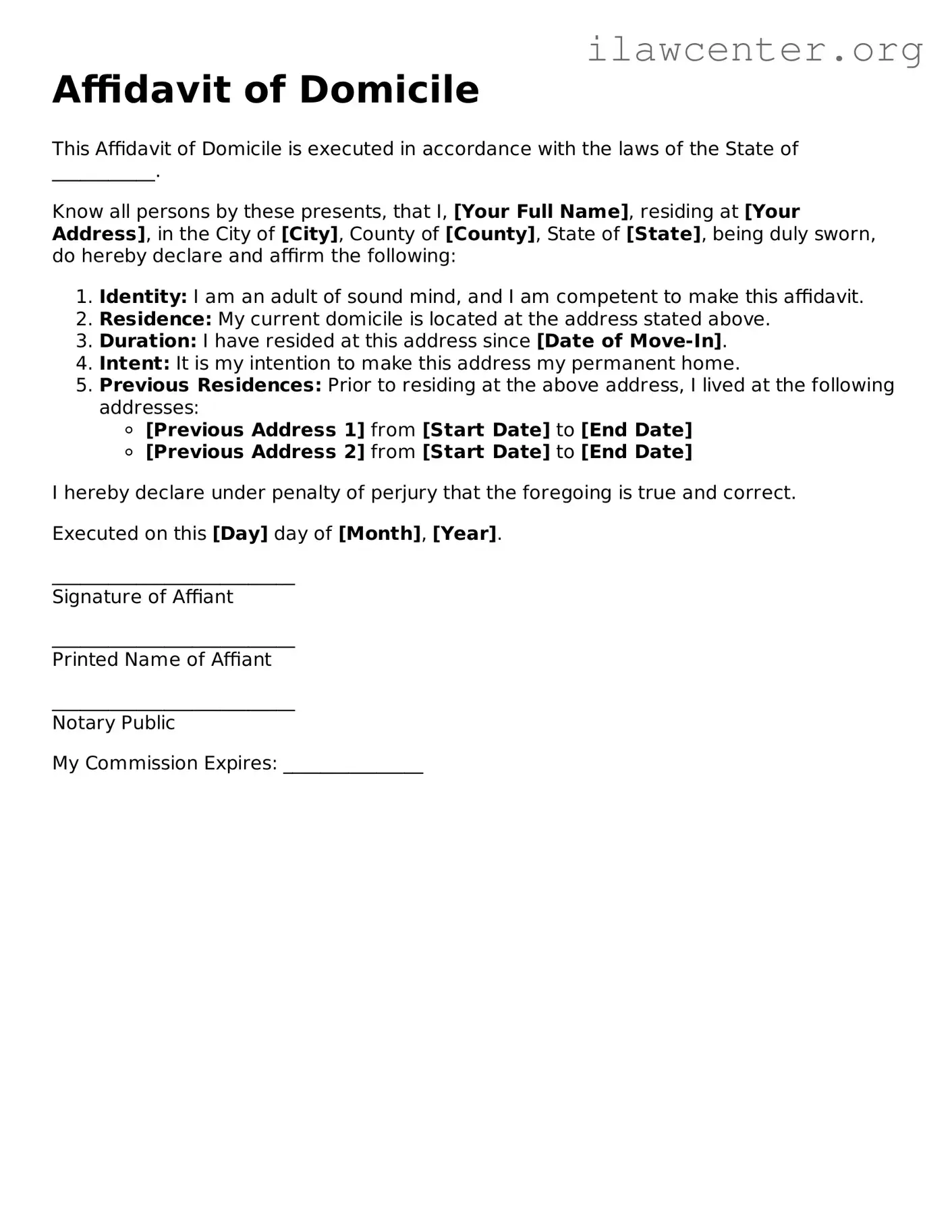
What is an Affidavit of Domicile?
An Affidavit of Domicile is a legal document that declares an individual's permanent residence. It is often used to establish the legal residence of a deceased person for estate purposes, particularly when transferring assets or settling an estate. This document can help clarify where a person lived at the time of their death, which can affect the distribution of their assets.
Why is an Affidavit of Domicile necessary?
This affidavit is necessary to provide proof of a person's residency for various legal and financial matters. For example, when a person passes away, their assets may need to be transferred to heirs or beneficiaries. The affidavit helps ensure that these assets are handled according to the laws of the state where the deceased resided, which can impact tax obligations and the probate process.
Who can file an Affidavit of Domicile?
Typically, the executor of an estate, a family member, or a legal representative can file the Affidavit of Domicile. The person filing the affidavit should have knowledge of the deceased's residency and be able to provide accurate information about their living situation at the time of death.
What information is included in an Affidavit of Domicile?
An Affidavit of Domicile usually includes the deceased person's name, date of birth, date of death, and the address of their permanent residence. It may also contain statements affirming the individual's residency status and any relevant details about their living situation, such as whether they owned property or had significant ties to the community.
Is the Affidavit of Domicile a public document?
Yes, the Affidavit of Domicile is generally considered a public document once it is filed with the appropriate court or government office. This means that it can be accessed by anyone who wishes to view it, which can help ensure transparency in the estate settlement process.
How is an Affidavit of Domicile executed?
The affidavit must be signed by the person filing it, and it often needs to be notarized to verify the identity of the signer and the authenticity of the document. Notarization adds a layer of credibility and helps prevent fraud. After execution, the affidavit is typically filed with the probate court or the relevant financial institution.
Can an Affidavit of Domicile be challenged?
Yes, an Affidavit of Domicile can be challenged if there is evidence suggesting that the information provided is inaccurate or misleading. Interested parties, such as heirs or creditors, may contest the affidavit in court, especially if they believe it affects their rights or interests in the estate.
What happens if an Affidavit of Domicile is not filed?
If an Affidavit of Domicile is not filed, it may complicate the probate process. Without this document, there could be disputes regarding the deceased's residency, which can delay asset distribution and create legal challenges. Additionally, the estate may face tax implications based on the state of residency, which could be avoided with proper documentation.
Where can I obtain an Affidavit of Domicile form?
Affidavit of Domicile forms can often be obtained from local probate courts, legal stationery stores, or online legal resources. It is important to ensure that the form complies with the specific requirements of the state where it will be filed, as these requirements can vary.