What is the AHA EM 385 form and why is it important?
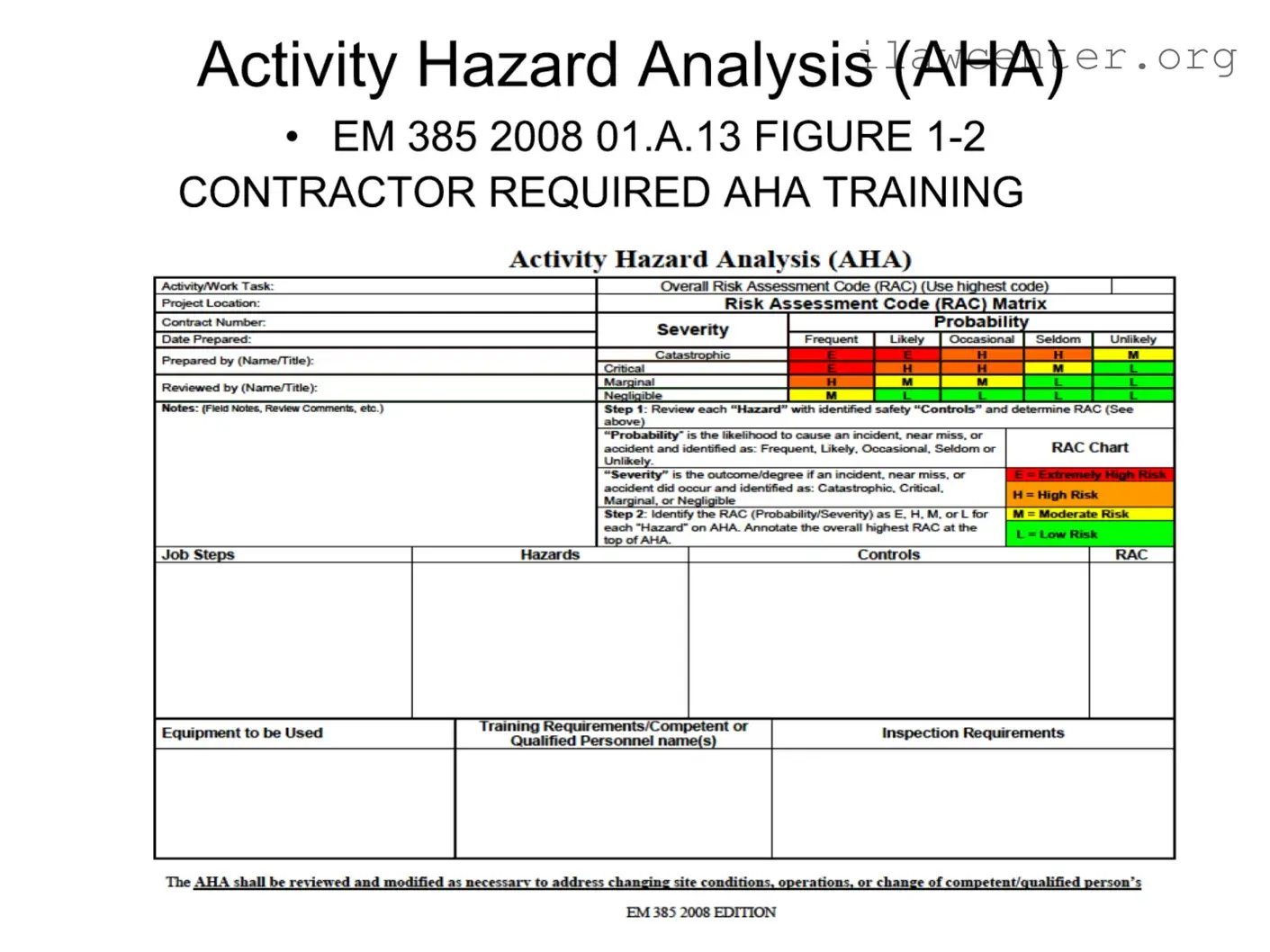
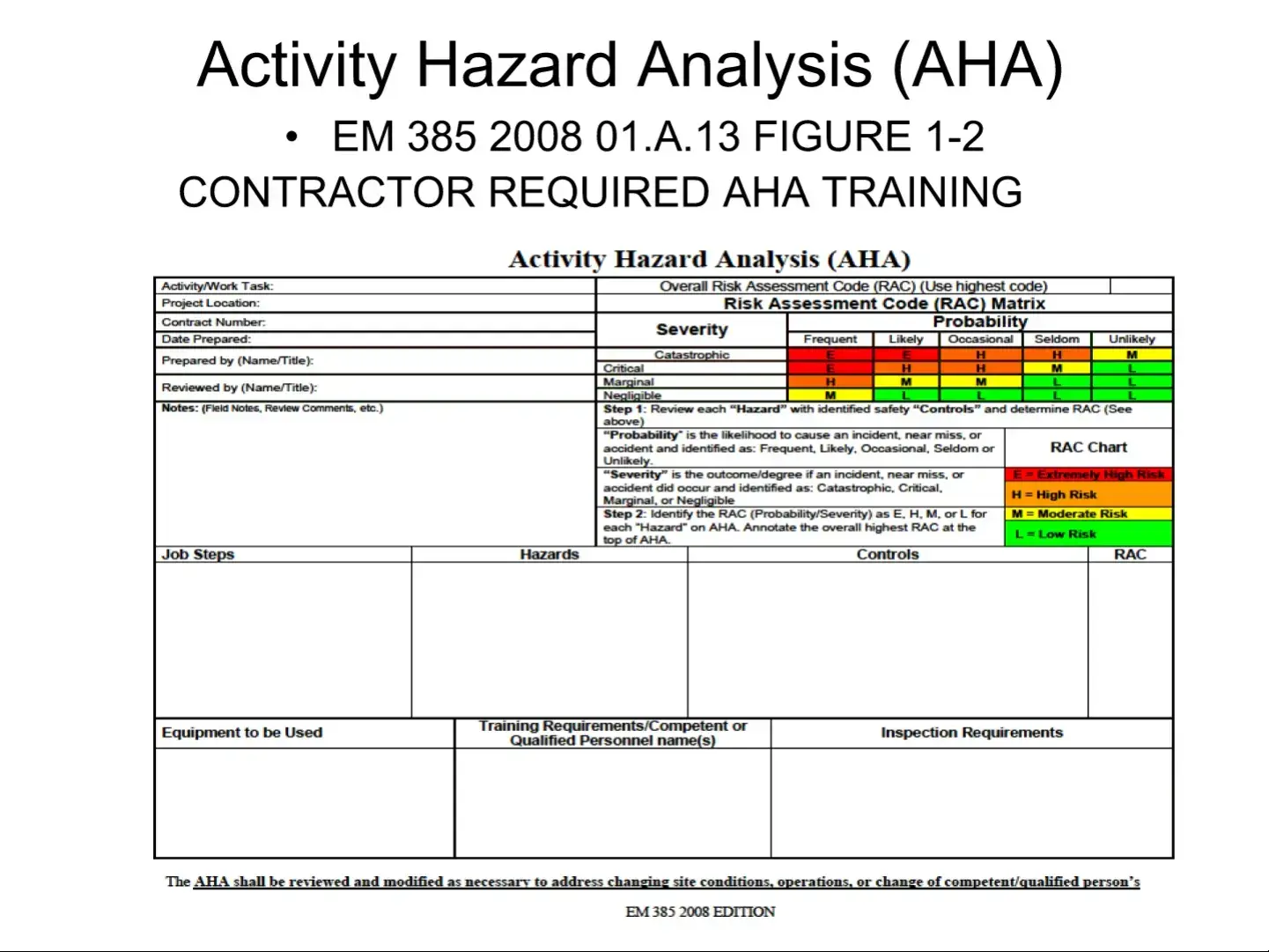
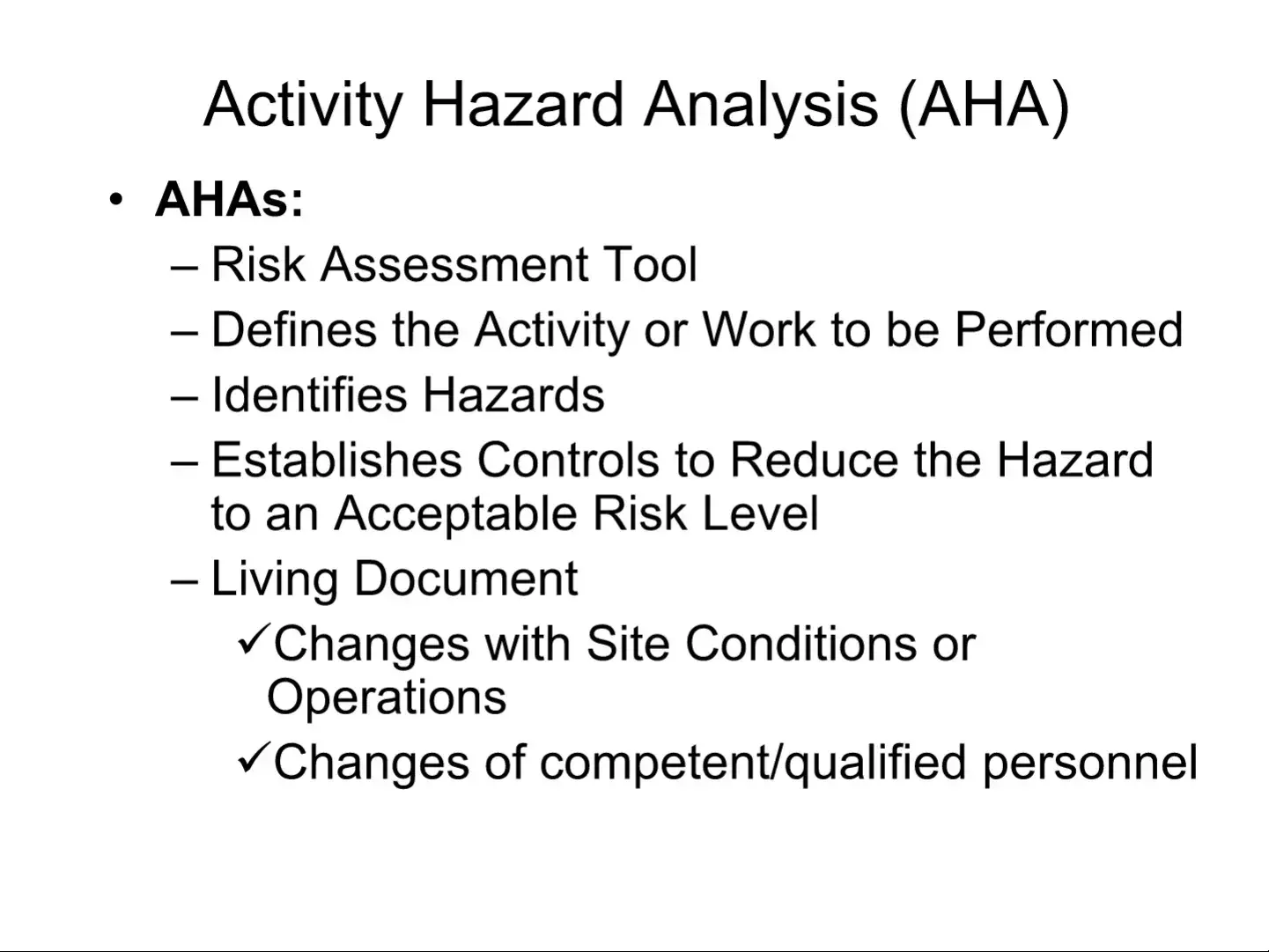
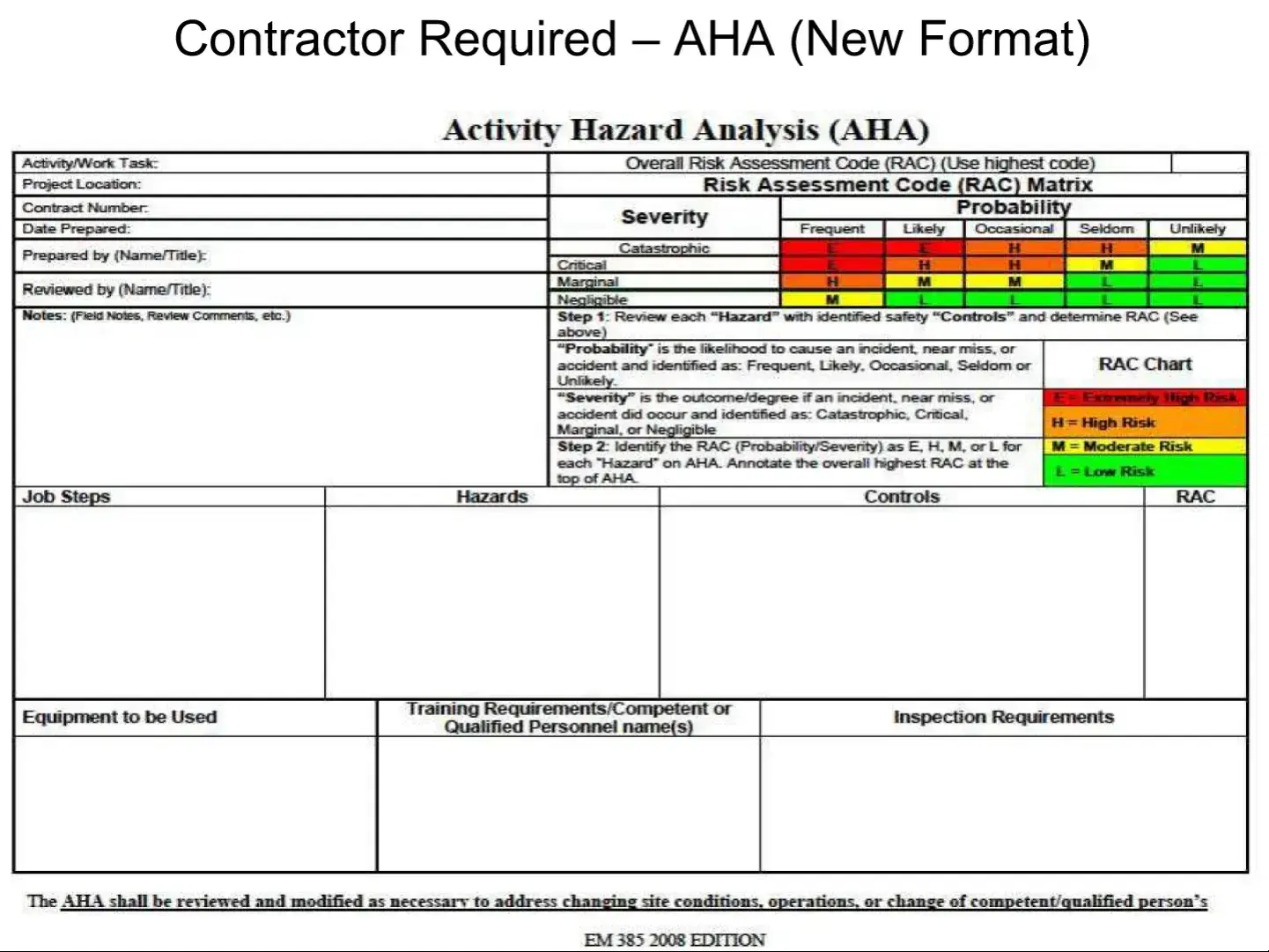
The AHA EM 385 form, or Activity Hazard Analysis, is a critical tool used in construction and other industries to identify potential hazards associated with specific work tasks. This form helps in assessing risks and implementing safety controls to minimize accidents. By clearly defining activities, hazards, and control measures, the AHA EM 385 form ensures that everyone involved understands the risks and how to mitigate them. It serves as a living document that must be updated as site conditions or personnel change, promoting ongoing safety awareness.
How do you complete the AHA EM 385 form?
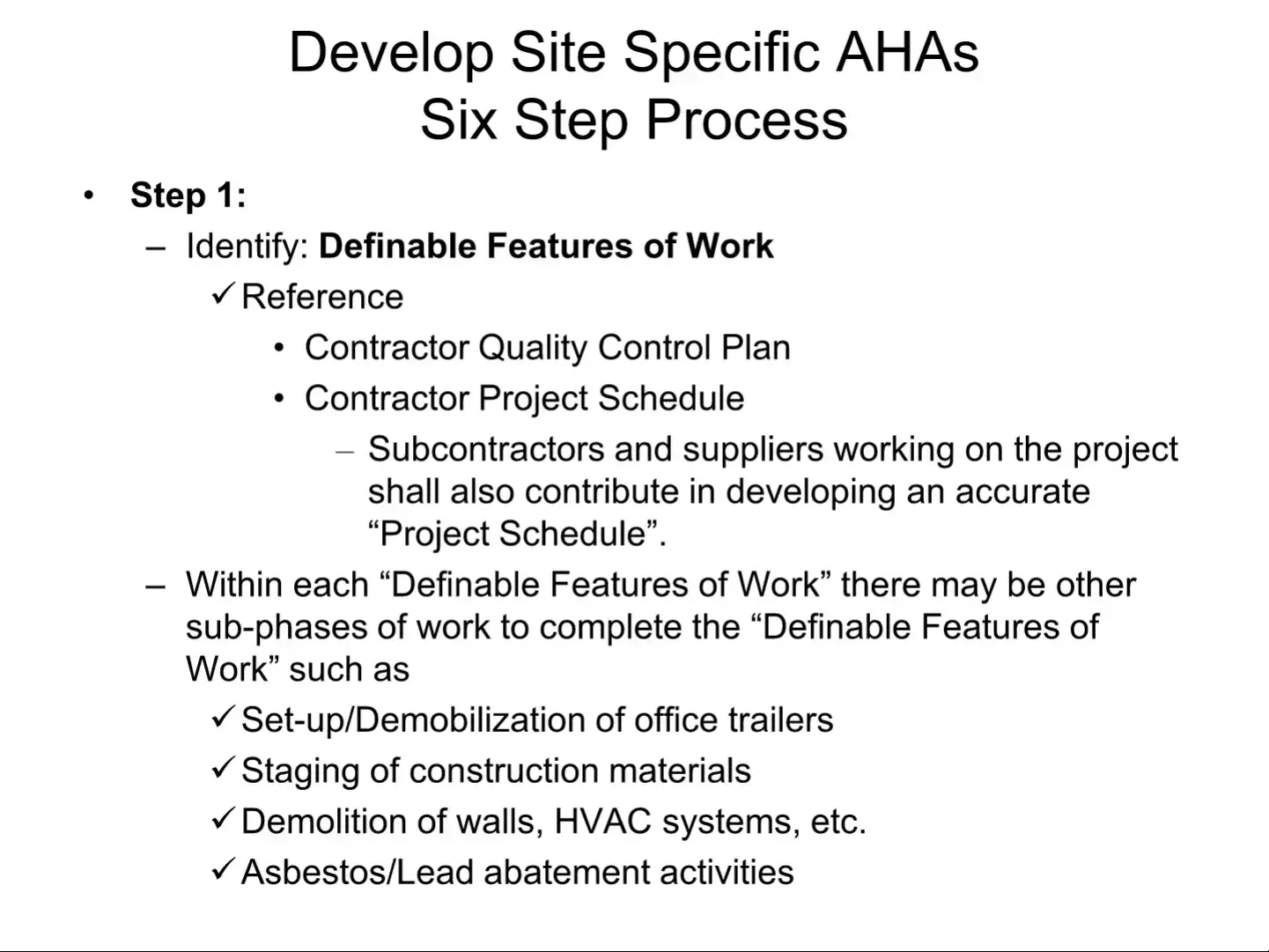
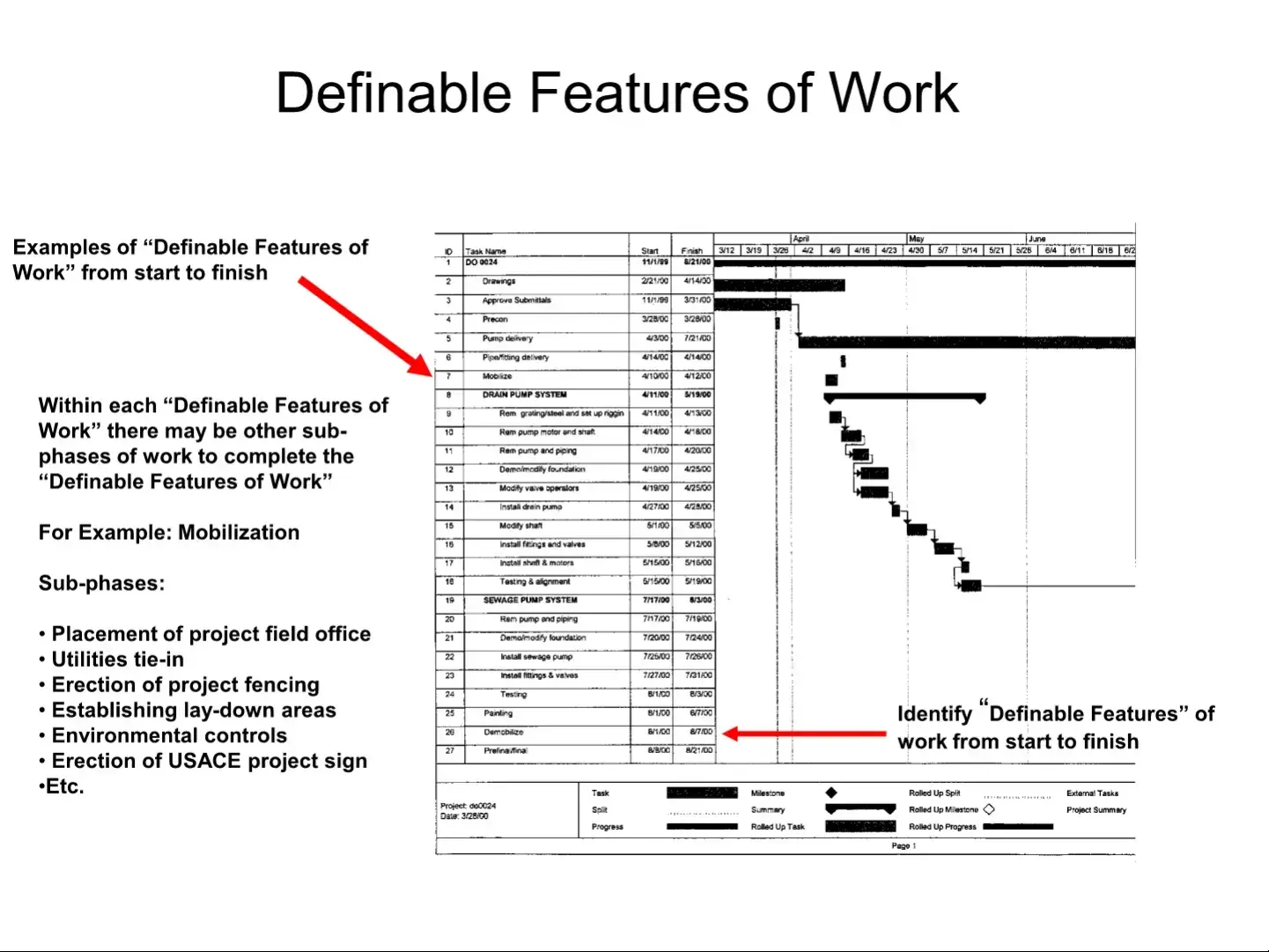
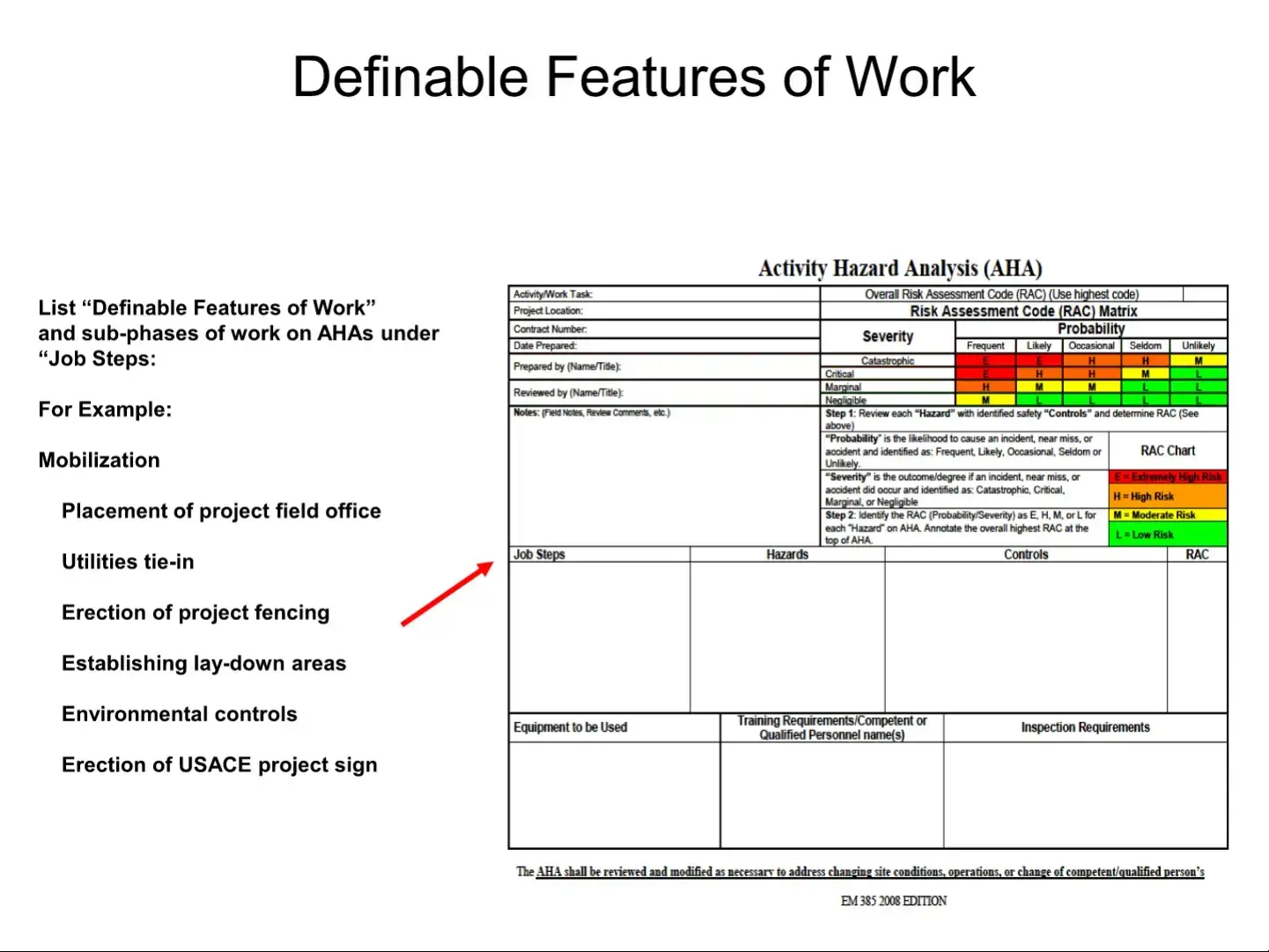
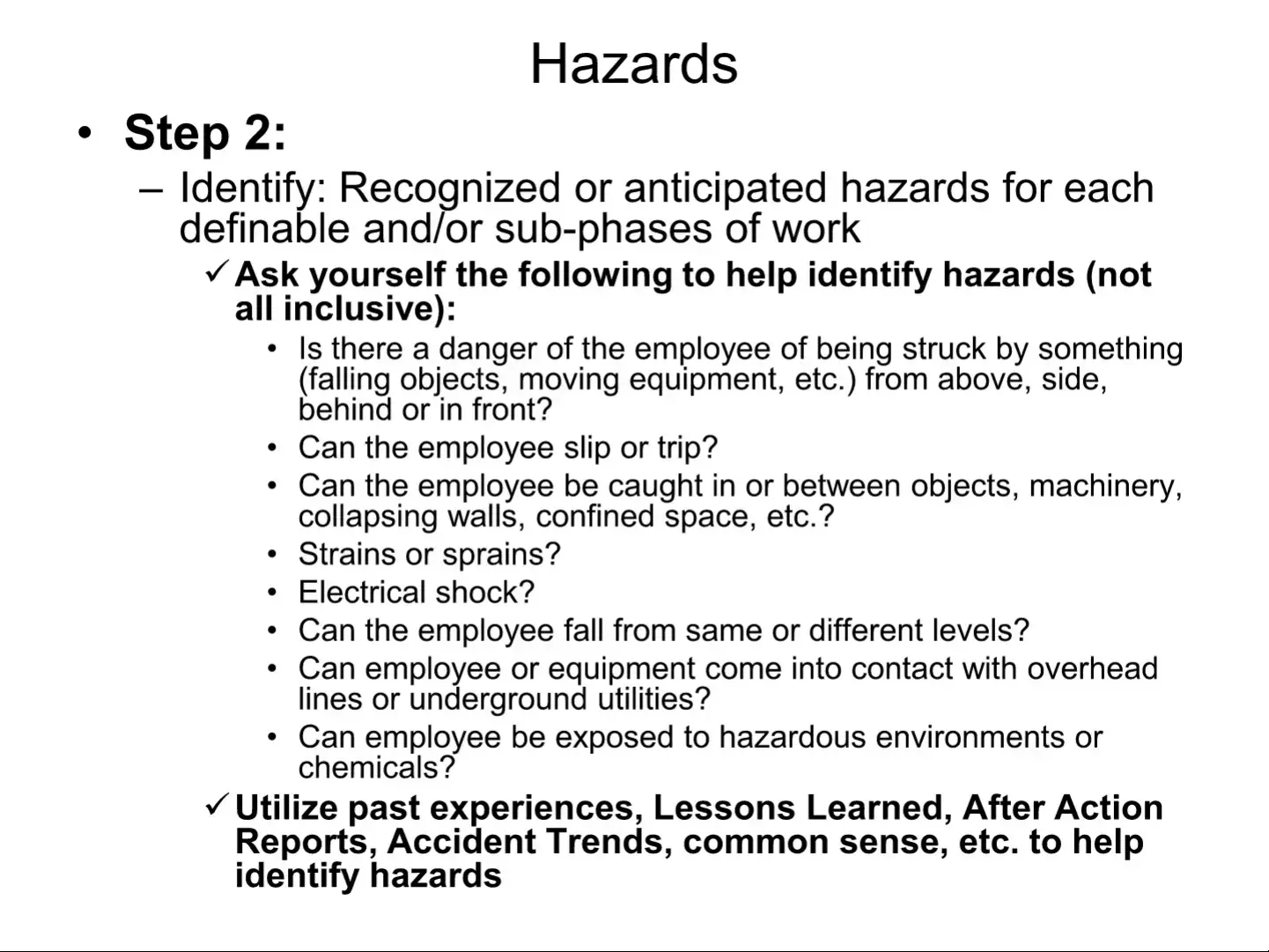
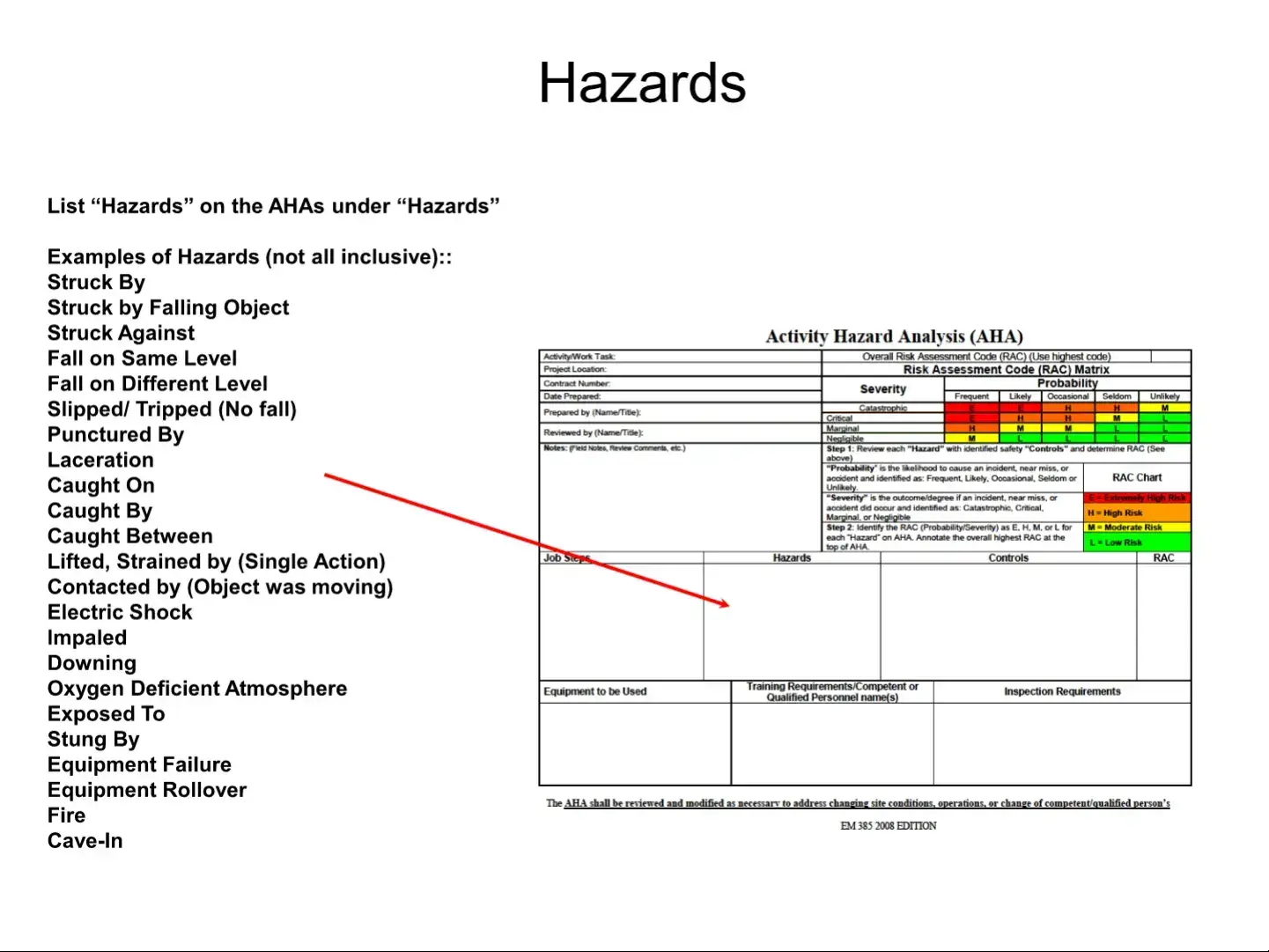
To complete the AHA EM 385 form, start by identifying the specific work tasks involved in your project. Next, review each potential hazard associated with those tasks and determine the appropriate safety controls. Use the Risk Assessment Code (RAC) matrix to evaluate both the probability of an incident occurring and the severity of its consequences. This will help you assign a RAC to each hazard. Finally, ensure that the AHA is reviewed by a qualified person and discussed with all team members before work begins. Remember, this form is dynamic and should be updated as conditions change.
Who is responsible for reviewing and approving the AHA EM 385 form?
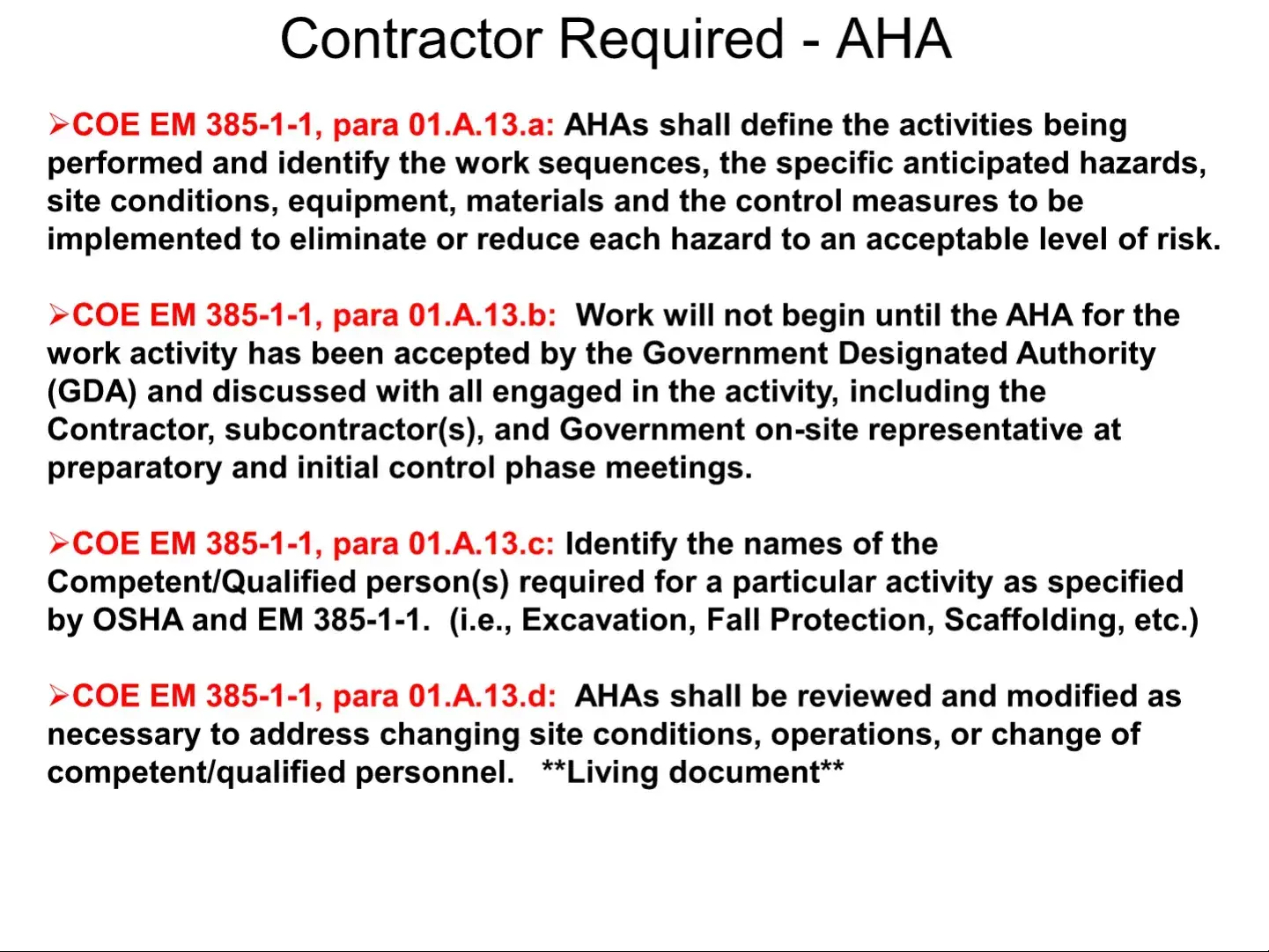
The responsibility for reviewing and approving the AHA EM 385 form typically lies with the Government Designated Authority (GDA). Before any work commences, the AHA must be accepted by the GDA. This approval process includes discussions with all parties involved, such as contractors, subcontractors, and any government representatives present on-site. Engaging everyone in this process fosters a culture of safety and ensures that all team members are aware of the hazards and controls in place.
What happens if conditions change after the AHA EM 385 form is approved?
If conditions change after the AHA EM 385 form has been approved, it is crucial to revisit and modify the document. Changes in site conditions, work operations, or personnel can introduce new hazards or alter existing ones. The AHA should be treated as a living document, meaning it should be continually updated to reflect current circumstances. This proactive approach helps maintain a safe working environment and ensures compliance with safety regulations.
What are the consequences of not having an AHA EM 385 form in place?
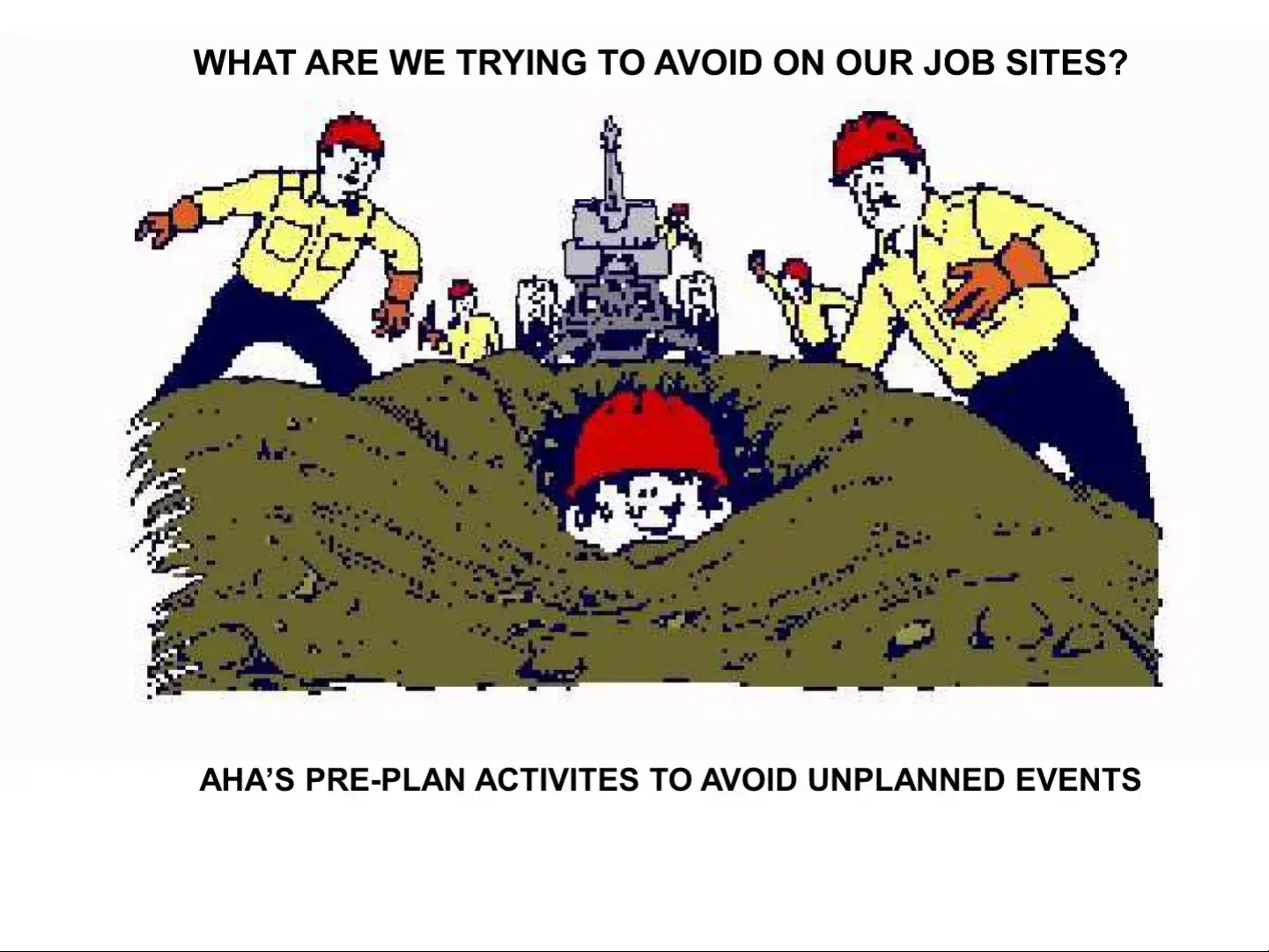
Not having an AHA EM 385 form in place can lead to significant safety risks, including increased likelihood of accidents and injuries on the job site. Without a thorough analysis of hazards and established safety controls, workers may be unaware of potential dangers, which can result in costly incidents. Additionally, failing to comply with safety regulations can lead to legal repercussions, fines, and damage to a company's reputation. Prioritizing the AHA EM 385 form is essential for protecting both workers and the organization.