Fillable Appraisal Contingency Addendum Document

Fillable Appraisal Contingency Addendum Document

The Appraisal Contingency Addendum is a legal document used in real estate transactions to protect buyers by ensuring that the property is appraised at a certain value. This addendum allows buyers to negotiate or withdraw their offer if the property does not meet the appraised value. To get started on your own Appraisal Contingency Addendum, click the button below.

Article Guide

When buying a home, ensuring that you make a sound financial investment is crucial. One of the tools that can help protect your interests is the Appraisal Contingency Addendum form. This important document serves as a safeguard, allowing buyers to negotiate based on the appraised value of the property. If the appraisal comes in lower than the agreed purchase price, this form provides options for the buyer, such as renegotiating the price or even walking away from the deal without penalty. It outlines the responsibilities of both the buyer and seller regarding the appraisal process and establishes timelines for completing the appraisal. Understanding this form is essential for any homebuyer, as it can greatly influence the overall transaction and financial outcome. With the right knowledge, you can navigate the complexities of real estate with confidence and ensure that your investment aligns with your financial goals.

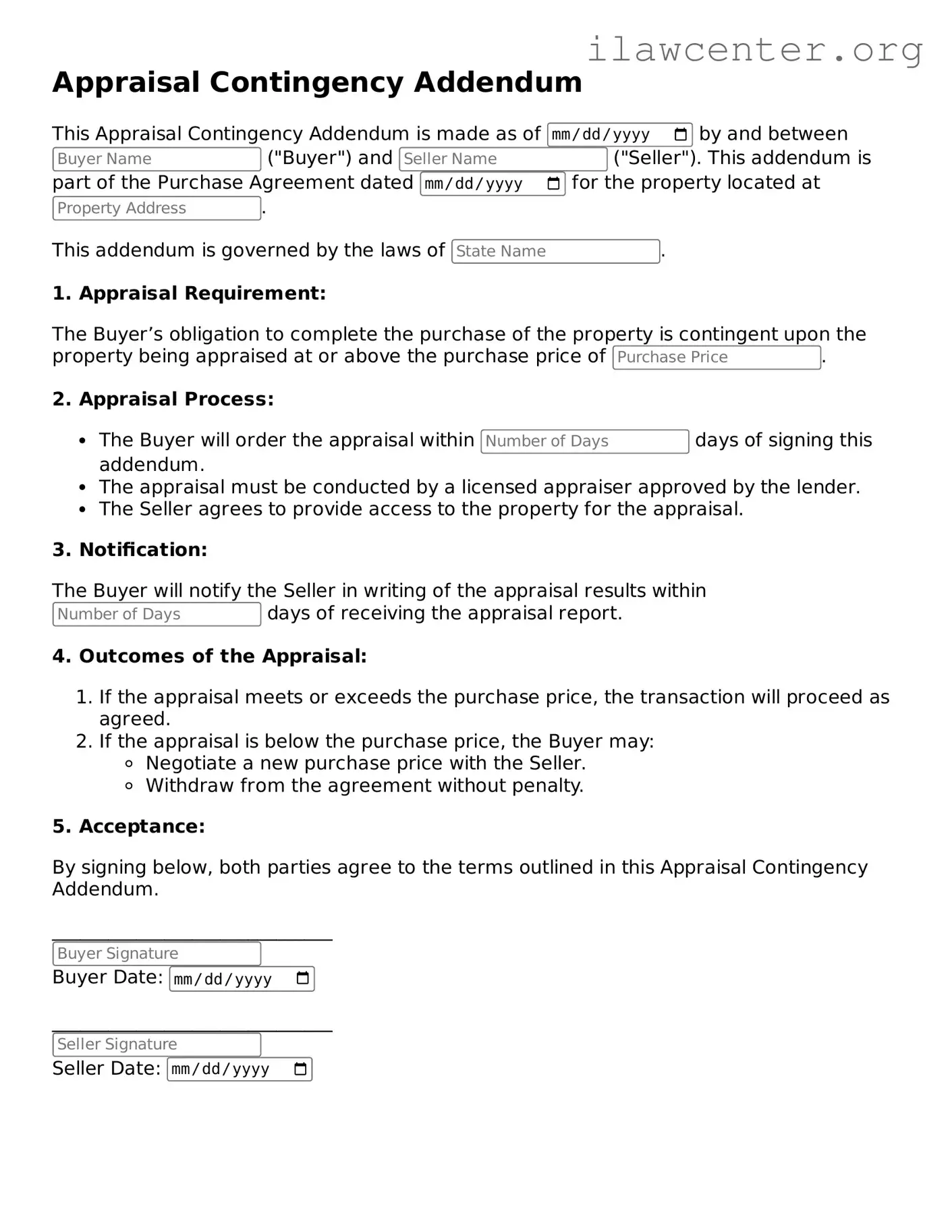
Appraisal Contingency Addendum Preview

Appraisal Contingency Addendum

This Appraisal Contingency Addendum is made as of by and between ("Buyer") and ("Seller"). This addendum is part of the Purchase Agreement dated for the property located at .

This addendum is governed by the laws of .

1. Appraisal Requirement:

The Buyer’s obligation to complete the purchase of the property is contingent upon the property being appraised at or above the purchase price of .

2. Appraisal Process:

  • The Buyer will order the appraisal within days of signing this addendum.
  • The appraisal must be conducted by a licensed appraiser approved by the lender.
  • The Seller agrees to provide access to the property for the appraisal.

3. Notification:

The Buyer will notify the Seller in writing of the appraisal results within days of receiving the appraisal report.

4. Outcomes of the Appraisal:

  1. If the appraisal meets or exceeds the purchase price, the transaction will proceed as agreed.
  2. If the appraisal is below the purchase price, the Buyer may:
    • Negotiate a new purchase price with the Seller.
    • Withdraw from the agreement without penalty.

5. Acceptance:

By signing below, both parties agree to the terms outlined in this Appraisal Contingency Addendum.

______________________________

Buyer Date:

______________________________

Seller Date:

PDF Form Characteristics

Fact Name Description
Purpose The Appraisal Contingency Addendum is used to protect buyers by ensuring that the property appraises for at least the purchase price.
Governing Law In many states, the governing law for real estate transactions, including the use of this addendum, is based on state-specific real estate statutes.
Timeline The addendum typically outlines a specific timeframe within which the appraisal must be completed.
Consequences of Low Appraisal If the appraisal comes in lower than the purchase price, the buyer may have options to negotiate, cover the difference, or withdraw from the contract.
Customizability Buyers and sellers can customize terms within the addendum to suit their specific needs and circumstances.
State Variations Different states may have variations in their appraisal contingency forms, reflecting local real estate practices and laws.

Instructions on Utilizing Appraisal Contingency Addendum

Once you have gathered all necessary information, you can begin filling out the Appraisal Contingency Addendum form. This form is essential for ensuring that both parties are clear about the appraisal conditions tied to a real estate transaction. Follow these steps to complete the form accurately.

  1. Start by entering the date at the top of the form. This is important for establishing the timeline of the agreement.
  2. Provide the names of the buyer and seller. Make sure to spell the names correctly to avoid any confusion later on.
  3. Fill in the property address. This should be the complete address of the property involved in the transaction.
  4. Indicate the agreed-upon purchase price. This is the amount that both parties have settled on for the sale.
  5. Specify the date by which the appraisal must be completed. This ensures that everyone is on the same page regarding timelines.
  6. Include any additional terms or conditions that may apply to the appraisal. This could involve specific requirements that the appraisal must meet.
  7. Finally, ensure that both the buyer and seller sign and date the form. This formalizes the agreement and confirms that both parties are in agreement with the terms outlined.

After completing the form, make copies for all parties involved. This ensures that everyone has a record of the agreement. Keep the original in a safe place for future reference.

Important Facts about Appraisal Contingency Addendum

What is an Appraisal Contingency Addendum?

The Appraisal Contingency Addendum is a document used in real estate transactions. It protects buyers by allowing them to back out of a purchase if the property does not appraise for a certain amount. This means that if the home is valued lower than the agreed purchase price, the buyer has options to renegotiate or withdraw from the deal without penalty.

Why is an Appraisal Contingency important?

This contingency is crucial for buyers because it ensures that they do not pay more for a property than it is worth. If a home appraises for less than the sale price, the buyer can either negotiate with the seller to lower the price or decide not to proceed with the purchase altogether. This helps buyers avoid financial loss and protects their investment.

How does the Appraisal Contingency work?

Once the buyer and seller agree on a price, the buyer typically has a specified period to obtain an appraisal. If the appraisal comes in lower than the purchase price, the buyer can invoke the contingency. They may request that the seller reduce the price or may choose to cancel the contract. It’s important for buyers to understand the timeline and conditions outlined in the addendum.

What happens if the appraisal is lower than the purchase price?

If the appraisal is lower than expected, the buyer can take several actions. They might negotiate a lower sale price with the seller based on the appraisal. Alternatively, the buyer could decide to cover the difference between the appraised value and the sale price out of pocket. If neither option is acceptable, the buyer has the right to terminate the agreement without losing their earnest money deposit.

Can the seller contest the appraisal?

Yes, the seller can contest the appraisal if they believe it is inaccurate. They may provide additional information or comparables to support a higher value. However, the buyer is not obligated to accept the seller's arguments. Ultimately, the appraisal is a professional opinion, and the buyer must decide how to proceed based on its findings.

Is an Appraisal Contingency always included in real estate contracts?

No, an Appraisal Contingency is not automatically included in all real estate contracts. Buyers can choose to include it for added protection, but it is not mandatory. Some buyers may waive this contingency to make their offer more attractive in a competitive market. However, this can expose them to greater financial risk if the property appraises for less than the purchase price.

How can buyers protect themselves when using an Appraisal Contingency?

Buyers can protect themselves by clearly defining the terms of the Appraisal Contingency in the addendum. This includes specifying the timeline for the appraisal and the actions that will be taken if the appraisal is lower than the purchase price. Consulting with a real estate agent or attorney can also provide valuable guidance to ensure that the buyer’s interests are safeguarded throughout the transaction.
Common mistakes

When navigating the real estate landscape, the Appraisal Contingency Addendum form can be a critical component of a property transaction. However, many individuals make mistakes that can lead to complications down the line. Understanding these common pitfalls can help ensure a smoother process.

One frequent error is failing to specify the appraisal amount. Buyers often assume that the agreed purchase price will automatically be the appraisal value. This assumption can lead to misunderstandings. Clearly stating the expected appraisal value protects both parties and sets clear expectations.

Another mistake involves overlooking the timeline for the appraisal. Many individuals do not realize that the timing of the appraisal can impact the entire transaction. If the appraisal is not completed within the specified timeframe, it can lead to delays or even the cancellation of the deal. It’s essential to outline a realistic deadline to avoid potential issues.

Additionally, some buyers neglect to understand the implications of a low appraisal. A low appraisal can result in a buyer needing to renegotiate the purchase price or come up with additional funds. Failing to prepare for this possibility can create financial strain. Buyers should consider discussing potential outcomes with their real estate agent beforehand.

Miscommunication regarding who pays for the appraisal is another common mistake. Often, buyers assume that the seller will cover this cost, but this is not always the case. Clarifying this detail in the addendum helps prevent confusion and ensures that both parties are on the same page.

Lastly, individuals sometimes forget to include a clause for the buyer's right to terminate the agreement if the appraisal comes in low. This clause is crucial for protecting the buyer’s interests. Without it, buyers may find themselves locked into a deal that no longer makes financial sense. Always ensure that such protective measures are included in the form.

Documents used along the form

The Appraisal Contingency Addendum form is a crucial document in real estate transactions, providing buyers with the option to negotiate or withdraw if the property's appraised value falls below the agreed purchase price. Alongside this form, several other documents often come into play to ensure a smooth transaction process. Here are five common forms and documents frequently used with the Appraisal Contingency Addendum:

  • Purchase Agreement: This is the primary contract between the buyer and seller outlining the terms of the sale, including the purchase price, closing date, and any contingencies, such as the appraisal contingency.
  • Disclosure Statements: These documents provide essential information about the property, including its condition and any known issues. Sellers are typically required to disclose material facts that could affect the buyer's decision.
  • Loan Commitment Letter: Issued by the lender, this letter confirms that the buyer has been approved for a mortgage loan, subject to certain conditions. It is crucial for demonstrating the buyer's financial capability to complete the purchase.
  • Inspection Report: This document details the findings from a home inspection, which assesses the property's condition. Buyers often use this report to negotiate repairs or credits with the seller.
  • Title Report: This report outlines the legal status of the property, including ownership and any liens or encumbrances. It is essential for ensuring that the buyer receives clear title to the property at closing.

Understanding these documents is vital for navigating the real estate process effectively. Each plays a significant role in protecting the interests of both buyers and sellers, ensuring that all parties are informed and prepared throughout the transaction.

Similar forms

  • Inspection Contingency Addendum: Similar to the Appraisal Contingency Addendum, this document allows buyers to negotiate repairs or credits based on the results of a home inspection. Both protect the buyer’s interests during the purchase process.
  • Financing Contingency Addendum: This document ensures that the buyer can secure financing for the purchase. Like the appraisal addendum, it provides a way for buyers to exit the contract if financing falls through.
  • Title Contingency Addendum: This addendum addresses potential issues with the property's title. It shares the same purpose of protecting the buyer by allowing them to back out if there are significant title problems.
  • Home Sale Contingency Addendum: This document allows a buyer to make their purchase contingent upon the sale of their current home. It functions similarly by providing a safety net in case the buyer's financial situation changes.
  • Leaseback Agreement: This agreement allows the seller to remain in the home after closing for a specified time. It parallels the appraisal addendum in that both can affect the timing and terms of the sale.
  • Repair Addendum: This document outlines specific repairs the seller agrees to make before closing. Like the appraisal addendum, it serves to protect the buyer's investment in the property.
  • Due Diligence Addendum: This form allows buyers a set period to investigate the property. It shares the same goal of ensuring the buyer is fully informed before finalizing the purchase.
  • Environmental Contingency Addendum: This document addresses potential environmental issues with the property. It serves a similar function to the appraisal addendum by allowing buyers to withdraw if significant concerns arise.
  • HOA Contingency Addendum: This addendum gives buyers the right to review homeowners association documents. It protects the buyer by ensuring they understand any restrictions or fees associated with the property.
  • Closing Date Contingency Addendum: This document allows buyers to set specific conditions regarding the closing date. Like the appraisal addendum, it can impact the overall transaction timeline.

Dos and Don'ts

When filling out the Appraisal Contingency Addendum form, it’s important to be careful and precise. Here are five things to keep in mind:

  • Do read the entire form carefully before filling it out.
  • Do provide accurate information about the property.
  • Do check for any deadlines related to the appraisal.
  • Don't leave any sections blank unless instructed to do so.
  • Don't rush through the process; mistakes can lead to delays.

Taking these steps can help ensure that your form is completed correctly and efficiently. Pay attention to details, and don’t hesitate to ask for help if needed.

Misconceptions

The Appraisal Contingency Addendum is an important document in real estate transactions, yet many misunderstand its purpose and implications. Here are six common misconceptions about this form:

  • It guarantees a specific appraisal value. Many people believe that the appraisal contingency will ensure that the property appraises at a certain value. In reality, the appraisal is an independent assessment conducted by a licensed appraiser, and the outcome can vary based on several factors.
  • It only protects buyers. While buyers often use the appraisal contingency to safeguard their investment, sellers can also benefit. If the appraisal comes in lower than the agreed purchase price, sellers may need to reconsider their pricing strategy or negotiate with the buyer.
  • It is the same as a home inspection. The appraisal contingency is not a substitute for a home inspection. An appraisal assesses the property's value, while a home inspection evaluates its condition. Both are crucial but serve different purposes in the buying process.
  • It can be waived without consequences. Some buyers think they can simply waive the appraisal contingency without any repercussions. However, doing so may expose them to financial risk if the property appraises for less than the purchase price, potentially leading to a larger down payment or additional negotiations.
  • Appraisals are always accurate. While appraisers are trained professionals, their assessments can be subjective. Factors such as market conditions, comparable sales, and the appraiser's expertise can influence the appraisal value, leading to discrepancies.
  • Once the appraisal is complete, the deal is finalized. A completed appraisal does not automatically seal the deal. If the appraisal value is lower than expected, it can trigger further negotiations or even lead to the buyer backing out of the transaction if the appraisal contingency is not met.

Understanding these misconceptions can help buyers and sellers navigate the complexities of real estate transactions more effectively. Clear communication and informed decision-making are key to a successful experience.

Key takeaways

When dealing with the Appraisal Contingency Addendum form, it is important to understand its purpose and implications. Here are ten key takeaways to consider:

  1. Purpose of the Addendum: The Appraisal Contingency Addendum protects buyers by ensuring that the property appraises at or above the agreed purchase price.
  2. Timing is Crucial: Buyers must submit the addendum within the specified time frame outlined in the purchase agreement.
  3. Clear Communication: It is essential to communicate with all parties involved, including real estate agents and lenders, to ensure everyone understands the appraisal process.
  4. Understanding Appraisals: Familiarize yourself with how appraisals are conducted and what factors appraisers consider when determining property value.
  5. Negotiation Potential: If the appraisal comes in lower than the purchase price, buyers can negotiate with sellers to lower the price or seek other remedies.
  6. Documentation: Keep thorough records of all communications and documents related to the appraisal for future reference.
  7. Contingency Removal: Buyers should be aware of how to formally remove the appraisal contingency once satisfied with the appraisal outcome.
  8. Impact on Financing: Lenders may require an appraisal as part of the mortgage approval process, making the addendum particularly important for financing.
  9. Local Market Conditions: Understanding local market trends can help buyers set realistic expectations about appraised values.
  10. Consult Professionals: Engaging a real estate attorney or a knowledgeable agent can provide valuable guidance throughout the appraisal process.