Attorney-Verified  Employee Handbook Document for Arizona

Attorney-Verified Employee Handbook Document for Arizona

The Arizona Employee Handbook form is a crucial document that outlines the policies, procedures, and expectations within a workplace. This form serves as a guide for both employers and employees, ensuring clarity and consistency in the work environment. To get started on creating your handbook, fill out the form by clicking the button below.

Article Guide

Creating a comprehensive employee handbook is essential for any business operating in Arizona. This document serves as a critical tool for outlining workplace policies, expectations, and the rights of employees. An Arizona Employee Handbook typically includes key sections such as company culture, code of conduct, anti-discrimination policies, and procedures for reporting grievances. Additionally, it addresses important topics like employee benefits, leave policies, and workplace safety guidelines. By clearly communicating these elements, the handbook not only helps in fostering a positive work environment but also ensures compliance with state and federal laws. Employers and employees alike benefit from having a well-structured handbook, as it provides clarity and serves as a reference point for both parties in the employment relationship.

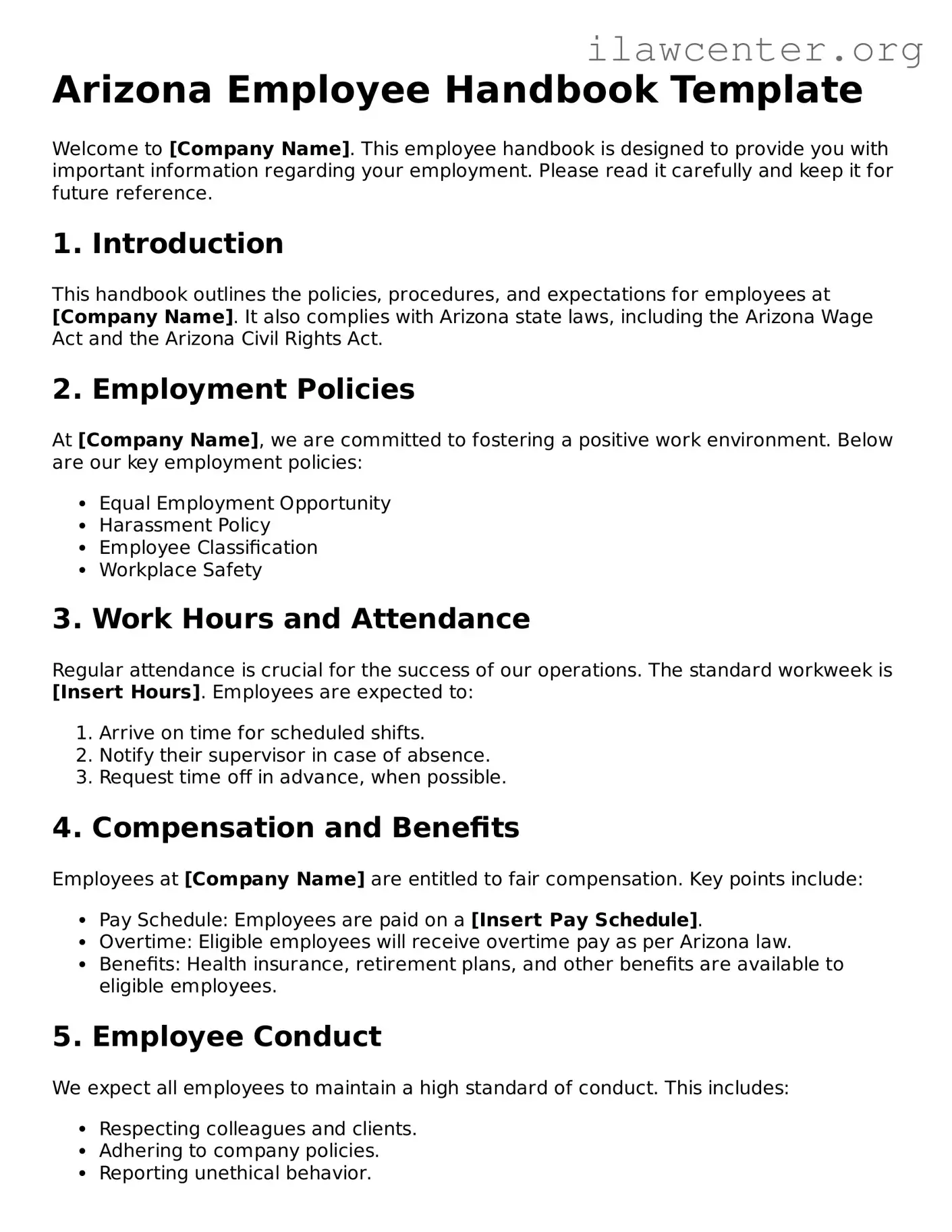
Arizona Employee Handbook Preview

Arizona Employee Handbook Template

Welcome to [Company Name]. This employee handbook is designed to provide you with important information regarding your employment. Please read it carefully and keep it for future reference.

1. Introduction

This handbook outlines the policies, procedures, and expectations for employees at [Company Name]. It also complies with Arizona state laws, including the Arizona Wage Act and the Arizona Civil Rights Act.

2. Employment Policies

At [Company Name], we are committed to fostering a positive work environment. Below are our key employment policies:

  • Equal Employment Opportunity
  • Harassment Policy
  • Employee Classification
  • Workplace Safety

3. Work Hours and Attendance

Regular attendance is crucial for the success of our operations. The standard workweek is [Insert Hours]. Employees are expected to:

  1. Arrive on time for scheduled shifts.
  2. Notify their supervisor in case of absence.
  3. Request time off in advance, when possible.

4. Compensation and Benefits

Employees at [Company Name] are entitled to fair compensation. Key points include:

  • Pay Schedule: Employees are paid on a [Insert Pay Schedule].
  • Overtime: Eligible employees will receive overtime pay as per Arizona law.
  • Benefits: Health insurance, retirement plans, and other benefits are available to eligible employees.

5. Employee Conduct

We expect all employees to maintain a high standard of conduct. This includes:

  • Respecting colleagues and clients.
  • Adhering to company policies.
  • Reporting unethical behavior.

6. Disciplinary Procedures

Failure to comply with company policies may result in disciplinary action, up to and including termination. The disciplinary process includes:

  1. Verbal Warning
  2. Written Warning
  3. Final Warning or Termination

7. Acknowledgment of Receipt

By signing below, you acknowledge that you have received and read the [Company Name] Employee Handbook.

Employee Name: [Insert Name]

Employee Signature: [Insert Signature]

Date: [Insert Date]

For any questions regarding this handbook, please contact your supervisor or the HR department.
PDF Form Characteristics

Fact Name Description
Purpose The Arizona Employee Handbook serves as a guide for employees, outlining company policies and expectations.
Governing Law The handbook is governed by Arizona state employment laws, including the Arizona Revised Statutes.
Mandatory Policies Certain policies, such as anti-discrimination and harassment policies, are required to be included.
At-Will Employment Arizona is an at-will employment state, meaning that employment can be terminated by either party at any time.
Employee Acknowledgment Employees should sign an acknowledgment form to confirm they have received and understood the handbook.
Updates The handbook should be reviewed and updated regularly to reflect changes in laws and company policies.
Confidentiality Employees are often required to maintain confidentiality regarding company information and trade secrets.
Disciplinary Procedures The handbook should outline disciplinary procedures for violations of company policies.
Benefits Overview Information about employee benefits, including health insurance and retirement plans, is typically included.

Instructions on Utilizing Arizona Employee Handbook

After obtaining the Arizona Employee Handbook form, you'll be ready to complete it. This process is straightforward and requires attention to detail. Follow the steps below to ensure that you fill out the form accurately.

  1. Begin by reviewing the form to familiarize yourself with its sections.
  2. Gather any necessary personal information, such as your full name, address, and contact details.
  3. Locate the section for employment details. Fill in your job title, department, and start date.
  4. Provide information about your supervisor or manager, including their name and contact information.
  5. Complete any sections related to company policies that require your acknowledgment or signature.
  6. Double-check all entries for accuracy and completeness.
  7. Sign and date the form where indicated.
  8. Submit the completed form to your HR department or designated personnel.

Important Facts about Arizona Employee Handbook

What is the purpose of the Arizona Employee Handbook form?

The Arizona Employee Handbook form serves as a vital tool for employers and employees alike. It outlines the company's policies, procedures, and expectations, creating a clear framework for workplace behavior. This handbook helps to ensure that employees understand their rights and responsibilities. Additionally, it can protect the employer by providing documented guidelines that can be referenced in case of disputes or misunderstandings.

Who should receive a copy of the Employee Handbook?

Every employee should receive a copy of the Employee Handbook upon their hiring. This includes full-time, part-time, and temporary employees. Providing a handbook to all staff members ensures that everyone is aware of the company’s policies and procedures. Employers may also choose to provide a copy to contractors or interns, depending on their relationship with the organization and the policies outlined in the handbook.

How often should the Employee Handbook be updated?

What should be included in the Employee Handbook?

The Employee Handbook should include a variety of essential topics. Key sections might cover company culture, workplace policies, employee benefits, code of conduct, anti-discrimination policies, and procedures for reporting grievances. Additionally, it should address attendance policies, leave policies, and any relevant safety procedures. Including this information helps create a transparent work environment and sets clear expectations for all employees.

Common mistakes

Filling out the Arizona Employee Handbook form can seem straightforward, but many people make common mistakes that can lead to confusion later on. One frequent error is not reading the instructions carefully. Many individuals rush through the form, assuming they understand what is required. This can result in incomplete sections or misunderstandings about what information is necessary. Taking the time to read the guidelines can save a lot of hassle.

Another mistake is failing to provide accurate personal information. Some people might forget to double-check their names, addresses, or contact numbers. This can create issues if the employer needs to reach out for important updates or communications. Always ensure that the information is current and correct before submitting the form.

Additionally, individuals sometimes overlook the importance of signing and dating the form. A signature is not just a formality; it indicates that you agree to the terms outlined in the handbook. Without a signature, the form may be considered incomplete, which could delay the onboarding process. Remember, a simple signature can make a significant difference.

Lastly, many forget to keep a copy of the completed form for their records. It's essential to have a reference point for what you agreed to, especially if questions arise later. Keeping a copy can help clarify any misunderstandings and serve as a reminder of your rights and responsibilities as an employee.

Documents used along the form

When developing an Arizona Employee Handbook, it's essential to consider several other documents that can complement the handbook and ensure compliance with state and federal regulations. These documents provide clarity on various aspects of employment and help create a transparent workplace environment.

  • Job Description Templates: These documents outline the responsibilities, qualifications, and expectations for specific roles within the organization. They serve as a guide for both employees and management, helping to clarify job duties and performance standards.
  • Employee Onboarding Checklist: This checklist ensures that new hires complete all necessary steps before starting their roles. It often includes items like tax form completion, benefits enrollment, and training requirements.
  • Code of Conduct: This document sets forth the expected behaviors and ethical standards for employees. It helps establish a positive workplace culture and can address issues like harassment, discrimination, and conflict resolution.
  • Confidentiality Agreement: Also known as a non-disclosure agreement, this document protects sensitive company information. Employees sign this to agree not to disclose proprietary information during and after their employment.
  • Performance Evaluation Forms: These forms are used to assess employee performance periodically. They provide a structured way to give feedback, set goals, and discuss career development with employees.
  • Leave of Absence Policy: This document outlines the procedures and eligibility requirements for taking leave, whether for personal, medical, or family reasons. It ensures that employees understand their rights and responsibilities regarding time off.
  • Employee Grievance Procedure: This document details the steps employees should follow if they have a complaint or issue. It ensures that employees know how to voice their concerns and seek resolution in a fair manner.
  • Safety and Health Policy: This policy outlines the company's commitment to maintaining a safe work environment. It includes guidelines for reporting hazards, emergency procedures, and employee responsibilities regarding workplace safety.

By utilizing these documents alongside the Arizona Employee Handbook, employers can foster a well-structured and compliant workplace. Each document plays a vital role in promoting clear communication, protecting employee rights, and ensuring a positive organizational culture.

Similar forms

The Employee Handbook serves as a vital resource for both employees and employers, outlining policies, procedures, and expectations within the workplace. Several other documents share similar purposes and structures. Below is a list of ten documents that are comparable to the Employee Handbook:

  • Onboarding Manual: This document provides new employees with essential information about the company, including its culture, values, and procedures, similar to the Employee Handbook's introductory sections.
  • Policy Manual: Like the Employee Handbook, this manual details specific workplace policies, such as attendance and dress code, ensuring that employees understand their responsibilities.
  • Code of Conduct: This document outlines acceptable behaviors and ethical standards within the workplace, paralleling the Employee Handbook's focus on maintaining a positive work environment.
  • Safety Manual: This manual emphasizes workplace safety protocols and emergency procedures, akin to the Employee Handbook's sections on employee welfare and safety practices.
  • Benefits Guide: Similar to the Employee Handbook, this guide explains employee benefits and entitlements, helping staff navigate their options and understand company offerings.
  • Performance Review Policy: This document outlines the performance evaluation process, mirroring the Employee Handbook's sections on employee development and feedback mechanisms.
  • Training Manual: This manual provides instructions for training programs, much like the Employee Handbook, which may also include training resources for employee growth.
  • Disciplinary Procedures Document: This document explains the process for addressing employee misconduct, similar to the Employee Handbook's provisions for handling violations of company policy.
  • Leave of Absence Policy: This policy outlines the procedures for requesting time off, paralleling the Employee Handbook's sections on employee rights and responsibilities regarding leave.
  • Grievance Procedure Document: This document details the steps for reporting workplace issues, akin to the Employee Handbook's guidance on conflict resolution and employee support.

Each of these documents plays a crucial role in fostering a clear understanding of workplace expectations and procedures, just like the Employee Handbook.

Dos and Don'ts

When filling out the Arizona Employee Handbook form, it is important to follow certain guidelines to ensure accuracy and completeness. Here are four things you should do and four things you should avoid:

  • Do read the instructions carefully. Understanding the requirements will help you provide the necessary information.
  • Do provide accurate information. Double-check your details to avoid errors that could affect your employment status.
  • Do ask for help if needed. If you have questions, reach out to your HR department for clarification.
  • Do keep a copy of the completed form. Having a record can be useful for future reference.
  • Don't rush through the form. Taking your time can prevent mistakes and omissions.
  • Don't leave any required fields blank. Incomplete forms may delay processing or lead to complications.
  • Don't use unclear or vague language. Be specific to ensure your intentions are understood.
  • Don't ignore deadlines. Submit the form on time to comply with company policies.

Misconceptions

When it comes to the Arizona Employee Handbook form, there are several misconceptions that can lead to confusion. Here are seven common myths explained:

  1. It’s a one-size-fits-all document. Many believe that the Employee Handbook is standard for all businesses. In reality, each handbook should be tailored to reflect the specific policies and culture of the organization.
  2. It’s only necessary for larger companies. Some think that only big businesses need an employee handbook. However, even small businesses benefit from having clear policies and guidelines in place.
  3. Once created, it never needs updating. There’s a misconception that an employee handbook is a static document. In fact, it should be reviewed and updated regularly to stay compliant with changing laws and company policies.
  4. It can include any policy the employer wants. While employers have flexibility, there are legal limits on what can be included. Policies must comply with federal and state laws to avoid potential legal issues.
  5. Employees will automatically read it. Many assume that employees will thoroughly read the handbook upon receiving it. To ensure understanding, employers should encourage discussions and provide training on key policies.
  6. It’s just a formality. Some view the handbook as merely a formality. In truth, it serves as a crucial tool for communication, setting expectations, and protecting both employees and the employer.
  7. All handbooks are the same across industries. There’s a belief that employee handbooks don’t vary much between industries. However, different sectors have unique regulations and practices that must be reflected in their handbooks.

Understanding these misconceptions can help employers create a more effective and compliant employee handbook that serves both the organization and its employees well.

Key takeaways

When filling out and using the Arizona Employee Handbook form, there are several important considerations to keep in mind. Here are key takeaways to ensure compliance and effectiveness:

  1. Understand the Purpose: The Employee Handbook serves as a guide for employees about company policies, procedures, and expectations.
  2. Customize the Content: Tailor the handbook to reflect your specific workplace culture, policies, and state laws.
  3. Include Essential Policies: Ensure that the handbook covers critical areas such as attendance, dress code, and workplace behavior.
  4. Legal Compliance: Familiarize yourself with Arizona labor laws to ensure that your handbook complies with state regulations.
  5. Review and Update Regularly: Regularly revisit the handbook to update policies as needed, especially when laws change.
  6. Distribute to Employees: Provide each employee with a copy of the handbook and ensure they acknowledge receipt.
  7. Training on Policies: Conduct training sessions to help employees understand the handbook and its implications.
  8. Seek Legal Advice: Consider consulting with a legal expert to review the handbook for potential legal issues.
  9. Include an Acknowledgment Form: Incorporate a section for employees to sign, indicating they have read and understood the handbook.
  10. Encourage Feedback: Create a channel for employees to provide feedback on the handbook, fostering a culture of open communication.

By following these guidelines, you can create a comprehensive and effective Employee Handbook that benefits both the employer and employees alike.