Attorney-Verified  Real Estate Purchase Agreement Document for Arizona

Attorney-Verified Real Estate Purchase Agreement Document for Arizona

The Arizona Real Estate Purchase Agreement is a legal document that outlines the terms and conditions for buying or selling real estate in Arizona. This form serves as a binding contract between the buyer and seller, detailing essential elements such as the purchase price, property description, and closing date. For a smooth transaction, it’s crucial to fill out this form accurately; click the button below to get started.

Article Guide

When navigating the Arizona real estate market, understanding the Real Estate Purchase Agreement form is crucial for both buyers and sellers. This document serves as the foundation for any property transaction, outlining the terms and conditions agreed upon by both parties. Key elements of the form include the purchase price, property description, and financing details, which all play a significant role in the negotiation process. Additionally, it addresses contingencies, such as home inspections and appraisals, ensuring that both parties have a clear understanding of their obligations. The agreement also specifies important dates, including the closing date and any deadlines for contingencies, which help keep the transaction on track. With its comprehensive structure, the Arizona Real Estate Purchase Agreement form not only protects the interests of both buyers and sellers but also provides a roadmap for a successful property transfer.

Arizona Real Estate Purchase Agreement Preview

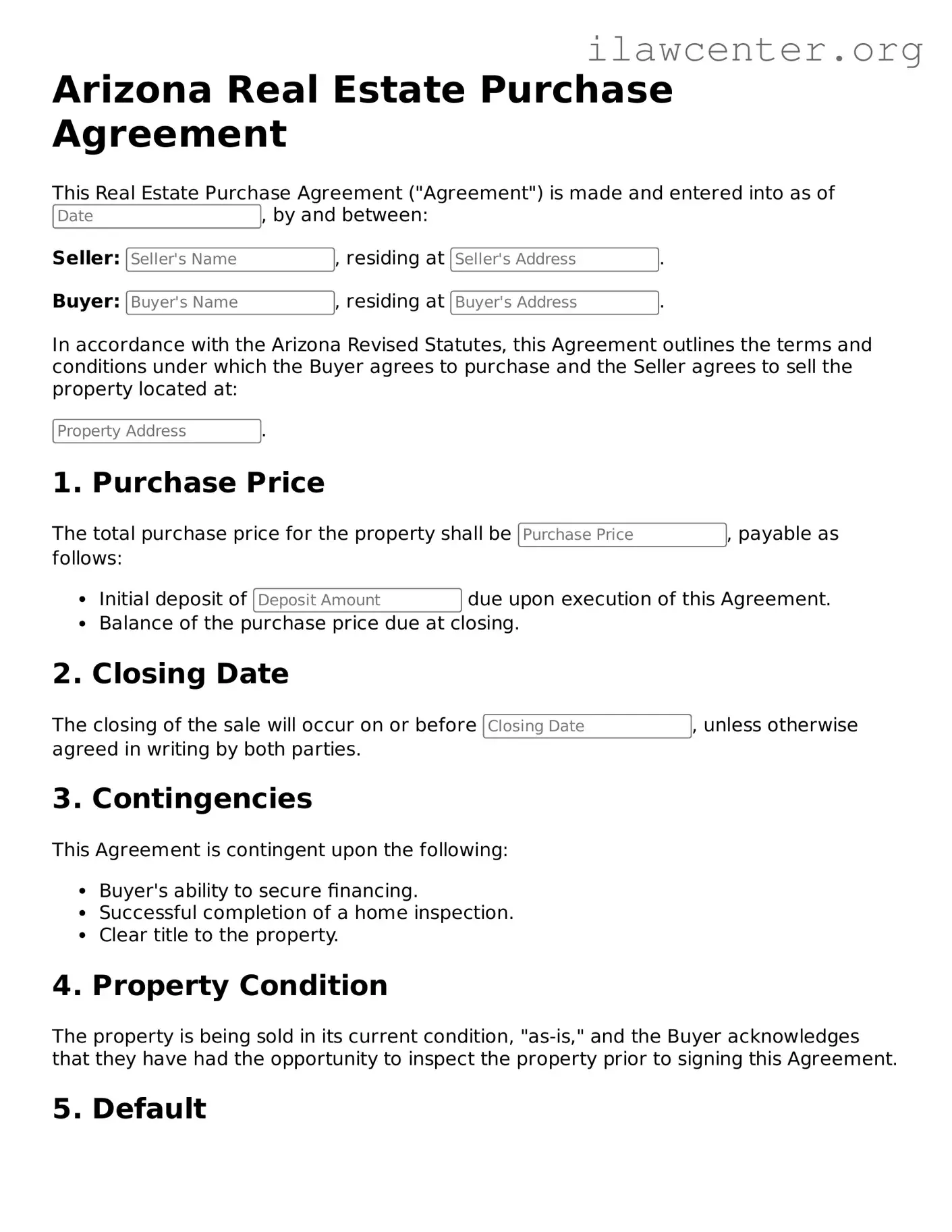
Arizona Real Estate Purchase Agreement

This Real Estate Purchase Agreement ("Agreement") is made and entered into as of , by and between:

Seller: , residing at .

Buyer: , residing at .

In accordance with the Arizona Revised Statutes, this Agreement outlines the terms and conditions under which the Buyer agrees to purchase and the Seller agrees to sell the property located at:

.

1. Purchase Price

The total purchase price for the property shall be , payable as follows:

  • Initial deposit of due upon execution of this Agreement.
  • Balance of the purchase price due at closing.

2. Closing Date

The closing of the sale will occur on or before , unless otherwise agreed in writing by both parties.

3. Contingencies

This Agreement is contingent upon the following:

  • Buyer's ability to secure financing.
  • Successful completion of a home inspection.
  • Clear title to the property.

4. Property Condition

The property is being sold in its current condition, "as-is," and the Buyer acknowledges that they have had the opportunity to inspect the property prior to signing this Agreement.

5. Default

If either party fails to perform their obligations under this Agreement, the non-defaulting party may pursue any remedies available under Arizona law.

6. Governing Law

This Agreement shall be governed by and construed in accordance with the laws of the State of Arizona.

7. Signatures

By signing below, both parties agree to the terms of this Agreement:

Seller's Signature: ________________________ Date: _______________

Buyer's Signature: ________________________ Date: _______________

This template is designed to provide a clear and concise framework for a real estate transaction in Arizona. It is recommended that both parties seek legal counsel to review the Agreement prior to execution.

PDF Form Characteristics

Fact Name Description
Governing Law The Arizona Real Estate Purchase Agreement is governed by Arizona state law.
Purpose This form outlines the terms and conditions of a real estate transaction between a buyer and a seller.
Parties Involved The agreement includes the names and contact information of both the buyer and the seller.
Property Description A detailed description of the property being sold is required, including the address and legal description.
Purchase Price The total purchase price must be clearly stated, along with any deposit amounts.
Contingencies Buyers can include contingencies, such as financing or inspection, that must be met for the sale to proceed.
Closing Date The agreement specifies the date on which the sale will be finalized and ownership transferred.
Default Provisions The form outlines what happens if either party defaults on the agreement.
Signatures Both parties must sign the agreement for it to be legally binding.
Additional Terms Any additional terms or conditions can be added to the agreement, as long as both parties agree.

Instructions on Utilizing Arizona Real Estate Purchase Agreement

Filling out the Arizona Real Estate Purchase Agreement is an important step in the home buying process. This document serves as a formal contract between the buyer and seller, outlining the terms of the sale. Once completed, it will guide the transaction and help ensure that both parties understand their rights and responsibilities.

  1. Obtain the Form: Start by acquiring the Arizona Real Estate Purchase Agreement form. This can usually be found online or through a real estate agent.
  2. Fill in Buyer Information: Enter the full names and contact information of the buyers. Make sure to include any co-buyers if applicable.
  3. Fill in Seller Information: Provide the full names and contact details of the sellers. This includes any co-sellers if there are multiple parties involved.
  4. Property Description: Clearly describe the property being sold. Include the address, legal description, and any relevant details that identify the property.
  5. Purchase Price: Specify the agreed-upon purchase price for the property. Ensure this figure is accurate and reflects the terms agreed upon by both parties.
  6. Earnest Money Deposit: Indicate the amount of earnest money the buyer will provide as a show of good faith. Include details about how this money will be handled.
  7. Financing Terms: Outline the type of financing the buyer will use to purchase the property. Include any contingencies related to obtaining a loan.
  8. Closing Date: Specify the anticipated closing date for the transaction. This is the date when the ownership of the property will officially transfer.
  9. Contingencies: List any contingencies that need to be met for the sale to proceed. This could include inspections, appraisals, or other conditions.
  10. Signatures: Finally, ensure that both the buyer and seller sign and date the agreement. This is essential for the document to be legally binding.

Once the form is filled out, it should be reviewed carefully by both parties. This review ensures that all terms are clearly understood and agreed upon before proceeding with the transaction.

Important Facts about Arizona Real Estate Purchase Agreement

What is the Arizona Real Estate Purchase Agreement?

The Arizona Real Estate Purchase Agreement is a legal document that outlines the terms and conditions under which a property is bought and sold in Arizona. It serves as a binding contract between the buyer and seller, detailing the purchase price, financing arrangements, and any contingencies that must be met for the sale to proceed. This agreement is crucial for ensuring that both parties understand their rights and obligations during the transaction.

What are the key components of the agreement?

The key components of the Arizona Real Estate Purchase Agreement include the names of the buyer and seller, the property address, the purchase price, earnest money deposit, closing date, and any contingencies such as inspections or financing. Additionally, the agreement may include provisions for repairs, disclosures, and any personal property included in the sale. Each section is designed to protect the interests of both parties.

Is the agreement legally binding?

Yes, the Arizona Real Estate Purchase Agreement is a legally binding contract once both parties sign it. This means that both the buyer and seller are obligated to adhere to the terms outlined in the agreement. If either party fails to fulfill their obligations, the other party may have legal recourse to enforce the agreement or seek damages.

Can the agreement be modified after signing?

Yes, the Arizona Real Estate Purchase Agreement can be modified after signing, but both parties must agree to any changes. Modifications should be documented in writing and signed by both the buyer and seller to ensure clarity and avoid disputes. Verbal agreements or informal changes may not be enforceable.

What happens if the buyer backs out of the agreement?

If the buyer backs out of the agreement without a valid reason, they may forfeit their earnest money deposit. The seller could also pursue legal action for breach of contract, depending on the circumstances. However, if the buyer withdraws due to a contingency outlined in the agreement, such as failing to secure financing or unsatisfactory inspection results, they may be able to cancel the contract without penalty.

Are there any contingencies that can be included?

Yes, contingencies are common in the Arizona Real Estate Purchase Agreement. Buyers often include contingencies for financing, home inspections, and appraisal results. These contingencies allow the buyer to back out of the agreement without penalty if certain conditions are not met. It is essential to clearly outline these contingencies to protect the buyer’s interests.

How can I ensure that my agreement is complete and accurate?

To ensure that your Arizona Real Estate Purchase Agreement is complete and accurate, consider working with a qualified real estate agent or attorney. They can help you navigate the complexities of the agreement and ensure that all necessary terms are included. Additionally, reviewing the agreement thoroughly before signing is crucial to avoid misunderstandings and potential legal issues.

Common mistakes

When filling out the Arizona Real Estate Purchase Agreement form, individuals often encounter various pitfalls that can lead to complications later in the process. One common mistake is failing to provide accurate property descriptions. It is essential to include the correct legal description of the property, as this ensures that all parties are clear about the specific piece of real estate being discussed. Omitting or incorrectly stating this information can lead to disputes and potential legal issues.

Another frequent error involves not specifying the purchase price clearly. While it may seem straightforward, ambiguity in the price can create confusion. Buyers and sellers should ensure that the price is clearly stated, along with any contingencies that might affect the final amount. This clarity helps avoid misunderstandings and protects both parties’ interests.

People also often overlook the importance of including all necessary parties in the agreement. If a buyer or seller is represented by an agent, their details should be included as well. Failing to do so can lead to complications in communication and may affect the enforceability of the contract.

Moreover, many individuals neglect to address the issue of earnest money. This deposit demonstrates the buyer's commitment to the purchase and should be specified in the agreement. Not mentioning the amount or the terms related to earnest money can lead to confusion and potential disputes if the deal falls through.

Another mistake involves not understanding or clearly outlining the contingencies. Contingencies are conditions that must be met for the agreement to be binding. Common contingencies include home inspections, financing, and appraisal conditions. A lack of clarity in this section can lead to disagreements later in the process.

Failure to include a timeline for closing is also a common oversight. The agreement should specify a closing date or a timeline for when certain conditions must be met. Without this information, both parties may have different expectations, leading to frustration and potential delays.

In addition, individuals sometimes forget to check for any required disclosures. Arizona law mandates that sellers disclose certain information about the property. Not including these disclosures can lead to legal repercussions and affect the transaction's validity.

Another issue arises when buyers and sellers do not fully understand the implications of the terms they agree to. Each section of the agreement carries weight, and misunderstanding these terms can have significant consequences. It is advisable for all parties to seek clarification on any points they do not fully comprehend.

Finally, many individuals fail to sign and date the agreement properly. A signature indicates acceptance of the terms, and without it, the document may not be enforceable. Ensuring that all necessary signatures are present is crucial for the validity of the agreement.

Documents used along the form

When engaging in a real estate transaction in Arizona, several forms and documents accompany the Real Estate Purchase Agreement. Each of these documents plays a crucial role in ensuring a smooth process. Below is a list of commonly used forms that you may encounter.

  • Seller's Disclosure Statement: This document requires the seller to disclose any known issues or defects with the property. It helps buyers make informed decisions.
  • Counteroffer: If the seller does not accept the initial offer, they may issue a counteroffer. This document outlines new terms for negotiation.
  • Earnest Money Agreement: This agreement details the amount of earnest money the buyer will deposit to show their commitment to the purchase.
  • Title Report: A title report provides information about the property's ownership history and any liens or encumbrances that may affect the sale.
  • Closing Disclosure: This document outlines the final terms of the mortgage, including loan costs and closing costs. It ensures transparency before the transaction is finalized.
  • Property Inspection Report: This report summarizes the findings of a professional property inspection, highlighting any significant issues that may need addressing.
  • Appraisal Report: An appraisal report assesses the property's market value. Lenders often require this document to ensure the loan amount aligns with the property's worth.
  • Affidavit of Title: This sworn statement confirms the seller's ownership of the property and asserts that there are no undisclosed claims against it.
  • Purchase Agreement Addendum: This document modifies the original purchase agreement, adding or changing specific terms agreed upon by both parties.

Understanding these documents can help streamline your real estate transaction. Each form serves a specific purpose, contributing to the overall clarity and legality of the agreement. Always consider consulting a professional for guidance tailored to your situation.

Similar forms

  • Lease Agreement: Similar to a Real Estate Purchase Agreement, a lease agreement outlines the terms under which one party can occupy another party's property. Both documents specify rights and responsibilities, but a lease is temporary, while a purchase agreement is for ownership.

  • Option to Purchase Agreement: This document gives a tenant the right to purchase the property at a later date. Like a purchase agreement, it details the purchase price and terms, but it does not transfer ownership until the option is exercised.

  • Joint Venture Agreement: In real estate, this agreement involves two or more parties collaborating on a property investment. It shares similarities with a purchase agreement in that it specifies contributions, roles, and profit-sharing, but it does not necessarily involve a transfer of ownership.

  • Real Estate Sale Agreement: This document is often synonymous with a purchase agreement. It serves the same purpose of outlining the terms of sale, including price and conditions, for a specific property.

  • Purchase and Sale Agreement: This is a broader term that encompasses the real estate purchase agreement. It details the sale of any property type, including commercial and residential, highlighting the same essential elements of price and terms.

  • Closing Disclosure: This document provides details about the final terms of a mortgage loan. While it is not a purchase agreement, it is closely related as it outlines the financial aspects of the transaction, including costs and fees that affect the purchase.

  • Title Insurance Policy: This document protects buyers from potential disputes over property ownership. It is similar to a purchase agreement in that it relates to the transfer of property rights and ensures a clear title.

  • Deed: A deed formally transfers property ownership from one party to another. Like a purchase agreement, it contains essential details about the transaction, but it is the legal instrument that finalizes the transfer.

  • Escrow Agreement: This document involves a third party holding funds or documents until certain conditions are met. It parallels a purchase agreement by ensuring that all conditions of the sale are fulfilled before the transfer occurs.

  • Real Estate Disclosure Statement: This document provides potential buyers with information about the property's condition. While it does not serve as a purchase agreement, it is crucial in informing buyers and can influence their decision to proceed with the purchase.

Dos and Don'ts

When filling out the Arizona Real Estate Purchase Agreement form, it's important to follow certain guidelines to ensure the process goes smoothly. Here are six things to keep in mind:

  • Do read the entire agreement carefully before signing. Understanding each section will help you avoid misunderstandings later.
  • Do provide accurate and complete information. This includes names, addresses, and details about the property.
  • Do consult with a real estate professional or attorney if you have questions. Their expertise can clarify complex terms or conditions.
  • Don't rush through the form. Take your time to ensure all information is correct and complete.
  • Don't leave any blanks. If a section does not apply, mark it as “N/A” instead of leaving it empty.
  • Don't sign without understanding your obligations. Make sure you are clear on all terms and conditions before you commit.

By following these dos and don'ts, you can help ensure that your real estate transaction proceeds without unnecessary complications.

Misconceptions

Understanding the Arizona Real Estate Purchase Agreement (REPA) is crucial for anyone involved in buying or selling property in the state. However, several misconceptions can lead to confusion. Here are ten common misunderstandings about the REPA:

  1. The REPA is a one-size-fits-all document. Many believe that the REPA is the same for every transaction. In reality, the agreement can be customized to fit the specific needs of the buyer and seller.
  2. Signing the REPA means the sale is final. Some think that once they sign the REPA, the deal is done. However, the agreement is contingent upon various factors, such as inspections and financing.
  3. All contingencies are the same. Not all contingencies in the REPA are identical. Different transactions may require different contingencies, such as those related to inspections, appraisals, or financing.
  4. The seller is always responsible for repairs. There’s a misconception that sellers must fix everything before closing. In fact, the REPA can specify which repairs, if any, the seller is obligated to complete.
  5. Real estate agents handle all the paperwork. While agents assist in the process, it’s important for buyers and sellers to understand the REPA and their responsibilities within it.
  6. Once an offer is made, it cannot be changed. Some individuals believe that an offer is set in stone once submitted. However, offers can be amended or countered before acceptance.
  7. The REPA guarantees a closing date. Many assume that the REPA guarantees a specific closing date. The closing date can be negotiated and may depend on various factors.
  8. Only the buyer needs to be aware of the REPA. It’s a common misconception that only buyers need to understand the REPA. Sellers must also be familiar with its terms and implications.
  9. All agreements are legally binding. While the REPA is a legally binding document, it can be voided under certain conditions, such as failure to meet contingencies.
  10. Legal advice is unnecessary. Some believe they can navigate the REPA without legal assistance. However, consulting a legal professional can provide valuable insights and help avoid pitfalls.

Addressing these misconceptions can lead to a smoother real estate transaction and a better understanding of the process for all parties involved.

Key takeaways

When engaging in a real estate transaction in Arizona, understanding the Real Estate Purchase Agreement form is crucial. Here are some key takeaways to consider:

  • Clarity is Essential: Ensure that all terms are clearly defined. Ambiguities can lead to misunderstandings and potential disputes.
  • Include All Necessary Details: The agreement should specify the property address, purchase price, and any contingencies. Missing information can complicate the transaction.
  • Understand Contingencies: Familiarize yourself with common contingencies, such as financing or inspection clauses. These protect both buyers and sellers during the process.
  • Review Deadlines: Pay attention to all deadlines outlined in the agreement. Timely responses can prevent the deal from falling through.
  • Seek Professional Guidance: Consulting with a real estate agent or attorney can provide valuable insights and help navigate the complexities of the agreement.

By keeping these points in mind, participants in a real estate transaction can approach the Arizona Real Estate Purchase Agreement with greater confidence and clarity.