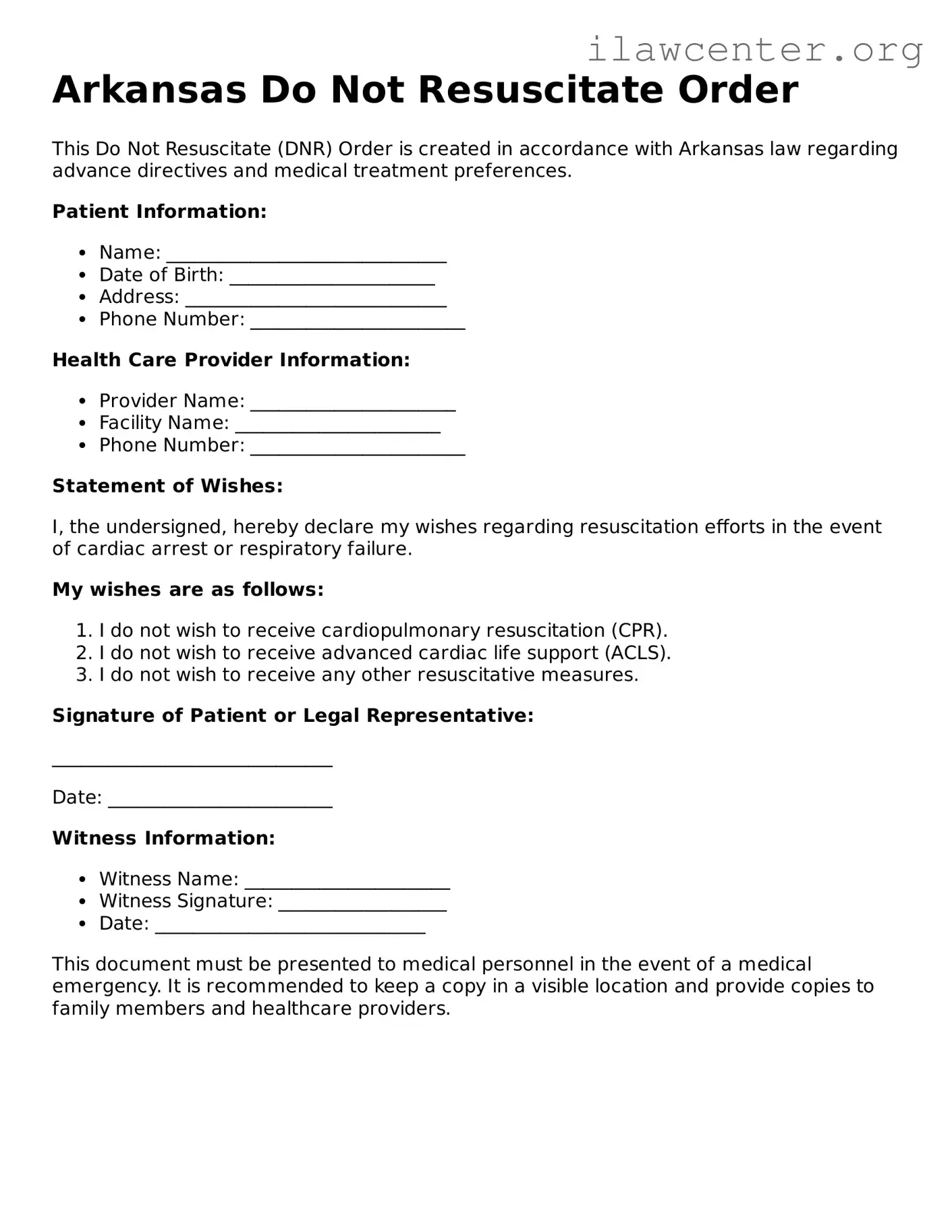
What is a Do Not Resuscitate (DNR) Order in Arkansas?
A Do Not Resuscitate Order is a medical order that indicates a person's wishes regarding resuscitation efforts in the event of cardiac arrest or respiratory failure. In Arkansas, this order is typically used by individuals who wish to avoid aggressive life-saving measures, such as CPR or mechanical ventilation, in situations where they are unable to communicate their preferences. It is important to have this order documented properly to ensure that medical staff honors your wishes during emergencies.
Who can request a DNR Order in Arkansas?
In Arkansas, a DNR Order can be requested by an adult patient who is capable of making their own medical decisions. Additionally, a legally authorized representative, such as a spouse, adult child, or designated healthcare proxy, may also request a DNR on behalf of an individual who is unable to make decisions due to a medical condition. It is crucial that the individual’s wishes are respected and clearly communicated.
How is a DNR Order created in Arkansas?
To create a DNR Order in Arkansas, a patient or their authorized representative must complete the state-approved DNR form. This form must be signed by the patient or their representative, as well as a physician. Once completed, the DNR Order should be kept in a prominent place, such as with medical records or in a location easily accessible to emergency responders. It is advisable to inform family members and healthcare providers about the existence of the order.
Will a DNR Order be honored in all medical situations?
A DNR Order specifically applies to situations involving cardiac arrest or respiratory failure. It does not limit other medical treatments or interventions that may be necessary for the patient’s comfort or well-being. For instance, a DNR does not prevent the administration of medications, pain relief, or other supportive care that may be appropriate. Medical professionals are trained to respect the DNR Order while still providing compassionate care.
Can a DNR Order be revoked?
Yes, a DNR Order can be revoked at any time by the patient or their authorized representative. To do so, the individual should inform their healthcare provider and remove the DNR form from their medical records. It is also wise to communicate this change to family members and caregivers to avoid any confusion in the future. The ability to change one’s mind is an important aspect of personal autonomy in medical decision-making.
What should I do if I have a DNR Order and am hospitalized?
If you have a DNR Order and find yourself hospitalized, it is essential to inform the hospital staff about your wishes as soon as possible. Provide them with a copy of the DNR Order, and ensure that it is included in your medical records. This will help ensure that all healthcare providers are aware of your preferences and can act accordingly. Open communication with your healthcare team will facilitate a better understanding of your care goals.
Is a DNR Order valid outside of a healthcare facility?
Yes, a DNR Order is valid outside of healthcare facilities, such as in a home or community setting. However, it is crucial to ensure that the order is easily accessible and that family members or caregivers are aware of its existence. If emergency medical services are called, they will look for the DNR form and honor its directives. Keeping a copy of the DNR Order in a visible location, such as on the refrigerator or with other important documents, can be helpful.
How can I ensure my DNR Order is properly recognized?
To ensure that your DNR Order is properly recognized, it is important to follow the legal requirements for completing the form, including obtaining the necessary signatures from both the patient and a physician. Keep copies of the order in accessible locations and inform family members, caregivers, and healthcare providers about your wishes. Regularly reviewing and updating the DNR Order as needed will also help ensure that it reflects your current preferences.