Attorney-Verified  Employee Handbook Document for Arkansas

Attorney-Verified Employee Handbook Document for Arkansas

The Arkansas Employee Handbook form serves as a crucial document that outlines the policies, procedures, and expectations within a workplace. It acts as a guide for employees, helping them understand their rights and responsibilities while fostering a positive work environment. To ensure compliance and clarity, consider filling out the form by clicking the button below.

Article Guide

Creating a comprehensive employee handbook is a crucial step for any business operating in Arkansas. This document serves as a vital resource for both employers and employees, outlining workplace policies, procedures, and expectations. It encompasses essential topics such as employee rights, code of conduct, attendance policies, and benefits information. Additionally, the handbook addresses workplace safety, anti-discrimination policies, and procedures for reporting grievances. A well-crafted employee handbook not only helps maintain a positive work environment but also ensures compliance with state and federal regulations. By providing clear guidelines, it fosters transparency and sets the tone for professional conduct within the organization. As you navigate the intricacies of developing this important document, understanding the key components will empower you to create a handbook that effectively communicates your company’s values and expectations.

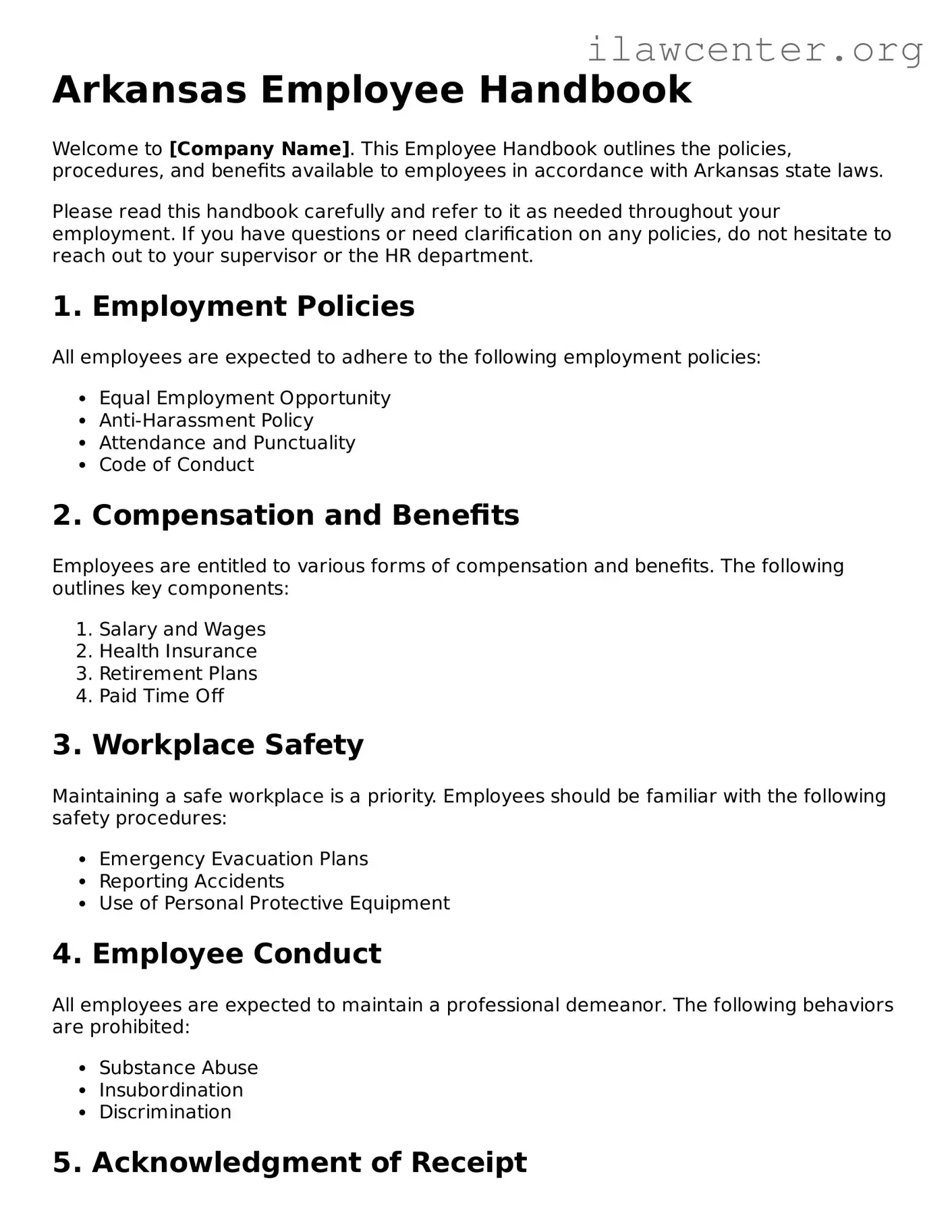
Arkansas Employee Handbook Preview

Arkansas Employee Handbook

Welcome to [Company Name]. This Employee Handbook outlines the policies, procedures, and benefits available to employees in accordance with Arkansas state laws.

Please read this handbook carefully and refer to it as needed throughout your employment. If you have questions or need clarification on any policies, do not hesitate to reach out to your supervisor or the HR department.

1. Employment Policies

All employees are expected to adhere to the following employment policies:

  • Equal Employment Opportunity
  • Anti-Harassment Policy
  • Attendance and Punctuality
  • Code of Conduct

2. Compensation and Benefits

Employees are entitled to various forms of compensation and benefits. The following outlines key components:

  1. Salary and Wages
  2. Health Insurance
  3. Retirement Plans
  4. Paid Time Off

3. Workplace Safety

Maintaining a safe workplace is a priority. Employees should be familiar with the following safety procedures:

  • Emergency Evacuation Plans
  • Reporting Accidents
  • Use of Personal Protective Equipment

4. Employee Conduct

All employees are expected to maintain a professional demeanor. The following behaviors are prohibited:

  • Substance Abuse
  • Insubordination
  • Discrimination

5. Acknowledgment of Receipt

All employees must sign an acknowledgment of receipt of this handbook. Please complete the following:

I, [Employee Name], acknowledge that I have received and read the Arkansas Employee Handbook of [Company Name].

Signature: ________________________ Date: _______________

PDF Form Characteristics

Fact Name Details
Purpose The Arkansas Employee Handbook serves as a guide for employees, outlining company policies, procedures, and expectations.
Legal Requirement While not legally required, having an employee handbook is highly recommended for clarity and compliance.
Governing Laws The handbook should comply with federal laws such as the Fair Labor Standards Act (FLSA) and state laws including the Arkansas Minimum Wage Act.
Content Areas Common sections include workplace conduct, anti-discrimination policies, benefits, and leave policies.
Updates Regular updates are necessary to reflect changes in laws or company policies, ensuring accuracy and relevance.
Distribution Handbooks should be distributed to all employees, with acknowledgment forms signed to confirm receipt and understanding.
Legal Protection A well-drafted handbook can provide legal protection by clarifying employer policies and reducing misunderstandings.
Employee Input Involving employees in the handbook creation process can enhance acceptance and adherence to policies.

Instructions on Utilizing Arkansas Employee Handbook

Completing the Arkansas Employee Handbook form is an essential task for ensuring compliance with workplace policies and regulations. Follow the steps below to fill out the form accurately and efficiently.

  1. Begin by gathering all necessary personal information, including your full name, address, and contact details.
  2. Review the sections of the form to familiarize yourself with the required information.
  3. Carefully enter your name in the designated field at the top of the form.
  4. Provide your current address, ensuring that it is complete and accurate.
  5. Fill in your phone number and email address in the appropriate sections.
  6. Review any additional sections that may require your input, such as emergency contact information or employment history.
  7. Double-check all entries for accuracy and completeness.
  8. Sign and date the form where indicated, confirming that the information provided is true and correct.
  9. Submit the completed form to your supervisor or the designated HR representative as instructed.

Once you have submitted the form, it will be reviewed by the appropriate personnel. They may reach out for clarification or additional information if necessary. This process ensures that your records are up-to-date and that you are informed about company policies.

Important Facts about Arkansas Employee Handbook

What is the purpose of the Arkansas Employee Handbook form?

The Arkansas Employee Handbook form serves as a crucial document that outlines the policies, procedures, and expectations for employees within a company. It provides clarity on various topics such as workplace conduct, benefits, and disciplinary actions. This handbook not only helps employees understand their rights and responsibilities but also ensures that employers maintain compliance with state and federal labor laws.

Who should receive a copy of the Employee Handbook?

Every employee should receive a copy of the Employee Handbook upon their hiring or onboarding process. This ensures that all staff members are informed about the company’s policies from the outset. Additionally, it is advisable for employers to provide updates to the handbook whenever significant changes occur, ensuring that all employees have access to the most current information.

Can the Employee Handbook be modified after it is distributed?

Yes, the Employee Handbook can be modified after distribution. Employers should regularly review and update the handbook to reflect changes in laws, regulations, or company policies. When updates are made, it is essential to communicate these changes to all employees promptly. This helps maintain transparency and ensures that everyone is aware of the current policies.

Is it necessary for employees to sign an acknowledgment of receipt of the handbook?

While it may not be legally required, it is highly recommended for employers to have employees sign an acknowledgment of receipt of the handbook. This signed document serves as proof that employees have received, read, and understood the handbook. It can be valuable in case of disputes or misunderstandings regarding policies, as it demonstrates that the employee was informed of the rules and expectations.

What should employees do if they have questions about the handbook?

If employees have questions or concerns about any section of the Employee Handbook, they should feel encouraged to reach out to their supervisor or the human resources department. Open communication is vital in addressing any uncertainties. Employers should foster an environment where employees feel comfortable seeking clarification, ensuring that everyone is on the same page regarding workplace policies.

Common mistakes

Filling out the Arkansas Employee Handbook form can be a straightforward process, but many people stumble over common mistakes that can lead to confusion or even complications later on. One of the most frequent errors is failing to read the instructions carefully. The handbook often contains specific guidelines on how to fill out the form correctly, and skipping this step can lead to incomplete or incorrect submissions.

Another mistake often made is not providing accurate personal information. It's essential to double-check your name, address, and contact details. Errors in this section can cause significant delays in communication and may even affect your employment status. Always ensure that your information is up to date and correctly spelled.

Many individuals overlook the importance of signing and dating the form. A signature signifies that you have read and understood the handbook, while the date confirms when you completed the process. Without this, the form may be considered invalid, leading to unnecessary complications down the road.

In addition, some people forget to ask questions if they don’t understand certain policies. The handbook is designed to clarify workplace rules and expectations, but if something is unclear, it’s vital to seek clarification. Ignoring this step can lead to misunderstandings about your rights and responsibilities.

Another common error is neglecting to keep a copy of the completed form. This simple act can save you a lot of trouble later. Having a record of what you submitted can be invaluable if there are any discrepancies or if you need to refer back to it in the future.

People also sometimes rush through the process, thinking they can complete it quickly. This haste can lead to careless mistakes, such as omitting important sections or providing incomplete answers. Taking your time ensures that you understand every aspect of the handbook and can fill out the form accurately.

Additionally, failing to update the form when your circumstances change is a mistake that can have serious implications. Whether it’s a change in your job title, address, or personal information, keeping the handbook up to date is crucial for maintaining clear communication with your employer.

Another pitfall is not reviewing the handbook itself before filling out the form. Understanding the policies and procedures outlined in the handbook can help you make informed decisions about your employment and ensure that you are in alignment with company expectations.

Finally, some individuals may ignore the importance of confidentiality when filling out the form. Sharing sensitive personal information with others can lead to privacy issues. Always treat your employee handbook and the information contained within it with the utmost respect and confidentiality.
Documents used along the form

The Arkansas Employee Handbook is an essential document that outlines the policies, procedures, and expectations for employees within an organization. Alongside this handbook, several other forms and documents are commonly utilized to ensure clarity and compliance in the workplace. Below is a list of four important documents that often accompany the Employee Handbook.

  • Job Description: This document provides detailed information about the responsibilities, qualifications, and expectations for a specific position within the organization. It helps employees understand their roles and aids in performance evaluations.
  • Employee Agreement: This form is a contract between the employer and employee that outlines the terms of employment, including compensation, benefits, and confidentiality agreements. It ensures both parties are aware of their commitments.
  • Performance Evaluation Form: Used to assess an employee's job performance, this document typically includes criteria for evaluation, feedback sections, and goal-setting areas. It is crucial for employee development and organizational growth.
  • Incident Report Form: This form is used to document any workplace incidents, including accidents or policy violations. It helps in tracking issues and implementing necessary changes to improve workplace safety and compliance.

These documents, when used in conjunction with the Arkansas Employee Handbook, create a comprehensive framework that supports both employees and employers. Together, they foster a clear understanding of workplace expectations and promote a positive work environment.

Similar forms

  • Company Policies Manual: Similar to the Employee Handbook, this document outlines the rules and regulations governing employee behavior and workplace standards.
  • Onboarding Guide: This guide helps new employees acclimate to the company culture and procedures, much like the Employee Handbook provides essential information for all employees.
  • Code of Conduct: This document specifies expected behaviors and ethical standards, paralleling the Employee Handbook's focus on maintaining a professional environment.
  • Safety Manual: Just as the Employee Handbook addresses workplace safety, this manual details safety protocols and emergency procedures.
  • Benefits Overview: This document explains employee benefits, mirroring the Employee Handbook's section on compensation and benefits.
  • Performance Evaluation Guidelines: Similar to the Employee Handbook, this document outlines the criteria and process for employee performance reviews.
  • Leave of Absence Policy: This policy details the procedures for taking leave, akin to the Employee Handbook's information on time off and leave policies.
  • Training and Development Plan: Just like the Employee Handbook, this plan emphasizes the importance of ongoing employee development and available resources.
  • Disciplinary Procedures: This document outlines the steps for addressing employee misconduct, similar to the disciplinary measures referenced in the Employee Handbook.

Dos and Don'ts

When filling out the Arkansas Employee Handbook form, it's important to follow certain guidelines to ensure accuracy and compliance. Here’s a list of things you should and shouldn’t do:

  • Do read the entire handbook before filling out the form.
  • Do provide accurate personal information, including your full name and contact details.
  • Do ask questions if you don't understand any part of the form.
  • Do keep a copy of the completed form for your records.
  • Don’t leave any required fields blank.
  • Don’t rush through the process; take your time to ensure everything is correct.

By following these guidelines, you can complete the form efficiently and effectively. This will help avoid any potential issues in the future.

Misconceptions

Below is a list of common misconceptions about the Arkansas Employee Handbook form, along with clarifications for each.

  1. All companies in Arkansas must have an Employee Handbook.

    This is not true. While having an Employee Handbook is beneficial for many businesses, it is not legally required for all companies in Arkansas.

  2. The Employee Handbook is a legally binding contract.

    Generally, the Employee Handbook serves as a guide for company policies and procedures. It is not typically considered a legally binding contract unless explicitly stated.

  3. Once created, the Employee Handbook does not need updates.

    Policies and laws can change. Regularly reviewing and updating the Employee Handbook ensures that it remains relevant and compliant with current regulations.

  4. All employees must sign the Employee Handbook.
  5. The Employee Handbook covers all aspects of employment.

    While the Handbook addresses many important policies, it may not cover every possible scenario. Specific situations may require additional documentation or policies.

  6. Employers cannot change policies once they are in the Handbook.

    Employers can update policies as needed. However, it is important to communicate any changes to employees effectively.

  7. The Employee Handbook is only for full-time employees.

    The Handbook can apply to all employees, including part-time and temporary workers, depending on the company’s policies.

  8. All Employee Handbooks must include the same policies.

    Each Employee Handbook can be tailored to fit the specific needs and culture of the company. Policies may vary widely between different organizations.

  9. Employees cannot question the policies in the Employee Handbook.

    Employees have the right to ask questions and seek clarification about any policies in the Handbook. Open communication is encouraged.

  10. Having an Employee Handbook prevents all legal issues.

    While a well-crafted Handbook can help mitigate risks, it does not guarantee that legal issues will not arise. Employers must also follow all applicable laws and regulations.

Key takeaways

When filling out and utilizing the Arkansas Employee Handbook form, it’s essential to keep several key points in mind. These takeaways can help ensure that the process is smooth and effective.

  • Understand the Purpose: The employee handbook serves as a crucial resource for both employers and employees. It outlines workplace policies, procedures, and expectations.
  • Customize the Content: Every organization is unique. Tailor the handbook to reflect your company’s culture, values, and specific policies to make it relevant.
  • Legal Compliance: Ensure that the handbook complies with Arkansas state laws and federal regulations. This helps protect the organization from potential legal issues.
  • Regular Updates: The workplace is dynamic. Regularly review and update the handbook to incorporate changes in laws, policies, or organizational structure.
  • Employee Acknowledgment: It’s important to have employees sign an acknowledgment form after they receive the handbook. This confirms that they understand and agree to the policies outlined.

By keeping these takeaways in mind, organizations can effectively create and maintain an employee handbook that supports a positive work environment and fosters clear communication.