Attorney-Verified  Medical Power of Attorney Document for Arkansas

Attorney-Verified Medical Power of Attorney Document for Arkansas

The Arkansas Medical Power of Attorney form is a legal document that allows an individual to appoint someone else to make healthcare decisions on their behalf if they become unable to do so. This ensures that your medical preferences are respected, even when you cannot communicate them yourself. To take control of your healthcare decisions, consider filling out the form by clicking the button below.

Article Guide

When it comes to making healthcare decisions, having a trusted person to advocate for you can provide peace of mind. The Arkansas Medical Power of Attorney form allows individuals to designate a representative who can make medical decisions on their behalf in the event they are unable to do so themselves. This important document outlines the powers granted to the appointed agent, ensuring that their healthcare preferences are honored even when they cannot communicate them directly. The form is designed to be straightforward, allowing for clear instructions regarding treatment options, end-of-life care, and other medical preferences. It is essential to choose someone who understands your values and wishes, as this person will have the authority to make critical decisions during difficult times. Additionally, the form must be signed and dated in accordance with state requirements to ensure its validity, making it a crucial step in proactive health planning.

Arkansas Medical Power of Attorney Preview

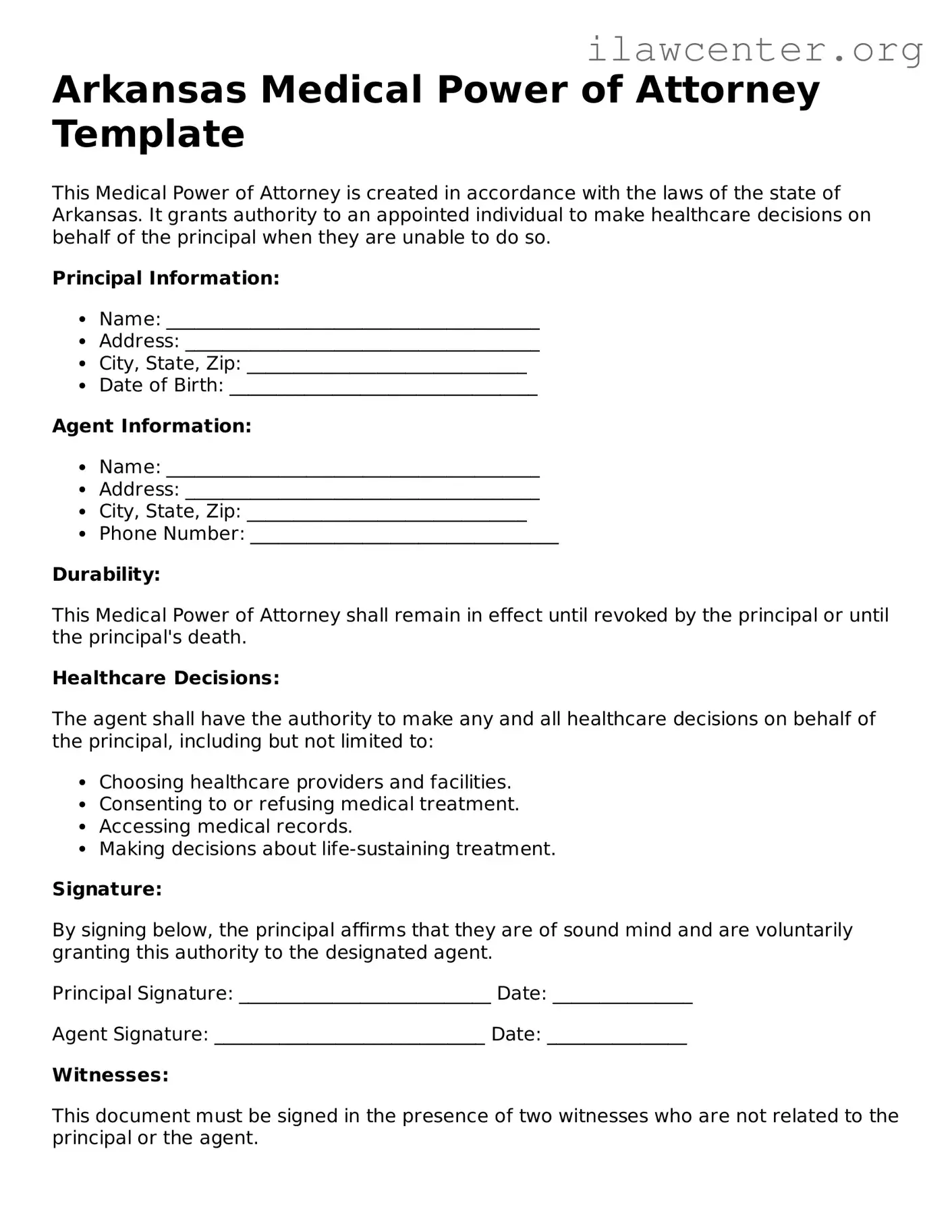
Arkansas Medical Power of Attorney Template

This Medical Power of Attorney is created in accordance with the laws of the state of Arkansas. It grants authority to an appointed individual to make healthcare decisions on behalf of the principal when they are unable to do so.

Principal Information:

  • Name: ________________________________________
  • Address: ______________________________________
  • City, State, Zip: ______________________________
  • Date of Birth: _________________________________

Agent Information:

  • Name: ________________________________________
  • Address: ______________________________________
  • City, State, Zip: ______________________________
  • Phone Number: _________________________________

Durability:

This Medical Power of Attorney shall remain in effect until revoked by the principal or until the principal's death.

Healthcare Decisions:

The agent shall have the authority to make any and all healthcare decisions on behalf of the principal, including but not limited to:

  • Choosing healthcare providers and facilities.
  • Consenting to or refusing medical treatment.
  • Accessing medical records.
  • Making decisions about life-sustaining treatment.

Signature:

By signing below, the principal affirms that they are of sound mind and are voluntarily granting this authority to the designated agent.

Principal Signature: ___________________________ Date: _______________

Agent Signature: _____________________________ Date: _______________

Witnesses:

This document must be signed in the presence of two witnesses who are not related to the principal or the agent.

  1. Witness Name: ___________________________________ Signature: ___________________________
  2. Witness Name: ___________________________________ Signature: ___________________________

Notarization:

For added validity, this document may be notarized. A notary public may sign below.

Notary Public Signature: ___________________________ Date: _______________

PDF Form Characteristics

Fact Name Details
Definition The Arkansas Medical Power of Attorney form allows an individual to appoint someone to make medical decisions on their behalf if they become unable to do so.
Governing Law This form is governed by the Arkansas Code Annotated, Title 20, Chapter 13.
Principal The person who creates the Medical Power of Attorney is referred to as the "principal." This individual retains the right to make decisions until incapacitated.
Agent The "agent" is the person designated to make medical decisions for the principal. This person must be at least 18 years old.
Durability The authority granted through this form remains effective even if the principal becomes incapacitated.
Revocation The principal can revoke the Medical Power of Attorney at any time, as long as they are competent to do so.
Witness Requirements The form must be signed in the presence of two witnesses or a notary public. Witnesses cannot be the agent or immediate family members.
Healthcare Provider Compliance Healthcare providers are required to comply with the decisions made by the agent, as long as the Medical Power of Attorney is valid.
Importance This form is crucial for ensuring that medical decisions reflect the principal's wishes when they are unable to communicate them.

Instructions on Utilizing Arkansas Medical Power of Attorney

Filling out the Arkansas Medical Power of Attorney form is a straightforward process. This document allows you to designate someone to make medical decisions on your behalf if you are unable to do so. Follow the steps below to complete the form accurately.

  1. Obtain the Arkansas Medical Power of Attorney form. You can find it online or at legal offices.
  2. Begin by entering your full name and address at the top of the form.
  3. Clearly identify the person you are appointing as your agent. Include their full name, address, and relationship to you.
  4. Specify any limitations or specific instructions regarding your agent's authority, if applicable.
  5. Sign and date the form in the designated area. Your signature indicates your consent.
  6. Have the form witnessed by at least two individuals who are not related to you and who do not stand to benefit from your estate.
  7. Consider having the form notarized for added legal validity.

Once the form is completed, keep a copy for your records and provide copies to your appointed agent and any relevant medical providers.

Important Facts about Arkansas Medical Power of Attorney

What is a Medical Power of Attorney in Arkansas?

A Medical Power of Attorney (MPOA) in Arkansas is a legal document that allows you to appoint someone to make healthcare decisions on your behalf if you become unable to make those decisions yourself. This appointed person, known as your agent, can make choices about your medical treatment, including surgery, medication, and end-of-life care, based on your wishes and best interests.

Who can be appointed as my agent in a Medical Power of Attorney?

You can choose anyone you trust to be your agent, as long as they are at least 18 years old and capable of making healthcare decisions. This could be a family member, close friend, or even a trusted advisor. It’s important to select someone who understands your values and preferences regarding medical care.

How do I create a Medical Power of Attorney in Arkansas?

To create a Medical Power of Attorney, you need to fill out the appropriate form, which can be obtained online or through legal resources. After completing the form, you must sign it in the presence of a notary public or two witnesses who are not related to you and do not stand to gain anything from your estate. This ensures that your document is legally valid and recognized in Arkansas.

Can I revoke my Medical Power of Attorney once it is created?

Yes, you can revoke your Medical Power of Attorney at any time as long as you are mentally competent. To do this, you should inform your agent and any healthcare providers that have a copy of the document. It’s a good idea to create a written revocation statement to avoid any confusion and ensure your wishes are clear.

What happens if I do not have a Medical Power of Attorney?

If you do not have a Medical Power of Attorney and become unable to make healthcare decisions, your family members or a court may have to step in to make those decisions for you. This can lead to disagreements among family members and may not reflect your personal wishes. Having an MPOA in place ensures that your healthcare decisions align with your preferences.

Is a Medical Power of Attorney the same as a Living Will?

No, a Medical Power of Attorney and a Living Will are different documents. While an MPOA allows someone to make healthcare decisions for you, a Living Will outlines your wishes regarding specific medical treatments, particularly at the end of life. Many people choose to have both documents to ensure comprehensive planning for their healthcare preferences.
Common mistakes

Filling out a Medical Power of Attorney (MPOA) form can be a straightforward process, but there are common pitfalls that individuals often encounter. One major mistake is not choosing the right agent. The agent should be someone trustworthy, who understands your healthcare preferences and can make decisions on your behalf when you are unable to do so. Many people mistakenly select a family member out of obligation rather than considering their ability to handle such responsibilities.

Another frequent error involves not discussing your wishes with the chosen agent. Communication is key. If your agent is unaware of your healthcare preferences, they may struggle to make decisions that align with your values. It is essential to have an open dialogue about your wishes, ensuring that your agent feels prepared and informed.

Inadequate completion of the form itself is also a common issue. Some individuals rush through the process, neglecting to fill in all required fields. This can lead to delays or even invalidation of the document. Take the time to carefully read the instructions and ensure that every section is completed accurately.

Additionally, failing to sign and date the form properly can create complications. Each state has specific requirements regarding signatures, and Arkansas is no exception. Make sure to sign the document in the presence of the required witnesses or a notary, as this adds an important layer of validity to your MPOA.

People often overlook the need to review and update their MPOA as circumstances change. Life events such as marriage, divorce, or the death of an agent can necessitate revisions to your document. Regularly reviewing your MPOA ensures that it reflects your current wishes and appoints the right individuals.

Another mistake is not providing copies of the MPOA to relevant parties. After completing the form, it is crucial to share copies with your healthcare providers, your agent, and any family members involved in your care. This ensures that everyone is aware of your preferences and can act accordingly in a medical situation.

Finally, some individuals underestimate the importance of understanding the legal implications of the MPOA. While it may seem like a simple document, it carries significant weight in medical decision-making. Educating yourself about the powers you are granting can help you make informed choices that align with your values and preferences.

Documents used along the form

When considering the Arkansas Medical Power of Attorney form, it is essential to understand that several other documents may complement it in managing healthcare decisions and ensuring that your wishes are honored. Below is a list of commonly used forms and documents that can work alongside the Medical Power of Attorney.

  • Living Will: This document outlines specific medical treatments and interventions you would or would not want if you become unable to communicate your wishes. It provides clarity on end-of-life care preferences.
  • Durable Power of Attorney: This form allows you to appoint someone to handle your financial affairs if you become incapacitated. Unlike the Medical Power of Attorney, it focuses on financial decisions rather than healthcare.
  • Do Not Resuscitate (DNR) Order: A DNR order is a specific request to medical personnel not to perform CPR if your heart stops or you stop breathing. It is a critical document for those who wish to avoid aggressive life-saving measures.
  • Advance Directive: This broader term encompasses both the Living Will and Medical Power of Attorney. It serves as a comprehensive guide for your healthcare preferences and decisions.
  • HIPAA Authorization: This document allows designated individuals to access your medical records and communicate with healthcare providers on your behalf. It ensures that your privacy is maintained while allowing trusted people to assist in your care.
  • Healthcare Proxy: Similar to the Medical Power of Attorney, a healthcare proxy appoints someone to make medical decisions for you if you are unable to do so. It is a key part of ensuring your medical wishes are respected.
  • Organ Donation Registration: This form indicates your wishes regarding organ donation after death. It can be included with your other advance care planning documents to ensure your intentions are clear.
  • Patient Advocate Designation: This document allows you to appoint someone to advocate for your healthcare wishes, particularly in situations where you cannot communicate your preferences.
  • Emergency Medical Information Form: This form provides essential health information, including allergies and current medications, to first responders in case of an emergency. It ensures that critical information is readily available when needed.

Having these documents in place can significantly ease the burden on your loved ones during difficult times. By clearly expressing your wishes, you help ensure that your healthcare decisions align with your values and preferences.

Similar forms

The Medical Power of Attorney (MPOA) form is a critical legal document that allows individuals to designate someone to make healthcare decisions on their behalf if they become unable to do so. There are several other documents that serve similar purposes in the realm of healthcare and decision-making. Below is a list of nine documents that share similarities with the MPOA.

  • Living Will: This document outlines an individual's wishes regarding medical treatment in situations where they are unable to communicate their preferences, particularly in end-of-life scenarios.
  • Durable Power of Attorney: This form grants someone the authority to make financial and legal decisions on behalf of an individual, often used in conjunction with healthcare decisions.
  • Healthcare Proxy: Similar to the MPOA, a healthcare proxy allows a designated person to make medical decisions for another individual when they are incapacitated.
  • Advance Directive: This broader term encompasses both living wills and MPOAs, providing instructions about medical care and designating decision-makers.
  • Do Not Resuscitate (DNR) Order: This document specifically instructs healthcare providers not to perform CPR or other life-saving measures in the event of cardiac arrest.
  • Organ Donation Form: This document expresses an individual's wishes regarding organ donation after death, ensuring that their preferences are honored.
  • Medical Records Release Form: This allows individuals to authorize the sharing of their medical records with designated persons, facilitating informed healthcare decisions.
  • Patient Advocate Designation: This document appoints a person to advocate for a patient's wishes and preferences in medical situations, often used in conjunction with other healthcare directives.
  • Healthcare Information Release Authorization: This form permits the release of specific health information to designated individuals, ensuring that they can participate in decision-making processes.

Each of these documents plays a vital role in ensuring that an individual's healthcare preferences are respected and that decision-making authority is clearly defined during times of incapacity.

Dos and Don'ts

Filling out a Medical Power of Attorney form in Arkansas is an important step in ensuring that your healthcare wishes are respected. Here are some essential dos and don’ts to keep in mind:

  • Do choose someone you trust as your agent. This person will make medical decisions on your behalf.
  • Do discuss your healthcare preferences with your agent. Clear communication can prevent confusion later.
  • Do ensure the form is signed and dated. Without your signature, the document may not be valid.
  • Do keep copies of the completed form in accessible places. Share them with your agent and healthcare providers.
  • Don’t leave any sections blank. Incomplete forms can lead to complications in emergencies.
  • Don’t choose an agent who may have conflicting interests. Your agent should prioritize your wishes above all else.
  • Don’t forget to review and update the form regularly. Life changes may affect your choices.
  • Don’t overlook state-specific requirements. Familiarize yourself with Arkansas laws regarding medical powers of attorney.

Misconceptions

Understanding the Arkansas Medical Power of Attorney form is crucial for anyone looking to ensure their healthcare decisions are respected when they can no longer communicate them. However, several misconceptions can lead to confusion. Here are nine common misunderstandings:

  1. It is the same as a regular Power of Attorney.

    A Medical Power of Attorney specifically deals with healthcare decisions, while a regular Power of Attorney can cover a broader range of financial and legal matters.

  2. Only elderly individuals need a Medical Power of Attorney.

    Anyone, regardless of age, can benefit from having this document. Unexpected medical emergencies can happen at any time.

  3. Once completed, it cannot be changed.

    Individuals can update or revoke their Medical Power of Attorney at any time, as long as they are mentally competent to do so.

  4. It only takes effect when a person is terminally ill.

    This document can take effect as soon as it is signed, depending on the stipulations included within it.

  5. Healthcare providers are required to follow the wishes outlined in the document.

    While healthcare providers should respect the directives, there may be situations where they are legally unable to do so, depending on the circumstances and laws.

  6. One Medical Power of Attorney form is sufficient for all situations.

    Different situations may require different directives. It’s essential to tailor the document to reflect specific healthcare wishes.

  7. Family members can make decisions without a Medical Power of Attorney.

    While family members often have a say, having a designated agent through a Medical Power of Attorney ensures that your specific wishes are honored.

  8. It is a complicated process to create a Medical Power of Attorney.

    In reality, creating this document can be straightforward. Many resources and templates are available to assist individuals in drafting their wishes clearly.

  9. Having a Medical Power of Attorney eliminates the need for discussions with family.

    Open conversations with family about healthcare wishes are still vital. The document serves as a guide but does not replace the importance of communication.

By addressing these misconceptions, individuals can make informed decisions regarding their healthcare preferences and ensure their wishes are respected in times of need.

Key takeaways

Filling out and using the Arkansas Medical Power of Attorney form is an important step in ensuring your healthcare wishes are respected. Here are some key takeaways to keep in mind:

  • Designate a trusted individual: Choose someone who understands your values and will advocate for your healthcare preferences.
  • Be clear and specific: Clearly outline your medical preferences and any limitations you want to impose on the authority granted.
  • Sign and date the form: Ensure that the document is signed in the presence of a notary or two witnesses to make it legally binding.
  • Keep copies accessible: Distribute copies to your designated agent, family members, and healthcare providers to avoid confusion during emergencies.
  • Review regularly: Revisit your Medical Power of Attorney periodically to ensure it still reflects your current wishes and circumstances.

By understanding these key points, you can confidently navigate the process of creating a Medical Power of Attorney in Arkansas, ensuring your healthcare decisions are honored when it matters most.