Fillable Artwork Release Document

Fillable Artwork Release Document

An Artwork Release form is a legal document that grants permission to use, reproduce, or display a piece of artwork. This form is essential for artists and organizations to protect their rights while allowing others to showcase their creative work. To ensure your artwork is used appropriately, consider filling out the form by clicking the button below.

Article Guide

The Artwork Release form serves as a crucial document in the realm of creative expression, ensuring that artists retain control over their work while also granting permission for its use by others. This form typically outlines the rights and responsibilities of both the artist and the party seeking to use the artwork, whether for commercial purposes, exhibitions, or promotional materials. It includes key elements such as the scope of the license granted, the duration of the agreement, and any compensation arrangements. Additionally, the form often addresses issues of attribution, ensuring that the artist receives proper credit for their creation. By clearly defining these aspects, the Artwork Release form protects the interests of the artist while facilitating the legal use of their work by others. Understanding the nuances of this document is essential for both artists and organizations, as it helps to prevent disputes and fosters a respectful collaboration between creators and users of artistic content.

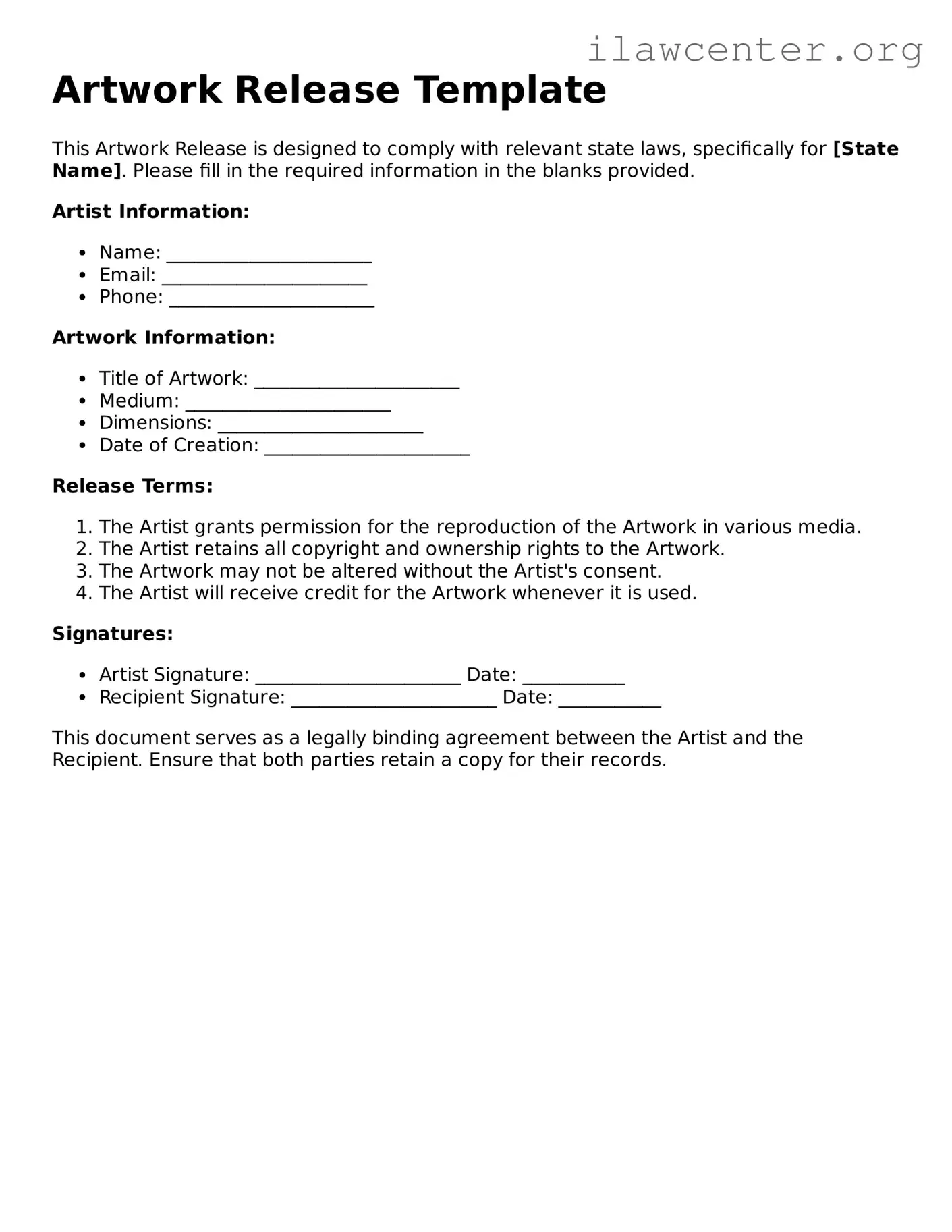
Artwork Release Preview

Artwork Release Template

This Artwork Release is designed to comply with relevant state laws, specifically for [State Name]. Please fill in the required information in the blanks provided.

Artist Information:

  • Name: ______________________
  • Email: ______________________
  • Phone: ______________________

Artwork Information:

  • Title of Artwork: ______________________
  • Medium: ______________________
  • Dimensions: ______________________
  • Date of Creation: ______________________

Release Terms:

  1. The Artist grants permission for the reproduction of the Artwork in various media.
  2. The Artist retains all copyright and ownership rights to the Artwork.
  3. The Artwork may not be altered without the Artist's consent.
  4. The Artist will receive credit for the Artwork whenever it is used.

Signatures:

  • Artist Signature: ______________________ Date: ___________
  • Recipient Signature: ______________________ Date: ___________

This document serves as a legally binding agreement between the Artist and the Recipient. Ensure that both parties retain a copy for their records.

PDF Form Characteristics

Fact Name Description
Purpose The Artwork Release form is used to grant permission for the use of artwork in various media, ensuring that the artist retains certain rights while allowing others to use their work.
Governing Law The governing laws for the Artwork Release form can vary by state, often falling under copyright law and contract law, depending on the jurisdiction.
Key Components This form typically includes details such as the artist's name, a description of the artwork, the scope of the release, and any compensation terms.
Importance of Clarity Clear language in the form helps prevent misunderstandings about how the artwork can be used and what rights the artist is retaining.
Signature Requirement Both the artist and the party receiving the rights must sign the form to make it legally binding, ensuring that both parties agree to the terms outlined.

Instructions on Utilizing Artwork Release

Completing the Artwork Release form is an important step in ensuring that the rights and permissions regarding the use of artwork are clearly defined. By following these instructions, you will be able to accurately fill out the form and proceed with your project.

  1. Begin by entering your full name in the designated field.
  2. Provide your contact information, including your email address and phone number.
  3. In the next section, describe the artwork. Include details such as the title, medium, and dimensions.
  4. Indicate whether you are the creator of the artwork or if you are representing someone else.
  5. Specify how you intend to use the artwork. Be clear about the purpose and the audience.
  6. Review the rights you are granting. Ensure you understand the permissions you are providing.
  7. Sign and date the form in the appropriate spaces to validate your agreement.
  8. Finally, submit the completed form according to the provided instructions.

Important Facts about Artwork Release

What is the purpose of the Artwork Release form?

The Artwork Release form is designed to secure permission from artists or creators to use their artwork for specific purposes. This may include reproduction, distribution, or display in various media. By obtaining a release, you ensure that the rights of the creator are respected while allowing for legal use of their work.

Who needs to sign the Artwork Release form?

The form must be signed by the artist or copyright holder of the artwork. If the artwork was created by multiple individuals, all relevant parties should provide their signatures to avoid any disputes regarding ownership or usage rights.

What information is typically included in the Artwork Release form?

Commonly, the form includes details such as the artist's name, contact information, a description of the artwork, and the specific rights being granted. It may also outline any limitations on usage, such as duration or geographic restrictions, ensuring clarity for both parties.

Is there a fee associated with the Artwork Release form?

Fees can vary based on the agreement between the artist and the party seeking to use the artwork. Some artists may charge a licensing fee, while others may provide their consent without any cost. It's essential to discuss and agree upon any financial terms before signing the form.

Can the Artwork Release form be revoked?

Once the form is signed, it typically grants permission for the specified use of the artwork. However, revocation may be possible if the agreement includes specific terms allowing for withdrawal of consent. Always review the terms carefully to understand the conditions surrounding revocation.

How long is the Artwork Release form valid?

The validity of the form depends on the terms outlined within it. Some releases are perpetual, allowing for indefinite use of the artwork, while others may have a set duration. It's crucial to clarify this aspect when drafting the agreement to avoid misunderstandings in the future.

What should I do if I have questions about the Artwork Release form?

If you have questions or concerns regarding the Artwork Release form, it's best to consult with the artist or a legal professional specializing in copyright and intellectual property. Open communication can help ensure that both parties are on the same page and that all aspects of the agreement are understood.
Common mistakes

Filling out an Artwork Release form can seem straightforward, but many individuals overlook key details that can lead to problems down the line. One common mistake is failing to provide accurate contact information. When the artist or the entity seeking permission needs to reach you, incomplete or incorrect contact details can create unnecessary delays or miscommunications.

Another frequent error involves not specifying the scope of use. Artists should clearly outline how their artwork will be used, whether for commercial purposes, promotional materials, or other specific applications. Without this clarity, misunderstandings may arise, leading to disputes over usage rights later.

People often neglect to include the date of the agreement. This seemingly minor detail can be crucial. A missing date can complicate matters, especially if there is a need to verify when the release was granted or if it aligns with specific project timelines.

Additionally, some individuals mistakenly assume that a verbal agreement is sufficient. While conversations can be important, a written release is essential for protecting both parties. Without it, rights to the artwork can become ambiguous, leading to potential legal issues.

Another common oversight is not considering the duration of the release. Some might leave this section blank or write vague terms. Clearly stating how long the rights are granted ensures that both parties have a mutual understanding of the agreement's timeline.

People sometimes forget to review the form for completeness before submission. Missing signatures or initials can render the form invalid. Taking a moment to double-check all sections can prevent unnecessary complications.

Some individuals also overlook the importance of understanding the implications of the release. They might sign without fully grasping what rights they are relinquishing. It’s crucial to read and comprehend the terms to avoid inadvertently giving away more than intended.

Another mistake involves not consulting with a professional when needed. If there are uncertainties about the form or its implications, seeking legal advice can provide clarity and ensure that all parties are adequately protected.

People may also forget to keep a copy of the signed form. Once the document is submitted, not having a personal record can lead to confusion in the future. Retaining a copy ensures that both parties have access to the same information.

Lastly, failing to update the form when circumstances change is a significant error. If the artist's contact information or the intended use of the artwork evolves, it’s essential to revise the release accordingly. Keeping the document current helps maintain clear communication and protects all parties involved.

Documents used along the form

When working with artwork and creative projects, various forms and documents are often utilized alongside the Artwork Release form. These documents help clarify rights, responsibilities, and permissions, ensuring that all parties involved understand their roles and the use of the artwork. Below is a list of common forms that are frequently used in conjunction with the Artwork Release form.

  • Model Release Form: This document is used to obtain permission from individuals who are featured in photographs or artwork. It grants the creator the right to use the likeness of the person in specified ways.
  • Copyright Assignment Agreement: This agreement transfers ownership of the copyright from the creator to another party. It is essential for defining who holds the rights to reproduce and distribute the artwork.
  • License Agreement: A license agreement outlines the terms under which one party can use the artwork created by another. This document specifies the scope of use, duration, and any compensation involved.
  • Collaboration Agreement: When multiple artists or creators work together, a collaboration agreement helps define each party's contributions, rights, and obligations regarding the shared artwork.
  • Non-Disclosure Agreement (NDA): An NDA protects sensitive information shared between parties during the creative process. This form ensures that proprietary ideas and concepts remain confidential.
  • Purchase Agreement: This document is used when artwork is being sold. It outlines the terms of sale, including price, payment methods, and delivery details.
  • Terms of Service: For online platforms or galleries displaying artwork, terms of service establish the rules and guidelines for users, including how artwork can be used and shared.
  • Exhibition Agreement: This agreement is essential for artists displaying their work in galleries or exhibitions. It details the terms of display, duration, and any commissions or fees involved.
  • Credit Line Agreement: This document ensures that the creator receives appropriate credit for their work when it is used or displayed, outlining how and where credit should be given.
  • Inventory Form: An inventory form keeps track of artwork, including details such as title, medium, dimensions, and current location. This is particularly useful for galleries and artists managing multiple pieces.

These documents collectively create a framework that protects the interests of artists, models, and other stakeholders involved in the creative process. Understanding and utilizing these forms can lead to smoother collaborations and clearer expectations for all parties involved.

Similar forms

  • Model Release Form: Similar to the Artwork Release form, a Model Release form grants permission to use an individual's likeness in various media. Both documents protect the rights of the creator while ensuring that the subjects involved have agreed to the usage of their image or work.

  • Property Release Form: This form is used when a photograph or artwork features private property. Like the Artwork Release, it secures permission from the property owner, ensuring that the creator can legally use images of the property in their work.

  • Music Release Form: Just as the Artwork Release form covers visual art, the Music Release form allows for the use of a musical composition or recording. Both forms ensure that creators receive credit and control over how their work is used.

  • Video Release Form: This document is similar in nature, as it secures permission to use someone's likeness in a video production. It protects the rights of both the creator and the individuals featured, much like the Artwork Release does for visual art.

  • Content Release Form: This form is used when an individual or organization wishes to use content created by another party. It resembles the Artwork Release form in that it outlines the terms of use and ownership rights, ensuring both parties are clear on the agreement.

  • Photography Release Form: This document is specifically for photographers who want to use images of people or property. It shares similarities with the Artwork Release form by ensuring that all parties involved understand the terms of use for the images taken.

  • Creative Commons License: While not a release form in the traditional sense, a Creative Commons License allows creators to specify how their work can be used by others. It parallels the Artwork Release by providing a framework for sharing while protecting the creator's rights.

Dos and Don'ts

When filling out the Artwork Release form, it’s important to follow certain guidelines to ensure clarity and compliance. Here are some dos and don’ts to keep in mind:

  • Do provide accurate information about the artwork and its creator.
  • Do read the entire form carefully before signing.
  • Don't leave any sections blank; incomplete forms can lead to delays.
  • Don't rush through the process; take your time to ensure all details are correct.

Misconceptions

Understanding the Artwork Release form is crucial for artists and clients alike. However, several misconceptions can lead to confusion. Below are four common misconceptions and clarifications regarding the Artwork Release form.

  • Misconception 1: The form is only necessary for professional artists.
  • This is not true. Anyone creating artwork, whether a hobbyist or a professional, should consider using the Artwork Release form to protect their rights and clarify usage terms.

  • Misconception 2: Signing the form means giving up all rights to the artwork.
  • In reality, the Artwork Release form outlines specific rights and permissions. Artists can retain certain rights while granting limited usage to clients or third parties.

  • Misconception 3: The form is only relevant for physical artworks.
  • This misconception overlooks the fact that the Artwork Release form applies to digital art as well. Whether the artwork is painted on canvas or created digitally, the form serves to clarify usage rights.

  • Misconception 4: Once signed, the form cannot be modified.
  • In fact, the Artwork Release form can be negotiated before signing. Both parties can discuss and amend terms to ensure mutual understanding and agreement.

Key takeaways

When filling out and using the Artwork Release form, keep these key takeaways in mind:

  • Clarity is essential: Ensure that all sections of the form are completed accurately. This helps avoid misunderstandings later.
  • Understand the rights granted: Know what rights you are giving away. This includes how the artwork can be used and by whom.
  • Keep a copy: Always retain a signed copy of the form for your records. This provides proof of the agreement.
  • Consult when in doubt: If you have questions about the form or its implications, seek legal advice to clarify your concerns.