Band Seating Chart PDF Template

Band Seating Chart PDF Template

The Band Seating Chart form is a crucial tool for organizing a concert band’s setup, ensuring that each musician has an appropriate space to perform. This form allows directors to detail the arrangement of chairs and stands, accommodating various instruments while maintaining sight lines to the conductor. To streamline your performance planning, fill out the form by clicking the button below.

Article Guide

The Band Seating Chart form serves as a crucial tool for organizing and planning the arrangement of musicians for a concert performance. This form is designed to capture essential details such as the director's name, school name, performance date, and time, ensuring that all necessary information is readily available. It includes a traditional American concert band set-up diagram, which allows directors to visualize the placement of chairs and music stands across multiple rows. Each row is clearly designated, enabling the precise allocation of seating for various instruments, from flutes to tubas. Specific instructions highlight the importance of maintaining the percussion section's basic setup, ensuring that sightlines to the conductor are unobstructed. Additionally, the form provides space to tally the total number of chairs and stands required, streamlining the logistical process. To facilitate timely communication, directors are instructed to fax the completed form to the designated contact prior to the specified deadline. This comprehensive approach helps ensure that every performance is well-organized and runs smoothly.

Band Seating Chart Preview

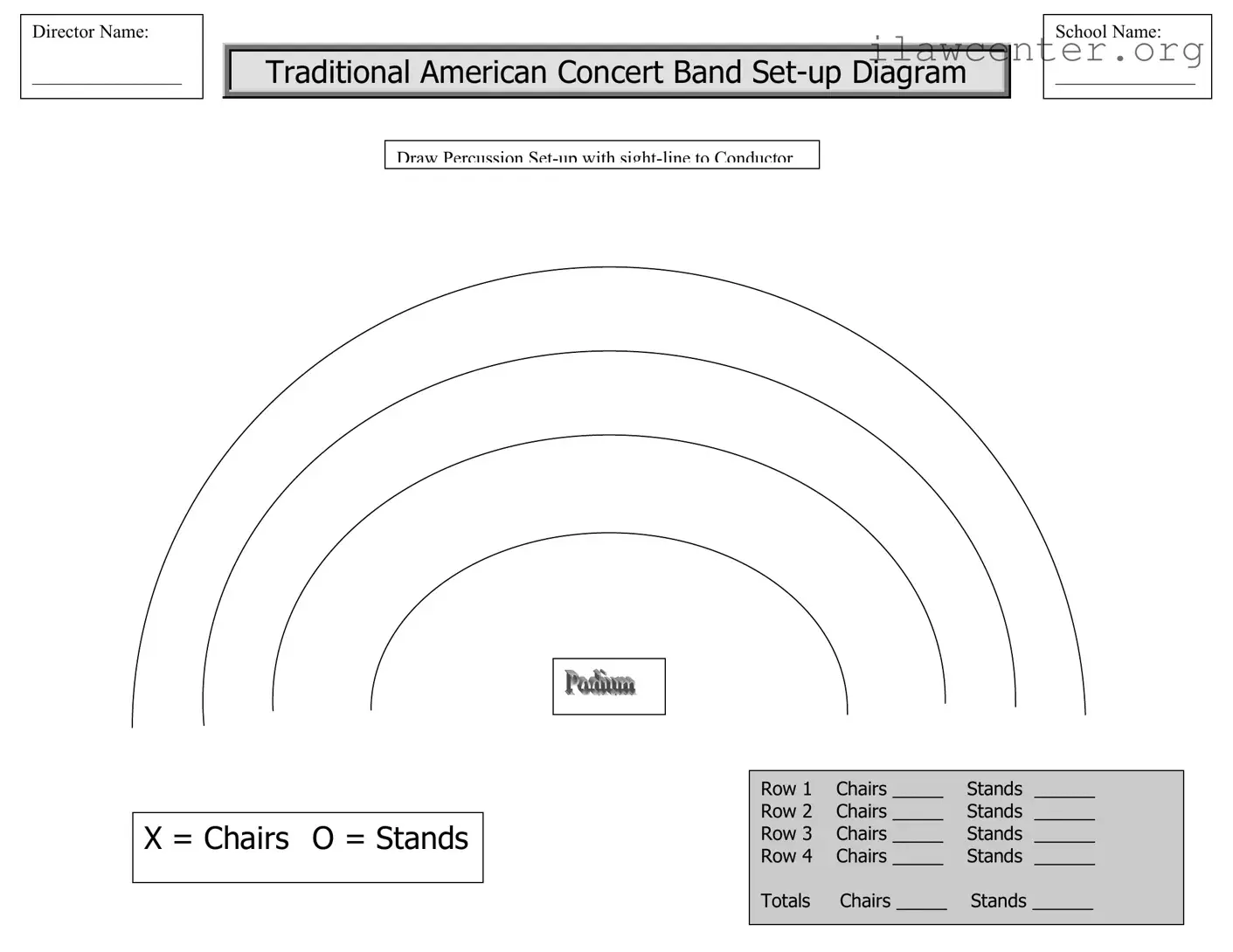
Traditional American Concert Band Set-up Diagram
Row 1 Chairs _____ Stands ______
Row 2 Chairs _____ Stands ______
Row 3 Chairs _____ Stands ______
Row 4 Chairs _____ Stands ______
Totals Chairs _____ Stands ______
X = Chairs O = Stands
Draw Percussion Set-up with sight-line to Conductor
School Name:
_______________
Director Name:
________________
Concert Band Set-u
School: _______________________________________
Director: ______________________________________
Performance Date: _____________ Time: __________
ROW 1 ______ chairs & _______ music stands
ROW 2 ______ chairs & _______ music stands
ROW 3 ______ chairs & _______ music stands
ROW 4 ______ chairs & _______ music stands
ROW 5 ______ chairs & _______ music stands
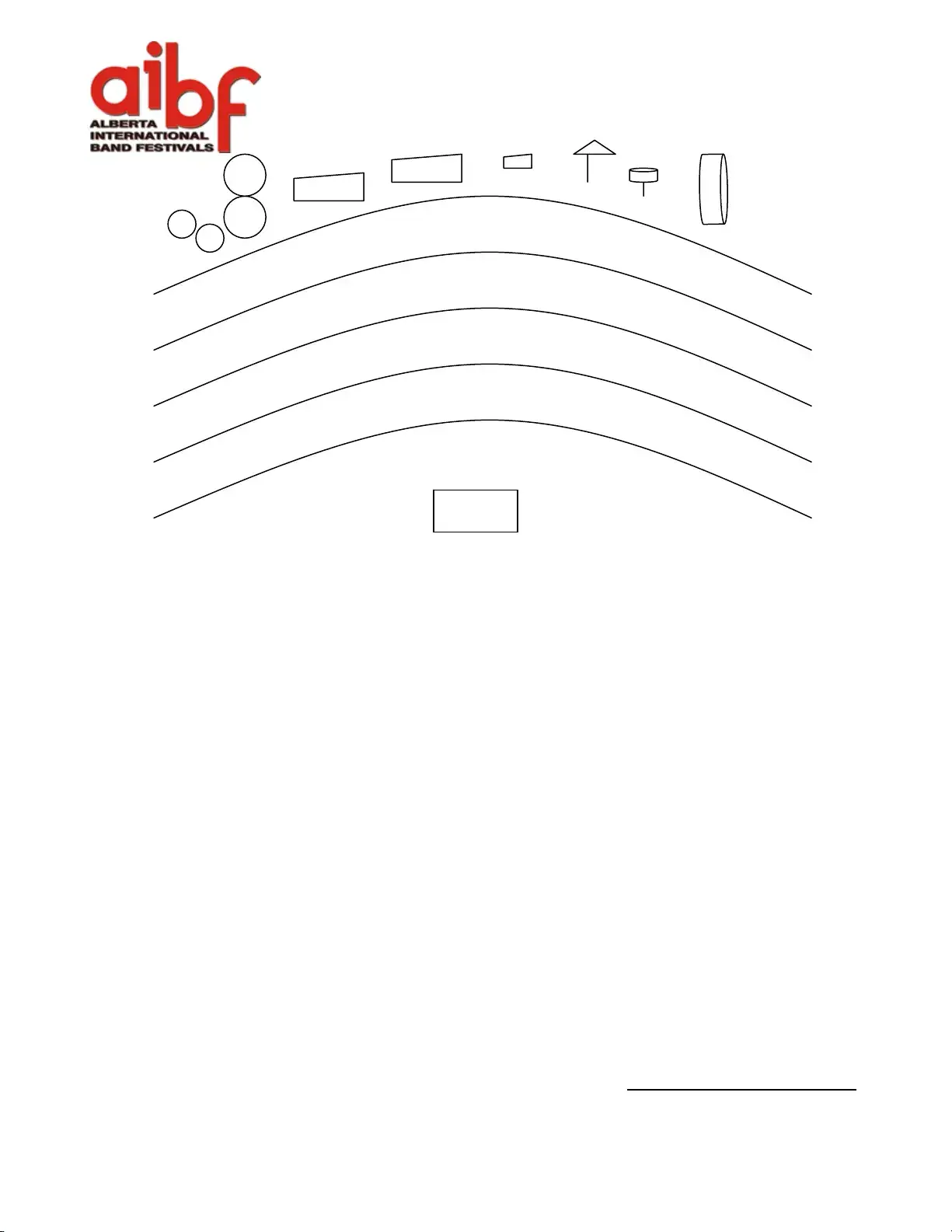
The AIBF stage crew will do their best to set the stage for your requirements.
Please note that percussion MUST stay in the basic set-up as shown.
PLEASE FAX THIS FORM TO 780-438-1465 ATT: ROB SPEERS PRIOR TO MARCH 1, 2008
Row 5
Row 4
Row 3
Row 2
Row 1
Podium
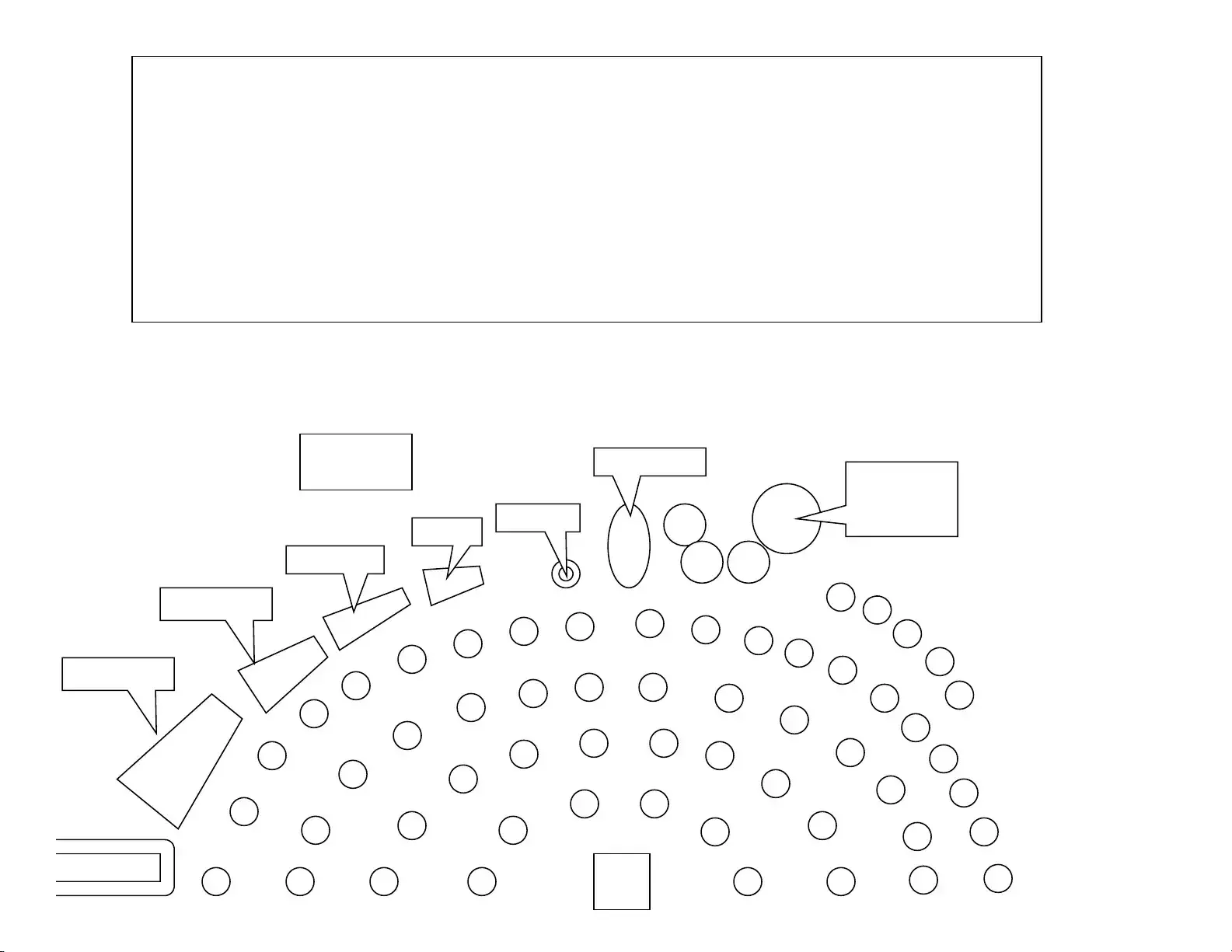
2007 Huron Concert Band
Row 1: 6 Chairs/3 Stands (Flute)
Row 2: 10 Chairs/8 Stands (1
st
& 2
nd
Clarinets, Oboe, Bassoon, Bass Clarinet)
Row 3: 14 Chairs/10 Stands (3
rd
Clarinet, Horns, Bari, Tenor, Alto
Row 4: 19 Chairs/13 Stands (Trumpets, Trombones, Euphonium, Tuba)
Row 5: 5 Stands
Percussion: 11 Stands
Chimes
Marimba
Xylophone
Vibes
Bells
Snare
Bass
Timpani
Auxiliary

File Properties

Fact Name Description
Director Name The form requires the director's name to ensure proper identification of the person in charge of the band.
School Name Participants must fill in the school name, which helps in organizing and identifying different bands.
Seating Arrangement The chart includes a detailed diagram for the traditional concert band setup, indicating the arrangement of chairs and stands.
Performance Details It is essential to note the performance date and time, ensuring that all parties are informed and prepared.
Fax Instructions The form must be faxed to a specific number by a set deadline, highlighting the importance of timely submission.
Percussion Setup The percussion section must adhere to a specified basic setup, which is critical for maintaining sight lines to the conductor.

Instructions on Utilizing Band Seating Chart

After completing the Band Seating Chart form, you will have a clear layout of the seating arrangements for your concert band performance. This will help ensure that all musicians are properly positioned and can see the conductor, facilitating a smooth performance. Follow these steps to fill out the form accurately.

  1. Start by writing the Director Name in the designated space.
  2. Next, fill in the School Name where the concert will take place.
  3. Draw the percussion set-up in the provided diagram, ensuring that it has a clear sight-line to the conductor.
  4. For each row from 1 to 4, enter the number of Chairs and Stands in the respective spaces.
  5. Calculate the totals for Chairs and Stands and fill them in at the bottom of the seating chart.
  6. In the Concert Band Set-up section, fill in the School and Director names again for clarity.
  7. Enter the Performance Date and Time in the specified fields.
  8. For each of the 5 rows in the Concert Band Set-up, indicate the number of Chairs and Music Stands required.
  9. Ensure that you note the percussion setup as it is outlined in the instructions.
  10. Once completed, fax the form to 780-438-1465, attention Rob Speers, before the deadline of March 1, 2008.

Important Facts about Band Seating Chart

What is the purpose of the Band Seating Chart form?

The Band Seating Chart form is designed to help organize the seating arrangement for a concert band performance. It allows the director to specify the number of chairs and music stands needed for each row, ensuring that every musician has the necessary space and equipment to perform effectively.

How do I fill out the Band Seating Chart form?

To fill out the form, start by entering your name as the director and the name of your school. Next, indicate the performance date and time. For each row, specify the number of chairs and stands required. Use the provided diagram to visualize the arrangement, ensuring that percussion instruments are placed according to the basic setup shown.

What should I do if I have special seating requirements?

If you have specific needs, such as accommodating students with disabilities or unique instrument arrangements, make a note of these in the comments section of the form. The AIBF stage crew will take your requests into consideration when setting up the stage.

Is there a deadline for submitting the Band Seating Chart form?

Yes, the form must be faxed to 780-438-1465, attention Rob Speers, prior to March 1, 2008. Timely submission ensures that the stage crew can adequately prepare for your performance.

What happens if I don’t submit the form on time?

Failing to submit the form by the deadline may result in a less-than-ideal setup for your performance. The stage crew may not be able to accommodate your specific seating needs, which could affect the overall performance experience for your musicians.

Can I make changes to the seating chart after I submit the form?

While it’s best to finalize your seating chart before the deadline, if changes are necessary, contact the AIBF stage crew as soon as possible. They will do their best to accommodate your requests, but last-minute changes may not always be possible.

What if I have more musicians than the seating chart allows?

If you anticipate having more musicians than the seating chart accommodates, it’s important to plan ahead. Consider discussing your needs with the AIBF stage crew before submitting the form. They can help you determine if additional seating can be arranged.

Are there any specific guidelines for percussion seating?

Yes, percussion instruments must remain in the basic setup as indicated on the form. This ensures that all percussionists have a clear sightline to the conductor and can perform effectively. Be sure to specify the number of percussion stands needed.

What if I need assistance with the form?

If you require help filling out the form or have questions about the seating arrangements, don’t hesitate to reach out to the AIBF team. They are there to assist you and ensure your concert band performance goes smoothly.

Where can I find the seating chart diagram?

The seating chart diagram is included on the Band Seating Chart form itself. It visually represents the arrangement of chairs and stands, helping you plan the layout for your musicians effectively.
Common mistakes

Filling out the Band Seating Chart form requires attention to detail, and many people make common mistakes that can lead to confusion. One frequent error is failing to accurately count the number of chairs and stands needed for each row. For instance, if a director underestimates the number of musicians in a section, it can result in inadequate seating and standing arrangements. This oversight can disrupt the performance and hinder musicians' ability to participate effectively.

Another mistake often made is neglecting to include the director's name and school information at the top of the form. This information is crucial for proper identification and communication. Without it, the stage crew may struggle to match the setup with the correct performance, leading to logistical issues on the day of the concert.

Additionally, some individuals forget to adhere to the specified percussion setup outlined in the form. The instructions clearly state that percussion must remain in the basic setup as shown. Ignoring this requirement can result in a chaotic arrangement, making it difficult for percussionists to follow the conductor and perform cohesively with the rest of the band.

Lastly, a common error is submitting the form after the deadline. The instructions specify that the form must be faxed prior to March 1, 2008. Late submissions may not receive the necessary attention from the stage crew, leading to a lack of preparation for the concert. Timeliness is essential to ensure a successful setup and performance.

Documents used along the form

The Band Seating Chart form is an essential document for organizing a concert band’s performance. However, it is often accompanied by several other forms and documents that help ensure everything runs smoothly. Below is a list of related documents that are frequently used alongside the Band Seating Chart.

  • Performance Schedule: This document outlines the date and time of the performance, along with rehearsal times and any other important events leading up to the concert.
  • Instrument Inventory List: This list details all the instruments that will be used during the performance, including their condition and any special requirements.
  • Music Selection List: This document includes the titles of the pieces to be performed, along with the composers and any relevant notes about the music.
  • Stage Setup Diagram: A visual representation of the stage layout, showing where each section of the band will be positioned, including the conductor's podium and any special equipment.
  • Sound Check Schedule: This outlines the times for sound checks prior to the performance, ensuring that all equipment is tested and ready to go.
  • Performance Agreement: A contract that details the expectations and responsibilities of all parties involved in the performance, including the venue, director, and musicians.
  • Emergency Contact List: This list provides important contact information for all key personnel, including directors, stage crew, and venue management, in case of emergencies.
  • Program Notes: A document that includes information about the pieces being performed, the composers, and any other relevant background information for the audience.
  • Volunteer Schedule: This outlines the roles and responsibilities of volunteers helping with the event, including setup, ushering, and cleanup.

Having these documents ready can greatly enhance the overall experience for both performers and the audience. Proper preparation ensures that the concert runs smoothly and that everyone involved knows their roles and responsibilities.

Similar forms

  • Seating Chart for Events: Similar to the Band Seating Chart, this document outlines the arrangement of attendees for various events, ensuring everyone knows where to sit. It helps in organizing space effectively and maintaining order during gatherings.
  • Stage Layout Plan: This document provides a visual representation of the stage setup, including where performers and equipment will be placed. Like the Band Seating Chart, it focuses on optimizing sightlines and accessibility for both performers and the audience.
  • Orchestra Seating Plan: This form is used by orchestras to arrange musicians in a way that enhances sound quality and balance. It shares the same purpose of ensuring that each musician has the right position for optimal performance.
  • Classroom Seating Chart: Teachers use this document to plan student seating in a classroom. It helps manage classroom dynamics and allows for better interaction among students, much like how a band director organizes musicians.
  • Wedding Seating Arrangement: Couples use this document to plan where guests will sit during the ceremony and reception. It ensures that guests are placed in a way that fosters relationships and comfort, similar to how musicians are arranged for performance.
  • Conference Room Layout: This document outlines how a conference room will be set up for meetings or presentations. It focuses on visibility and communication, much like the Band Seating Chart aims to enhance the performance experience.
  • Sports Team Lineup: Coaches create this document to outline player positions during games. It serves a similar function of organizing individuals into roles that contribute to overall success, just as musicians are arranged for optimal performance.
  • Performance Rehearsal Schedule: This document details the timing and arrangement of performers during rehearsals. It parallels the Band Seating Chart by coordinating the logistics of practice sessions for better performance outcomes.

Dos and Don'ts

When filling out the Band Seating Chart form, following a few simple guidelines can make the process smoother. Here are some dos and don'ts to keep in mind:

  • Do clearly write the director's name and school name at the top of the form.
  • Do accurately fill in the number of chairs and stands for each row.
  • Do ensure that the percussion section is set up according to the provided diagram.
  • Do double-check your totals for chairs and stands before submitting the form.
  • Don't forget to fax the completed form to the specified number before the deadline.
  • Don't leave any sections blank; every detail counts.
  • Don't alter the basic set-up for percussion unless instructed otherwise.

By keeping these points in mind, you can help ensure that your band’s seating arrangement is organized and meets everyone's needs. Good luck with your performance!

Misconceptions

Misconceptions about the Band Seating Chart form can lead to confusion and mistakes. Here are ten common misunderstandings, along with clarifications:

  1. It’s only for large bands. Many believe this form is only necessary for big ensembles. In reality, it can be used for bands of any size.
  2. All instruments are treated the same. Some think every instrument gets equal space. The chart specifies different setups for various instruments, especially percussion.
  3. Seating arrangements are flexible. Many assume they can change the setup at will. However, the percussion section must follow the basic layout provided.
  4. Directors don’t need to fill out the form. Some might think the form is optional. In fact, it’s crucial for ensuring the stage crew knows the requirements.
  5. Faxing is outdated. While some may prefer email, the form specifically asks to be faxed. This ensures it reaches the right person promptly.
  6. Only the number of chairs matters. People often focus solely on chairs. The number of music stands is equally important for proper setup.
  7. Performance date is not critical. Some might overlook the performance date. It’s essential for scheduling and planning the stage setup.
  8. There’s no need for a diagram. Many think a written list is enough. The diagram helps visualize the arrangement, making it easier for everyone involved.
  9. All schools use the same setup. Some may assume a standard setup applies to all. Each school can customize their chart based on their unique needs.
  10. Changes can be made after submission. Some believe they can modify their requests later. It's best to finalize everything before faxing the form to avoid issues.

Key takeaways

When filling out and using the Band Seating Chart form, consider the following key takeaways to ensure a smooth process:

  • Provide Accurate Information: Clearly fill in the director's name and school name at the top of the form. This helps in identifying your submission quickly.
  • Understand the Set-up Diagram: Use the provided traditional American concert band set-up diagram to accurately draw the percussion set-up. This ensures that all performers can see the conductor effectively.
  • Count Chairs and Stands: Carefully tally the number of chairs and music stands for each row. This information is crucial for the stage crew to prepare the space appropriately.
  • Follow the Basic Set-up: Remember that percussion instruments must adhere to the basic set-up shown in the diagram. Deviating from this may disrupt the overall arrangement.
  • Submit Before the Deadline: Fax the completed form to the designated number before the deadline of March 1, 2008. Timely submission is essential for proper planning.
  • Review Previous Arrangements: Look at past seating arrangements, like the 2007 Huron Concert Band example, for guidance on how to organize different instruments and sections effectively.

By keeping these points in mind, you can facilitate a well-organized performance that meets the needs of both the musicians and the audience.