Baseball Field Lineup PDF Template

Baseball Field Lineup PDF Template

The Baseball Field Lineup form is a crucial tool for organizing your team's players, positions, and pitching assignments for a game. It helps coaches and managers ensure everyone knows their role and contributes to a well-structured game plan. Ready to get started? Fill out the form by clicking the button below.

Article Guide

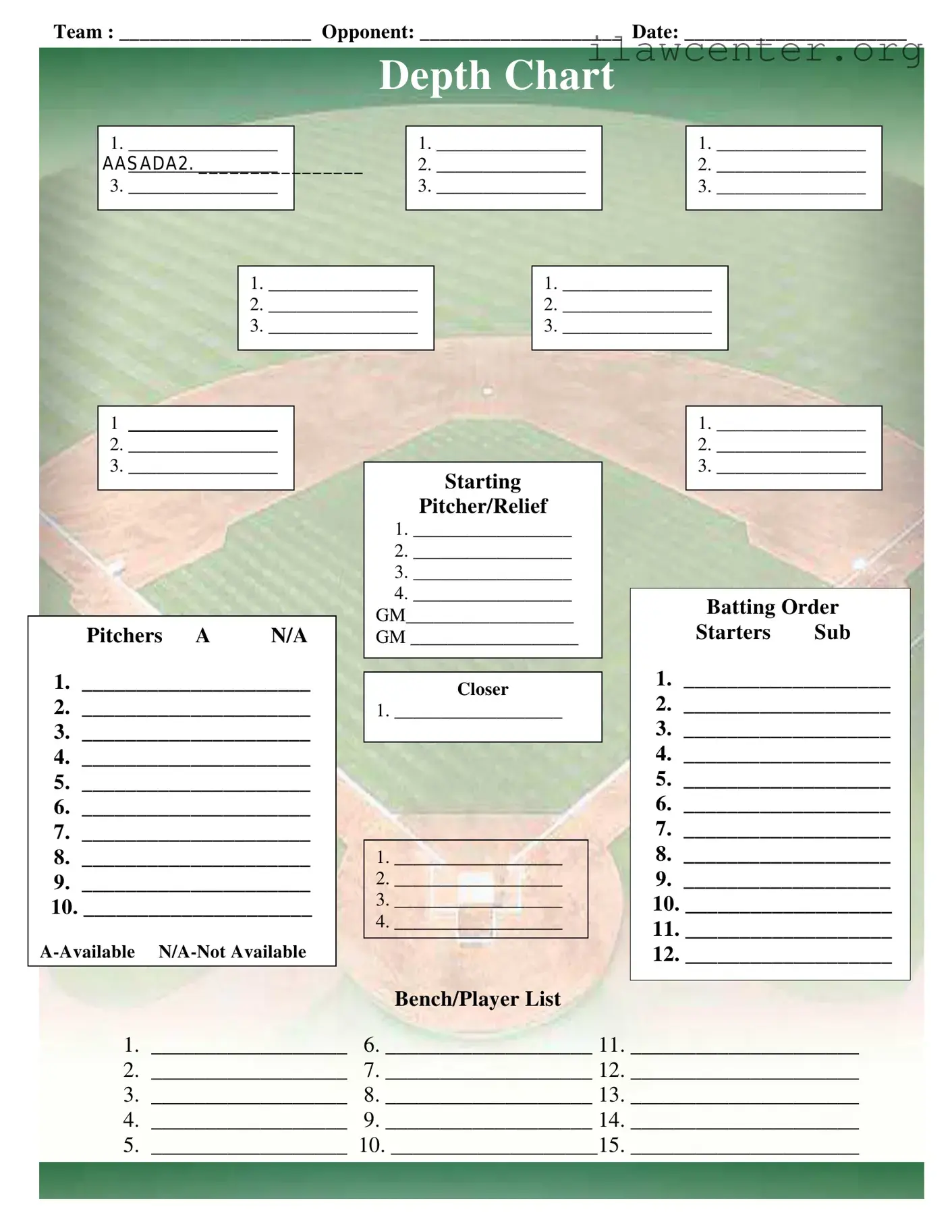
The Baseball Field Lineup form is an essential tool for coaches and teams preparing for a game. It captures crucial information about the team, including the name of the team, the opponent, and the date of the game. The form features sections for listing players in the batting order, ensuring that each position is filled strategically. Depth charts help coaches organize their players by position, allowing for quick adjustments if needed. Additionally, the form includes a section for pitchers, where their availability is noted, distinguishing between starting pitchers and relievers. This clarity is vital for making real-time decisions during the game. The batting order section is particularly important, as it outlines the sequence in which players will hit, maximizing scoring opportunities. Finally, the bench/player list provides a comprehensive overview of all available players, ensuring that the team is ready for any situation that may arise. By utilizing this form, coaches can streamline their game preparation and enhance team performance.

Baseball Field Lineup Preview

Starting
Pitcher/Relief
1. _________________
2. _________________
3. _________________
4. _________________
GM__________________
GM __________________
1. ________________
2. ________________
3. ________________
1. ________________
2. ________________
3. ________________
1. ________________
2. ________________
3. ________________
1. __________________
2. __________________
3. __________________
4. __________________
1. ________________
2. ________________
3. ________________
1. ________________
2. ________________
3. ________________
1 ________________
2. ________________
3. ________________
1. ________________
2. ________________
3. ________________
Bench/Player List
1. __________________ 6. ___________________ 11. _____________________
2. __________________ 7. ___________________ 12. _____________________
3. __________________ 8. ___________________ 13. _____________________
4. __________________ 9. ___________________ 14. _____________________
5. __________________ 10. ___________________15. _____________________
Batting Order
Starters Sub
1. ___________________
2. ___________________
3. ___________________
4. ___________________
5. ___________________
6. ___________________
7. ___________________
8. ___________________
9. ___________________
10. ___________________
11. ___________________
12. ___________________
Team : ___________________ Opponent: ____________________ Date: ______________________
Pitchers A N/A
1. _____________________
2. _____________________
3. _____________________
4. _____________________
5. _____________________
6. _____________________
7. _____________________
8. _____________________
9. _____________________
10. _____________________
A-Available N/A-Not Available
Closer
1. __________________
__________________
Depth Chart
AASADA2. ________________

File Properties

Fact Name Description
Team Identification The form requires the name of the team and the opponent to be filled in at the top.
Date Requirement The date of the game must be recorded on the form for reference.
Player Depth Chart A section is designated for listing players in a depth chart format, allowing coaches to organize player positions.
Pitcher Availability The form includes a section for pitchers, indicating their availability status as either "Available" or "Not Available."
Batting Order The batting order for starters and substitutes must be clearly defined, with spaces provided for up to twelve players.
Governing Laws In some states, the use of this form may be governed by local sports regulations and league rules.

Instructions on Utilizing Baseball Field Lineup

Completing the Baseball Field Lineup form is essential for organizing your team's roster for the game. Follow these steps to ensure all necessary information is accurately filled out.

  1. Team: Write the name of your team in the designated space.
  2. Opponent: Enter the name of the opposing team.
  3. Date: Fill in the date of the game.
  4. Starting Players: List the names of your starting players in the first three slots.
  5. Depth Chart: Fill in the names of players in the depth chart section, which includes three slots for each of the four categories.
  6. Pitchers: List the names of your pitchers in the designated slots. Use "A" for available and "N/A" for not available.
  7. Starting Pitcher/Relief: Specify the names of the starting pitchers and relief pitchers in the provided spaces.
  8. GM: Enter the names of the general managers in the appropriate areas.
  9. Closer: Fill in the name of your closer and any additional relievers as needed.
  10. Batting Order: List the batting order for your starters and substitutes in the respective sections.
  11. Bench/Player List: Complete the bench/player list with the names of all additional players.

Important Facts about Baseball Field Lineup

What is the purpose of the Baseball Field Lineup form?

The Baseball Field Lineup form is designed to help coaches organize their team for a game. It allows for clear communication of player positions, batting order, and pitching assignments. This ensures that everyone is on the same page, which is crucial for a successful game.

How do I fill out the team and opponent sections?

In the designated spaces at the top of the form, write your team's name and the name of the opposing team. This information is essential for record-keeping and helps everyone involved know which teams are playing.

What should I include in the depth chart section?

The depth chart section is where you list your players based on their positions. You should categorize them by their primary roles on the field. This helps you quickly identify who can step in if a player is unavailable or needs to be substituted.

How do I indicate player availability?

Use the "A" for available and "N/A" for not available next to each player's name in the pitching section. This will help you keep track of who can pitch and who cannot, ensuring you have enough players ready for the game.

What information is needed for the starting pitcher and relief pitchers?

In the section for pitchers, list the names of your starting pitcher and any relief pitchers you plan to use. This allows for strategic planning during the game, especially in managing pitching changes effectively.

How do I determine the batting order?

The batting order should be filled out based on the players' strengths and matchups against the opposing team's pitchers. List the starters first, followed by any substitutes. This structure helps maximize your team's offensive potential.

What if I have more players than the form allows?

If you have more players than the form accommodates, you can use additional sheets or write their names in the margins. It's important to ensure that every player is accounted for, even if it means getting a bit creative with the space available.

Who should have access to the completed lineup form?

The completed lineup form should be shared with all coaching staff and players. This ensures that everyone knows their roles and responsibilities. It may also be beneficial to share it with team parents or guardians for additional support.

Common mistakes

Filling out the Baseball Field Lineup form can be straightforward, but many people make common mistakes. One frequent error is forgetting to include the team name and opponent at the top of the form. This information is crucial for identifying the game and can lead to confusion later.

Another mistake is not filling in the date of the game. Without the date, it can be challenging to track records or refer back to specific games. Always double-check that this information is accurate and complete.

People often overlook the depth chart. This section is essential for understanding player positions and substitutions. Leaving it blank or incomplete can lead to disorganization during the game.

Additionally, some individuals mistakenly list players in the wrong order. The batting order must reflect the actual lineup, and mixing up players can disrupt the flow of the game. It’s important to review this section carefully.

Another common issue is failing to indicate player availability. The A for available and N/A for not available must be marked clearly for each player. If this is not done, coaches may struggle to make informed decisions about substitutions.

When it comes to the pitching section, some people do not specify whether a player is a starting pitcher or a relief pitcher. This information is vital for game strategy, so it’s crucial to label each player correctly.

Another mistake is neglecting to fill in the closer section. This position is key in high-pressure situations, and not designating a closer can lead to confusion during the game.

Many also forget to list all players in the bench/player list. This section should include every player on the team, ensuring that everyone is accounted for. Missing players can lead to complications during substitutions.

Lastly, some individuals do not review the entire form before submitting it. Taking a moment to double-check the lineup can prevent errors and ensure that everything is in order. A quick review can save time and headaches later on.

Documents used along the form

The Baseball Field Lineup form serves as a critical document for organizing a baseball team's roster and game strategy. Alongside this form, several other documents are often utilized to ensure effective team management and communication. Below is a list of related forms and documents that may accompany the Baseball Field Lineup form.

  • Player Roster Form: This document provides a comprehensive list of all players on the team, including their positions, jersey numbers, and contact information. It is essential for maintaining up-to-date records of team members.
  • Game Schedule: The game schedule outlines the dates, times, and locations of upcoming games. This document helps players and coaches keep track of their commitments throughout the season.
  • Injury Report: The injury report details any injuries affecting players, including their status and expected recovery times. This information is crucial for making informed decisions about player availability and lineup adjustments.
  • Scorebook: The scorebook is used to record the details of each game, including runs scored, player statistics, and key plays. This document serves as a historical record and can be referenced for performance analysis.

These documents work together to support the organization and efficiency of a baseball team. Proper management of these forms can enhance communication, streamline operations, and improve overall team performance.

Similar forms

The Baseball Field Lineup form serves a specific purpose in organizing team details for a game. It shares similarities with several other documents used in sports management. Here are four such documents:

  • Player Roster: This document lists all team members, including their positions and jersey numbers. Like the lineup form, it helps coaches and staff quickly identify players and their roles during a game.
  • Game Day Schedule: This outlines the timing of events for the day, including warm-ups, game start time, and breaks. Similar to the lineup form, it ensures everyone is on the same page regarding the day's structure.
  • Injury Report: This document provides information on player availability due to injuries. It parallels the lineup form by indicating which players are fit to play and which are not, thus impacting game strategy.
  • Pitching Rotation Chart: This chart details the order in which pitchers will be used during games. Much like the lineup form, it helps coaches plan their strategy based on player strengths and game conditions.

Dos and Don'ts

When filling out the Baseball Field Lineup form, attention to detail is crucial. Here are some important do's and don'ts to keep in mind:

  • Do ensure all team and opponent information is accurate.
  • Do fill in the date clearly to avoid confusion.
  • Do list players in the correct order as per the depth chart.
  • Do indicate player availability using A for Available and N/A for Not Available.
  • Do confirm the starting pitcher and relief pitchers are correctly noted.
  • Don't leave any sections blank unless absolutely necessary.
  • Don't use nicknames; always write players' full names.
  • Don't forget to include all necessary players in the batting order.
  • Don't use abbreviations that may not be understood by others reviewing the form.

Misconceptions

Understanding the Baseball Field Lineup form can be challenging. Here are nine common misconceptions about this important document:

  • The lineup form is only for the starting players. Many believe that the form is solely for starters, but it also includes substitutes and depth charts, ensuring all players are accounted for.
  • Pitchers are only listed once. Some think pitchers are only mentioned in one section. In reality, there are multiple areas for pitchers, including starting and relief pitchers, which helps coaches strategize effectively.
  • All players must be available to fill out the form. It's a misconception that every player needs to be available. The form includes notations for players who are unavailable, which is crucial for planning.
  • The batting order is fixed. Many assume that once the batting order is written, it cannot change. However, coaches can adjust the order based on game circumstances or player performance.
  • The depth chart is unimportant. Some overlook the depth chart, thinking it’s not essential. In fact, it provides valuable insights into player positions and substitutions during the game.
  • Only the head coach fills out the form. It's a common belief that only one person is responsible for the lineup. In many teams, multiple staff members contribute to ensure accuracy and strategy.
  • The form is only relevant on game day. Some people think the lineup form is only useful right before a game. However, it can be a critical tool for practice sessions and player evaluations as well.
  • All teams use the same format for the lineup form. Many assume that every team has a standardized form. In reality, each team may customize their lineup form to fit their specific needs and preferences.
  • Filling out the form is a simple task. Some underestimate the complexity involved in completing the lineup form. It requires careful consideration of player statistics, matchups, and game strategy.

By dispelling these misconceptions, players, coaches, and fans can better appreciate the significance of the Baseball Field Lineup form in the game.

Key takeaways

Filling out the Baseball Field Lineup form is essential for organizing your team effectively. Here are some key takeaways to keep in mind:

  • Complete Team Information: Always fill in your team name, opponent, and date at the top of the form.
  • List Players Clearly: Write the names of players in the designated spots to ensure everyone knows their position.
  • Use the Depth Chart: This section helps you track player availability and positions. Fill it out thoroughly.
  • Pitcher Details Matter: Clearly list your pitchers and their availability. This is crucial for game strategy.
  • Identify Starting and Relief Pitchers: Specify who will start the game and who will be available for relief.
  • Organize the Batting Order: Write down the batting order for starters and substitutes to streamline the game flow.
  • Keep a Bench/Player List: Include all players not in the starting lineup. This helps in quick substitutions.
  • Review Before the Game: Double-check the completed form to ensure accuracy and clarity. It can impact your game strategy.