Fillable Bicycle Bill of Sale Document

Fillable Bicycle Bill of Sale Document

The Bicycle Bill of Sale form is a legal document that records the transfer of ownership of a bicycle from one party to another. This form provides essential details about the transaction, including the buyer, seller, and specific information about the bicycle itself. To ensure a smooth transfer, consider filling out the form by clicking the button below.

Article Guide

The Bicycle Bill of Sale form serves as a crucial document in the transfer of ownership for bicycles. This form not only provides a record of the sale but also protects both the buyer and the seller by detailing essential information about the transaction. Key components typically included in the form are the names and contact details of both parties, a description of the bicycle—including its make, model, and serial number—and the sale price. Additionally, the date of the transaction is noted, ensuring a clear timeline of ownership. By documenting the condition of the bicycle at the time of sale, the form also helps prevent disputes regarding its state. Furthermore, the inclusion of signatures from both parties signifies mutual agreement to the terms outlined in the document, reinforcing its legal validity. Overall, the Bicycle Bill of Sale form plays an integral role in facilitating transparent and secure transactions in the cycling community.

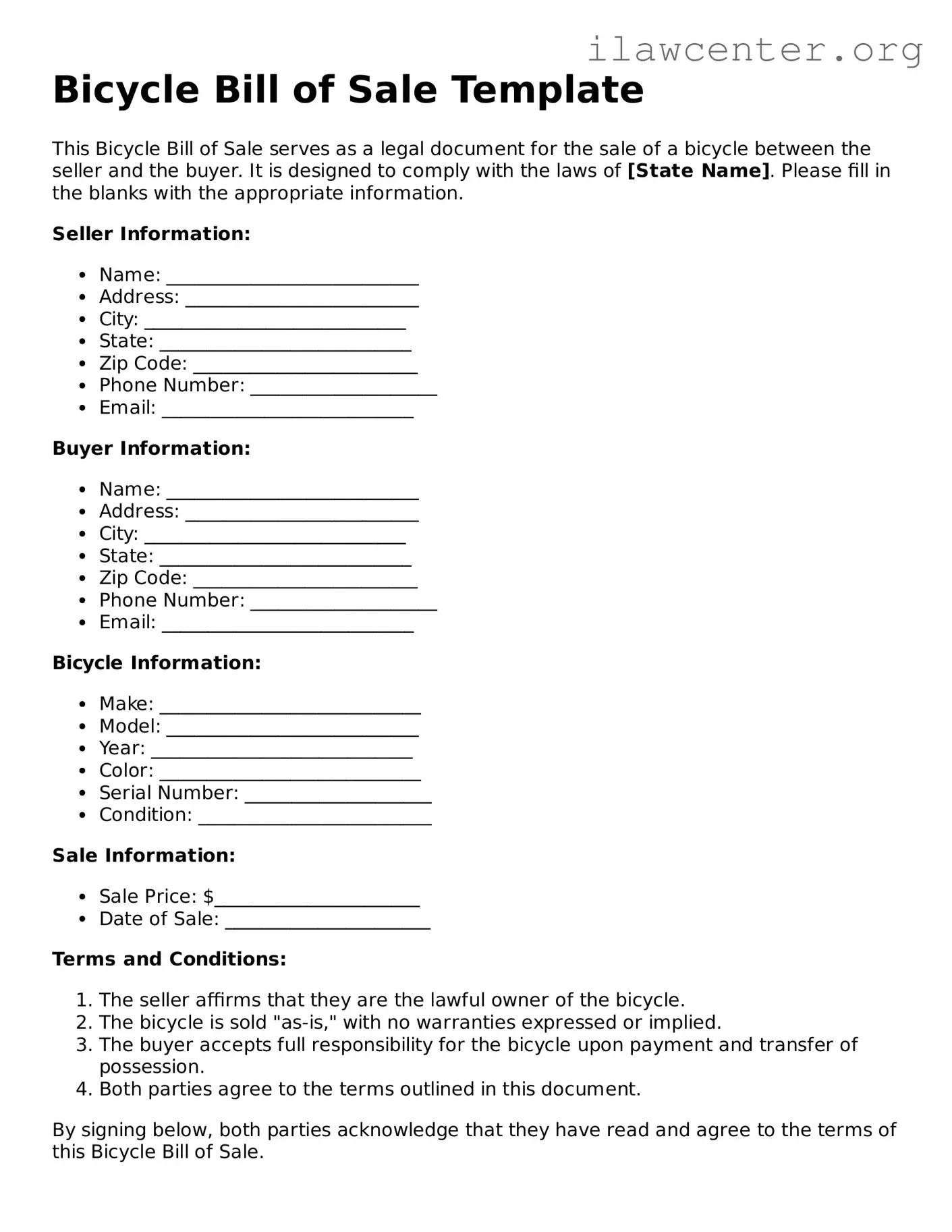
Bicycle Bill of Sale Preview

Bicycle Bill of Sale Template

This Bicycle Bill of Sale serves as a legal document for the sale of a bicycle between the seller and the buyer. It is designed to comply with the laws of [State Name]. Please fill in the blanks with the appropriate information.

Seller Information:

  • Name: ___________________________
  • Address: _________________________
  • City: ____________________________
  • State: ___________________________
  • Zip Code: ________________________
  • Phone Number: ____________________
  • Email: ___________________________

Buyer Information:

  • Name: ___________________________
  • Address: _________________________
  • City: ____________________________
  • State: ___________________________
  • Zip Code: ________________________
  • Phone Number: ____________________
  • Email: ___________________________

Bicycle Information:

  • Make: ____________________________
  • Model: ___________________________
  • Year: ____________________________
  • Color: ____________________________
  • Serial Number: ____________________
  • Condition: _________________________

Sale Information:

  • Sale Price: $______________________
  • Date of Sale: ______________________

Terms and Conditions:

  1. The seller affirms that they are the lawful owner of the bicycle.
  2. The bicycle is sold "as-is," with no warranties expressed or implied.
  3. The buyer accepts full responsibility for the bicycle upon payment and transfer of possession.
  4. Both parties agree to the terms outlined in this document.

By signing below, both parties acknowledge that they have read and agree to the terms of this Bicycle Bill of Sale.

Seller Signature: ___________________________ Date: _______________

Buyer Signature: ___________________________ Date: _______________

This document should be retained by both parties for their records.

PDF Form Characteristics

Fact Name Description
Purpose The Bicycle Bill of Sale form serves as a legal document to record the sale and transfer of ownership of a bicycle.
Parties Involved The form typically includes details of the seller and the buyer, ensuring both parties are identified in the transaction.
Item Description A detailed description of the bicycle, including make, model, color, and serial number, is essential for identification.
Payment Details The form should specify the sale price and payment method to clarify the financial aspect of the transaction.
Governing Law Each state may have specific laws governing the sale of bicycles. For example, California follows the California Civil Code § 1738.
Signatures Both the seller and buyer must sign the form to validate the transaction and confirm agreement to the terms.
As-Is Condition The form may include a clause stating that the bicycle is sold "as-is," indicating no warranties are provided by the seller.
Record Keeping It is advisable for both parties to keep a copy of the signed Bill of Sale for their records, as it may be needed for future reference.
Transfer of Liability The Bill of Sale can help establish the date of transfer, which may affect liability in case of accidents or theft after the sale.
State-Specific Variations Some states may have additional requirements or forms related to bicycle sales, which should be reviewed before completing the transaction.

Instructions on Utilizing Bicycle Bill of Sale

After obtaining the Bicycle Bill of Sale form, you will need to provide specific information to complete it accurately. Follow the steps below to ensure all necessary details are included.

  1. Begin by entering the date of the transaction at the top of the form.
  2. Fill in the seller's full name and address. This identifies the person selling the bicycle.
  3. Next, provide the buyer's full name and address. This information is essential for the new owner.
  4. Include a detailed description of the bicycle. Mention the make, model, year, color, and any unique identifying features, such as the serial number.
  5. State the purchase price of the bicycle clearly. This amount should reflect the agreed-upon sale price.
  6. Both the seller and buyer should sign and date the form. Signatures confirm the agreement and transfer of ownership.

Once you have filled out the form completely, it is advisable to keep a copy for your records. This document serves as proof of the transaction between the seller and buyer.

Important Facts about Bicycle Bill of Sale

What is a Bicycle Bill of Sale form?

A Bicycle Bill of Sale form is a legal document that records the sale and transfer of ownership of a bicycle from one party to another. It serves as proof of the transaction and includes details about the bicycle, the buyer, and the seller. This form can protect both parties by documenting the terms of the sale.

Why should I use a Bicycle Bill of Sale?

Using a Bicycle Bill of Sale is beneficial for several reasons. It provides a clear record of the transaction, which can be useful in case of disputes or misunderstandings. It can also help establish ownership if the bicycle is ever lost or stolen. Additionally, some states may require a bill of sale for registration or insurance purposes.

What information is typically included in the form?

A typical Bicycle Bill of Sale form includes the following information: the names and addresses of the buyer and seller, the date of the sale, a description of the bicycle (including make, model, color, and serial number), the sale price, and any warranties or conditions of the sale. Both parties usually sign the document to acknowledge the transaction.

Is the Bicycle Bill of Sale form legally binding?

Yes, a properly completed and signed Bicycle Bill of Sale form is legally binding. It acts as a contract between the buyer and seller, outlining the terms of the sale. However, for it to hold up in court, it should be clear, accurate, and include all necessary details. Both parties should keep a copy for their records.

Do I need to have the form notarized?

Notarization is not typically required for a Bicycle Bill of Sale, but it can add an extra layer of authenticity to the document. Having the form notarized may be advisable if the transaction involves a significant amount of money or if either party wishes to ensure that the document will be upheld in the event of a dispute.

Can I create my own Bicycle Bill of Sale form?

Yes, you can create your own Bicycle Bill of Sale form. It is important to include all necessary information and to ensure that the language is clear and unambiguous. Many templates are available online that you can customize to fit your needs. Just ensure that the final document meets your state’s requirements.

What if the bicycle has a lien on it?

If the bicycle has a lien, it is crucial to disclose this information in the Bill of Sale. A lien indicates that there is a debt associated with the bicycle, and the seller must ensure that the lien is satisfied before transferring ownership. Failing to disclose a lien can lead to legal complications for both the buyer and seller.

How can I use the Bicycle Bill of Sale for insurance purposes?

Insurance companies often require proof of ownership for coverage. A Bicycle Bill of Sale serves as this proof. When applying for insurance, you can submit the completed bill of sale along with any other required documents. This can help ensure that you receive adequate coverage in the event of theft or damage to your bicycle.

Where can I find a Bicycle Bill of Sale template?

Many online resources offer free or paid templates for a Bicycle Bill of Sale. Websites dedicated to legal documents, local government sites, or bicycle advocacy organizations often provide downloadable forms. Ensure that the template you choose complies with your state’s laws and includes all necessary details for your transaction.
Common mistakes

When filling out the Bicycle Bill of Sale form, many individuals inadvertently make mistakes that can lead to complications down the road. One common error is failing to provide complete information about the bicycle. This includes not specifying the make, model, year, and serial number. Without these details, it may become difficult to identify the bicycle in case of theft or disputes.

Another frequent mistake involves incorrect dates. People sometimes forget to enter the date of the sale or mistakenly use the wrong date. This can create confusion regarding the ownership timeline and may affect any warranty claims or legal issues that arise later.

Some individuals neglect to include the seller's and buyer's full names and addresses. Omitting this information can lead to difficulties in establishing ownership and may complicate future transactions. It is essential to ensure that both parties are clearly identified to avoid any misunderstandings.

Additionally, many people overlook the importance of signatures. The form requires both the seller and buyer to sign it to validate the transaction. Without signatures, the document may not hold up in legal situations, making it crucial to ensure both parties have signed before completing the sale.

Another mistake is not providing a clear statement of the sale price. Some individuals might write "negotiable" or leave the price blank. This can lead to disputes later on regarding how much was actually paid for the bicycle, so it’s important to list a specific amount.

Some people forget to check local laws regarding the sale of bicycles. Depending on the state or city, there may be specific requirements for the sale that need to be included in the Bill of Sale. Ignoring these regulations can result in legal complications.

Failing to provide a description of the bicycle's condition is also a common oversight. Buyers appreciate knowing whether the bicycle is new, used, or has any existing damage. A thorough description can prevent disagreements about the bicycle's state after the sale is completed.

Many individuals do not keep a copy of the Bill of Sale for their records. After the transaction, it’s essential for both the buyer and seller to retain a copy. This serves as proof of the sale and can be useful for future reference, especially if any issues arise.

Lastly, some people forget to include any additional terms of the sale. If there are specific agreements between the buyer and seller, such as warranties or return policies, these should be documented in the Bill of Sale. This clarity can help prevent misunderstandings and protect both parties.

Documents used along the form

When purchasing or selling a bicycle, the Bicycle Bill of Sale form serves as an essential document to record the transaction. However, there are several other forms and documents that are often used in conjunction with it to ensure a smooth transfer of ownership and to provide additional protection for both parties involved. Below is a list of these documents, each serving a unique purpose.

  • Title Transfer Document: This document officially transfers ownership from the seller to the buyer. It is particularly important for high-value bicycles or those that may have been registered with a governing body.
  • Warranty Certificate: If the bicycle comes with a warranty, this certificate outlines the terms and conditions of the warranty, including coverage and duration. It provides peace of mind for the buyer.
  • Release of Liability Form: This form protects the seller from any future claims or liabilities related to the bicycle after the sale. It is crucial for both parties to understand their rights and responsibilities.
  • Inspection Report: An inspection report documents the condition of the bicycle at the time of sale. It can help prevent disputes over the bicycle's condition after the transaction is completed.
  • Receipt of Payment: A simple receipt serves as proof of payment for the bicycle. It can be useful for both the buyer and seller for record-keeping purposes.
  • Insurance Policy: If the buyer intends to insure the bicycle, they may need to provide proof of insurance or obtain a policy that covers theft or damage.
  • Identification Documents: Both parties may wish to exchange identification, such as a driver’s license or state ID, to verify identities and prevent fraud.
  • Sales Agreement: A more detailed document than the bill of sale, a sales agreement outlines the terms of the sale, including payment methods, delivery details, and any conditions agreed upon by both parties.
  • Financing Agreement: If the buyer is financing the bicycle, this document details the terms of the loan, including interest rates and repayment schedules.
  • Registration Form: Some states require bicycles to be registered. This form ensures that the bicycle is properly recorded with local authorities, which can help in recovery if it is stolen.

Utilizing these documents alongside the Bicycle Bill of Sale can help facilitate a transparent and secure transaction. Each form plays a vital role in protecting the interests of both the buyer and the seller, ensuring that all aspects of the sale are clearly defined and agreed upon.

Similar forms

  • Vehicle Bill of Sale: This document serves a similar purpose for motor vehicles. It provides proof of transfer of ownership, details about the vehicle, and the sale price. Both forms protect the buyer and seller by documenting the transaction.
  • Boat Bill of Sale: Like the Bicycle Bill of Sale, this document records the sale of a boat. It includes information about the boat, the seller, and the buyer. Both forms are essential for establishing legal ownership and can be used for registration purposes.
  • Personal Property Bill of Sale: This document is used for various types of personal property transactions. It outlines the details of the item sold, the parties involved, and the sale price. Both documents serve to protect the interests of the buyer and seller.
  • Gun Bill of Sale: Similar to the Bicycle Bill of Sale, this document is used for the sale of firearms. It includes details about the firearm, the buyer, and the seller. Both forms help ensure compliance with legal requirements and provide a record of ownership transfer.

Dos and Don'ts

When filling out the Bicycle Bill of Sale form, it is important to follow certain guidelines to ensure that the transaction is clear and legally sound. Below is a list of things you should and shouldn't do.

  • Do include the full names and addresses of both the buyer and the seller.
  • Do provide a detailed description of the bicycle, including the make, model, color, and any unique identifiers such as the serial number.
  • Do specify the sale price clearly to avoid any misunderstandings.
  • Do sign and date the form to validate the transaction.
  • Don't leave any sections of the form blank; incomplete information can lead to disputes.
  • Don't use vague terms when describing the bicycle; clarity is key.
  • Don't forget to keep a copy of the completed form for your records.
  • Don't rush through the process; take your time to ensure accuracy.

Misconceptions

The Bicycle Bill of Sale form is a useful document for both buyers and sellers in the transaction of a bicycle. However, several misconceptions exist about its purpose and function. Below are ten common misconceptions, along with explanations to clarify them.

  1. It is only necessary for expensive bicycles.

    This is not true. A Bill of Sale is beneficial for any bicycle transaction, regardless of price. It serves as proof of ownership and protects both parties.

  2. It is a legally required document in all states.

    While a Bill of Sale is recommended, it is not legally required in every state for bicycle sales. Regulations vary, so it is essential to check local laws.

  3. Only the seller needs to sign the document.

    Both the buyer and seller should sign the Bill of Sale. This ensures that both parties acknowledge the terms of the sale.

  4. It is only for new bicycles.

    Used bicycles can also benefit from a Bill of Sale. This document helps clarify the transaction details, regardless of the bicycle's condition.

  5. It must be notarized to be valid.

    Notarization is not typically required for a Bill of Sale. However, having it notarized can add an extra layer of authenticity, if desired.

  6. It is not important if the bicycle is a gift.

    A Bill of Sale can still be useful for gifts. It provides a record of the transfer and can help avoid future disputes regarding ownership.

  7. It only includes the price of the bicycle.

    While the price is a key component, the Bill of Sale can also include details like the bicycle's make, model, and any warranties or conditions of the sale.

  8. It is a complicated document.

    The Bicycle Bill of Sale is generally straightforward and can be created using simple templates available online. It does not require complex legal language.

  9. Once signed, it cannot be changed.

    If both parties agree, changes can be made to the Bill of Sale before the transaction is finalized. Always ensure that any modifications are documented.

  10. It is only for private sales.

    While often used in private transactions, a Bill of Sale can also be used in sales through dealers or shops. It serves the same purpose in any context.

Understanding these misconceptions can help ensure a smoother transaction when buying or selling a bicycle. A Bill of Sale is a valuable tool for both parties involved.

Key takeaways

When filling out and using a Bicycle Bill of Sale form, there are several important points to consider. Here are key takeaways to keep in mind:

  1. Accurate Information: Ensure that all information provided is accurate, including the buyer's and seller's names, addresses, and contact details.
  2. Bicycle Details: Include specific details about the bicycle, such as the make, model, color, and serial number.
  3. Condition of the Bicycle: Clearly state the condition of the bicycle. This helps manage expectations for both parties.
  4. Sale Price: Document the agreed-upon sale price to avoid any misunderstandings later.
  5. Date of Sale: Include the date when the sale is taking place. This is important for record-keeping.
  6. Signatures: Both the buyer and seller should sign the form to confirm the transaction.
  7. Witness Signature: Although not always necessary, having a witness sign can add an extra layer of validation.
  8. Retention of Copies: Both parties should keep a copy of the completed bill of sale for their records.
  9. Legal Protection: A bill of sale can provide legal protection for both the buyer and seller in case of disputes.

By following these key points, individuals can ensure a smoother transaction when buying or selling a bicycle.