Bill of Lading with a Supplement PDF Template

Bill of Lading with a Supplement PDF Template

The Bill of Lading with a Supplement form is a crucial document used in the shipping industry, serving as a receipt for goods and a contract between the shipper and carrier. This form outlines the details of the shipment, including the type of goods, their destination, and any special instructions. For those looking to streamline their shipping process, completing this form accurately is essential; click the button below to get started.

Article Guide

The Bill of Lading with a Supplement form serves as a critical document in the shipping and logistics industry, facilitating the transportation of goods while ensuring that all parties involved are protected and informed. This form not only acts as a receipt for the cargo but also outlines the terms and conditions under which the goods are transported. It typically includes essential details such as the names and addresses of the shipper and consignee, a description of the goods, and the shipping route. Additionally, the Supplement section allows for the inclusion of extra information or amendments that may be necessary for specific shipments, accommodating unique requirements or changes in circumstances. By providing clarity and structure, this form enhances communication between shippers, carriers, and receivers, ultimately streamlining the shipping process and reducing the risk of disputes. Understanding the components and significance of the Bill of Lading with a Supplement form is vital for anyone involved in the logistics chain, as it lays the groundwork for efficient and compliant transportation practices.

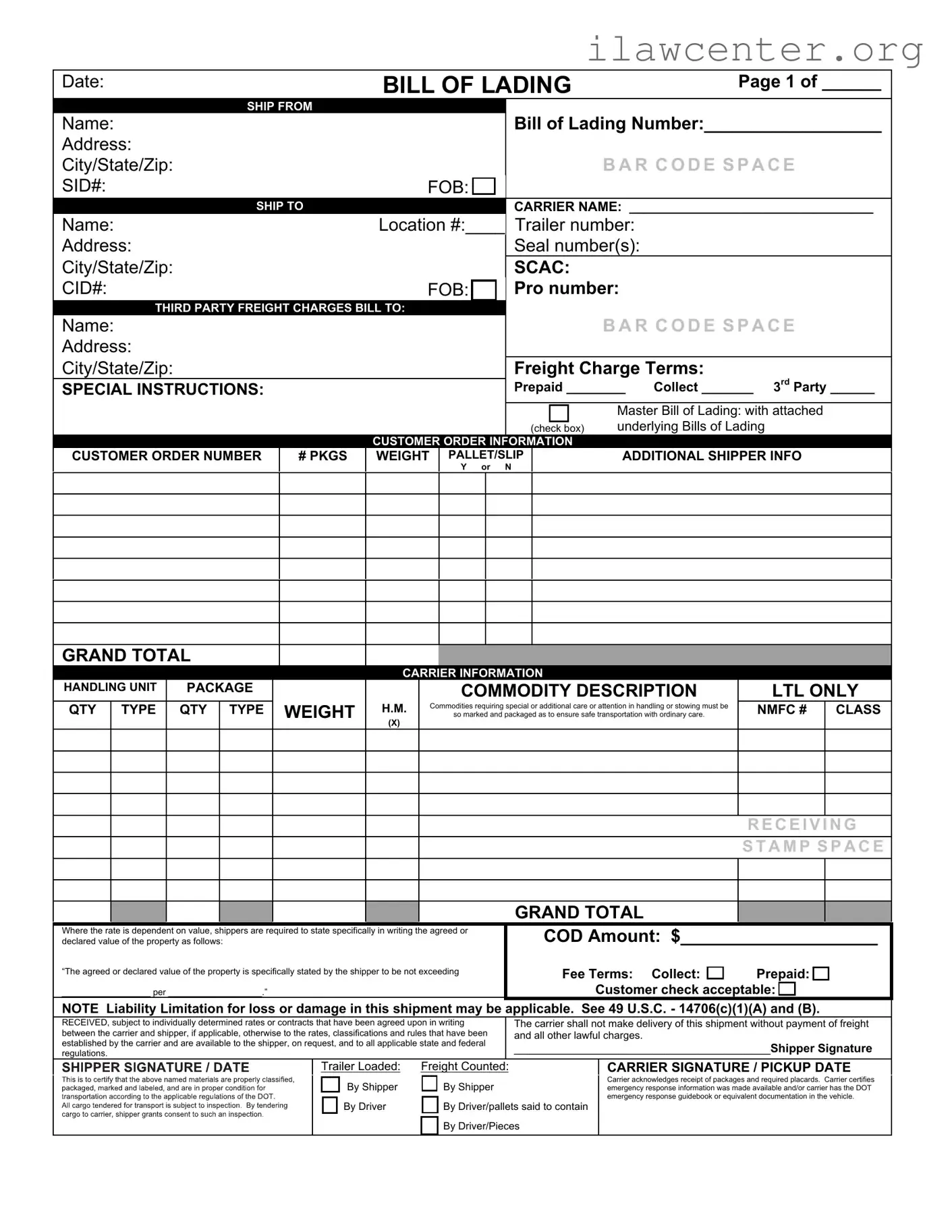
Bill of Lading with a Supplement Preview

Date:
BILL OF LADING
Page 1 of ______
SHIP FROM
Name: Bill of Lading Number:__________________
Address:
City/State/Zip:
B A R C O D E S P A C E
SID#:
FOB:
o
SHIP TO
CARRIER NAME: _________________________________
Name: Location #:____ Trailer number:
Address: Seal number(s):
City/State/Zip: SCAC:
CID#:
FOB:
o
Pro number:
THIRD PARTY FREIGHT CHARGES BILL TO:
Name:
B A R C O D E S P A C E
Address:
City/State/Zip: Freight Charge Terms:
SPECIAL INSTRUCTIONS:
Prepaid ________ Collect _______ 3
rd
Party ______
o
(check box)
Master Bill of Lading: with attached
underlying Bills of Lading
CUSTOMER ORDER INFORMATION
CUSTOMER ORDER NUMBER # PKGS WEIGHT
PALLET/SLIP
Y or N
ADDITIONAL SHIPPER INFO
GRAND TOTAL
CARRIER INFORMATION
HANDLING UNIT
PACKAGE
COMMODITY DESCRIPTION LTL ONLY
QTY TYPE QTY TYPE
WEIGHT
H.M.
(X)
Commodities requiring special or additional care or attention in handling or stowing must be
so marked and packaged as to ensure safe transportation with ordinary care.
NMFC #
CLASS
R E C E I V I N G
S T A M P S P A C E
GRAND TOTAL
Where the rate is dependent on value, shippers are required to state specifically in writing the agreed or
declared value of the property as follows:
COD Amount: $____________________
“The agreed or declared value of the property is specifically stated by the shipper to be not exceeding
__________________ per ___________________.”
Fee Terms: Collect: ¨ Prepaid: o
Customer check acceptable: o
NOTE Liability Limitation for loss or damage in this shipment may be applicable. See 49 U.S.C. - 14706(c)(1)(A) and (B).
RECEIVED, subject to individually determined rates or contracts that have been agreed upon in writing
between the carrier and shipper, if applicable, otherwise to the rates, classifications and rules that have been
established by the carrier and are available to the shipper, on request, and to all applicable state and federal
regulations.
The carrier shall not make delivery of this shipment without payment of freight
and all other lawful charges.
_______________________________________Shipper Signature
SHIPPER SIGNATURE / DATE
Trailer Loaded: Freight Counted:
CARRIER SIGNATURE / PICKUP DATE
This is to certify that the above named materials are properly classified,
packaged, marked and labeled, and are in proper condition for
transportation according to the applicable regulations of the DOT.
p By Shipper
p By Driver
p By Shipper
p By Driver/pallets said to contain
Carrier acknowledges receipt of packages and required placards. Carrier certifies
emergency response information was made available and/or carrier has the DOT
emergency response guidebook or equivalent documentation in the vehicle.
p By Driver/Pieces
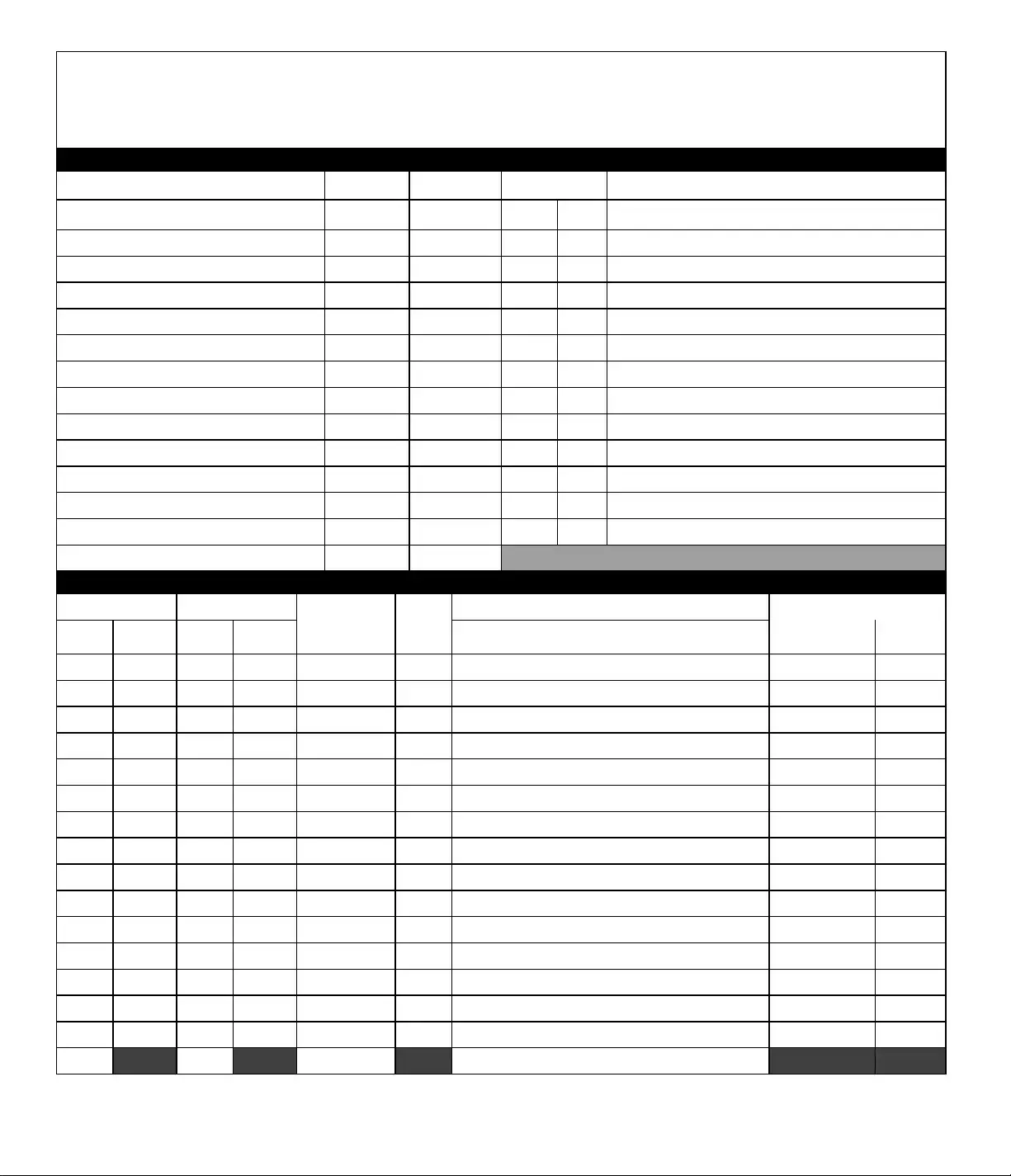
SUPPLEMENT TO THE BILL OF LADING
Page _________
Bill of Lading Number: __________________
CUSTOMER ORDER INFORMATION
CUSTOMER ORDER NUMBER # PKGS WEIGHT
PALLET/SLIP
Y or N
ADDITIONAL SHIPPER INFO
PAGE SUBTOTAL
CARRIER INFORMATION
HANDLING UNIT
PACKAGE
COMMODITY DESCRIPTION LTL ONLY
QTY TYPE QTY TYPE
WEIGHT
H.M.
(X)
Commodities requiring special or additional care or attention in handling or stowing must
be so marked and packaged as to ensure safe transportation with ordinary care.
NMFC # CLASS
PAGE SUBTOTAL

File Properties

Fact Name Description
Definition A Bill of Lading (BOL) is a legal document between a shipper and a carrier that details the type, quantity, and destination of goods being transported.
Types There are several types of Bills of Lading, including straight, order, and bearer BOLs, each serving different purposes in the shipping process.
Supplement Form A Supplement form may accompany a BOL to provide additional details or terms, ensuring all parties have the necessary information for the shipment.
State-Specific Forms Some states may require specific forms or additional documentation for certain types of shipments, ensuring compliance with local regulations.
Governing Laws The governing laws for Bills of Lading can vary by state. For example, the Uniform Commercial Code (UCC) often governs BOLs in many states.
Importance A Bill of Lading serves as a receipt for the goods, a contract for transportation, and a document of title, making it a crucial element in logistics and supply chain management.

Instructions on Utilizing Bill of Lading with a Supplement

Completing the Bill of Lading with a Supplement form is essential for ensuring that all shipping details are accurately recorded. This process involves providing specific information about the shipment, the parties involved, and any additional details that may be necessary for transport. Following the steps outlined below will help facilitate a smooth completion of the form.

  1. Begin by entering the date on which the Bill of Lading is being filled out.
  2. Provide the name and address of the shipper. This includes both the company name and the physical address.
  3. Next, enter the consignee's information. This should also include the name and address of the individual or company receiving the shipment.
  4. Indicate the origin of the shipment. This is where the goods are being shipped from.
  5. Specify the destination of the shipment. This is where the goods are being sent to.
  6. Detail the description of the goods being shipped. Include quantity, weight, and any other relevant specifications.
  7. Check the appropriate box for the type of transport being used (e.g., truck, rail, air).
  8. If applicable, provide any special instructions or notes related to the shipment.
  9. Sign and date the form to certify that the information provided is accurate and complete.
  10. Make a copy of the completed form for your records before submitting it as required.

Important Facts about Bill of Lading with a Supplement

What is a Bill of Lading?

A Bill of Lading (BOL) is a crucial document in the shipping industry. It serves as a receipt for goods, a contract between the shipper and the carrier, and a document of title. This means it provides proof that the carrier has received the goods as described and is responsible for delivering them to the designated destination. Understanding its significance is essential for anyone involved in shipping or logistics.

What is the purpose of the Supplement form?

The Supplement form is used to provide additional information that may not be included in the standard Bill of Lading. This could involve details about special handling instructions, additional charges, or specific requirements for the shipment. It ensures that all parties have the necessary information to facilitate a smooth transaction and prevent misunderstandings.

Who needs to fill out the Bill of Lading with a Supplement form?

Typically, the shipper or freight forwarder is responsible for completing the Bill of Lading along with the Supplement form. However, all parties involved in the shipping process, including the carrier and the consignee, should review the documents to ensure accuracy and completeness. This collaborative effort helps to avoid potential disputes later on.

What information is required on the Bill of Lading?

Key details must be included on the Bill of Lading, such as the names and addresses of the shipper and consignee, a description of the goods, the weight and dimensions, and shipping instructions. The Supplement form may require additional information, like specific handling instructions or any hazardous materials declarations. Providing accurate information is critical for compliance and safety.

Can a Bill of Lading be amended after it is issued?

Yes, a Bill of Lading can be amended, but it often requires consent from all parties involved. If changes are necessary, a new document may need to be issued. The Supplement form can be utilized to clarify or add information, but it is important to ensure that all changes are documented properly to avoid confusion or legal issues.

What happens if the Bill of Lading is lost?

If a Bill of Lading is lost, it can create significant challenges. The shipper should notify the carrier immediately to discuss options. In many cases, a "letter of indemnity" may be required to protect the carrier from any potential claims. It's essential to act quickly to minimize disruptions in the shipping process.

Why is it important to keep copies of the Bill of Lading and Supplement form?

Keeping copies of the Bill of Lading and Supplement form is vital for record-keeping and legal purposes. These documents serve as proof of the transaction and can be crucial in case of disputes or claims. Storing them securely ensures that you have access to important information whenever needed.

Common mistakes

Filling out the Bill of Lading with a Supplement form is a critical task that requires attention to detail. One common mistake is omitting essential information. Each section of the form serves a specific purpose, and leaving out details such as the shipper's address or the consignee's contact information can lead to significant delays in the shipping process.

Another frequent error is incorrect weight and measurement entries. Inaccurate data can result in shipping discrepancies and additional charges. It is crucial to double-check the weight and dimensions of the cargo before submission. A simple miscalculation can create complications that could have been easily avoided.

People also often fail to sign the Bill of Lading. A signature is not just a formality; it confirms that the information provided is accurate and that the terms of the shipment are accepted. Without a signature, the document may be deemed invalid, leading to potential disputes or claims.

Additionally, misunderstanding the terms and conditions outlined in the form can lead to problems. Each Bill of Lading may have specific requirements based on the type of cargo or the mode of transport. It is essential to read and comprehend these terms to avoid any misinterpretations that could affect the shipment.

Finally, neglecting to keep copies of the completed Bill of Lading with a Supplement form is a critical oversight. Retaining copies is vital for record-keeping and can serve as evidence in case of disputes. Without proper documentation, it may become challenging to resolve issues that arise during transit.

Documents used along the form

The Bill of Lading with a Supplement form is a crucial document in the shipping and freight industry. It serves as a receipt for goods, a contract for transportation, and a document of title. Alongside this form, there are several other documents that are commonly used to ensure a smooth shipping process. Below is a list of these documents, each with a brief description.

  • Commercial Invoice: This document details the transaction between the buyer and seller. It includes information such as the description of goods, quantities, prices, and payment terms.
  • Packing List: This list outlines the contents of each package being shipped. It helps in verifying the shipment upon arrival and assists customs in determining duties.
  • Certificate of Origin: This document certifies the country in which the goods were manufactured. It may be required for customs clearance and to determine tariff rates.
  • Insurance Certificate: This document provides proof of insurance coverage for the goods during transit. It protects against loss or damage that may occur while the shipment is in transit.
  • Delivery Receipt: This is signed by the recipient upon delivery of the goods. It serves as proof that the goods were received in the agreed condition.
  • Export License: This document is required for certain goods being shipped internationally. It grants permission from the government to export specific products.
  • Customs Declaration: This form is submitted to customs authorities to declare the nature and value of goods being imported or exported. It is essential for compliance with regulations.

Understanding these documents is vital for anyone involved in shipping and logistics. Each one plays a specific role in ensuring that goods are transported efficiently and legally. Proper documentation can prevent delays and complications during transit.

Similar forms

The Bill of Lading with a Supplement form serves as a crucial document in shipping and logistics. It shares similarities with several other important documents. Below are four documents that are comparable to the Bill of Lading with a Supplement form, along with explanations of how they are alike:

  • Commercial Invoice: This document details the sale transaction between the buyer and seller. Like the Bill of Lading, it includes information about the goods being shipped, such as quantity, description, and price. Both documents serve as proof of the transaction and are essential for customs clearance.
  • Air Waybill: An Air Waybill is used for air freight shipments. Similar to the Bill of Lading, it acts as a receipt for the goods and outlines the terms of transport. It also serves as a contract between the shipper and the carrier, ensuring that both parties understand their responsibilities.
  • Delivery Order: A Delivery Order instructs the carrier to release the cargo to the designated party. Like the Bill of Lading, it confirms the ownership of the goods and facilitates the transfer of possession. Both documents are vital for ensuring that the right person receives the shipment.
  • Certificate of Origin: This document certifies the country in which the goods were produced. While it serves a different purpose, it is similar to the Bill of Lading in that it is often required for customs clearance and international trade. Both documents help verify the legitimacy of the shipment.

Dos and Don'ts

When filling out the Bill of Lading with a Supplement form, it’s essential to ensure accuracy and clarity. Here are some important dos and don’ts to keep in mind:

  • Do double-check all information before submission.
  • Do use clear and legible handwriting if filling it out by hand.
  • Do include all necessary details, such as the shipper's and consignee's information.
  • Do ensure that the description of goods is accurate and complete.
  • Don't leave any sections blank unless instructed to do so.
  • Don't use abbreviations that may confuse the reader.
  • Don't forget to sign and date the form where required.

Following these guidelines can help prevent delays and ensure smooth processing of your shipment.

Misconceptions

The Bill of Lading with a Supplement form is an important document in the shipping industry. However, several misconceptions exist about it. Here are six common misunderstandings:

  • It is just a receipt. Many people think a Bill of Lading is merely a receipt for goods. In reality, it serves multiple purposes, including acting as a contract of carriage and a document of title.
  • It can be modified at any time. Some believe that once a Bill of Lading is issued, it can be changed freely. However, modifications typically require agreement from all parties involved.
  • All Bills of Lading are the same. There is a misconception that all Bills of Lading are identical. In fact, there are different types, such as straight and negotiable, each serving distinct purposes.
  • It guarantees delivery of goods. While a Bill of Lading facilitates the transportation of goods, it does not guarantee delivery. Various factors, such as weather or customs issues, can affect the outcome.
  • Only the shipper needs a copy. Some believe only the shipper requires a copy of the Bill of Lading. In truth, all parties, including the consignee and carrier, should retain copies for their records.
  • It is not legally binding. There is a common belief that a Bill of Lading is not a legally binding document. In fact, it is enforceable in court and outlines the rights and responsibilities of the parties involved.

Understanding these misconceptions can help individuals and businesses navigate shipping processes more effectively.

Key takeaways

When dealing with the Bill of Lading with a Supplement form, understanding its components and requirements is crucial. Here are some key takeaways to consider:

  • Purpose: The Bill of Lading serves as a receipt for goods, a contract of carriage, and a document of title.
  • Accuracy: Ensure all information is filled out accurately to avoid disputes or delays.
  • Signatures: Obtain necessary signatures from both the shipper and the carrier to validate the document.
  • Supplement Use: The Supplement form is used to add additional details or amend information in the original Bill of Lading.
  • Documentation: Keep copies of all documents for your records, as they may be needed for future reference.
  • Liability: Understand the liability terms outlined in the Bill of Lading, as they affect claims and responsibilities.
  • Compliance: Follow all regulatory requirements related to the transportation of goods, as outlined in the Bill of Lading.
  • Tracking: Use the Bill of Lading number for tracking shipments and managing logistics effectively.
  • Dispute Resolution: Familiarize yourself with the process for resolving disputes that may arise from the Bill of Lading.