What is the purpose of the Bill Payment Checklist form?
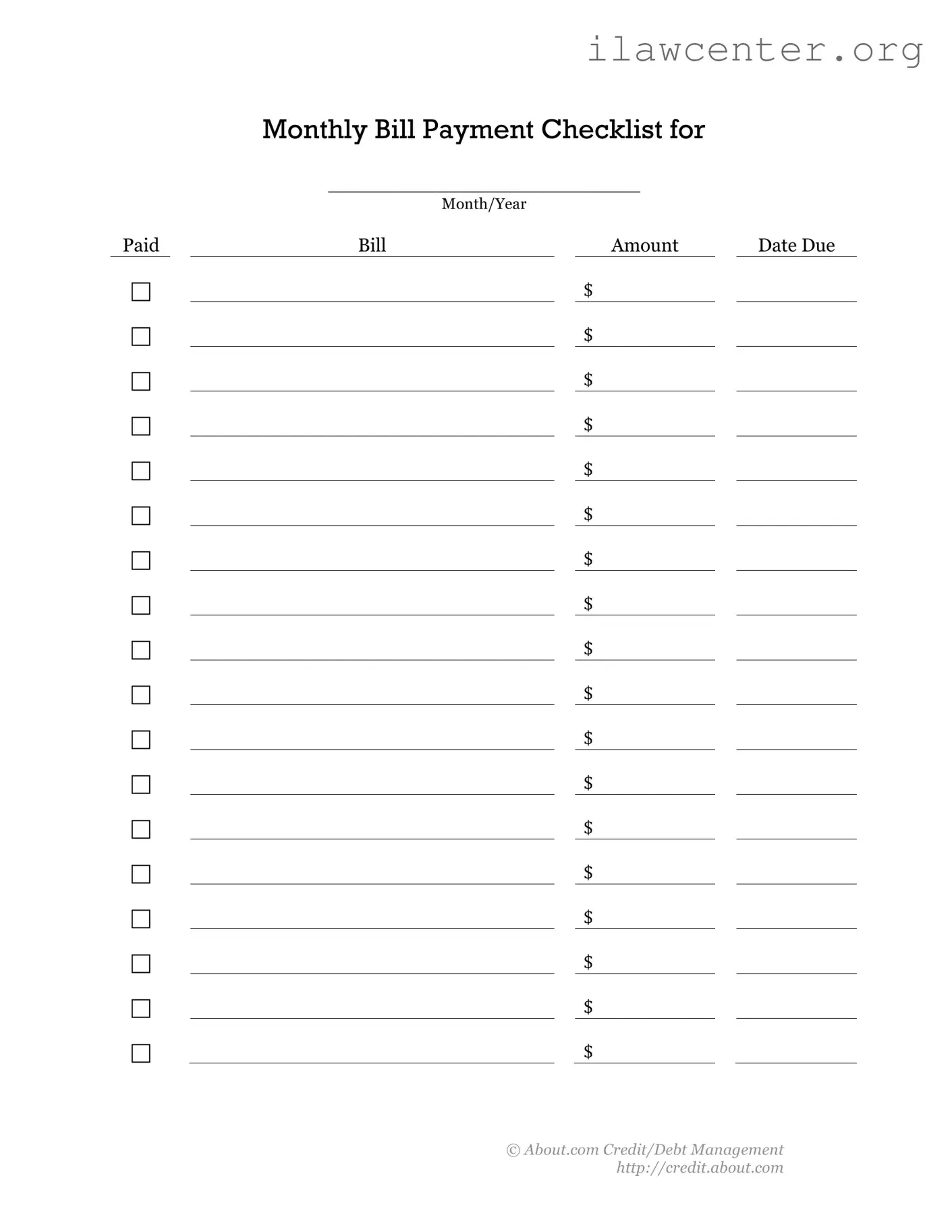
The Bill Payment Checklist form is designed to help individuals manage their monthly bills efficiently. By providing a structured format, it allows users to list their bills, note the due dates, and track payment amounts. This organization can reduce the risk of missed payments and help maintain a good credit score.
How should I fill out the Bill Payment Checklist form?
To fill out the Bill Payment Checklist form, start by entering the month and year at the top. Then, list each bill you need to pay in the designated spaces. For each bill, include the amount due and the date it is due. As you make payments, check off each bill to visually track your progress and ensure that nothing is overlooked.
Can I use the Bill Payment Checklist form for irregular expenses?
While the form is primarily intended for monthly bills, it can also be adapted for irregular expenses. If you have bills that are not due every month, simply add them to the checklist as they arise. This flexibility allows you to maintain a comprehensive overview of all your financial obligations, regardless of their frequency.
Is there a specific format for listing bills on the form?
No specific format is required for listing bills on the form. You can choose to organize them by category, such as utilities, rent, and loans, or simply list them in the order they are due. The key is to ensure that all relevant information is included so you can easily track your payments.
What should I do if I miss a payment?
If you miss a payment, it’s important to act quickly. First, check if there are any late fees or penalties associated with the missed payment. Then, make the payment as soon as possible to minimize any negative impact on your credit. Update your checklist accordingly to reflect the new status of that bill, ensuring you stay on top of your financial responsibilities.
How can the Bill Payment Checklist help with budgeting?
The Bill Payment Checklist can be a valuable tool for budgeting by providing a clear picture of your monthly expenses. By tracking due dates and amounts, you can better plan your finances, allocate funds appropriately, and avoid any surprises at the end of the month. This proactive approach can lead to more effective budgeting and financial management overall.