Fillable Business Purchase and Sale Agreement Document

Fillable Business Purchase and Sale Agreement Document

A Business Purchase and Sale Agreement is a legal document that outlines the terms and conditions under which a business is bought or sold. This agreement serves to protect both the buyer and the seller by clearly defining the rights and responsibilities of each party involved in the transaction. Understanding this form is crucial for ensuring a smooth transfer of ownership and minimizing potential disputes.

To get started, fill out the form by clicking the button below.

Article Guide

When embarking on the journey of buying or selling a business, having a comprehensive Business Purchase and Sale Agreement is essential. This document serves as the cornerstone of the transaction, outlining the terms and conditions that govern the sale. It typically includes key elements such as the purchase price, payment terms, and the assets being transferred. Additionally, it addresses any liabilities that may be associated with the business, ensuring that both parties understand their responsibilities. The agreement may also outline contingencies, such as financing requirements and the timeline for closing the deal. By clearly defining the rights and obligations of both the buyer and seller, this agreement helps to minimize misunderstandings and protect the interests of all involved. With careful attention to detail, a well-drafted Business Purchase and Sale Agreement can facilitate a smoother transaction and lay the groundwork for a successful transition.

Business Purchase and Sale Agreement Preview

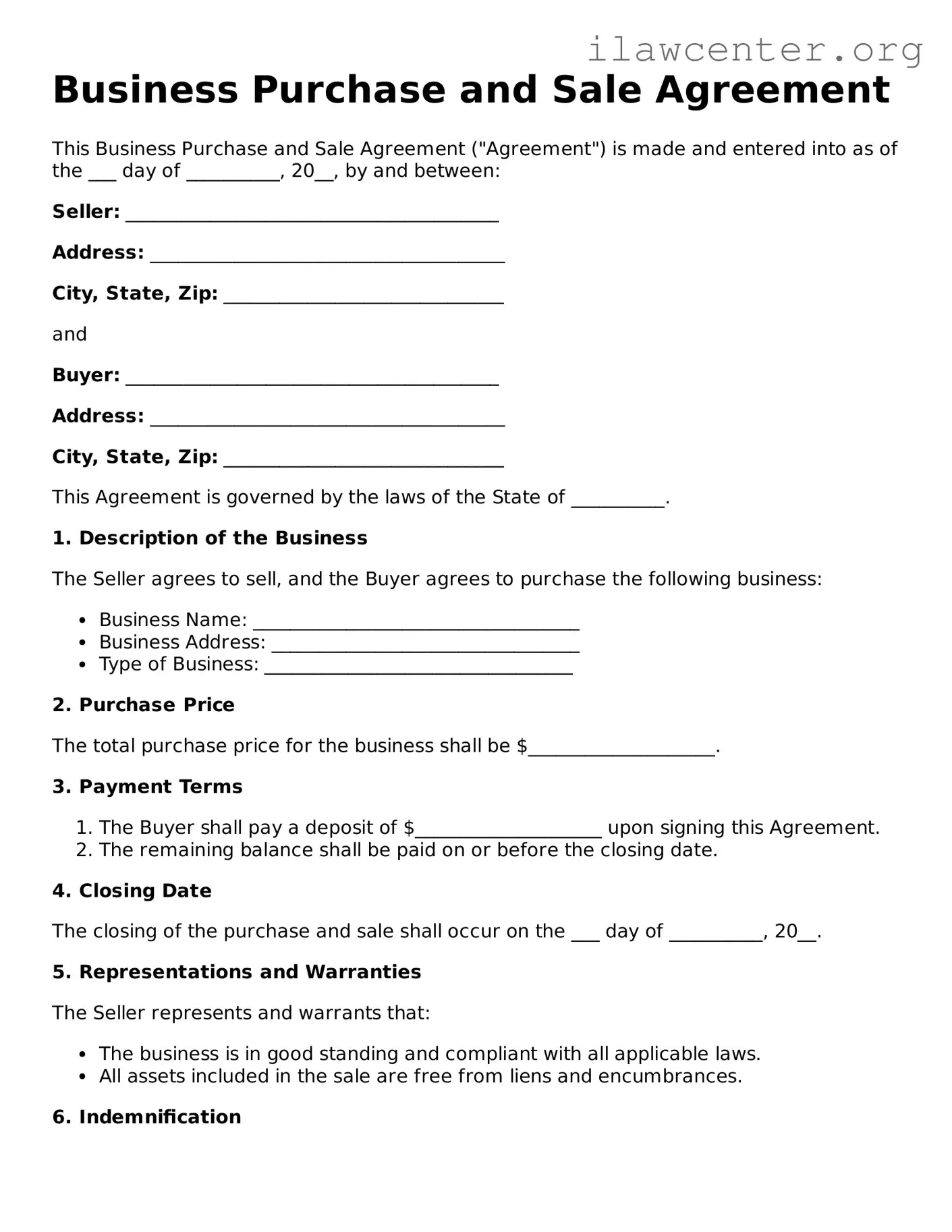
Business Purchase and Sale Agreement

This Business Purchase and Sale Agreement ("Agreement") is made and entered into as of the ___ day of __________, 20__, by and between:

Seller: ________________________________________

Address: ______________________________________

City, State, Zip: ______________________________

and

Buyer: ________________________________________

Address: ______________________________________

City, State, Zip: ______________________________

This Agreement is governed by the laws of the State of __________.

1. Description of the Business

The Seller agrees to sell, and the Buyer agrees to purchase the following business:

  • Business Name: ___________________________________
  • Business Address: _________________________________
  • Type of Business: _________________________________

2. Purchase Price

The total purchase price for the business shall be $____________________.

3. Payment Terms

  1. The Buyer shall pay a deposit of $____________________ upon signing this Agreement.
  2. The remaining balance shall be paid on or before the closing date.

4. Closing Date

The closing of the purchase and sale shall occur on the ___ day of __________, 20__.

5. Representations and Warranties

The Seller represents and warrants that:

  • The business is in good standing and compliant with all applicable laws.
  • All assets included in the sale are free from liens and encumbrances.

6. Indemnification

The Seller agrees to indemnify and hold harmless the Buyer from any claims arising from the Seller's operation of the business prior to the closing date.

7. Governing Law

This Agreement shall be governed by and construed in accordance with the laws of the State of __________.

8. Entire Agreement

This Agreement constitutes the entire understanding between the parties and supersedes all prior agreements and understandings.

IN WITNESS WHEREOF, the parties hereto have executed this Business Purchase and Sale Agreement as of the date first above written.

Seller's Signature: _______________________________

Date: _________________________________________

Buyer's Signature: _______________________________

Date: _________________________________________

PDF Form Characteristics

Fact Name Description
Definition A Business Purchase and Sale Agreement is a legal document outlining the terms and conditions under which a business is bought or sold.
Parties Involved The agreement typically involves a seller, who is the current business owner, and a buyer, who is the prospective new owner.
Key Components It generally includes details such as purchase price, payment terms, and the assets being sold.
Governing Law The agreement is usually governed by the laws of the state in which the business operates, which can vary by state.
Due Diligence Buyers often conduct due diligence to evaluate the business's financial health and legal standing before finalizing the agreement.
Confidentiality Clause Many agreements include a confidentiality clause to protect sensitive business information during the sale process.
Contingencies Contingencies may be included, allowing the buyer to back out of the deal if certain conditions are not met.
Closing Process The closing process is the final step, where the ownership of the business is officially transferred and payment is made.

Instructions on Utilizing Business Purchase and Sale Agreement

When preparing to fill out the Business Purchase and Sale Agreement form, it's important to gather all necessary information about the business being sold and the buyer. This ensures that the process goes smoothly and all relevant details are accurately captured. Once the form is completed, it will serve as a formal record of the agreement between the parties involved.

  1. Identify the Parties: Start by entering the names and contact information of both the seller and the buyer. This includes full legal names and addresses.
  2. Describe the Business: Provide a detailed description of the business being sold. Include its name, location, and any relevant business identification numbers.
  3. Specify the Purchase Price: Clearly state the total purchase price for the business. If applicable, outline any payment terms, such as deposits or financing arrangements.
  4. List Included Assets: Enumerate all assets included in the sale. This may consist of inventory, equipment, intellectual property, and any other items that are part of the transaction.
  5. Outline Liabilities: Identify any liabilities that the buyer will assume as part of the purchase. This can include debts, leases, or outstanding obligations.
  6. Include Contingencies: Mention any conditions that must be met before the sale is finalized. This could involve inspections, financing approvals, or regulatory requirements.
  7. Set Closing Date: Indicate the expected closing date for the transaction. This is when the sale will officially take place.
  8. Signatures: Finally, both parties must sign and date the agreement. Ensure that each signature is accompanied by the printed name and title of the signatory.

Important Facts about Business Purchase and Sale Agreement

What is a Business Purchase and Sale Agreement?

A Business Purchase and Sale Agreement is a legal document that outlines the terms and conditions under which a business is sold. It serves as a binding contract between the buyer and seller, detailing the assets being sold, the purchase price, and other important terms of the sale.

Why is a Business Purchase and Sale Agreement important?

This agreement is crucial because it protects both parties involved in the transaction. It clarifies the expectations and obligations of each party, minimizing the risk of disputes. A well-drafted agreement can also provide legal recourse if either party fails to meet their obligations.

What should be included in a Business Purchase and Sale Agreement?

Key components of the agreement typically include the purchase price, payment terms, a description of the business assets being sold, representations and warranties, and any conditions that must be met before the sale is finalized. It may also address non-compete clauses and confidentiality agreements.

Who should draft the Business Purchase and Sale Agreement?

While it is possible for either party to draft the agreement, it is advisable to have an attorney experienced in business transactions create or review the document. This ensures that all legal requirements are met and that the agreement protects your interests.

What happens if one party breaches the agreement?

If one party fails to fulfill their obligations under the agreement, the other party may have the right to seek remedies. This could include monetary damages, specific performance (forcing the party to comply with the agreement), or termination of the agreement. Legal action may be necessary to resolve the issue.

Can the terms of the agreement be negotiated?

Yes, the terms of a Business Purchase and Sale Agreement can and often are negotiated. Both parties should discuss their needs and expectations before finalizing the agreement. Negotiation can lead to a more favorable outcome for both sides.

Is a Business Purchase and Sale Agreement legally binding?

Yes, once both parties sign the agreement, it becomes legally binding. This means that both parties are obligated to adhere to the terms outlined in the document. It is essential to ensure that all terms are clearly understood and agreed upon before signing.

How can I ensure that the agreement is enforceable?

To ensure enforceability, the agreement should be in writing, signed by both parties, and include clear terms. It is also beneficial to have the document reviewed by a legal professional. Compliance with local laws and regulations is crucial for enforceability.

Common mistakes

Filling out a Business Purchase and Sale Agreement form is a critical step in any business transaction. Yet, many individuals make common mistakes that can lead to significant issues down the line. Awareness of these pitfalls is essential for anyone considering a business sale or purchase.

One frequent mistake is failing to clearly define the terms of the sale. Ambiguities can lead to misunderstandings and disputes. It's vital to specify what is included in the sale, such as assets, liabilities, and any intellectual property. Without clarity, both parties may have different expectations, which can complicate the transaction.

Another common error is neglecting to conduct due diligence. Buyers should thoroughly investigate the business they are purchasing. This includes reviewing financial statements, contracts, and any potential liabilities. Skipping this step can result in unexpected financial burdens after the sale is complete.

Inaccurate valuations of the business are also a significant concern. Sellers may overestimate their business's worth, while buyers might undervalue it. Proper valuation is crucial to ensure a fair price is agreed upon. Engaging a professional appraiser can help mitigate this risk.

Some individuals forget to include contingencies in the agreement. These are essential for protecting both parties. For example, a buyer may want to include a contingency that allows them to back out if financing falls through. Without such provisions, one party could find themselves in a disadvantageous position.

Another mistake involves inadequate legal review. It's tempting to fill out the form without consulting an attorney, but this can be a costly error. Legal professionals can identify potential issues and ensure that the agreement complies with local laws and regulations.

Additionally, people often overlook the importance of clearly outlining payment terms. The agreement should specify how and when payments will be made. Vague terms can lead to confusion and disputes later on, which can derail the entire transaction.

Lastly, failing to consider tax implications can have serious financial consequences. Both buyers and sellers should understand how the sale will affect their tax situation. Consulting with a tax professional can provide valuable insights and help avoid unexpected liabilities.

In summary, avoiding these common mistakes when filling out a Business Purchase and Sale Agreement can save time, money, and stress. Careful attention to detail, thorough research, and professional guidance are key to a successful transaction.

Documents used along the form

When engaging in the process of buying or selling a business, several important documents accompany the Business Purchase and Sale Agreement. Each of these documents serves a specific purpose, ensuring that both parties understand their rights and obligations throughout the transaction. Below is a list of commonly used forms and documents that are often part of this process.

  • Letter of Intent (LOI): This document outlines the preliminary understanding between the buyer and seller before a formal agreement is drafted. It typically includes key terms such as purchase price and payment structure, serving as a roadmap for negotiations.
  • Confidentiality Agreement (Non-Disclosure Agreement): This agreement protects sensitive information shared during the negotiation process. It ensures that both parties keep proprietary information confidential, which is crucial for maintaining competitive advantage.
  • Due Diligence Checklist: This is a comprehensive list of documents and information that the buyer requests to review before finalizing the purchase. It often includes financial statements, contracts, and employee records, allowing the buyer to assess the business's value and risks.
  • Asset Purchase Agreement: If the sale involves purchasing specific assets rather than the entire business, this document details the assets being sold. It specifies what is included in the sale, such as equipment, inventory, and intellectual property.
  • Bill of Sale: This document serves as proof of the transfer of ownership from the seller to the buyer. It includes details about the transaction and is essential for legal documentation of the sale.

Understanding these documents is vital for anyone involved in a business transaction. Each plays a crucial role in ensuring a smooth and legally compliant transfer of ownership. By being familiar with these forms, both buyers and sellers can navigate the complexities of the process with greater confidence.

Similar forms

  • Letter of Intent (LOI): This document outlines the preliminary understanding between the buyer and seller before the formal agreement. It typically includes key terms such as price, payment structure, and timeline, serving as a roadmap for negotiations.
  • Asset Purchase Agreement (APA): Similar to a Business Purchase and Sale Agreement, an APA focuses specifically on the acquisition of a company's assets rather than its stock. It details which assets are included in the sale and any liabilities that may be assumed.
  • Stock Purchase Agreement (SPA): This document is used when a buyer intends to purchase shares of a corporation. Like the Business Purchase and Sale Agreement, it outlines the terms of the transaction, but it specifically addresses the transfer of ownership in the company's stock.
  • Confidentiality Agreement (NDA): Often signed prior to negotiations, this agreement ensures that sensitive information shared between parties remains confidential. It is crucial for protecting proprietary business information during the sale process.
  • Due Diligence Checklist: While not a formal agreement, this document lists all the necessary information and documents the buyer needs to review before finalizing the sale. It ensures that all aspects of the business are examined, much like the detailed considerations in a Business Purchase and Sale Agreement.
  • Closing Statement: This document is prepared at the end of the transaction and summarizes the financial aspects of the sale. It includes the final purchase price and any adjustments, similar to how the Business Purchase and Sale Agreement outlines the terms of the sale.

Dos and Don'ts

When filling out the Business Purchase and Sale Agreement form, it’s crucial to approach the process with care. Here are seven important dos and don’ts to consider:

  • Do read the entire agreement thoroughly before filling it out.
  • Do provide accurate and complete information to avoid future disputes.
  • Do consult with a legal professional if you have any questions.
  • Do ensure all parties involved sign the agreement.
  • Don't rush through the process; take your time to understand each section.
  • Don't leave any blanks; if a section doesn't apply, mark it as N/A.
  • Don't ignore deadlines for submission; timely completion is essential.

Misconceptions

The Business Purchase and Sale Agreement is a crucial document in any business transaction. However, several misconceptions surround it. Here are eight common misunderstandings:

  1. It is only necessary for large transactions.

    This is not true. Regardless of the size of the business, having a formal agreement helps protect both parties involved.

  2. It can be a verbal agreement.

    While verbal agreements may seem convenient, they are difficult to enforce. A written agreement clarifies terms and conditions.

  3. All agreements are the same.

    Each agreement should be tailored to the specific transaction. A one-size-fits-all approach can lead to misunderstandings.

  4. It only covers the sale price.

    The agreement includes various elements, such as payment terms, liabilities, and conditions of the sale, beyond just the price.

  5. It is a simple document.

    The agreement can be complex, depending on the transaction's specifics. It often requires careful consideration and legal insight.

  6. Once signed, it cannot be changed.

    Parties can negotiate amendments to the agreement as needed, provided both sides consent to the changes.

  7. Only lawyers can create it.

    While legal expertise is beneficial, business owners can draft the agreement with a clear understanding of their needs.

  8. It is only for the seller's protection.

    The agreement protects both the buyer and the seller by outlining rights and responsibilities, ensuring fairness in the transaction.

Understanding these misconceptions can lead to better business practices and smoother transactions.

Key takeaways

When dealing with a Business Purchase and Sale Agreement, understanding the key elements is crucial for a smooth transaction. Here are some important takeaways to keep in mind:

  1. Clearly define the parties involved. Make sure to include the full legal names of both the buyer and the seller to avoid any confusion.
  2. Specify the business assets being sold. List all tangible and intangible assets included in the sale, such as equipment, inventory, and intellectual property.
  3. Outline the purchase price. Clearly state the total amount being paid for the business and detail any payment terms, such as deposits or installment payments.
  4. Include contingencies. Address any conditions that must be met before the sale can be finalized, such as financing approval or regulatory approvals.
  5. Detail the closing process. Specify the date and location of the closing, as well as any necessary documents that need to be exchanged.
  6. Address liabilities. Clarify who will be responsible for any existing debts or obligations of the business after the sale.
  7. Include representations and warranties. Both parties should provide assurances about the business's condition, ownership, and compliance with laws.
  8. Define non-compete clauses. Consider whether the seller will agree not to start a competing business for a certain period after the sale.
  9. Review the dispute resolution process. Specify how any disagreements will be handled, whether through mediation, arbitration, or litigation.
  10. Consult a legal professional. It’s wise to have an attorney review the agreement to ensure all legal requirements are met and to protect your interests.

By keeping these key points in mind, both buyers and sellers can navigate the complexities of a Business Purchase and Sale Agreement more effectively.