Attorney-Verified  Cease and Desist Letter Document for California

Attorney-Verified Cease and Desist Letter Document for California

A California Cease and Desist Letter is a formal document used to request an individual or organization to stop engaging in certain activities that may infringe upon the rights of another party. This letter serves as a warning, signaling that legal action may be pursued if the specified behavior does not cease. For those needing to address such matters, filling out the form is a crucial step; click the button below to get started.

Article Guide

In the realm of legal communications, a California Cease and Desist Letter serves as a crucial tool for individuals and businesses seeking to address potential violations or disputes without resorting to litigation. This letter is typically employed to formally request that an individual or organization stop engaging in specific activities that are believed to infringe upon rights, such as intellectual property rights, privacy rights, or contractual obligations. By outlining the nature of the grievance, the letter not only conveys the seriousness of the matter but also provides the recipient with an opportunity to rectify the situation before further legal action is considered. Essential components of the letter include a clear identification of the parties involved, a detailed description of the offending behavior, and a request for the cessation of such actions. Additionally, it often includes a deadline for compliance and may warn of potential legal consequences if the recipient fails to respond appropriately. This proactive approach can facilitate resolution while preserving relationships and minimizing costs associated with litigation.

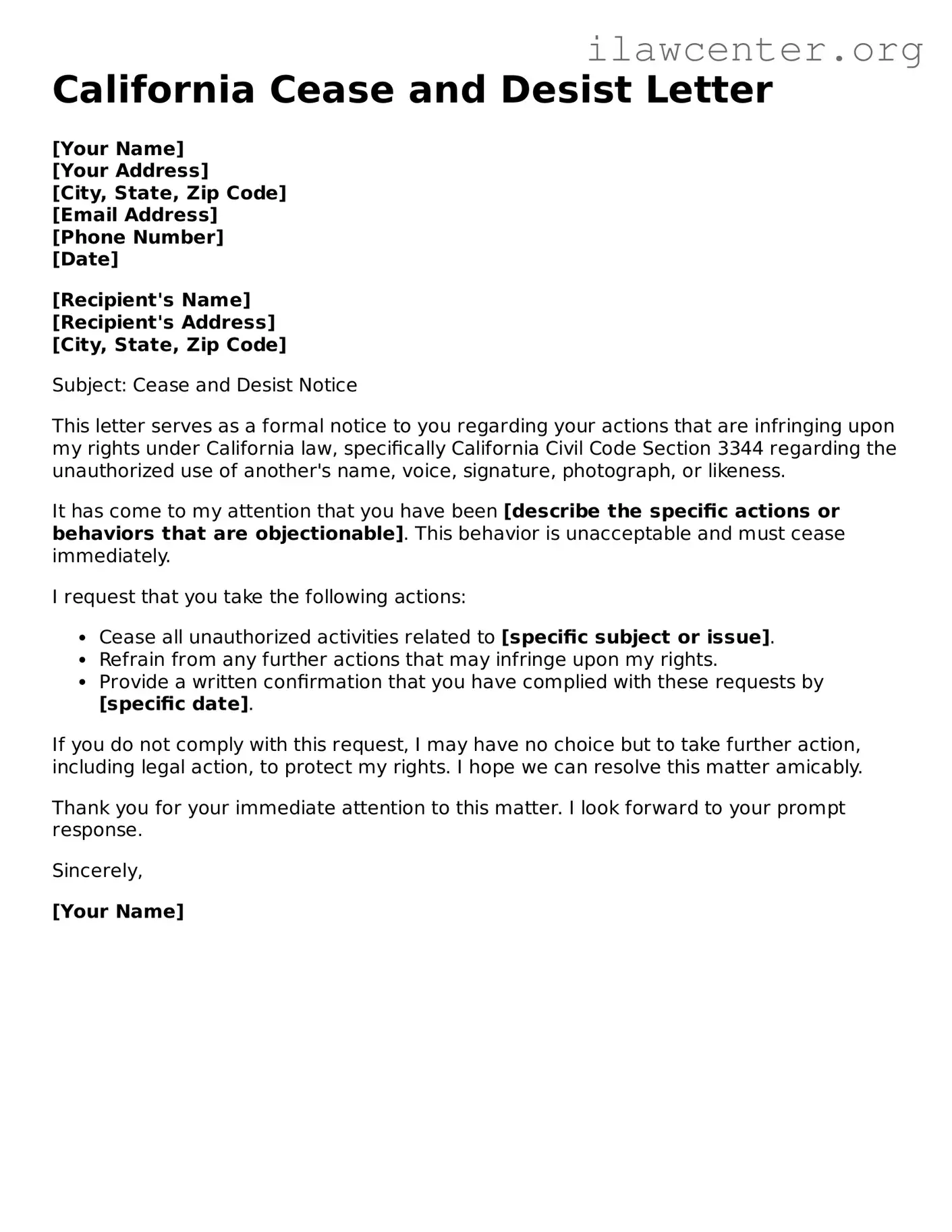
California Cease and Desist Letter Preview

California Cease and Desist Letter

[Your Name]
[Your Address]
[City, State, Zip Code]
[Email Address]
[Phone Number]
[Date]

[Recipient's Name]
[Recipient's Address]
[City, State, Zip Code]

Subject: Cease and Desist Notice

This letter serves as a formal notice to you regarding your actions that are infringing upon my rights under California law, specifically California Civil Code Section 3344 regarding the unauthorized use of another's name, voice, signature, photograph, or likeness.

It has come to my attention that you have been [describe the specific actions or behaviors that are objectionable]. This behavior is unacceptable and must cease immediately.

I request that you take the following actions:

  • Cease all unauthorized activities related to [specific subject or issue].
  • Refrain from any further actions that may infringe upon my rights.
  • Provide a written confirmation that you have complied with these requests by [specific date].

If you do not comply with this request, I may have no choice but to take further action, including legal action, to protect my rights. I hope we can resolve this matter amicably.

Thank you for your immediate attention to this matter. I look forward to your prompt response.

Sincerely,

[Your Name]

PDF Form Characteristics

Fact Name Details
Definition A cease and desist letter is a formal request to stop an alleged illegal activity.
Purpose It serves to inform the recipient of the legal rights involved and the potential consequences of non-compliance.
Governing Law In California, cease and desist letters are often governed by principles of contract law and tort law.
Common Uses These letters are frequently used in cases of copyright infringement, trademark disputes, and harassment claims.
Delivery Method They can be delivered via mail, email, or even in person, depending on the situation.
Response Time Typically, recipients are given a specific time frame to respond or comply, often ranging from 10 to 30 days.

Instructions on Utilizing California Cease and Desist Letter

Once you have the California Cease and Desist Letter form in hand, you are ready to take the necessary steps to fill it out accurately. This process involves providing specific information about the situation at hand, which will help clarify your intentions. After completing the form, you will be able to send it to the appropriate party, signaling your request for them to stop the specified actions.

  1. Begin by entering your name and address at the top of the form. This information identifies you as the sender.
  2. Next, provide the date on which you are filling out the form. This date is important for record-keeping purposes.
  3. Clearly state the name and address of the person or organization you are sending the letter to. This ensures that the recipient knows who the letter is directed towards.
  4. In the designated section, describe the specific actions or behaviors that you want to be stopped. Be as clear and concise as possible.
  5. Include any relevant details that support your request. This could involve dates, locations, or any previous communications regarding the issue.
  6. Sign the letter at the bottom. Your signature adds a personal touch and indicates that you are serious about your request.
  7. Finally, make a copy of the completed form for your records before sending it to the recipient.

Important Facts about California Cease and Desist Letter

What is a Cease and Desist Letter?

A Cease and Desist Letter is a formal request to stop certain activities that are believed to be infringing on someone’s rights or causing harm. It serves as a warning that legal action may follow if the behavior does not cease. This letter can be sent by individuals or businesses to address issues like copyright infringement, harassment, or unfair competition.

When should I use a Cease and Desist Letter?

Consider using a Cease and Desist Letter when you believe someone is violating your rights, whether it’s intellectual property, privacy, or contractual agreements. It’s often a first step before pursuing legal action. This letter can clarify your position and provide the other party with an opportunity to rectify the situation without escalating to court.

How do I write a Cease and Desist Letter?

Writing a Cease and Desist Letter involves clearly stating your concerns and the specific actions you want the recipient to stop. Include your contact information, a description of the offending behavior, and a deadline for compliance. It’s important to maintain a professional tone while being direct about the consequences of not complying with your request.

Is a Cease and Desist Letter legally binding?

While a Cease and Desist Letter itself is not a legally binding document, it can serve as evidence of your attempt to resolve the issue amicably. If the recipient ignores the letter and the matter escalates to court, the letter may be referenced to show that you took reasonable steps to address the situation before pursuing legal action.

What happens if the recipient ignores the Cease and Desist Letter?

If the recipient ignores your Cease and Desist Letter, you may choose to take further action, which could include filing a lawsuit. The letter can strengthen your case by demonstrating that you attempted to resolve the issue outside of court. However, it’s advisable to consult with a legal professional to discuss your options and the best course of action.

Can I send a Cease and Desist Letter myself?

Yes, you can draft and send a Cease and Desist Letter on your own. However, it may be beneficial to consult with a legal expert to ensure that your letter is effective and properly addresses the situation. A well-crafted letter can significantly impact the recipient’s response and your overall chances of resolving the matter favorably.

Common mistakes

When filling out a California Cease and Desist Letter form, many individuals make common mistakes that can undermine their efforts. One significant error is failing to clearly identify the recipient. It's crucial to include the full name and address of the person or entity you are addressing. Without this information, the letter may not reach the intended party, rendering your efforts ineffective.

Another frequent mistake is not specifying the exact behavior that needs to stop. A vague description can lead to confusion. Instead, be precise about the actions that you find objectionable. This clarity helps the recipient understand the issue and the urgency of your request.

Many people also overlook the importance of including relevant dates. Providing specific dates related to the actions in question can strengthen your case. This detail adds context and makes it easier for the recipient to grasp the timeline of events.

Additionally, failing to state the consequences of not complying with the letter is a common oversight. It's essential to outline what actions you may take if the behavior does not cease. This could include legal action or other remedies. Clearly stating these consequences can motivate the recipient to take your request seriously.

Another mistake is neglecting to keep a copy of the letter for your records. Documentation is key in any legal matter. By retaining a copy, you have proof of your communication, which can be vital if further action becomes necessary.

Lastly, many individuals forget to sign the letter. A signature adds a personal touch and indicates that the letter is legitimate. Without a signature, the recipient may question the authenticity of your request. Always remember to sign and date your letter before sending it.

Documents used along the form

A California Cease and Desist Letter is an important tool for addressing unwanted behavior or actions. However, it is often accompanied by other forms and documents that can help clarify the situation or provide additional support. Below is a list of commonly used documents that may accompany a Cease and Desist Letter.

  • Demand Letter: This document formally requests that the recipient take specific actions, such as stopping certain behaviors or compensating for damages. It often serves as a precursor to legal action.
  • Notice of Intent to Sue: This notice informs the recipient that legal action may be forthcoming if the issue is not resolved. It outlines the grievances and gives the recipient a chance to respond.
  • Affidavit of Service: This document provides proof that the Cease and Desist Letter was delivered to the intended recipient. It typically includes details about how and when the letter was served.
  • Response Letter: If the recipient chooses to respond, this letter outlines their position regarding the claims made in the Cease and Desist Letter. It can help clarify misunderstandings or disputes.
  • Settlement Agreement: If both parties agree to resolve the issue, a settlement agreement outlines the terms of the resolution, including any actions to be taken or compensation to be provided.
  • Legal Complaint: If the situation escalates, a legal complaint may be filed in court. This document formally initiates a lawsuit and outlines the claims against the defendant.
  • Witness Statements: These statements provide accounts from individuals who may have observed the behavior in question. They can support the claims made in the Cease and Desist Letter.
  • Evidence Documentation: This includes any relevant documents, photographs, or recordings that support the claims made in the Cease and Desist Letter. It serves as proof of the alleged actions.
  • Response to Demand Letter: If a demand letter was sent, this document outlines the recipient's response to the demands made, including any agreements or disagreements.

These documents can play a crucial role in addressing disputes and clarifying the intentions of both parties involved. Understanding their purpose can help individuals navigate the complexities of conflict resolution effectively.

Similar forms

A Cease and Desist Letter is a powerful tool used to address various legal issues. Several other documents share similarities with it in terms of purpose and function. Here’s a look at four such documents:

  • Demand Letter: Like a cease and desist letter, a demand letter outlines a specific request, often related to payment or action. Both documents aim to resolve disputes before escalating to legal action.
  • Notice of Violation: This document informs an individual or organization that they have violated a law or agreement. Similar to a cease and desist letter, it seeks to halt the offending behavior and encourages compliance.
  • Settlement Agreement: A settlement agreement is used to resolve disputes without going to court. While it typically follows negotiations, it shares the goal of preventing further legal action, much like a cease and desist letter.
  • Injunction: An injunction is a court order that requires a party to do or refrain from doing specific acts. While it is more formal and legally binding than a cease and desist letter, both documents aim to stop certain behaviors or actions.

Dos and Don'ts

When filling out the California Cease and Desist Letter form, it is essential to approach the task with care. Here are some important dos and don’ts to keep in mind:

  • Do clearly state the reason for the letter. Be specific about the actions you want to stop.
  • Do provide your contact information. This allows the recipient to reach out if they have questions.
  • Don't use aggressive language. Maintain a professional tone throughout the letter.
  • Don't forget to keep a copy for your records. Documentation is crucial for any future actions.

Misconceptions

Many people have misunderstandings about the California Cease and Desist Letter form. Here are six common misconceptions:

  1. Cease and Desist Letters are legally binding.

    Many believe that sending a cease and desist letter automatically creates a legal obligation for the recipient to comply. In reality, these letters serve as a formal request and do not have the force of law unless further legal action is taken.

  2. Only lawyers can draft a Cease and Desist Letter.

    While legal professionals often prepare these letters, individuals can also draft them. Clear communication of the issue is key, and templates are available to assist in this process.

  3. Receiving a Cease and Desist Letter means you are guilty.

    Receiving such a letter does not imply guilt. It is simply a notification of a perceived issue, allowing the recipient an opportunity to address it before legal action is pursued.

  4. Cease and Desist Letters can only address copyright issues.

    These letters can address a variety of legal concerns, including trademark infringement, harassment, and breach of contract. They are not limited to copyright matters.

  5. Ignoring a Cease and Desist Letter has no consequences.

    Ignoring a cease and desist letter can lead to escalation. The sender may pursue legal action if the issue is not resolved, which could result in court proceedings.

  6. All Cease and Desist Letters are the same.

    Each letter is unique and tailored to the specific situation. The content, tone, and legal references will vary based on the circumstances and the parties involved.

Key takeaways

When dealing with a situation that requires a cease and desist letter in California, it’s essential to understand the process clearly. Here are some key takeaways to keep in mind:

  • Understand the Purpose: A cease and desist letter is a formal request to stop certain actions that are harmful or infringing on your rights.
  • Identify the Recipient: Clearly identify who the letter is addressed to. This helps ensure that the intended person or organization receives it.
  • Be Clear and Specific: Clearly state what actions you want the recipient to stop. Avoid vague language to prevent misunderstandings.
  • Include Relevant Details: Provide details about the situation, including dates, locations, and any prior communications related to the issue.
  • State the Consequences: Inform the recipient of the potential legal actions you may take if they do not comply with the request.
  • Keep a Copy: Always keep a copy of the letter for your records. This can be crucial for any future legal actions.
  • Consider Sending via Certified Mail: Sending the letter via certified mail can provide proof that the recipient received it, which may be important later.
  • Consult a Professional: If you’re unsure about the process or the content of the letter, consider consulting with a legal professional for guidance.

Following these steps can help ensure that your cease and desist letter is effective and serves its intended purpose.