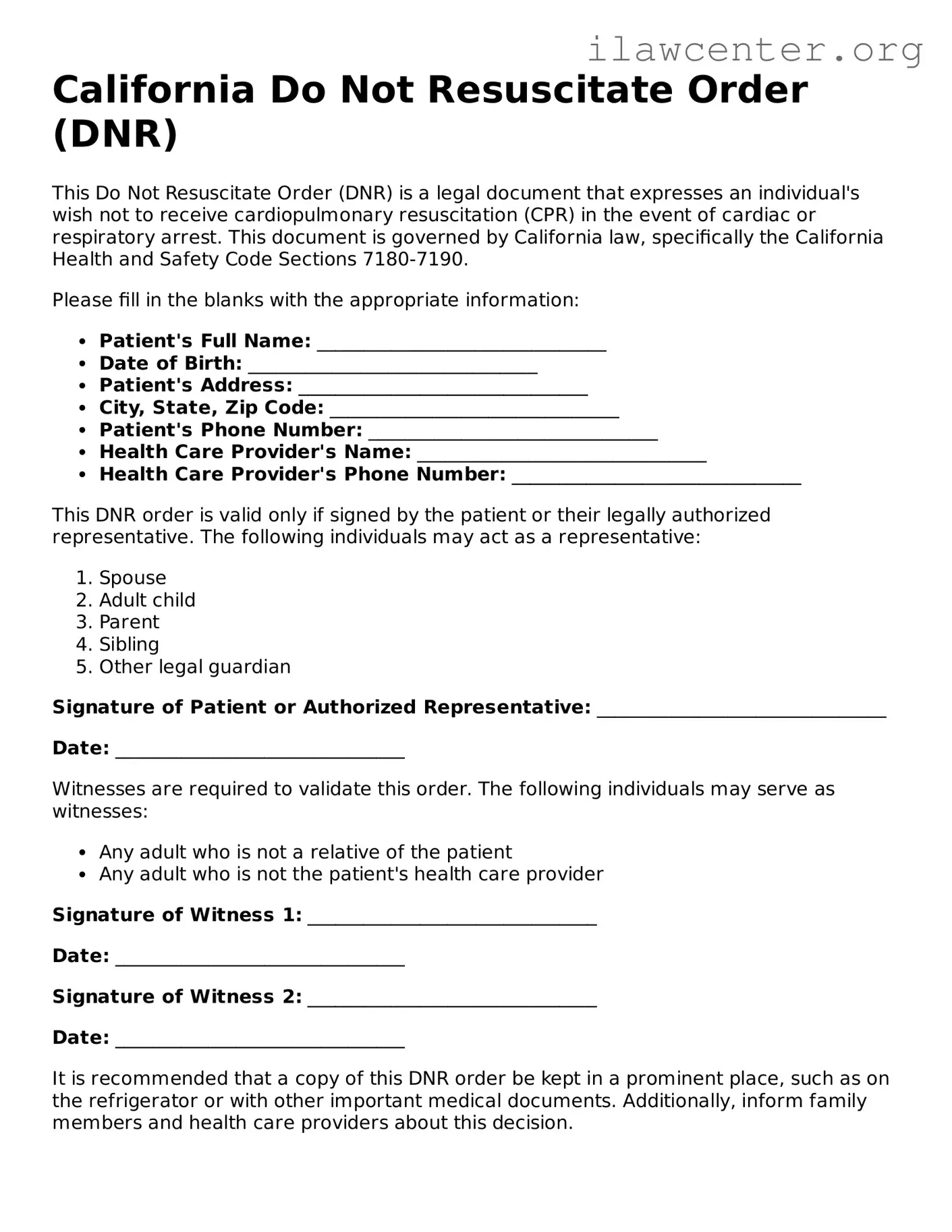
What is a Do Not Resuscitate (DNR) Order in California?
A Do Not Resuscitate Order is a legal document that allows an individual to refuse specific life-saving measures, such as cardiopulmonary resuscitation (CPR), in the event of a medical emergency. In California, a DNR order is typically used by individuals with serious medical conditions who wish to avoid aggressive medical interventions when their heart stops or they stop breathing.
Who can request a DNR Order?
In California, a DNR order can be requested by a patient who is capable of making their own medical decisions. If the patient is unable to communicate their wishes, a legally authorized representative, such as a spouse, adult child, or designated healthcare proxy, may request a DNR order on their behalf.
How do I obtain a DNR Order form in California?
The DNR order form can be obtained from various sources, including hospitals, healthcare providers, and online resources. The California Department of Public Health provides a downloadable version of the form on its website. It is essential to ensure that the form is filled out correctly and signed to be valid.
What information is required on the DNR Order form?
The DNR order form requires specific information, including the patient's name, date of birth, and a statement indicating the patient's wishes regarding resuscitation. Additionally, the form must be signed by the patient or their authorized representative, as well as a physician who agrees with the patient's decision.
Is a DNR Order valid in all healthcare settings?
Yes, a properly executed DNR order is valid in all healthcare settings in California, including hospitals, nursing homes, and at home. However, it is important to communicate the existence of the DNR order to all healthcare providers involved in the patient's care to ensure that their wishes are respected.
Can I change or revoke my DNR Order?
A DNR order can be changed or revoked at any time by the patient or their authorized representative. To revoke the order, the individual should communicate their decision to their healthcare provider and, if possible, destroy the original DNR form. It is advisable to document the change in writing to avoid any confusion in the future.
What should I do if my loved one has a DNR Order?
If your loved one has a DNR order, it is crucial to keep a copy of the form in an easily accessible location. Inform all family members and caregivers about the order. Additionally, ensure that healthcare providers are aware of the DNR order, especially during medical emergencies, to respect the individual's wishes.
What are the implications of having a DNR Order?
Having a DNR order means that healthcare providers will not perform CPR or other resuscitative measures if the patient experiences cardiac arrest or respiratory failure. It is essential to understand that a DNR order does not affect other types of medical treatment. Patients will still receive appropriate care and comfort measures, even if they have a DNR order in place.