Attorney-Verified  Dog Bill of Sale Document for California

Attorney-Verified Dog Bill of Sale Document for California

The California Dog Bill of Sale form is a legal document used to transfer ownership of a dog from one person to another. This form provides essential details about the dog, including its breed, age, and any relevant health information. It is important for both the seller and buyer to complete this form accurately to ensure a smooth transaction.

To fill out the form, click the button below.

Article Guide

When it comes to buying or selling a dog in California, having the right documentation is essential for both parties involved. The California Dog Bill of Sale form serves as a vital tool in this process, ensuring that the transaction is clear and legally recognized. This form captures key details such as the names and addresses of both the seller and the buyer, a description of the dog including breed, age, and color, and the agreed-upon sale price. Additionally, it often includes important disclosures regarding the dog's health and any known issues, which can protect both the seller from future claims and the buyer from unexpected surprises. By providing a written record of the sale, this form not only formalizes the transaction but also helps establish trust between the parties, making it easier to navigate any potential disputes down the road. Understanding the significance of this document can help ensure a smooth transition for both the new owner and their furry companion.

California Dog Bill of Sale Preview

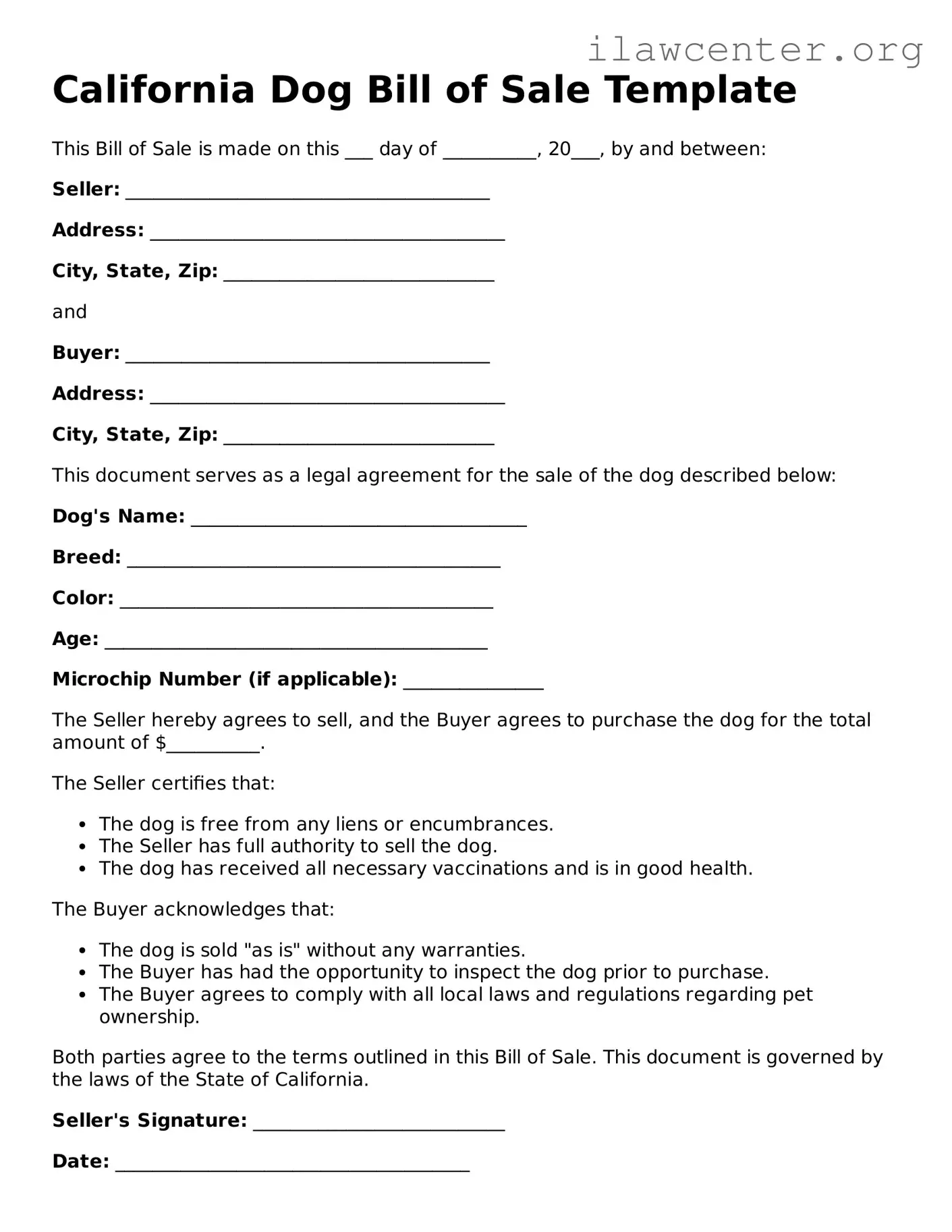
California Dog Bill of Sale Template

This Bill of Sale is made on this ___ day of __________, 20___, by and between:

Seller: _______________________________________

Address: ______________________________________

City, State, Zip: _____________________________

and

Buyer: _______________________________________

Address: ______________________________________

City, State, Zip: _____________________________

This document serves as a legal agreement for the sale of the dog described below:

Dog's Name: ____________________________________

Breed: ________________________________________

Color: ________________________________________

Age: _________________________________________

Microchip Number (if applicable): _______________

The Seller hereby agrees to sell, and the Buyer agrees to purchase the dog for the total amount of $__________.

The Seller certifies that:

  • The dog is free from any liens or encumbrances.
  • The Seller has full authority to sell the dog.
  • The dog has received all necessary vaccinations and is in good health.

The Buyer acknowledges that:

  • The dog is sold "as is" without any warranties.
  • The Buyer has had the opportunity to inspect the dog prior to purchase.
  • The Buyer agrees to comply with all local laws and regulations regarding pet ownership.

Both parties agree to the terms outlined in this Bill of Sale. This document is governed by the laws of the State of California.

Seller's Signature: ___________________________

Date: ______________________________________

Buyer's Signature: ___________________________

Date: ______________________________________

This Bill of Sale may be executed in counterparts, each of which shall be deemed an original, but all of which together shall constitute one and the same instrument.

PDF Form Characteristics

Fact Name Description
Purpose The California Dog Bill of Sale form is used to document the sale or transfer of ownership of a dog.
Governing Law This form is governed by California Civil Code Section 1738.5.
Buyer and Seller Information The form requires the names and addresses of both the buyer and seller.
Dog Description Details about the dog, including breed, age, and color, must be included.
Purchase Price The agreed purchase price for the dog should be clearly stated on the form.
Health Guarantee The seller may provide a health guarantee, which should be noted in the form.
Signatures Both parties must sign the document to make it legally binding.
Record Keeping It is advisable for both the buyer and seller to keep a copy of the completed form for their records.

Instructions on Utilizing California Dog Bill of Sale

When you’re ready to complete the California Dog Bill of Sale form, you’ll need to gather some essential information about the dog being sold and the parties involved. This form serves as a record of the transaction and helps ensure that both the buyer and seller are clear about the details of the sale.

  1. Begin by entering the date of the sale at the top of the form.
  2. Fill in the seller's full name and address. Ensure that this information is accurate.
  3. Next, provide the buyer's full name and address. Double-check for any spelling errors.
  4. In the designated section, describe the dog being sold. Include details such as the dog's breed, age, color, and any identifying marks or features.
  5. Indicate the sale price of the dog. Clearly state the amount in both numerical and written form to avoid any confusion.
  6. Both the seller and buyer should sign and date the form at the bottom. This confirms that both parties agree to the terms outlined.
  7. If applicable, note any warranties or guarantees related to the dog. This could include health guarantees or information about vaccinations.

Once you have filled out the form completely, keep a copy for your records. The buyer should also retain a copy as proof of ownership transfer. This documentation can be helpful for future reference, especially for veterinary care or if any disputes arise.

Important Facts about California Dog Bill of Sale

What is a California Dog Bill of Sale?

A California Dog Bill of Sale is a document that serves as proof of the transfer of ownership of a dog from one party to another. This form is essential for establishing clear ownership and can help prevent disputes in the future. It typically includes details about the dog, such as breed, age, and any identifying features, as well as the names and signatures of both the seller and the buyer.

Is a Dog Bill of Sale required in California?

While it's not legally required to have a Dog Bill of Sale in California, it is highly recommended. This document provides a written record of the transaction, which can be invaluable if any issues arise later regarding ownership or the dog's health. Having a Bill of Sale can also be useful for registration purposes with local animal control or licensing authorities.

What information should be included in a Dog Bill of Sale?

A comprehensive Dog Bill of Sale should include several key pieces of information. This includes the names and addresses of both the seller and the buyer, the dog's breed, age, color, and any distinguishing marks. Additionally, it should outline the purchase price and any conditions of the sale, such as warranties or guarantees regarding the dog's health.

Can I create my own Dog Bill of Sale?

Yes, you can create your own Dog Bill of Sale. There are many templates available online that can guide you in drafting one. Just ensure that it includes all the necessary information to protect both parties. However, if you have specific concerns or unusual circumstances, consulting with a legal professional might be beneficial.

What if the dog has health issues?

If the dog has known health issues, it's crucial to disclose this information in the Bill of Sale. Transparency helps build trust between the seller and buyer. Including a clause about the health condition can also protect the seller from future liability claims. If the buyer is aware of the dog's condition, they cannot claim that they were misled after the sale.

Is a Dog Bill of Sale legally binding?

A Dog Bill of Sale is generally considered a legally binding contract, provided it includes all necessary elements like the agreement of both parties and consideration (the purchase price). However, if disputes arise, the enforceability may depend on the specific circumstances surrounding the sale. Having clear documentation can significantly strengthen your position in case of disagreements.

Do I need to have the Dog Bill of Sale notarized?

No, it is not necessary to have a Dog Bill of Sale notarized in California. However, notarization can add an extra layer of legitimacy to the document, making it more difficult for either party to dispute its validity later on. If both parties are comfortable, notarizing the Bill of Sale can be a good idea.

What should I do after completing the Dog Bill of Sale?

After completing the Dog Bill of Sale, both the seller and buyer should keep a signed copy for their records. The buyer may also want to contact local animal control or licensing authorities to register the dog in their name. This step ensures that the new owner is recognized legally and can help in case the dog goes missing.

Can I use a Dog Bill of Sale for other animals?

While a Dog Bill of Sale is specifically designed for the sale of dogs, similar documents can be used for other animals. The key is to ensure that the form accurately reflects the details of the specific animal being sold. Customizing the document to fit the type of animal and the terms of the sale is essential for clarity and legal protection.
Common mistakes

When filling out the California Dog Bill of Sale form, it’s easy to make mistakes that can lead to confusion or legal issues later on. One common error is failing to provide complete information about the dog. Buyers and sellers must include details such as the dog’s breed, age, and any identifying features. Omitting this information can create ambiguity regarding the transaction.

Another frequent mistake is not including the seller’s and buyer’s full names and addresses. This information is crucial for establishing clear ownership and can help resolve any disputes that may arise in the future. Incomplete contact information can lead to complications if either party needs to be reached after the sale.

People often overlook the importance of signing the form. Both parties must sign the Dog Bill of Sale to validate the transaction. Without signatures, the document may not hold up in a dispute, leaving the ownership of the dog unclear.

Additionally, many forget to note any health guarantees or warranties. If there are specific conditions regarding the dog’s health or behavior, these should be clearly stated in the form. This helps protect both the buyer and the seller and sets clear expectations.

Another mistake is using outdated or incorrect forms. It’s essential to ensure that you are using the most current version of the California Dog Bill of Sale. Using an old form might lead to missing sections or outdated legal language.

Some individuals do not keep a copy of the completed form for their records. Retaining a copy is vital for both parties. It provides a reference point if questions arise later about the sale or the dog’s ownership.

People sometimes fail to include the purchase price of the dog. This detail is important for establishing the value of the transaction and can be relevant for tax purposes. Leaving this blank can lead to misunderstandings between the buyer and seller.

Another common oversight is neglecting to include any additional terms of the sale. If there are specific agreements regarding future care, training, or return policies, these should be documented. Clear communication prevents misunderstandings down the line.

Lastly, many individuals rush through the process without reading the form thoroughly. Taking the time to review all the details ensures that the information is accurate and complete. This diligence can save time and trouble in the future.

Documents used along the form

When purchasing or selling a dog in California, several important documents may accompany the Dog Bill of Sale form. These documents help ensure a smooth transaction and provide legal protections for both parties involved. Below is a list of commonly used forms and documents that can be beneficial in the process.

  • Health Certificate: This document certifies that the dog has been examined by a veterinarian and is free from contagious diseases. It often includes vaccination records and is crucial for the buyer's peace of mind.
  • Microchip Registration: If the dog is microchipped, this document provides details on the chip's registration. It is important for identifying the dog if it gets lost.
  • Transfer of Ownership Form: This form officially transfers ownership of the dog from the seller to the buyer. It may be required by certain organizations or registries.
  • Purchase Agreement: A detailed agreement outlining the terms of the sale, including price, payment method, and any warranties or guarantees. This protects both parties and clarifies expectations.
  • Breed Certification: If applicable, this document confirms the breed of the dog, which can be important for insurance or housing requirements.
  • Return Policy Agreement: Some sellers may provide a return policy, allowing the buyer to return the dog under specific conditions. This agreement outlines the terms of the return.
  • Liability Waiver: This document releases the seller from liability for any injuries or damages caused by the dog after the sale. It helps protect the seller legally.

Having these documents ready can facilitate a smoother transaction and provide necessary protections for both the buyer and the seller. It is advisable to review each document carefully to ensure all information is accurate and complete before finalizing the sale.

Similar forms

  • Bill of Sale for Other Pets: Similar to the Dog Bill of Sale, this document serves as proof of transfer for various pets, detailing the buyer, seller, and pet specifics.
  • Vehicle Bill of Sale: This form outlines the sale of a vehicle, including buyer and seller information, vehicle details, and sale price, ensuring a clear transfer of ownership.
  • Boat Bill of Sale: Much like the Dog Bill of Sale, this document records the sale of a boat, providing necessary details about the boat and the parties involved.
  • Real Estate Purchase Agreement: This agreement formalizes the sale of property, detailing the terms, conditions, and parties involved, similar to how a Dog Bill of Sale outlines the transfer of a dog.
  • Equipment Bill of Sale: This document serves to transfer ownership of equipment, specifying the item, sale price, and parties, akin to the dog sale process.
  • Gun Bill of Sale: Used for the sale of firearms, this document includes buyer and seller information and details about the firearm, paralleling the Dog Bill of Sale's purpose.
  • Business Asset Bill of Sale: This form transfers ownership of business assets, similar to how a Dog Bill of Sale transfers ownership of a dog.
  • Livestock Bill of Sale: Like the Dog Bill of Sale, this document facilitates the transfer of livestock, detailing the animals involved and the sale agreement.
  • Art Bill of Sale: This document records the sale of artwork, including descriptions and prices, similar to how a Dog Bill of Sale captures the specifics of a dog sale.

Dos and Don'ts

When filling out the California Dog Bill of Sale form, it's important to ensure that you provide accurate and complete information. Here are some essential dos and don’ts to keep in mind:

  • Do include the seller's full name and contact information.
  • Do provide the buyer's full name and contact information.
  • Do accurately describe the dog, including breed, age, and any distinguishing features.
  • Do specify the sale price clearly.
  • Don't leave any sections of the form blank.
  • Don't forget to sign and date the form before handing it over.

By following these guidelines, you can ensure a smooth transaction when selling or purchasing a dog in California.

Misconceptions

When it comes to the California Dog Bill of Sale form, many people have misunderstandings. Here are some common misconceptions:

  • It is not legally required. Some believe that a bill of sale is optional when selling a dog. However, having a bill of sale provides proof of ownership transfer and can protect both the seller and buyer.
  • It only applies to purebred dogs. This form is not limited to purebreds. It is valid for any dog, regardless of breed.
  • It must be notarized. Many think that the bill of sale needs to be notarized to be valid. In California, notarization is not required for the bill to be effective.
  • It is only for private sales. Some assume that this form is only necessary for private sales. In reality, it can also be used in transactions involving breeders or pet shops.
  • It is a complicated document. Many people feel overwhelmed by legal documents. The California Dog Bill of Sale form is straightforward and easy to complete.
  • It does not need to include health information. Some think health records are irrelevant. Including health information about the dog can be beneficial for the buyer.
  • Once signed, it cannot be changed. There’s a belief that the bill of sale is final and unchangeable. In fact, both parties can agree to modifications if needed, as long as they are documented.

Understanding these misconceptions can help ensure a smoother transaction when buying or selling a dog in California.

Key takeaways

When filling out and using the California Dog Bill of Sale form, keep these key takeaways in mind:

  • Accurate Information: Ensure that all details about the dog, including breed, age, and any identifying features, are correct.
  • Seller and Buyer Details: Include full names and contact information for both the seller and the buyer.
  • Purchase Price: Clearly state the agreed-upon price for the dog to avoid any misunderstandings.
  • Health and Vaccination Records: Attach any relevant health documents or vaccination records to the bill of sale.
  • Signatures Required: Both parties must sign the document to validate the sale.
  • Keep a Copy: Retain a copy of the completed bill of sale for your records after the transaction.