Attorney-Verified  Employee Handbook Document for California

Attorney-Verified Employee Handbook Document for California

The California Employee Handbook form is a crucial document that outlines workplace policies, employee rights, and company expectations. This form helps ensure that both employees and employers understand their responsibilities, promoting a positive work environment. To get started, fill out the form by clicking the button below.

Article Guide

Creating a comprehensive employee handbook is an essential step for any business operating in California. This document serves as a guide for both employers and employees, outlining workplace policies, expectations, and rights. A well-crafted employee handbook can help foster a positive work environment, clarify company culture, and ensure compliance with state and federal laws. Key aspects typically included in the California Employee Handbook form are policies on anti-discrimination, harassment prevention, and workplace safety. Additionally, it covers employee benefits, time-off policies, and procedures for addressing grievances. By providing clear guidelines, the handbook not only protects the organization but also empowers employees to understand their roles and responsibilities within the company. It’s important to tailor this document to reflect the unique values and practices of your business, making it a vital tool for effective communication and organizational success.

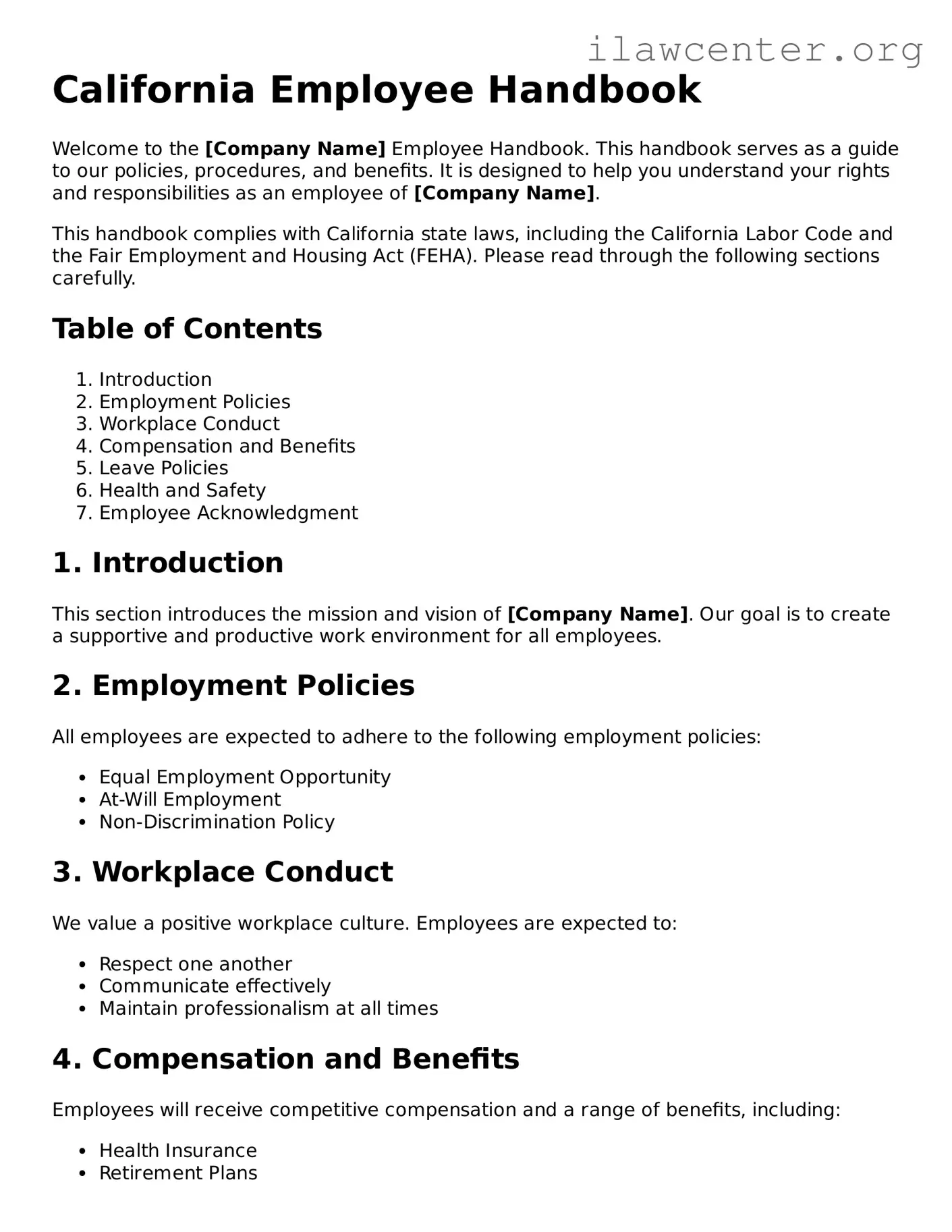
California Employee Handbook Preview

California Employee Handbook

Welcome to the [Company Name] Employee Handbook. This handbook serves as a guide to our policies, procedures, and benefits. It is designed to help you understand your rights and responsibilities as an employee of [Company Name].

This handbook complies with California state laws, including the California Labor Code and the Fair Employment and Housing Act (FEHA). Please read through the following sections carefully.

Table of Contents

  1. Introduction
  2. Employment Policies
  3. Workplace Conduct
  4. Compensation and Benefits
  5. Leave Policies
  6. Health and Safety
  7. Employee Acknowledgment

1. Introduction

This section introduces the mission and vision of [Company Name]. Our goal is to create a supportive and productive work environment for all employees.

2. Employment Policies

All employees are expected to adhere to the following employment policies:

  • Equal Employment Opportunity
  • At-Will Employment
  • Non-Discrimination Policy

3. Workplace Conduct

We value a positive workplace culture. Employees are expected to:

  • Respect one another
  • Communicate effectively
  • Maintain professionalism at all times

4. Compensation and Benefits

Employees will receive competitive compensation and a range of benefits, including:

  • Health Insurance
  • Retirement Plans
  • Paid Time Off

5. Leave Policies

Understanding your leave options is crucial. Our leave policies include:

  • Family and Medical Leave Act (FMLA)
  • California Paid Sick Leave
  • Parental Leave

6. Health and Safety

Your safety is a priority. We adhere to the California Occupational Safety and Health Administration (Cal/OSHA) regulations. Employees are encouraged to:

  • Report unsafe conditions
  • Participate in safety training
  • Follow safety protocols

7. Employee Acknowledgment

By signing below, you acknowledge that you have read and understood the [Company Name] Employee Handbook.

Employee Name: ____________________________

Date: ____________________________

PDF Form Characteristics

Fact Name Description
Purpose The California Employee Handbook serves as a guide for employees regarding company policies, procedures, and expectations.
Legal Requirement While not legally required, having an employee handbook is highly recommended to clarify workplace policies.
Governing Laws Several laws govern employee handbooks in California, including the California Labor Code and the Fair Employment and Housing Act (FEHA).
Content Guidelines Handbooks should include topics such as anti-discrimination policies, harassment policies, and employee benefits.
At-Will Employment California is an at-will employment state, meaning that either the employer or employee can terminate the employment relationship at any time.
Updates Employers should regularly update the handbook to reflect changes in laws or company policies.
Distribution Handbooks should be distributed to all employees, and acknowledgment of receipt is recommended for legal protection.
Employee Rights Handbooks must inform employees of their rights under state and federal laws, including wage and hour laws.
Confidentiality Confidentiality policies regarding employee information and company trade secrets should be clearly stated.
Legal Review It is advisable for employers to have the handbook reviewed by legal counsel to ensure compliance with applicable laws.

Instructions on Utilizing California Employee Handbook

Filling out the California Employee Handbook form is a straightforward process that requires attention to detail. Once completed, this form will serve as an important reference for both employees and employers, outlining key policies and expectations within the workplace.

  1. Begin by downloading the California Employee Handbook form from the official website or obtain a physical copy from your HR department.
  2. Read through the entire form carefully to understand the information required.
  3. Start with the employee's personal information section. Fill in your full name, address, phone number, and email address accurately.
  4. Move on to the employment details section. Provide your job title, department, and the date you began your employment.
  5. Next, review the policies listed in the handbook. Make sure to familiarize yourself with each policy and its implications.
  6. Sign and date the acknowledgment section at the end of the form, indicating that you have read and understood the handbook.
  7. Submit the completed form to your HR representative or follow the submission guidelines provided.

After submitting the form, keep a copy for your records. This will help you stay informed about your rights and responsibilities as an employee in California.

Important Facts about California Employee Handbook

What is a California Employee Handbook?

A California Employee Handbook is a document that outlines an employer's policies, procedures, and expectations for employees. It serves as a guide for both management and staff, detailing important information regarding workplace behavior, benefits, and legal rights. This handbook helps ensure consistency in the workplace and can protect both the employer and employees by clarifying expectations and responsibilities.

Why is it important to have an Employee Handbook?

An Employee Handbook is crucial for several reasons. It provides a clear reference for employees regarding company policies and procedures. It also helps to establish a positive workplace culture by promoting transparency. Additionally, having a handbook can mitigate legal risks by ensuring that employees are aware of their rights and the company’s obligations under California law.

What should be included in the Employee Handbook?

Essential elements of an Employee Handbook include the company’s mission statement, employment policies, code of conduct, anti-discrimination policies, and procedures for reporting harassment. Additionally, it should outline employee benefits, leave policies, and disciplinary procedures. A well-rounded handbook addresses both employee rights and employer responsibilities.

How often should the Employee Handbook be updated?

It is advisable to review and update the Employee Handbook at least annually. Changes in employment law, company policies, or operational procedures may necessitate updates. Regular reviews help ensure that the handbook remains compliant with current laws and reflects the company's values and practices.

Is it mandatory for California employers to provide an Employee Handbook?

While it is not legally required for California employers to have an Employee Handbook, it is highly recommended. Having a handbook can help clarify policies and protect the organization from potential legal issues. Employers with 50 or more employees are required to provide specific information regarding family leave, which can be included in the handbook.

Can employees be required to sign the Employee Handbook?

Yes, employers can require employees to sign an acknowledgment form indicating they have received and understood the Employee Handbook. This signature serves as proof that the employee is aware of the policies and procedures outlined in the document. However, it is important to ensure that the handbook does not contain any language that could be interpreted as a contract of employment.

What should an employer do if an employee violates a policy in the Handbook?

If an employee violates a policy outlined in the Employee Handbook, the employer should follow the disciplinary procedures specified in the handbook. Consistency in enforcement is key to maintaining fairness and credibility. Depending on the severity of the violation, disciplinary actions may range from a verbal warning to termination.

How can employees access the Employee Handbook?

Employees should have easy access to the Employee Handbook. It can be distributed in print form or made available electronically through the company’s intranet or email. Employers should ensure that all employees know how to access the handbook and encourage them to review it regularly.

What if an employee has questions about the Employee Handbook?

Employees are encouraged to ask questions about the Employee Handbook if they need clarification on any policies or procedures. Employers should provide a designated point of contact, such as a human resources representative, to address any concerns or questions. Open communication fosters a better understanding of workplace expectations.

Can an Employee Handbook be used in legal disputes?

Yes, an Employee Handbook can be used as evidence in legal disputes. Courts may reference the handbook to determine whether an employer followed its own policies and procedures. Therefore, it is essential that the handbook is clear, comprehensive, and consistently enforced to protect the organization in case of legal challenges.
Common mistakes

Filling out the California Employee Handbook form is a crucial step for both employees and employers. However, many people make common mistakes that can lead to confusion or legal issues down the line. Understanding these pitfalls can help ensure that the form is completed accurately and effectively.

One frequent mistake is not reading the entire handbook before signing. Employees may overlook important policies or procedures that could affect their rights and responsibilities. Taking the time to read the handbook thoroughly can prevent misunderstandings later.

Another common error is providing incomplete information. When employees fail to fill in all required fields, it can create delays and complications. Each section of the form is designed to gather essential information, so it is important to ensure that every part is completed fully.

Some individuals also neglect to ask questions about unclear sections. If something in the handbook is confusing, employees should seek clarification from their employer or HR representative. Ignoring these uncertainties can lead to misinterpretations of policies.

Additionally, failing to update personal information is a mistake that can have significant consequences. Changes in address, phone number, or emergency contacts should be promptly communicated to ensure that records are accurate and up-to-date.

Another error involves not keeping a copy of the signed handbook. After submitting the form, employees should retain a copy for their records. This documentation can be invaluable if disputes arise regarding policies or agreements.

Lastly, some people overlook the importance of understanding the implications of the handbook. The handbook outlines company policies, procedures, and expectations. Familiarity with these details is essential for maintaining a positive working relationship and ensuring compliance with company standards.

Documents used along the form

When creating a comprehensive workplace policy, several forms and documents complement the California Employee Handbook. Each of these documents serves a specific purpose and helps ensure that both employees and employers understand their rights and responsibilities.

  • Job Description Template: This document outlines the roles, responsibilities, and expectations for a specific position. It helps clarify what is required from employees and can be useful during performance evaluations.
  • Employee Agreement: This form establishes the terms of employment, including job title, salary, and benefits. It serves as a formal acknowledgment of the employment relationship.
  • Non-Disclosure Agreement (NDA): An NDA protects sensitive company information. Employees sign this document to agree not to share confidential information with outside parties.
  • Employee Performance Review Form: This document is used to evaluate an employee's job performance. Regular reviews help identify strengths and areas for improvement, fostering professional development.
  • Incident Report Form: This form records any workplace accidents or incidents. It is crucial for documenting events that may lead to claims or require further investigation.
  • Leave of Absence Request Form: Employees use this form to formally request time off for various reasons, such as medical leave or personal matters. It ensures that requests are documented and processed appropriately.
  • Employee Acknowledgment Form: This document confirms that employees have received and understood the Employee Handbook. It serves as proof that the company has communicated its policies effectively.
  • Training and Development Plan: This plan outlines opportunities for employee growth and skill enhancement. It helps align training with the organization's goals and individual career aspirations.

By utilizing these documents alongside the California Employee Handbook, organizations can create a structured and supportive work environment. This approach not only protects the company but also fosters a culture of transparency and trust among employees.

Similar forms

  • Company Policies Manual: Similar to the Employee Handbook, this document outlines the organization's policies and procedures. It serves as a guide for employees to understand their rights and responsibilities within the workplace.

  • Onboarding Guide: This document provides new hires with essential information about their roles, the company culture, and the resources available to them. Like the Employee Handbook, it helps set expectations from the start.

  • Code of Conduct: This document specifies the expected behavior of employees. It shares similarities with the Employee Handbook by establishing guidelines for professional conduct and ethical standards.

  • Safety Manual: Focused on workplace safety, this manual outlines procedures and protocols to ensure employee well-being. It parallels the Employee Handbook by emphasizing the importance of a safe working environment.

  • Benefits Guide: This document details the benefits available to employees, such as health insurance and retirement plans. Like the Employee Handbook, it provides crucial information that impacts employee satisfaction and retention.

  • Performance Review Guidelines: This document explains the performance evaluation process and criteria. Similar to the Employee Handbook, it clarifies expectations and promotes transparency in employee assessments.

  • Leave Policy Document: This outlines the types of leave available to employees, including sick leave and vacation. It aligns with the Employee Handbook by informing employees of their rights regarding time off.

  • Disciplinary Procedures Manual: This document details the steps taken when addressing employee misconduct. It is akin to the Employee Handbook as it provides clarity on consequences and procedures, promoting fairness in the workplace.

  • Employee Rights and Responsibilities Document: This document outlines the rights and responsibilities of employees under labor laws. It parallels the Employee Handbook by ensuring employees are aware of their legal protections and obligations.

  • Training and Development Guide: This document offers information on available training programs and career development opportunities. Like the Employee Handbook, it encourages employee growth and engagement within the organization.

Dos and Don'ts

When filling out the California Employee Handbook form, it is important to follow certain guidelines to ensure accuracy and compliance. Below is a list of things you should and shouldn't do.

  • Do read the entire handbook carefully before filling out the form.
  • Do provide accurate and up-to-date personal information.
  • Do ask questions if you are unsure about any section of the form.
  • Do review your completed form for any errors or omissions.
  • Do submit the form by the specified deadline.
  • Don't rush through the form without understanding its contents.
  • Don't provide false information, as this can lead to serious consequences.
  • Don't ignore any sections, even if they seem irrelevant to you.
  • Don't forget to sign and date the form before submission.

By following these guidelines, you can ensure that your completion of the California Employee Handbook form is both effective and compliant with necessary regulations.

Misconceptions

Many people have misunderstandings about the California Employee Handbook. Here are six common misconceptions:

  1. All companies are required to have an employee handbook.

    This is not true. While having an employee handbook is highly recommended, it is not a legal requirement for all businesses in California. However, it can provide clarity and protection for both employers and employees.

  2. Employee handbooks are only for large companies.

    This misconception overlooks the fact that small businesses can also benefit from having a handbook. It helps set clear expectations and policies, regardless of the size of the company.

  3. Once created, the handbook never needs to be updated.

    Policies and laws change over time. Regularly reviewing and updating the employee handbook is essential to ensure compliance with current regulations and to reflect any changes in company policies.

  4. Handbooks are legally binding contracts.

    While an employee handbook can outline policies and procedures, it is generally not considered a legally binding contract. Employers often include disclaimers to clarify that the handbook is meant for guidance, not as a contractual agreement.

  5. Every employee must sign the handbook.

    Although it is a good practice to have employees acknowledge receipt of the handbook, it is not legally required. However, having a signed acknowledgment can help avoid disputes in the future.

  6. All handbooks must include the same policies.

    This is a misconception. Each handbook should reflect the unique culture, values, and needs of the specific organization. Policies can vary significantly between different companies.

Key takeaways

When filling out and using the California Employee Handbook form, keep the following key takeaways in mind:

  • Ensure that the handbook is tailored to your specific workplace policies and culture.
  • Include all necessary legal requirements to protect both the employer and employees.
  • Regularly update the handbook to reflect any changes in laws or company policies.
  • Clearly outline employee rights and responsibilities to promote a positive work environment.
  • Distribute the handbook to all employees and obtain acknowledgment of receipt.
  • Make the handbook easily accessible for future reference, whether in print or online.