Attorney-Verified  Employment Verification Document for California

Attorney-Verified Employment Verification Document for California

The California Employment Verification form is a document used to confirm an individual's employment status and details. This form serves as an essential tool for employers and employees alike, ensuring accurate record-keeping and compliance with state regulations. For those needing to complete this form, click the button below to get started.

Article Guide

In the state of California, the Employment Verification form plays a crucial role in the hiring process, serving as a vital tool for both employers and employees. This form is designed to confirm the employment status of an individual, providing necessary details such as job title, dates of employment, and salary information. Employers utilize this document to ensure that they are making informed hiring decisions, while prospective employees may find it essential for securing loans, renting apartments, or applying for various benefits. The form not only facilitates transparency in the employment relationship but also helps to protect the rights of workers by ensuring that their employment history is accurately represented. Understanding the nuances of this form is essential for both parties involved, as it fosters a smoother transition into the workforce and supports compliance with state regulations. In this article, we will explore the key components of the Employment Verification form, the responsibilities of employers in completing it, and the rights of employees regarding their employment information.

California Employment Verification Preview

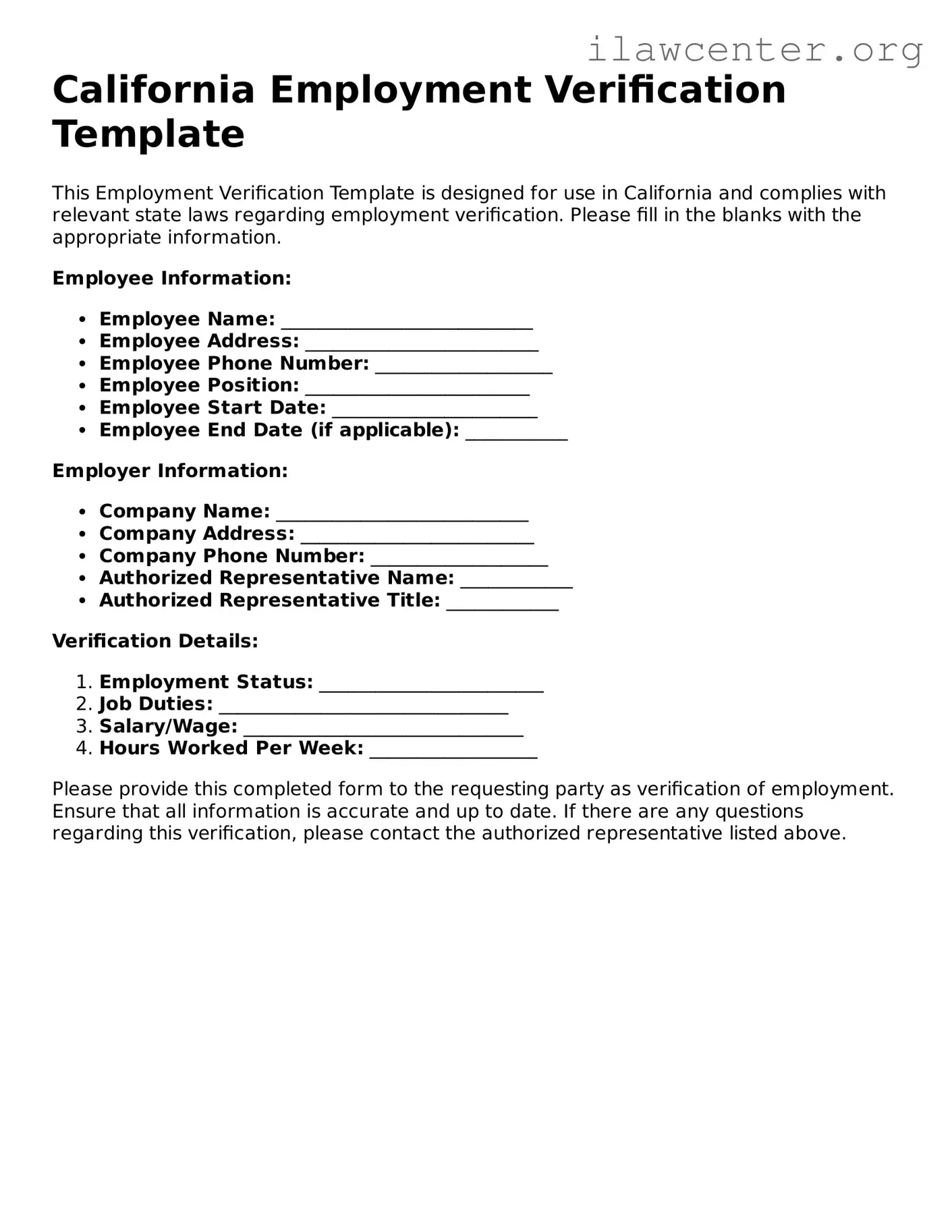
California Employment Verification Template

This Employment Verification Template is designed for use in California and complies with relevant state laws regarding employment verification. Please fill in the blanks with the appropriate information.

Employee Information:

  • Employee Name: ___________________________
  • Employee Address: _________________________
  • Employee Phone Number: ___________________
  • Employee Position: ________________________
  • Employee Start Date: ______________________
  • Employee End Date (if applicable): ___________

Employer Information:

  • Company Name: ___________________________
  • Company Address: _________________________
  • Company Phone Number: ___________________
  • Authorized Representative Name: ____________
  • Authorized Representative Title: ____________

Verification Details:

  1. Employment Status: ________________________
  2. Job Duties: _______________________________
  3. Salary/Wage: ______________________________
  4. Hours Worked Per Week: __________________

Please provide this completed form to the requesting party as verification of employment. Ensure that all information is accurate and up to date. If there are any questions regarding this verification, please contact the authorized representative listed above.

PDF Form Characteristics

Fact Name Description
Purpose The California Employment Verification form is used to confirm an employee's identity and employment status.
Governing Law This form is governed by California Labor Code Section 1174.
Who Uses It Employers in California use this form to verify the employment of their staff.
Required Information The form typically requires the employee's name, job title, and dates of employment.
Confidentiality Employers must handle the information on this form with care to protect employee privacy.
Submission Employees may need to submit this form to potential employers or for loan applications.
Signature Requirement A signature from the employer or authorized representative is usually required to validate the form.
Retention Period Employers should keep completed forms for at least three years after the employee's departure.
Availability The form can often be obtained from the employer's human resources department or online.

Instructions on Utilizing California Employment Verification

After you have gathered the necessary information, you are ready to complete the California Employment Verification form. Make sure to fill it out accurately to ensure a smooth verification process.

  1. Start by entering the employee's full name at the top of the form.
  2. Provide the employee's Social Security number in the designated space.
  3. Fill in the employee's job title and the department they work in.
  4. Next, include the name of the employer or company.
  5. Indicate the employer's address, including the street, city, state, and zip code.
  6. Enter the employee's start date with the company.
  7. If applicable, provide the employee's end date.
  8. Fill in the employee's current salary or hourly wage.
  9. Sign and date the form at the bottom to certify the information is correct.

Once you have completed these steps, review the form for any errors before submitting it. This will help avoid any delays in the verification process.

Important Facts about California Employment Verification

What is the California Employment Verification form?

The California Employment Verification form is a document used by employers to confirm the employment status of an individual. This form is typically requested by third parties, such as lenders or landlords, who need proof of income or employment for various purposes. It serves as an official record that verifies the individual's job title, employment dates, and sometimes salary information.

Who needs to fill out the Employment Verification form?

Generally, the employer is responsible for completing the Employment Verification form. However, the employee may need to provide information or consent for the employer to release details. This process ensures that the verification is accurate and compliant with privacy regulations.

How can I obtain a California Employment Verification form?

You can typically obtain the Employment Verification form from your employer’s human resources department. Some companies may have their own version of the form, while others may use a standard template. If you're a third party requesting verification, you may need to contact the employer directly to initiate the process.

What information is required on the form?

The form usually requires basic information such as the employee's name, job title, dates of employment, and the employer's contact details. Some forms may also ask for the employee's salary or hourly wage, but this is not always included due to privacy concerns. Always check with the employer for specific requirements.

How long does it take to process an Employment Verification request?

The processing time for an Employment Verification request can vary. Typically, employers aim to respond within a few business days. However, factors such as the company's policies, workload, and the completeness of the request can influence the timeline. It’s a good idea to follow up if you haven’t received a response within a week.

Can an employee dispute information on the Employment Verification form?

Yes, if an employee believes that the information provided on the Employment Verification form is incorrect, they have the right to dispute it. The employee should contact their employer’s human resources department to address any discrepancies. Open communication is key to resolving any issues that may arise.

Is the Employment Verification form confidential?

Yes, the information contained in the Employment Verification form is generally considered confidential. Employers must handle this data responsibly and share it only with authorized parties. Employees should be aware of their rights regarding privacy and how their information is used.
Common mistakes

Completing the California Employment Verification form can be a straightforward process, but several common mistakes often lead to delays or complications. One frequent error is failing to provide accurate personal information. Individuals sometimes overlook the importance of ensuring that their name, address, and Social Security number are correct. This information is crucial for the verification process, and inaccuracies can lead to significant setbacks.

Another common mistake is neglecting to include all relevant employment details. Applicants may forget to list their job title, dates of employment, or the name of their employer. Each of these elements plays a vital role in establishing a clear employment history. Omitting any of this information can raise questions and potentially hinder the verification process.

In addition, many individuals fail to sign and date the form. A signature is not just a formality; it confirms that the information provided is true and accurate. Without a signature, the form may be considered incomplete, resulting in unnecessary delays. It is essential to remember that both the date and signature are required for the form to be valid.

Another mistake involves misunderstanding the purpose of the form. Some individuals may provide unnecessary personal details that are not relevant to employment verification. This can lead to confusion and may even raise privacy concerns. Keeping the information focused on employment history is key to ensuring a smooth verification process.

Many applicants also overlook the importance of providing supporting documentation. While the form itself is crucial, accompanying it with relevant documents—such as pay stubs or tax forms—can help substantiate the information provided. This additional evidence can strengthen the application and streamline the verification process.

Furthermore, people often fail to follow the specific instructions outlined for the form. Each section of the form may have particular requirements, and not adhering to these can result in incomplete submissions. Reading and following the instructions carefully can prevent unnecessary complications.

Lastly, some individuals do not keep a copy of the completed form for their records. Retaining a copy can be beneficial for future reference and can serve as proof of submission. This simple step can save time and effort if any issues arise later in the process.

Documents used along the form

When completing the California Employment Verification process, several other forms and documents may be required to provide a comprehensive view of an individual's employment history and status. These documents help employers confirm the details provided by job applicants and ensure compliance with legal requirements.

  • Job Application Form: This form collects personal information, work history, and references from the applicant. It serves as the foundation for the employment verification process.
  • W-2 Form: Issued by employers, this form summarizes an employee's annual wages and tax withholdings. It is useful for verifying income and employment duration.
  • Pay Stubs: Recent pay stubs provide evidence of current employment and salary. They often include details about hours worked and deductions.
  • Tax Returns: Personal tax returns, especially the 1040 form, can be used to verify income, particularly for self-employed individuals or freelancers.
  • Offer Letter: This document outlines the terms of employment, including job title, salary, and benefits. It confirms the applicant's acceptance of the job offer.
  • Employment Contract: A formal agreement between employer and employee detailing job responsibilities, compensation, and other employment terms. It can clarify the nature of the employment relationship.
  • Background Check Authorization: This form allows employers to conduct background checks, which can include criminal history, credit checks, and other relevant information about the applicant.
  • Reference Letters: Letters from previous employers or colleagues can support an applicant's claims about their work ethic, skills, and contributions in past roles.
  • Resumes: A resume summarizes an applicant's work experience, skills, and education. It provides a snapshot of the candidate's qualifications for the position.

These documents collectively enhance the employment verification process, ensuring that employers make informed hiring decisions. They help create a clear picture of an applicant's qualifications and history, which is essential for both the employer and the prospective employee.

Similar forms

The Employment Verification form serves as a crucial document in the hiring process, ensuring that potential employees have the necessary qualifications and background. Several other documents share similar purposes, each playing a vital role in verifying an individual's credentials and employment history. Here’s a look at eight documents that resemble the Employment Verification form:

  • Job Offer Letter: This document outlines the terms of employment, including job title, salary, and start date. Like the Employment Verification form, it confirms the candidate's acceptance of a position.
  • Reference Check Form: Used to gather insights from previous employers or colleagues, this form helps verify a candidate's work history and character, much like the Employment Verification form does.
  • Background Check Authorization: This document allows employers to conduct a background check on a candidate. It serves a similar purpose by validating the information provided by the applicant.
  • W-2 Form: Issued by employers, this form summarizes an employee’s annual wages and taxes withheld. It can be used to verify employment history and income, paralleling the Employment Verification form's objectives.
  • Pay Stubs: These documents provide evidence of income and employment status. They are often used to confirm a candidate's financial stability and employment duration.
  • Resume or Curriculum Vitae (CV): This document outlines an individual's work experience, education, and skills. It is a foundational piece of information that the Employment Verification form seeks to confirm.
  • Employment History Form: Similar to the Employment Verification form, this document collects detailed information about a candidate's past employment, including job titles, responsibilities, and duration of employment.
  • Professional License Verification: For certain professions, this document confirms that an individual holds the necessary licenses to practice. It aligns with the Employment Verification form by ensuring that candidates meet required qualifications.

Understanding these documents can streamline the hiring process, ensuring that both employers and potential employees have clarity and confidence in their professional relationships.

Dos and Don'ts

When filling out the California Employment Verification form, it's crucial to follow certain guidelines to ensure accuracy and compliance. Here’s a list of what to do and what to avoid:

  • Do read the instructions carefully before starting.
  • Do provide accurate and complete information about your employment history.
  • Do use clear and legible handwriting or type the information.
  • Do double-check all entries for spelling and numerical errors.
  • Do sign and date the form where required.
  • Don't leave any sections blank unless instructed to do so.
  • Don't provide false information or misrepresent your employment status.

Following these guidelines can help avoid delays and ensure your form is processed smoothly.

Misconceptions

Understanding the California Employment Verification form can be tricky. Here are seven common misconceptions that many people have:

  1. It is only required for new hires.

    Many believe that the Employment Verification form is only necessary when someone is starting a new job. In reality, it can also be required for promotions or changes in job status.

  2. It is the same as a background check.

    Some think that completing the Employment Verification form is equivalent to undergoing a background check. However, the form primarily confirms employment status and does not delve into criminal history or credit reports.

  3. Employers can ask for any information they want.

    There’s a misconception that employers have free rein in what they can request. In fact, there are specific guidelines regarding what information can be requested and shared under this form.

  4. It is optional for employers.

    Some people assume that employers can choose whether or not to use the Employment Verification form. However, for many industries and positions, it is a mandatory process.

  5. Only full-time employees need verification.

    Another common belief is that only full-time workers require employment verification. In truth, part-time and temporary employees may also need to be verified, depending on the employer's policies.

  6. Once submitted, the information cannot be changed.

    Many think that once the Employment Verification form is filled out, it is set in stone. However, if there are errors or changes in employment status, updates can be made to ensure accuracy.

  7. It can be completed by anyone.

    Lastly, some believe that anyone can fill out the Employment Verification form. In reality, it should be completed by the employer or an authorized representative to ensure the information is accurate and valid.

Being aware of these misconceptions can help clarify the purpose and requirements of the California Employment Verification form, making the process smoother for everyone involved.

Key takeaways

When filling out and using the California Employment Verification form, it is essential to understand its purpose and the information it requires. Here are some key takeaways that can help you navigate the process effectively:

  • Purpose of the Form: The California Employment Verification form serves to confirm an individual's employment status, job title, and duration of employment, often required for loans, housing applications, or government benefits.
  • Accurate Information: Ensure that all details provided on the form are accurate and up-to-date. Incorrect information can lead to delays or complications in the verification process.
  • Employer's Responsibility: Employers are typically responsible for completing the verification section of the form. They should provide honest and clear responses to avoid any legal implications.
  • Privacy Considerations: Both employees and employers should be aware of privacy concerns. Sensitive information should be handled with care, and consent may be required before sharing personal details.
  • Signature Requirement: The form usually requires a signature from the employee authorizing the release of their employment information. This step is crucial for compliance with privacy laws.
  • Submission Process: After completing the form, it should be submitted to the requesting party, such as a bank or landlord. Ensure that you follow any specific submission guidelines they may have.
  • Keep Copies: Always keep a copy of the completed form for your records. This can be helpful in case of disputes or if further verification is needed in the future.
  • Follow-Up: If you do not receive confirmation of the verification within a reasonable timeframe, consider following up with the requesting party to ensure the process is moving forward.

Understanding these key points can make the employment verification process smoother and more efficient for everyone involved.