Attorney-Verified  Horse Bill of Sale Document for California

Attorney-Verified Horse Bill of Sale Document for California

The California Horse Bill of Sale form serves as a crucial document for anyone involved in the buying or selling of horses in the state. This form not only protects the interests of both parties but also ensures that the transaction is legally recognized. If you're ready to make a horse purchase or sale, fill out the form by clicking the button below.

Article Guide

The California Horse Bill of Sale form serves as a vital document in the transaction of horse ownership, providing both buyers and sellers with a clear record of the sale. This form outlines essential details such as the horse's description, including its breed, age, color, and any distinguishing marks, ensuring that both parties have a mutual understanding of the animal being sold. Additionally, the document includes the purchase price and payment terms, which helps to avoid any misunderstandings regarding financial obligations. It also addresses the transfer of ownership, offering legal protection to both the buyer and seller by documenting the date of sale and any warranties or guarantees related to the horse's health and condition. By signing this form, both parties acknowledge their agreement to the terms laid out, creating a binding contract that can be referenced in the event of disputes. Understanding the significance of this form is crucial for anyone involved in equine transactions in California, as it not only facilitates a smooth sale process but also ensures compliance with state regulations governing animal sales.

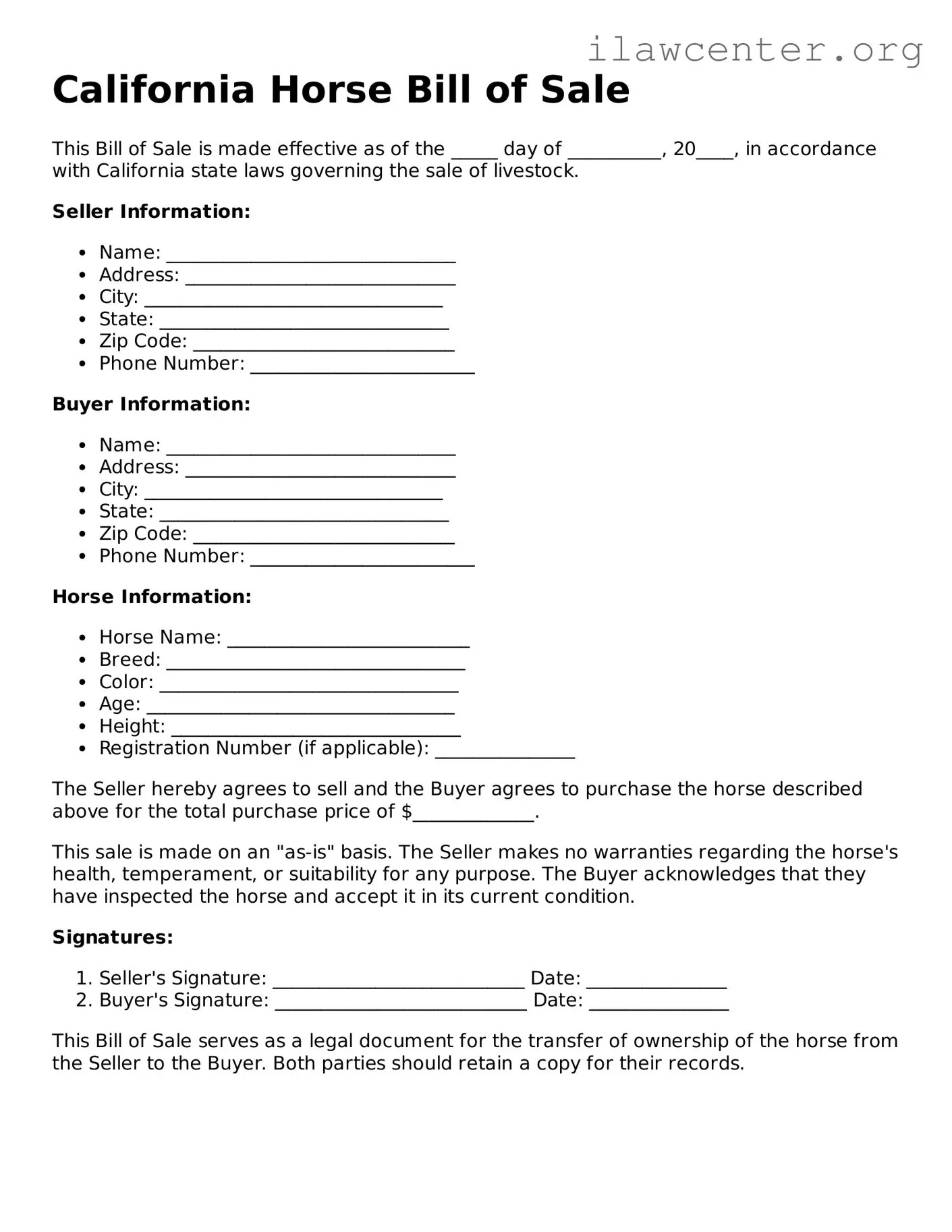
California Horse Bill of Sale Preview

California Horse Bill of Sale

This Bill of Sale is made effective as of the _____ day of __________, 20____, in accordance with California state laws governing the sale of livestock.

Seller Information:

  • Name: _______________________________
  • Address: _____________________________
  • City: ________________________________
  • State: _______________________________
  • Zip Code: ____________________________
  • Phone Number: ________________________

Buyer Information:

  • Name: _______________________________
  • Address: _____________________________
  • City: ________________________________
  • State: _______________________________
  • Zip Code: ____________________________
  • Phone Number: ________________________

Horse Information:

  • Horse Name: __________________________
  • Breed: ________________________________
  • Color: ________________________________
  • Age: _________________________________
  • Height: _______________________________
  • Registration Number (if applicable): _______________

The Seller hereby agrees to sell and the Buyer agrees to purchase the horse described above for the total purchase price of $_____________.

This sale is made on an "as-is" basis. The Seller makes no warranties regarding the horse's health, temperament, or suitability for any purpose. The Buyer acknowledges that they have inspected the horse and accept it in its current condition.

Signatures:

  1. Seller's Signature: ___________________________ Date: _______________
  2. Buyer's Signature: ___________________________ Date: _______________

This Bill of Sale serves as a legal document for the transfer of ownership of the horse from the Seller to the Buyer. Both parties should retain a copy for their records.

PDF Form Characteristics

Fact Name Description
Purpose The California Horse Bill of Sale form serves as a legal document to transfer ownership of a horse from one party to another.
Governing Law This form is governed by California Civil Code Section 1738, which outlines the requirements for the sale of personal property.
Parties Involved The form includes sections for both the seller and the buyer to provide their names and contact information.
Horse Description Detailed information about the horse, including breed, age, color, and any identifying marks, must be included in the form.
Purchase Price The agreed-upon price for the horse must be clearly stated, ensuring both parties understand the financial terms of the sale.
Signatures Both the seller and buyer are required to sign the form, confirming their agreement to the terms outlined in the document.
Record Keeping It is advisable for both parties to keep a copy of the completed Bill of Sale for their records, as it serves as proof of ownership transfer.

Instructions on Utilizing California Horse Bill of Sale

Once you have the California Horse Bill of Sale form in hand, it’s important to fill it out accurately to ensure a smooth transaction. This document serves as proof of the sale and includes essential details about the horse and the parties involved. Follow these steps to complete the form correctly.

  1. Obtain the form: You can find the California Horse Bill of Sale form online or at a local equestrian supply store.
  2. Fill in the seller's information: Write the full name, address, and contact information of the person selling the horse.
  3. Provide the buyer's details: Enter the full name, address, and contact information of the buyer.
  4. Describe the horse: Include the horse's name, breed, age, color, and any identifying marks or registration numbers.
  5. State the sale price: Clearly indicate the amount for which the horse is being sold.
  6. Include the date of sale: Write the date when the transaction takes place.
  7. Sign the form: Both the seller and buyer must sign the form to validate the sale.
  8. Keep copies: Make sure both parties retain a copy of the completed form for their records.

Important Facts about California Horse Bill of Sale

What is a California Horse Bill of Sale form?

A California Horse Bill of Sale form is a legal document that records the sale and transfer of ownership of a horse in California. This form serves as proof of the transaction and includes essential details about the horse, the buyer, and the seller. It helps protect both parties in the event of disputes regarding ownership or terms of the sale.

Why is a Horse Bill of Sale important?

This document is crucial for establishing legal ownership. It protects the buyer by providing evidence of their purchase, while it also protects the seller by documenting that the horse has been sold. Without this form, disputes may arise regarding ownership or the condition of the horse at the time of sale.

What information is included in the Horse Bill of Sale?

The form typically includes the names and addresses of both the buyer and seller, a description of the horse (including breed, age, color, and any identifying marks), the sale price, the date of sale, and any warranties or representations made by the seller. Both parties should sign the document to validate the transaction.

Do I need to have the Horse Bill of Sale notarized?

While notarization is not required by California law, it is highly recommended. A notarized document adds an extra layer of authenticity and can help prevent disputes by verifying the identities of the parties involved. It may also be required by some buyers or sellers for their own records.

Can I use a generic Bill of Sale for a horse sale?

While a generic Bill of Sale can be used, it is advisable to use a specific Horse Bill of Sale form. A specialized form includes relevant details tailored to horse transactions, ensuring that all necessary information is covered. This reduces the risk of missing important details that could lead to complications later.

What happens if the horse is found to have undisclosed issues after the sale?

If undisclosed issues arise after the sale, the buyer may have limited recourse unless specific warranties were included in the Bill of Sale. It is essential to discuss any known issues before the sale and to document them in the form. Buyers should consider having a pre-purchase veterinary examination to uncover potential problems.

Is there a specific format for the California Horse Bill of Sale?

There is no mandated format for the Horse Bill of Sale in California. However, it should be clear and include all necessary information to protect both parties. Many templates are available online, which can serve as a good starting point. Ensure that any template used meets the specific needs of the transaction.

Where can I obtain a California Horse Bill of Sale form?

California Horse Bill of Sale forms can be obtained from various online legal form providers, equestrian organizations, or local agricultural extension offices. It’s important to choose a reputable source to ensure that the form complies with state laws and includes all necessary elements for a valid sale.
Common mistakes

When filling out the California Horse Bill of Sale form, many people overlook important details that can lead to complications down the line. One common mistake is failing to provide accurate information about the horse being sold. It's essential to include the horse's registered name, breed, age, and any identifying markings. Inaccurate details can create confusion and disputes later.

Another frequent error is neglecting to include the seller's and buyer's full names and contact information. This information is crucial for establishing a clear record of the transaction. Without it, either party may find it difficult to reach out for follow-up questions or issues related to the sale.

Some individuals forget to indicate the sale price clearly. This omission can lead to misunderstandings about the terms of the sale. Always ensure that the sale price is clearly stated in the form. Additionally, consider including any payment terms, such as whether a deposit was made or if the payment will be completed in installments.

Many people also skip the section regarding any warranties or guarantees. If the horse is sold "as is," it should be explicitly stated in the bill of sale. Conversely, if there are any warranties about the horse's health or performance, those should be documented as well. Clarity on this point can prevent future disputes.

Another mistake involves the signatures. Both the seller and buyer must sign the document for it to be valid. Some individuals mistakenly think that a verbal agreement suffices. However, a signed bill of sale serves as a legal record of the transaction and is vital for both parties.

Lastly, individuals often forget to keep a copy of the completed bill of sale for their records. This document serves as proof of ownership and can be essential for future reference, especially if any issues arise after the sale. Always ensure that both parties retain a signed copy of the document.

Documents used along the form

When buying or selling a horse in California, it's important to have the right documentation to ensure a smooth transaction. The California Horse Bill of Sale form serves as a crucial record of the sale, but it is often accompanied by other important documents that help clarify ownership and ensure legal compliance. Here are four commonly used forms and documents that complement the Horse Bill of Sale:

  • Horse Purchase Agreement: This document outlines the terms of the sale, including the purchase price, payment method, and any warranties or guarantees related to the horse. It serves as a binding contract between the buyer and seller.
  • Health Certificate: Issued by a licensed veterinarian, this certificate confirms that the horse is in good health and free from contagious diseases. It is often required for interstate transport and can provide peace of mind to the buyer.
  • Brand Inspection Certificate: In California, horses may be branded for identification. This certificate verifies the brand and ownership of the horse, which can be particularly important in case of disputes or theft.
  • Transfer of Ownership Form: This form is necessary for officially transferring the horse's registration with breed associations or other organizations. It ensures that the new owner is recognized and can participate in events or competitions.

Having these documents prepared and organized can help facilitate a seamless transaction. It's always advisable to consult with professionals when dealing with legal forms to ensure that all requirements are met and that your interests are protected.

Similar forms

The Horse Bill of Sale form serves as an important document in the transaction of buying or selling a horse. Several other documents share similarities with this form, particularly in their purpose of transferring ownership or documenting agreements. Below is a list of nine documents that are similar to the Horse Bill of Sale:

  • Vehicle Bill of Sale: This document is used to transfer ownership of a vehicle from one party to another, detailing the vehicle's make, model, and identification number.
  • Boat Bill of Sale: Similar to the Horse Bill of Sale, this form transfers ownership of a boat and includes information about the vessel, such as its registration number and condition.
  • Real Estate Purchase Agreement: This document outlines the terms of a property sale, including the purchase price and any contingencies, much like the terms outlined in a horse sale.
  • Pet Adoption Agreement: When adopting a pet, this agreement documents the transfer of ownership and responsibilities, similar to how a horse sale is formalized.
  • Equipment Bill of Sale: This form is used for the sale of various types of equipment, detailing the items being sold and their condition, akin to the specifics provided in a horse sale.
  • Business Asset Sale Agreement: This document is used when selling business assets, outlining what is included in the sale and the terms, paralleling the horse sale process.
  • Art Sale Agreement: This document facilitates the sale of artwork, detailing the piece being sold and the terms of the transaction, similar to the Horse Bill of Sale.
  • Livestock Bill of Sale: Used for the sale of livestock, this form provides details about the animals being sold, similar to how a horse bill outlines specifics about the horse.
  • Timeshare Purchase Agreement: This agreement outlines the terms for purchasing a timeshare, including ownership rights, much like the terms in a horse sale transaction.

Each of these documents serves a specific purpose in facilitating the transfer of ownership, providing necessary details to protect both the buyer and the seller.

Dos and Don'ts

When filling out the California Horse Bill of Sale form, it’s important to follow certain guidelines to ensure the process goes smoothly. Here are ten things you should and shouldn't do:

  • Do provide accurate information about the horse, including breed, age, and registration number.
  • Don't leave any sections blank; complete all required fields.
  • Do include the sale price and payment method clearly.
  • Don't use vague descriptions; be specific about the horse's condition.
  • Do have both the buyer and seller sign the document.
  • Don't forget to date the form; this is essential for record-keeping.
  • Do keep a copy of the completed form for your records.
  • Don't rush through the process; take your time to ensure accuracy.
  • Do check local laws for any additional requirements.
  • Don't assume that verbal agreements are enough; always use a written bill of sale.

Misconceptions

Misconceptions about the California Horse Bill of Sale form can lead to confusion for buyers and sellers. Here are eight common misunderstandings:

  • The form is not necessary for a horse sale. Some people believe a verbal agreement suffices. However, having a written bill of sale provides legal protection for both parties.
  • Only registered horses require a bill of sale. Regardless of registration status, all horse sales benefit from a bill of sale to document the transaction.
  • The bill of sale must be notarized. While notarization can add credibility, it is not a legal requirement for the bill of sale in California.
  • All details about the horse must be included. While it’s advisable to provide as much information as possible, the form does not mandate exhaustive details.
  • The seller is liable for any future issues with the horse. Liability depends on the terms agreed upon in the bill of sale. Clear terms can limit future disputes.
  • Buyers cannot return a horse once sold. Return policies depend on the agreement made in the bill of sale. It is essential to specify any return conditions.
  • The bill of sale is only for private sales. This document is useful for both private and commercial transactions to ensure clarity and protection.
  • Once signed, the bill of sale cannot be changed. Amendments can be made if both parties agree, but it is best to document any changes in writing.

Understanding these misconceptions can help facilitate smoother transactions and protect the interests of both buyers and sellers.

Key takeaways

When filling out and using the California Horse Bill of Sale form, there are several important points to keep in mind. Understanding these key takeaways can help ensure a smooth transaction.

  • Complete Information: Ensure that all sections of the form are filled out accurately, including the buyer's and seller's names, addresses, and contact information.
  • Detailed Description: Provide a thorough description of the horse, including its breed, age, color, and any identifying marks or brands.
  • Purchase Price: Clearly state the agreed-upon purchase price. This is essential for both parties to understand the terms of the sale.
  • Signatures Required: Both the buyer and seller must sign the document to validate the sale. Without signatures, the bill of sale may not hold legal weight.
  • As-Is Condition: Include a statement regarding the condition of the horse. Many sales are conducted "as-is," meaning the buyer accepts the horse with any known or unknown issues.
  • Keep Copies: After completing the form, both parties should retain a copy for their records. This can help resolve any disputes that may arise later.