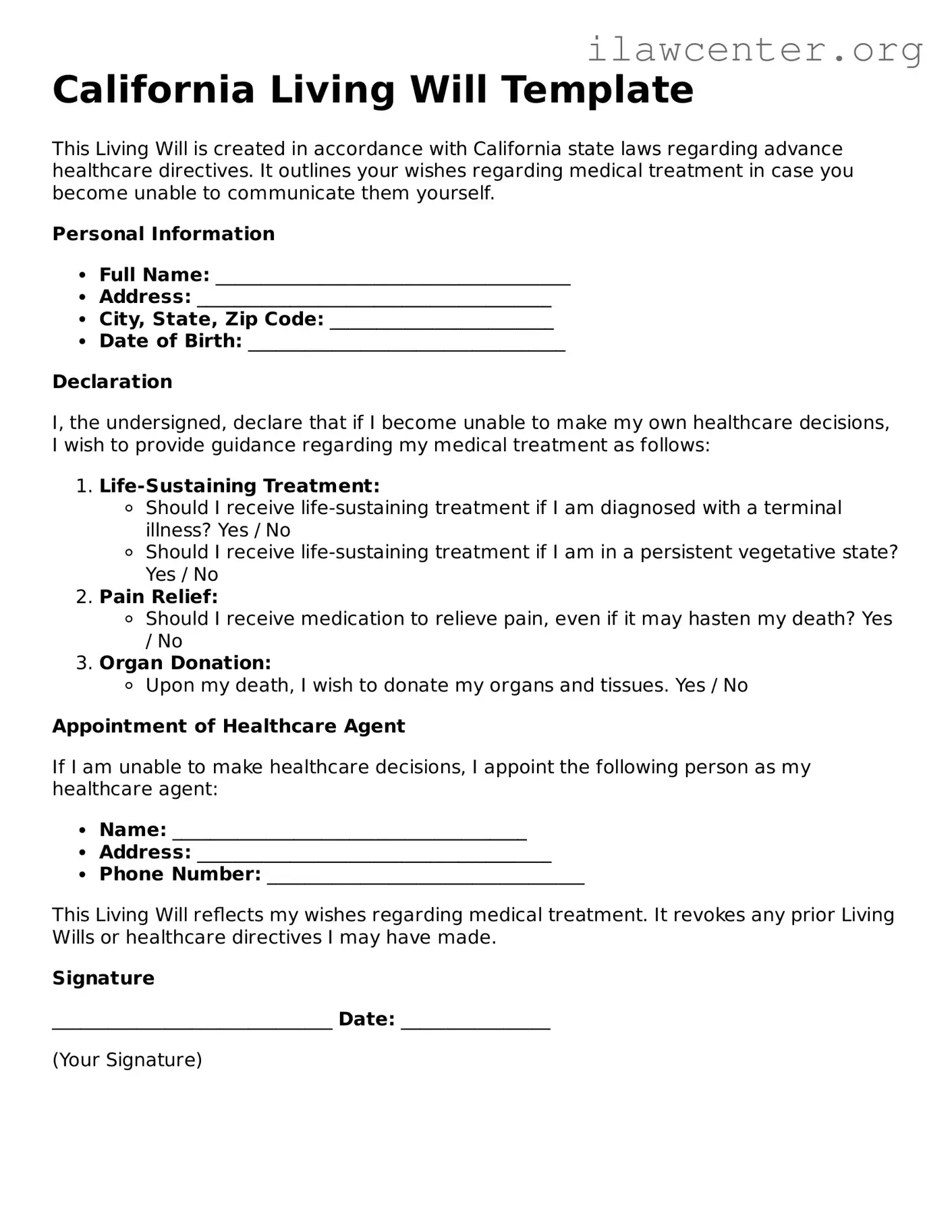
What is a California Living Will?
A California Living Will, also known as an advance healthcare directive, is a legal document that allows individuals to outline their preferences for medical treatment in the event they become unable to communicate their wishes. This document can specify the types of medical interventions a person does or does not want, particularly in situations involving terminal illness or severe incapacitation. It is an important tool for ensuring that a person's healthcare choices are respected when they cannot speak for themselves.
How do I create a Living Will in California?
Creating a Living Will in California involves several steps. First, you need to download the California Advance Health Care Directive form from a reliable source or obtain it from a healthcare provider. After filling out the form, you must sign it in the presence of two witnesses or a notary public to make it legally valid. It’s important to choose witnesses who are not related to you or who would not benefit from your estate. Once completed, distribute copies to your healthcare providers, family members, and anyone else who may need to know your wishes.
Can I change or revoke my Living Will?
Yes, you can change or revoke your Living Will at any time, as long as you are mentally competent. To change your Living Will, simply create a new document that clearly states your updated wishes and follow the same signing and witnessing requirements. If you wish to revoke your Living Will, you can do so by destroying the document or by stating your intent to revoke it in writing. It is advisable to inform your healthcare providers and family members about any changes or revocations to avoid confusion later.
What happens if I do not have a Living Will?
If you do not have a Living Will, medical decisions may be made on your behalf by family members or healthcare providers based on what they believe you would want. This can lead to uncertainty and potential conflicts among family members, especially during emotionally charged situations. Without clear guidance, healthcare providers may follow default medical protocols that may not align with your personal preferences. Therefore, having a Living Will is crucial for ensuring your wishes are known and respected.
Is a Living Will the same as a Power of Attorney?
No, a Living Will and a Power of Attorney are not the same, although they can be related. A Living Will specifically addresses your healthcare preferences, while a Power of Attorney allows you to designate someone to make decisions on your behalf, including financial and legal matters. In healthcare contexts, you may appoint a healthcare agent through a Power of Attorney to make medical decisions for you if you are unable to do so. It is often advisable to have both documents to ensure comprehensive planning for your future healthcare and financial needs.