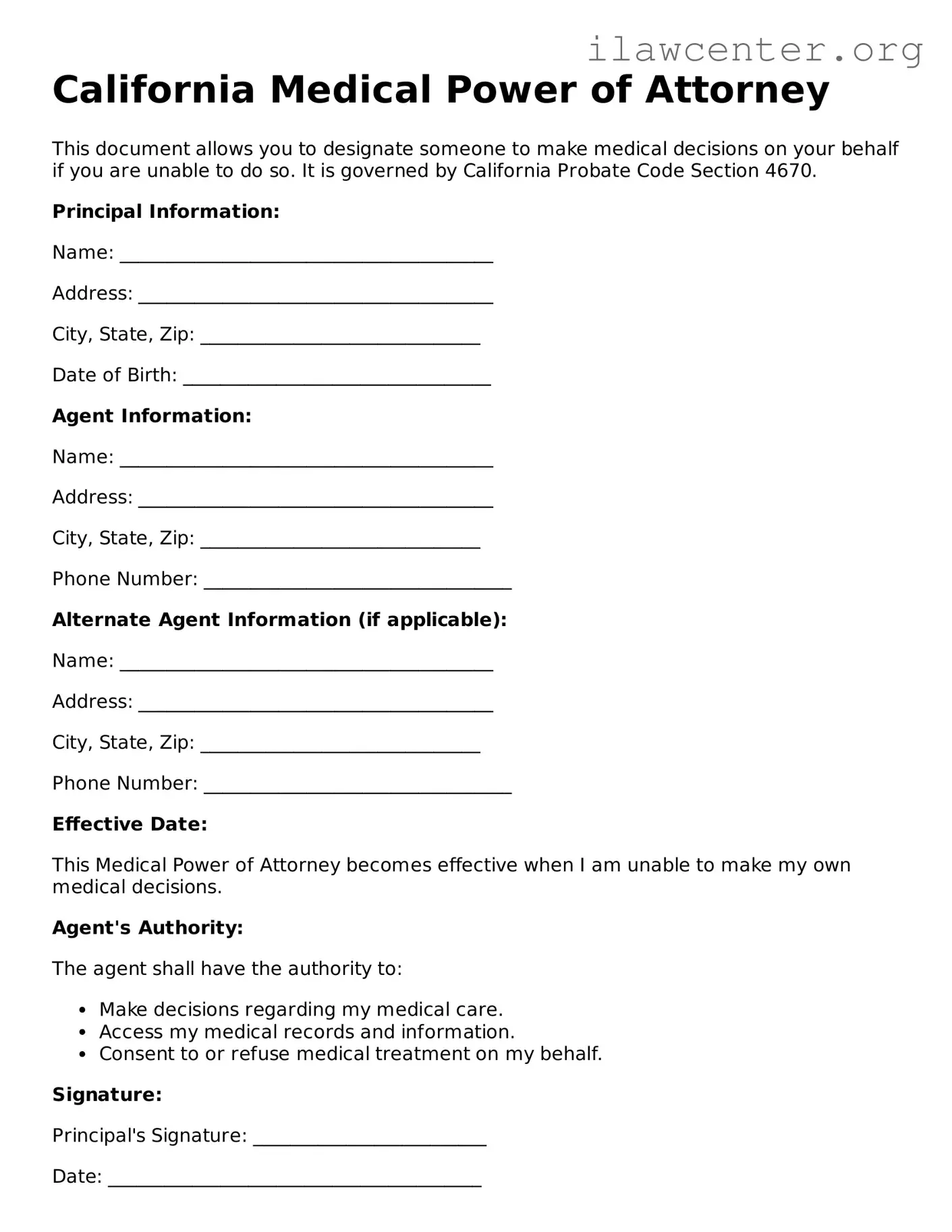
What is a California Medical Power of Attorney?
A California Medical Power of Attorney is a legal document that allows you to designate someone, known as your agent, to make medical decisions on your behalf if you become unable to do so. This is particularly important in situations where you may be incapacitated due to illness or injury. The agent you choose should be someone you trust to act in your best interests regarding your healthcare choices.
Who can be appointed as an agent in a Medical Power of Attorney?
In California, you can appoint any competent adult as your agent. This could be a family member, friend, or even a trusted advisor. However, it is advisable to choose someone who understands your values and preferences regarding medical treatment. Your agent should be willing to take on this responsibility and be able to communicate effectively with healthcare providers.
How do I create a Medical Power of Attorney in California?
To create a Medical Power of Attorney, you need to fill out the appropriate form, which is available through various sources, including hospitals, legal websites, and healthcare providers. Once completed, it is important to sign the document in the presence of a witness or a notary public. This step ensures that the document is legally valid and can be honored by healthcare professionals.
Can I change or revoke my Medical Power of Attorney?
Yes, you can change or revoke your Medical Power of Attorney at any time, as long as you are mentally competent. To revoke it, you should inform your agent and any healthcare providers who may have a copy of the document. It is a good practice to create a new document if you wish to appoint a different agent or update your preferences.
What happens if I do not have a Medical Power of Attorney?
If you do not have a Medical Power of Attorney and become unable to make decisions for yourself, your family may face challenges in making medical choices on your behalf. In such cases, a court may need to appoint a guardian or conservator, which can be a lengthy and emotionally taxing process. Having a Medical Power of Attorney in place can help avoid these complications.
Are there any specific requirements for the Medical Power of Attorney form in California?
Yes, the form must be in writing, signed by you, and dated. It should also include the name of your chosen agent and any specific instructions regarding your medical care. While it is not mandatory to have the document notarized, doing so can add an extra layer of validity and may make it easier for healthcare providers to accept it.
Can my agent make decisions about life-sustaining treatments?
Yes, your agent can make decisions about life-sustaining treatments if you give them that authority in your Medical Power of Attorney. It is essential to communicate your wishes clearly in the document. This may include preferences about resuscitation, artificial nutrition, and other critical care options. Discussing these topics with your agent beforehand can ensure they understand your desires.
Is a Medical Power of Attorney the same as an Advance Healthcare Directive?
No, while both documents are related to healthcare decisions, they serve different purposes. A Medical Power of Attorney specifically appoints an agent to make decisions for you, while an Advance Healthcare Directive outlines your preferences for medical treatment in various scenarios. You can have both documents to ensure comprehensive coverage of your healthcare wishes.