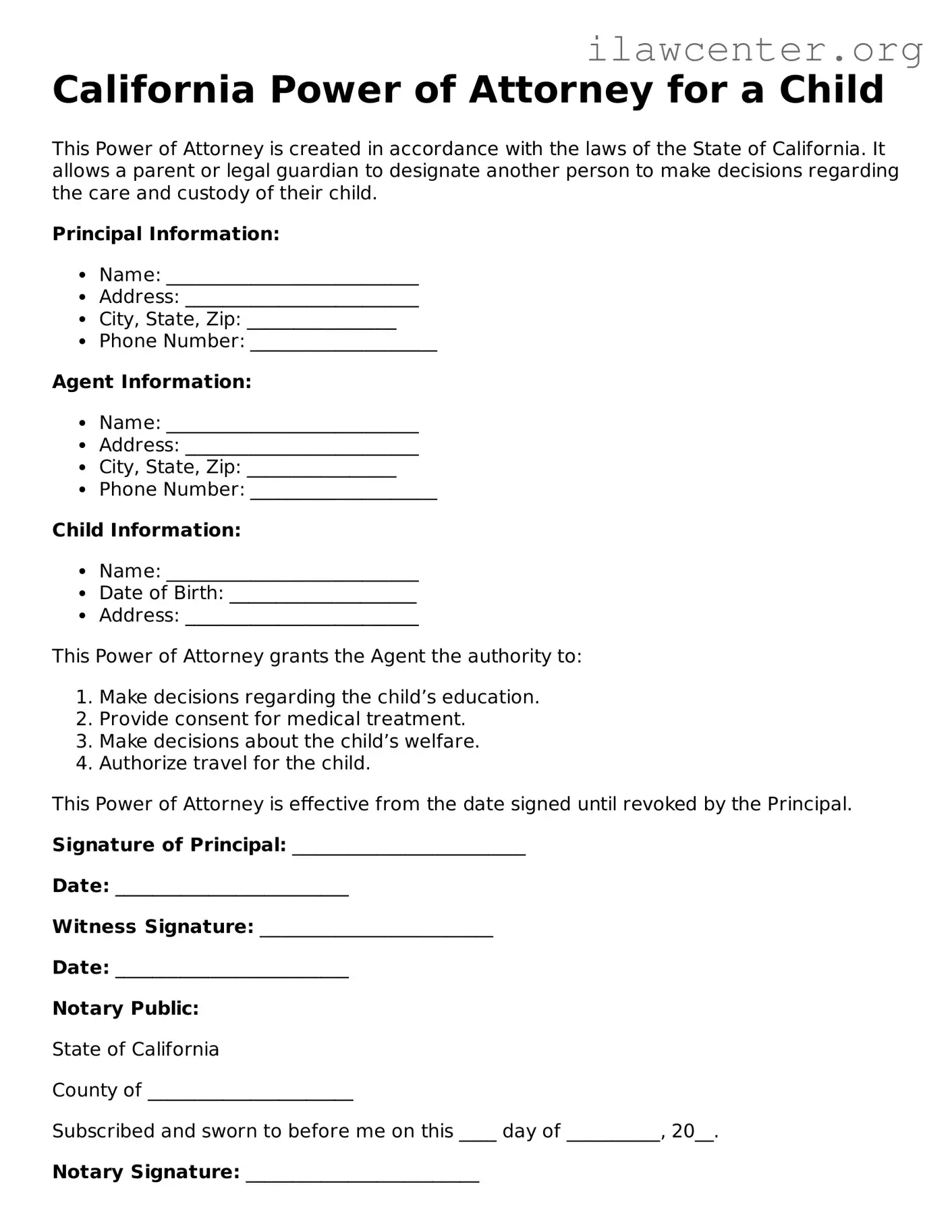
When filling out the California Power of Attorney for a Child form, many people make common mistakes that can lead to complications. One frequent error is failing to specify the child’s full name and date of birth accurately. This information is crucial for identifying the child and ensuring that the document is valid. Omitting or misspelling these details can cause delays or even invalidate the form.
Another mistake involves not clearly identifying the agent. The agent is the person who will have the authority to make decisions on behalf of the child. It’s essential to provide the agent's full name, relationship to the child, and contact information. Incomplete or unclear information can lead to confusion and potential disputes.
Some individuals neglect to include the duration of the power of attorney. The form should specify whether the authority is temporary or ongoing. Without this information, it may be unclear how long the agent has the right to act on behalf of the child, which can create legal issues later on.
Additionally, people often forget to sign and date the form. The signature of the parent or legal guardian is necessary for the document to be legally binding. Without a signature, the power of attorney is not enforceable, and the agent will not have the authority to act.
Another common oversight is not having the form notarized. In California, notarization is required for the power of attorney to be valid. Failing to have the document notarized can lead to challenges in its acceptance by schools, medical facilities, or other organizations.
Some individuals also overlook the need to provide copies of the completed form to relevant parties. Once the form is filled out and signed, it should be shared with the agent and any institutions that may need to reference it. Not doing so can result in the agent being unable to exercise their authority when needed.
People sometimes forget to review the form for accuracy before submission. Errors or omissions can lead to misunderstandings or legal complications. Taking the time to double-check the information ensures that everything is correct and up to date.
Lastly, individuals may not understand the implications of granting power of attorney. It’s vital to be aware of what authority is being given and to whom. Without a clear understanding, there is a risk of unintended consequences that could affect the child’s welfare.