Fillable Cat Bill of Sale Document

Fillable Cat Bill of Sale Document

A Cat Bill of Sale form is a legal document that records the sale and transfer of ownership of a cat from one person to another. This form helps protect both the seller and the buyer by providing clear details about the transaction. For a smooth process, consider filling out the form by clicking the button below.

Article Guide

When it comes to buying or selling a cat, having the right documentation is essential to ensure a smooth transaction. The Cat Bill of Sale form serves as a crucial record of the transfer of ownership between the seller and the buyer. This form typically includes important details such as the names and addresses of both parties, a description of the cat—including breed, age, and any unique markings—along with the sale price. Additionally, it may cover any warranties or guarantees regarding the cat's health and well-being, providing peace of mind for the new owner. By using this form, both parties can protect their interests and clarify the terms of the sale, making it a vital tool in the pet adoption and sales process. Whether you're a seasoned breeder or a first-time pet owner, understanding the components of the Cat Bill of Sale can help you navigate the transaction with confidence.

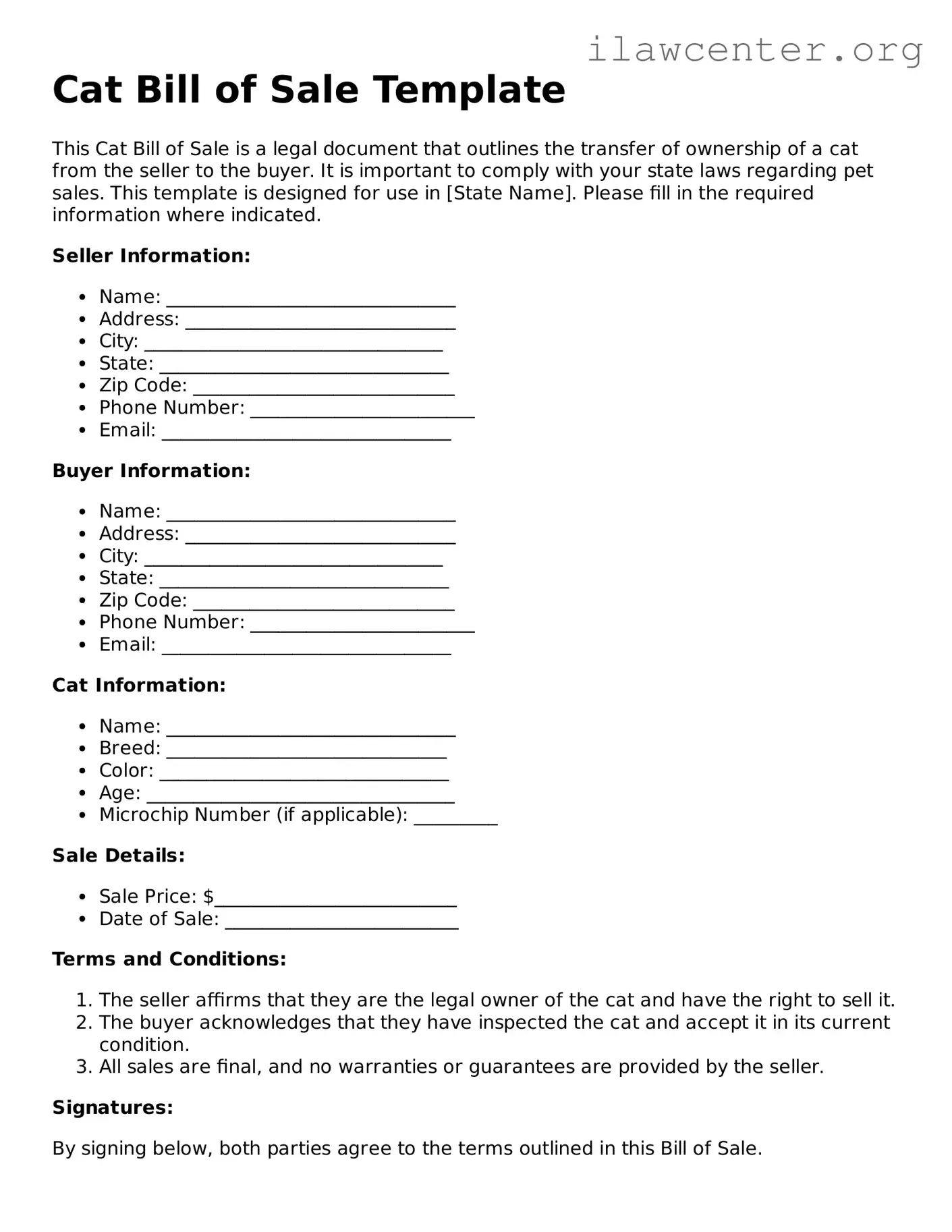
Cat Bill of Sale Preview

Cat Bill of Sale Template

This Cat Bill of Sale is a legal document that outlines the transfer of ownership of a cat from the seller to the buyer. It is important to comply with your state laws regarding pet sales. This template is designed for use in [State Name]. Please fill in the required information where indicated.

Seller Information:

  • Name: _______________________________
  • Address: _____________________________
  • City: ________________________________
  • State: _______________________________
  • Zip Code: ____________________________
  • Phone Number: ________________________
  • Email: _______________________________

Buyer Information:

  • Name: _______________________________
  • Address: _____________________________
  • City: ________________________________
  • State: _______________________________
  • Zip Code: ____________________________
  • Phone Number: ________________________
  • Email: _______________________________

Cat Information:

  • Name: _______________________________
  • Breed: ______________________________
  • Color: _______________________________
  • Age: _________________________________
  • Microchip Number (if applicable): _________

Sale Details:

  • Sale Price: $__________________________
  • Date of Sale: _________________________

Terms and Conditions:

  1. The seller affirms that they are the legal owner of the cat and have the right to sell it.
  2. The buyer acknowledges that they have inspected the cat and accept it in its current condition.
  3. All sales are final, and no warranties or guarantees are provided by the seller.

Signatures:

By signing below, both parties agree to the terms outlined in this Bill of Sale.

_______________________________
Seller's Signature

_______________________________
Buyer's Signature

Date: _____________________________

PDF Form Characteristics

Fact Name Details
Purpose The Cat Bill of Sale form is used to document the sale and transfer of ownership of a cat from one party to another.
Seller Information The form requires the seller's name, address, and contact information to ensure proper identification.
Buyer Information Buyers must also provide their name, address, and contact details to complete the transaction.
Governing Laws In the United States, the laws governing the sale of pets, including cats, vary by state. It is advisable to check local regulations.
Condition of Sale The form may include details about the cat's health, vaccinations, and any warranties or guarantees provided by the seller.

Instructions on Utilizing Cat Bill of Sale

After obtaining the Cat Bill of Sale form, you will need to complete it accurately to ensure a smooth transfer of ownership. The following steps will guide you through the process of filling out the form correctly.

  1. Begin by entering the date of the transaction at the top of the form.
  2. Provide the seller's full name and contact information in the designated fields.
  3. Next, fill in the buyer's full name and contact information.
  4. Specify the details of the cat being sold, including its name, breed, age, color, and any identifying features or markings.
  5. Indicate the sale price of the cat clearly in the appropriate section.
  6. If applicable, note any additional terms or conditions of the sale, such as whether the cat comes with any supplies or medical records.
  7. Both the seller and the buyer should sign and date the form at the bottom to finalize the transaction.

Important Facts about Cat Bill of Sale

What is a Cat Bill of Sale form?

A Cat Bill of Sale form is a legal document that records the sale of a cat from one party to another. It serves as proof of the transaction, detailing important information about the cat, the seller, and the buyer. This document can help prevent disputes by clearly outlining the terms of the sale, including any warranties or guarantees related to the cat's health or breed.

Why do I need a Cat Bill of Sale?

You need a Cat Bill of Sale to ensure that both parties have a clear understanding of the transaction. It protects the seller by providing evidence that the cat has been sold and protects the buyer by documenting the purchase. Additionally, if any issues arise after the sale, this document can serve as a reference point for resolving disputes, such as claims about the cat's health or behavior.

What information should be included in a Cat Bill of Sale?

A Cat Bill of Sale should include essential details such as the names and addresses of both the seller and the buyer, the date of the sale, and a description of the cat (including breed, age, color, and any identifying features). It should also state the sale price and any terms related to the sale, such as health guarantees or return policies. Both parties should sign the document to validate the transaction.

Is a Cat Bill of Sale required by law?

While a Cat Bill of Sale is not legally required in all states, it is highly recommended. Some jurisdictions may have specific regulations regarding pet sales, and having a bill of sale can help you comply with these rules. Additionally, it provides legal protection for both the seller and the buyer, making it a smart choice for anyone involved in the sale of a cat.

Common mistakes

When completing a Cat Bill of Sale form, individuals often overlook important details that can lead to complications later. One common mistake is failing to include the full name and contact information of both the seller and the buyer. This information is crucial for establishing a clear record of the transaction and ensuring that both parties can be reached if necessary.

Another frequent error is neglecting to specify the cat's details, such as breed, age, and any distinguishing features. This information helps to verify the identity of the cat being sold and can prevent disputes regarding the animal's history or characteristics.

Many people also forget to include the sale price. Omitting this detail can create confusion and complicate future transactions, especially if the buyer needs to provide proof of purchase for registration or veterinary care.

In addition, some individuals fail to indicate whether the sale is final or if there are any conditions attached. This lack of clarity can lead to misunderstandings about the buyer's rights and responsibilities post-sale.

Another common mistake is not providing a space for signatures. Both parties should sign the form to acknowledge their agreement to the sale. Without signatures, the document may lack legal validity.

People sometimes overlook the importance of including a date on the form. The date marks when the transaction occurred, which can be essential for record-keeping and any future legal matters.

Additionally, some sellers do not disclose any known health issues or behavioral problems with the cat. Transparency is vital in maintaining trust between the seller and buyer, and failing to disclose such information can lead to disputes.

Another mistake is using vague language in the description of the sale terms. Clear, specific language helps to prevent misinterpretations and ensures that both parties understand their obligations.

Lastly, individuals may not keep a copy of the completed Cat Bill of Sale form. Retaining a copy is important for both the seller and buyer, as it serves as proof of the transaction and can be referred to in the future if any issues arise.
Documents used along the form

When completing a cat sale, several forms and documents may accompany the Cat Bill of Sale to ensure a smooth transaction. Each document serves a specific purpose and can help protect both the buyer and seller. Below is a list of commonly used documents in conjunction with the Cat Bill of Sale.

  • Adoption Agreement: This document outlines the terms under which the cat is being adopted. It may include details about the cat's care, responsibilities of the adopter, and any fees involved.
  • Health Certificate: A health certificate is often required to confirm that the cat has been examined by a veterinarian and is free from contagious diseases. This document may also include vaccination records.
  • Transfer of Ownership Form: This form officially transfers ownership of the cat from the seller to the buyer. It may include both parties' signatures and relevant details about the cat.
  • Microchip Registration Form: If the cat is microchipped, this form is necessary to register the new owner's information with the microchip company. It helps ensure the cat can be returned if lost.
  • Pet Insurance Policy: If the buyer wishes to insure the cat, a pet insurance policy may be drafted. This document outlines coverage details and terms of the insurance plan.
  • Sales Receipt: A sales receipt serves as proof of purchase for the buyer. It typically includes the sale amount, date, and a description of the cat.

Utilizing these documents alongside the Cat Bill of Sale can help ensure a clear and legally sound transaction. Each form plays a vital role in protecting the interests of both parties involved in the sale.

Similar forms

  • Dog Bill of Sale: Similar to the Cat Bill of Sale, this document transfers ownership of a dog from one party to another. It includes details about the dog, such as breed, age, and health status.
  • Vehicle Bill of Sale: This document serves to transfer ownership of a vehicle. It includes the vehicle's make, model, year, and identification number, ensuring both parties are clear on the transaction.
  • Boat Bill of Sale: Like the Cat Bill of Sale, this document outlines the transfer of ownership for a boat. It details the boat's specifications and any conditions of the sale.
  • Equipment Bill of Sale: This document is used for the sale of equipment, such as machinery or tools. It specifies the equipment's condition, model, and any warranties that may apply.
  • Real Estate Purchase Agreement: While more complex, this document also serves to transfer ownership. It outlines the property details, purchase price, and any contingencies related to the sale.

Dos and Don'ts

When filling out the Cat Bill of Sale form, it is important to follow certain guidelines to ensure accuracy and compliance. Here are six things to consider:

  • Do provide accurate information about the cat, including breed, age, and health status.
  • Do include the seller's and buyer's full names and contact information.
  • Do specify the sale price clearly to avoid any confusion.
  • Don't leave any sections blank; complete all required fields.
  • Don't use vague terms; be specific about any conditions of the sale.
  • Don't forget to sign and date the form to validate the transaction.

Misconceptions

There are several misconceptions surrounding the Cat Bill of Sale form that can lead to confusion for both sellers and buyers. Understanding these misconceptions is crucial for a smooth transaction. Below are nine common misunderstandings:

  1. A Cat Bill of Sale is not legally binding. Many people believe that this document holds no legal weight. In reality, a properly completed bill of sale can serve as a legal record of the transaction.
  2. It is only necessary for purebred cats. Some think that a bill of sale is only required for purebred cats. However, it is advisable for any cat sale, regardless of breed, to have this document.
  3. A Cat Bill of Sale must be notarized. While notarization can add an extra layer of security, it is not a requirement for the bill of sale to be valid.
  4. The form needs to be filled out by a lawyer. There is a misconception that only legal professionals can create this document. In fact, anyone can fill out a bill of sale as long as they include the necessary information.
  5. It only protects the seller. Some buyers think that the bill of sale only serves the seller's interests. In truth, it protects both parties by documenting the sale and any agreed-upon conditions.
  6. It is not necessary if the cat is free. Even if the cat is given away for free, a bill of sale is still a good practice to document the transfer of ownership.
  7. All states have the same requirements for a Cat Bill of Sale. This is incorrect. Each state may have different requirements, so it is important to check local laws.
  8. A verbal agreement is sufficient. Relying on a verbal agreement can lead to disputes. A written bill of sale provides clear evidence of the transaction.
  9. Once signed, the document cannot be changed. While it is best to complete the bill of sale accurately the first time, amendments can be made if both parties agree and initial the changes.

Understanding these misconceptions can help ensure that both buyers and sellers are protected during the transaction. Always take the time to properly complete and review the Cat Bill of Sale form.

Key takeaways

When engaging in the sale or transfer of a cat, using a Cat Bill of Sale form is essential for both the seller and the buyer. Here are some key takeaways to consider:

  • Documentation of Ownership: The Cat Bill of Sale serves as a legal document that proves the transfer of ownership from the seller to the buyer. This is crucial in establishing who is the rightful owner of the cat.
  • Details Matter: It is important to fill out the form with accurate details, including the cat's name, breed, age, and any distinguishing features. This information helps prevent disputes over the cat's identity in the future.
  • Health and Condition: Including information about the cat's health status and any vaccinations or medical treatments received is beneficial. This provides the buyer with essential information regarding the cat's well-being.
  • Legal Protection: Both parties benefit from having a signed Cat Bill of Sale. It protects the seller from future claims regarding the cat and assures the buyer of their new ownership rights.