Fillable Cease and Desist Letter Document

Fillable Cease and Desist Letter Document

A Cease and Desist Letter is a formal request asking an individual or organization to stop a specific action that is deemed harmful or unlawful. This document serves as a way to assert your rights and prevent further infringement or misconduct. If you need to address a situation effectively, consider filling out the form by clicking the button below.

Article Guide

In the realm of legal communications, a Cease and Desist Letter serves as a crucial tool for individuals and businesses seeking to address potential legal disputes before they escalate. This letter typically outlines the specific actions or behaviors that are deemed objectionable, providing the recipient with a clear understanding of the sender's concerns. It often includes a demand for the recipient to halt the contested activity and may specify a timeline for compliance. While the tone can vary from formal to assertive, the goal remains consistent: to protect one's rights and interests without immediately resorting to litigation. The letter may also highlight the potential legal consequences of ignoring the request, which can include further legal action. By using this form, individuals can assert their position while maintaining a professional demeanor, opening the door for resolution without the need for court intervention.

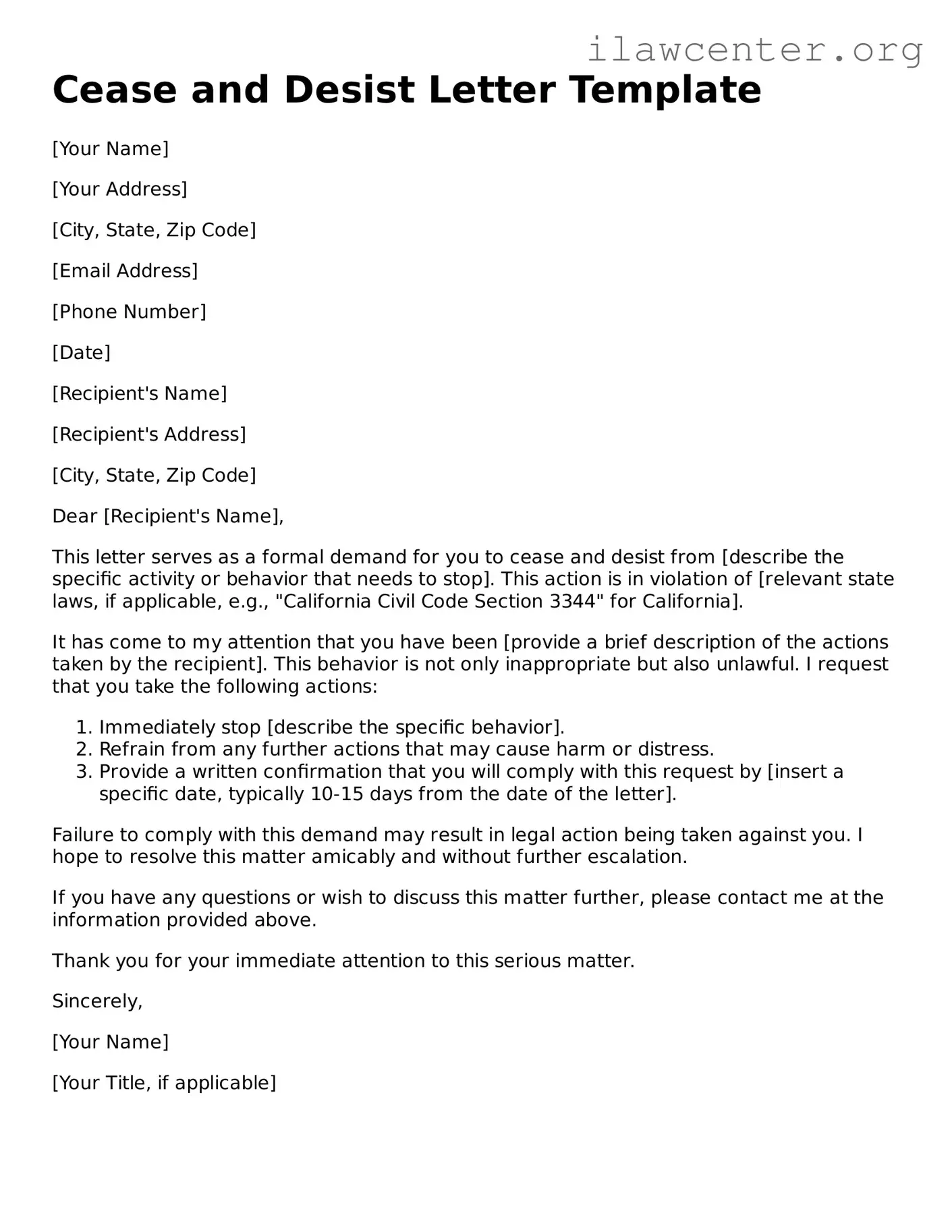
Cease and Desist Letter Preview

Cease and Desist Letter Template

[Your Name]

[Your Address]

[City, State, Zip Code]

[Email Address]

[Phone Number]

[Date]

[Recipient's Name]

[Recipient's Address]

[City, State, Zip Code]

Dear [Recipient's Name],

This letter serves as a formal demand for you to cease and desist from [describe the specific activity or behavior that needs to stop]. This action is in violation of [relevant state laws, if applicable, e.g., "California Civil Code Section 3344" for California].

It has come to my attention that you have been [provide a brief description of the actions taken by the recipient]. This behavior is not only inappropriate but also unlawful. I request that you take the following actions:

  1. Immediately stop [describe the specific behavior].
  2. Refrain from any further actions that may cause harm or distress.
  3. Provide a written confirmation that you will comply with this request by [insert a specific date, typically 10-15 days from the date of the letter].

Failure to comply with this demand may result in legal action being taken against you. I hope to resolve this matter amicably and without further escalation.

If you have any questions or wish to discuss this matter further, please contact me at the information provided above.

Thank you for your immediate attention to this serious matter.

Sincerely,

[Your Name]

[Your Title, if applicable]

PDF Form Characteristics

Fact Name Description
Purpose A Cease and Desist Letter is used to formally request that an individual or organization stop a specific action that is believed to be unlawful or harmful.
Legal Standing These letters can serve as a precursor to legal action. They often indicate that the sender is serious about pursuing their rights.
State-Specific Forms Different states may have their own specific requirements for these letters. For example, in California, the governing law includes California Civil Code Section 1708.
Delivery Method Cease and Desist Letters can be delivered via mail, email, or personal service. Proper delivery is crucial for establishing receipt.
Response Time The recipient typically has a limited time frame to respond, often 10 to 30 days, depending on the situation and jurisdiction.

Instructions on Utilizing Cease and Desist Letter

After you have gathered the necessary information, it's time to fill out the Cease and Desist Letter form. This process will help ensure that your concerns are clearly communicated to the other party. Following these steps will guide you through the completion of the form.

  1. Identify the Sender: Write your full name and address at the top of the form. This is essential as it identifies who is issuing the letter.
  2. Identify the Recipient: Include the full name and address of the person or entity you are addressing. This ensures that the letter reaches the correct individual.
  3. State the Date: Fill in the date on which you are completing the letter. This establishes a timeline for your request.
  4. Describe the Issue: Clearly outline the behavior or action that you want to stop. Be specific about what the other party is doing that you find unacceptable.
  5. Request Action: State what you want the recipient to do. This could be to stop a specific action or to refrain from future actions.
  6. Set a Deadline: Indicate a reasonable timeframe for the recipient to comply with your request. This adds urgency to your request.
  7. Sign the Letter: Include your signature at the bottom of the form. This shows that you are formally making this request.
  8. Make Copies: Before sending, make copies of the completed letter for your records. This is important for future reference.

Once the form is filled out, you can proceed to send it to the recipient. Be sure to choose a method that allows for tracking, so you have proof of delivery. Keeping a copy for yourself is also crucial in case you need to reference it later.

Important Facts about Cease and Desist Letter

What is a Cease and Desist Letter?

A Cease and Desist Letter is a formal request for someone to stop a specific action or behavior that is believed to be unlawful or infringing on your rights. This letter serves as a warning and outlines the actions that need to be stopped. It can be used in various situations, including copyright infringement, harassment, or breach of contract. The goal is to resolve the issue without going to court.

When should I send a Cease and Desist Letter?

Consider sending a Cease and Desist Letter when you believe your rights are being violated or when someone is engaging in behavior that is harmful to you or your business. It is often a good first step before pursuing legal action. Sending this letter can sometimes prompt the other party to stop their actions without further conflict.

What should be included in a Cease and Desist Letter?

A well-crafted Cease and Desist Letter should include several key elements. Start with your contact information and the recipient’s details. Clearly state the reason for the letter, specifying the actions you want them to stop. Include any relevant evidence or examples to support your claims. Finally, specify a timeline for compliance and mention the potential consequences if they fail to comply.

Is a Cease and Desist Letter legally binding?

While a Cease and Desist Letter is not a legally binding document, it is a serious communication. It signals your intent to take action if the recipient does not comply. If the matter escalates to court, the letter can be used as evidence to show that you attempted to resolve the issue amicably before taking legal steps.

What happens if the recipient ignores the Cease and Desist Letter?

If the recipient ignores the letter, you may have several options. You could consider negotiating directly with them, seeking mediation, or pursuing legal action. The appropriate next steps will depend on the severity of the issue and your specific situation. Consulting with a legal professional can provide guidance tailored to your needs.

Common mistakes

When filling out a Cease and Desist Letter form, many individuals make common mistakes that can undermine their efforts. One frequent error is failing to clearly identify the recipient. It’s essential to include the full name and address of the person or entity you are addressing. Without this information, your letter may not reach the intended party, rendering your efforts ineffective.

Another common mistake is using vague language. A Cease and Desist Letter should be direct and specific about the actions you want the recipient to stop. If the letter is ambiguous, the recipient may not understand what behavior you are objecting to, leading to further misunderstandings.

Many people neglect to include a detailed description of the harmful behavior. Simply stating that someone is infringing on your rights is not enough. Providing specific examples of the actions in question can strengthen your case and make your demands clearer.

Omitting a deadline for compliance is another pitfall. It's important to set a reasonable timeframe for the recipient to cease the offending behavior. Without a deadline, the recipient may not feel any urgency to respond, prolonging the issue.

Some individuals forget to include their contact information. This can be problematic if the recipient wishes to discuss the matter further. Providing your phone number or email allows for open communication and may help resolve the issue more quickly.

Another mistake is not documenting previous communications. If you have attempted to resolve the issue informally, mention those efforts in the letter. This shows that you have made reasonable attempts to address the problem before resorting to a formal cease and desist request.

Using an aggressive tone can also backfire. While it's important to be firm, a confrontational approach may provoke a defensive reaction. Striking a balance between assertiveness and professionalism is key to ensuring your letter is taken seriously.

Some people fail to proofread their letters. Grammatical errors or typos can detract from the seriousness of your message. A well-written letter conveys professionalism and can enhance your credibility.

Additionally, many forget to include a statement of legal consequences. While you don’t need to provide a legal lecture, informing the recipient of potential repercussions can emphasize the seriousness of the situation and encourage compliance.

Finally, sending the letter without proper delivery confirmation can lead to further complications. Consider using certified mail or another method that provides proof of delivery. This ensures that you have a record of your correspondence, which may be important if the situation escalates.

Documents used along the form

A Cease and Desist Letter is often accompanied by other important documents that help clarify the situation and provide additional context. Below is a list of forms and documents that are commonly used alongside a Cease and Desist Letter.

  • Demand Letter: This document outlines a specific request or demand from one party to another, often preceding a Cease and Desist Letter. It typically details the grievance and the action required to resolve it.
  • Affidavit: A sworn statement that provides evidence or support for claims made in the Cease and Desist Letter. It is often used to establish facts in a legal dispute.
  • Response Letter: This is a reply from the recipient of the Cease and Desist Letter. It addresses the claims made and may either agree to the demands or contest them.
  • Settlement Agreement: If the parties reach an agreement, this document outlines the terms of the settlement. It serves as a formal resolution to the dispute and prevents further action.
  • Notice of Intent to Sue: This document informs the other party of the intention to take legal action if the issue is not resolved. It often serves as a final warning before litigation.

Using these documents together can strengthen your position and clarify your intentions. Each serves a unique purpose in the process of resolving disputes effectively.

Similar forms

  • Demand Letter: A demand letter requests that the recipient take specific action, such as paying a debt or stopping a harmful action. Like a cease and desist letter, it clearly states what is being requested and sets a timeline for compliance.
  • Notice of Violation: This document informs an individual or organization that they have violated a specific law or regulation. Similar to a cease and desist letter, it outlines the violation and demands corrective action.
  • Settlement Agreement: A settlement agreement resolves a dispute between parties. It often includes terms that both parties agree to follow, much like the terms outlined in a cease and desist letter to prevent further issues.
  • Legal Complaint: A legal complaint initiates a lawsuit and outlines the plaintiff's claims against the defendant. While it is more formal, it shares the goal of addressing grievances and seeking resolution.
  • Warning Letter: A warning letter serves to notify someone of inappropriate behavior or actions. It is similar in tone and purpose to a cease and desist letter, aiming to prompt a change in behavior.
  • Injunction: An injunction is a court order that requires a party to do or refrain from doing specific acts. Like a cease and desist letter, it seeks to stop certain actions, but it has the force of law behind it.
  • Non-Disclosure Agreement (NDA): An NDA protects sensitive information from being disclosed. It shares a preventive nature with a cease and desist letter, as both aim to stop harmful actions before they occur.
  • Release of Liability: A release of liability document protects one party from claims made by another. While it serves a different purpose, it similarly seeks to prevent future disputes.
  • Termination Letter: A termination letter formally ends a business relationship or employment. It often outlines the reasons for termination, similar to how a cease and desist letter explains the reasons for the requested action.

Dos and Don'ts

When filling out a Cease and Desist Letter form, it’s crucial to approach the task with care. Here are some essential do's and don'ts to keep in mind:

  • Do clearly state the reason for the letter.
  • Do include specific details about the actions you want to stop.
  • Don't use aggressive or threatening language.
  • Don't forget to provide your contact information for a response.

Misconceptions

Cease and desist letters are often misunderstood. Here are eight common misconceptions that can lead to confusion:

  1. Cease and desist letters are legally binding. Many believe that sending a cease and desist letter automatically creates a legal obligation. However, these letters are typically requests for action rather than enforceable orders.
  2. Receiving a cease and desist letter means you are being sued. A cease and desist letter is not a lawsuit. It is a warning that someone believes you are infringing on their rights or engaging in illegal activity.
  3. All cease and desist letters are the same. Each cease and desist letter is unique and tailored to the specific situation. They vary in tone, content, and intent based on the circumstances.
  4. You must comply with a cease and desist letter immediately. While it is wise to take these letters seriously, you are not legally required to comply right away. It is important to evaluate the claims made in the letter.
  5. Ignoring a cease and desist letter will have no consequences. Ignoring the letter can lead to further legal action. It is advisable to respond thoughtfully rather than dismissively.
  6. Only lawyers can send cease and desist letters. While attorneys often draft these letters, anyone can send one. However, legal advice may enhance the effectiveness of the letter.
  7. Cease and desist letters are only used in copyright cases. These letters can be used in a variety of legal disputes, including trademark infringement, defamation, and breach of contract.
  8. Once a cease and desist letter is sent, the sender cannot change their mind. The sender can choose to withdraw their request or negotiate terms after sending the letter, depending on the situation.

Understanding these misconceptions can help individuals navigate the complexities of cease and desist letters more effectively.

Key takeaways

When you need to address a situation where someone is infringing on your rights or causing harm, a Cease and Desist Letter can be an effective tool. Here are some key takeaways to keep in mind when filling out and using this form:

  • Understand the Purpose: A Cease and Desist Letter is meant to formally request that someone stop an activity that is harmful or illegal.
  • Identify the Recipient: Clearly state who the letter is addressed to. This ensures that the right person receives your message.
  • Be Specific: Describe the actions you want the recipient to stop. Vague language can lead to misunderstandings.
  • Include Evidence: If possible, provide evidence that supports your claims. This can strengthen your position.
  • State the Consequences: Let the recipient know what actions you will take if they do not comply with your request.
  • Keep It Professional: Use a respectful tone. While you may be upset, a professional approach is more likely to yield positive results.
  • Set a Deadline: Specify a reasonable time frame for the recipient to respond or comply with your request.
  • Consult a Lawyer: If you’re unsure about any part of the process, consider seeking legal advice to ensure your letter is effective.

By following these guidelines, you can create a Cease and Desist Letter that clearly communicates your intentions and encourages the recipient to take your concerns seriously.