Fillable Cease and Desist Slander and Libel Letter Document

Fillable Cease and Desist Slander and Libel Letter Document

A Cease and Desist Slander and Libel Letter is a formal document used to demand that an individual or entity stop making false statements that harm a person's reputation. This letter serves as a warning and outlines the potential legal consequences of continued defamatory actions. To take the first step in protecting your reputation, consider filling out the form by clicking the button below.

Article Guide

When faced with false statements that harm your reputation, understanding how to respond is crucial. A Cease and Desist Slander and Libel Letter serves as an important tool in addressing these issues. This letter is a formal request to an individual or organization to stop making defamatory statements. It outlines the specific claims that are deemed false, highlights the potential consequences of continued slander or libel, and demands that the offending party cease their harmful actions immediately. Additionally, it may provide a timeline for compliance and warn of possible legal action if the situation is not resolved. By utilizing this form, individuals can take a proactive step in protecting their reputation and seeking justice against those who spread falsehoods. Crafting an effective letter requires clarity and precision, ensuring that the message is conveyed firmly yet professionally.

Cease and Desist Slander and Libel Letter Preview

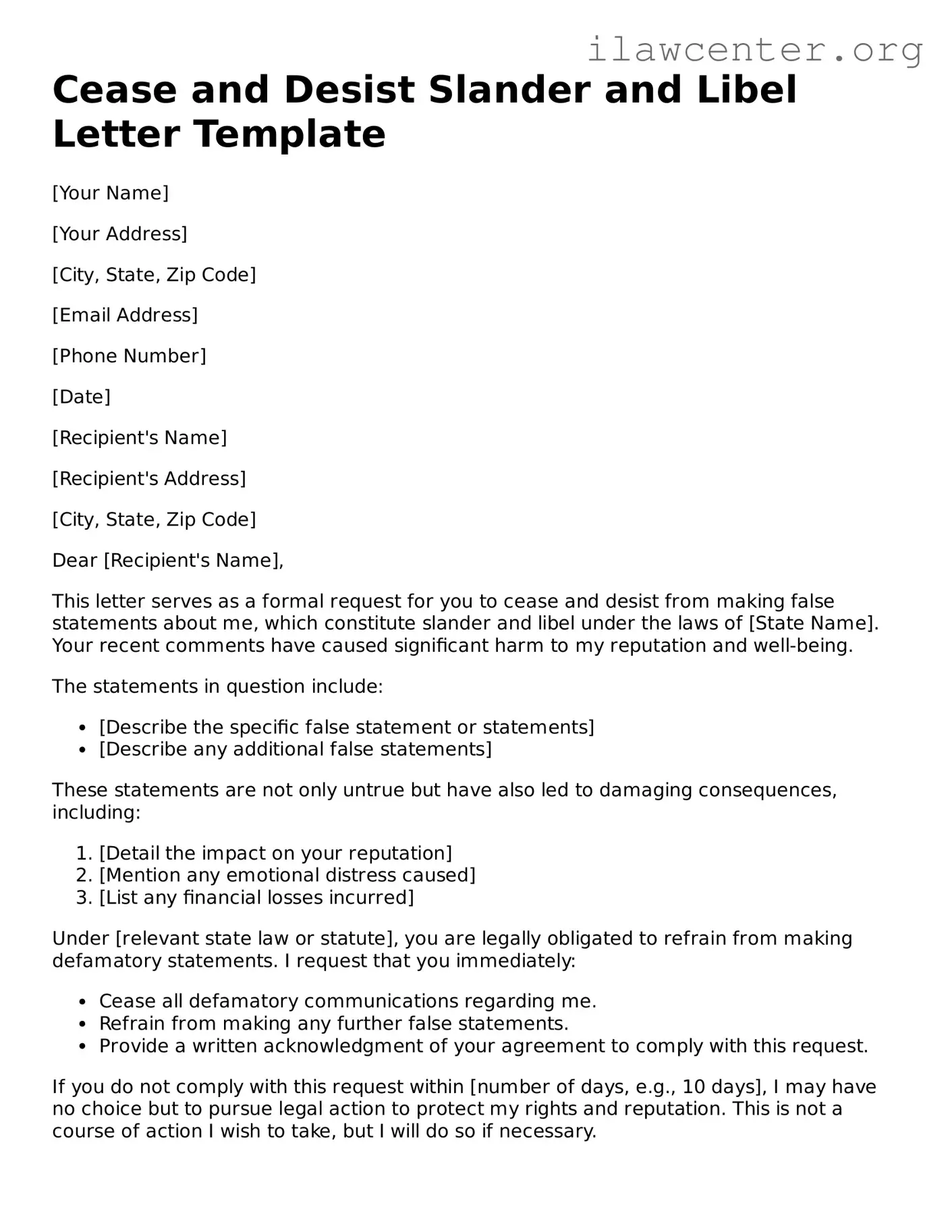
Cease and Desist Slander and Libel Letter Template

[Your Name]

[Your Address]

[City, State, Zip Code]

[Email Address]

[Phone Number]

[Date]

[Recipient's Name]

[Recipient's Address]

[City, State, Zip Code]

Dear [Recipient's Name],

This letter serves as a formal request for you to cease and desist from making false statements about me, which constitute slander and libel under the laws of [State Name]. Your recent comments have caused significant harm to my reputation and well-being.

The statements in question include:

  • [Describe the specific false statement or statements]
  • [Describe any additional false statements]

These statements are not only untrue but have also led to damaging consequences, including:

  1. [Detail the impact on your reputation]
  2. [Mention any emotional distress caused]
  3. [List any financial losses incurred]

Under [relevant state law or statute], you are legally obligated to refrain from making defamatory statements. I request that you immediately:

  • Cease all defamatory communications regarding me.
  • Refrain from making any further false statements.
  • Provide a written acknowledgment of your agreement to comply with this request.

If you do not comply with this request within [number of days, e.g., 10 days], I may have no choice but to pursue legal action to protect my rights and reputation. This is not a course of action I wish to take, but I will do so if necessary.

Thank you for your immediate attention to this serious matter. I hope we can resolve this amicably.

Sincerely,

[Your Name]

PDF Form Characteristics

Fact Name Description
Purpose A Cease and Desist Slander and Libel Letter is used to formally request the cessation of defamatory statements made by an individual or organization.
Legal Basis Defamation laws vary by state, but generally, slander and libel are governed by state tort law.
State-Specific Forms Some states have specific requirements for Cease and Desist Letters, including details on how to serve the letter.
Content Requirements The letter should clearly identify the defamatory statements, explain why they are false, and demand their removal.
Potential Outcomes Sending a letter may lead to the cessation of harmful statements or serve as a precursor to legal action if the issue is not resolved.
Documentation Keep a copy of the letter and any correspondence related to the matter for future reference, especially if legal action becomes necessary.

Instructions on Utilizing Cease and Desist Slander and Libel Letter

Taking action against slander or libel can feel daunting, but filling out a Cease and Desist letter is a crucial first step. This letter serves to formally notify the offending party of their harmful actions and request that they stop immediately. With the right information and approach, you can effectively communicate your concerns and protect your reputation.

  1. Gather Information: Collect all relevant details about the slanderous or libelous statements. This includes dates, locations, and the context in which the statements were made.
  2. Identify the Offending Party: Clearly identify the person or organization responsible for the statements. Include their full name and address if possible.
  3. State Your Intent: Begin the letter by clearly stating your intention to cease and desist. Use direct language to convey the seriousness of the situation.
  4. Detail the Statements: Describe the specific statements that are considered slanderous or libelous. Be factual and avoid emotional language.
  5. Explain the Impact: Briefly explain how these statements have affected you or your reputation. This can help emphasize the urgency of your request.
  6. Request Action: Clearly request that the offending party stop making these statements and retract any false information published.
  7. Set a Deadline: Provide a reasonable deadline for the offending party to respond or comply with your request. This adds a sense of urgency.
  8. Include Your Contact Information: Make sure to provide your full name, address, phone number, and email address so they can reach you easily.
  9. Sign the Letter: Sign the letter at the bottom to give it authenticity. If sending via email, consider typing your name and including a scanned signature.
  10. Send the Letter: Choose a reliable method to send the letter, such as certified mail or email, ensuring you keep a copy for your records.

Once you have completed the form, it’s important to send it promptly to ensure that your concerns are addressed in a timely manner. Keeping a record of all communications is vital for any potential future actions you may need to take.

Important Facts about Cease and Desist Slander and Libel Letter

What is a Cease and Desist Slander and Libel Letter?

A Cease and Desist Slander and Libel Letter is a formal document sent to an individual or organization to demand that they stop making false statements that harm your reputation. This letter serves as a warning and outlines the specific statements considered defamatory. It is often the first step in addressing slander or libel before pursuing legal action.

When should I consider sending a Cease and Desist Letter?

If you have been the target of false statements that damage your reputation or livelihood, it may be time to send a Cease and Desist Letter. Consider this action if the statements are widely disseminated, if they have caused you emotional distress, or if they have resulted in financial loss. Taking prompt action is crucial to protect your rights and reputation.

What should be included in the letter?

Your letter should clearly identify the false statements, explain why they are untrue, and describe how they have harmed you. It should also demand that the recipient cease making these statements immediately. Including a deadline for compliance can add urgency and may prompt a quicker response. Additionally, you may want to mention the possibility of legal action if the behavior continues.

Is a Cease and Desist Letter legally binding?

While a Cease and Desist Letter itself is not a legally binding document, it serves as a formal notice of your intent to protect your reputation. If the recipient ignores the letter and continues to make defamatory statements, you may have grounds for a lawsuit. In this sense, the letter can be an important step in establishing your case.

How do I deliver the letter?

Delivering the letter effectively is important. You can send it via certified mail to ensure that there is a record of delivery. Emailing the letter may also be appropriate, especially if you know the recipient checks their email regularly. Keeping a copy of the letter and any correspondence related to it is essential for your records.

What happens if the recipient ignores the letter?

If the recipient does not comply with your request to cease making defamatory statements, you may consider taking further legal action. This could involve filing a lawsuit for defamation. Consulting with a legal professional can help you understand your options and the best course of action moving forward.

Can I send a Cease and Desist Letter on my own?

Yes, you can draft and send a Cease and Desist Letter on your own. However, it may be beneficial to consult with a legal professional to ensure that your letter is clear, effective, and legally sound. A well-crafted letter can significantly improve your chances of resolving the issue without resorting to litigation.

Common mistakes

When it comes to addressing slander and libel, many individuals turn to the Cease and Desist letter as a first step. However, mistakes can easily occur during this process. One common error is not providing enough detail about the defamatory statements. Simply stating that something is false isn't sufficient. It's important to specify what was said, who said it, and how it has harmed you. This clarity is crucial for the recipient to understand the seriousness of the situation.

Another frequent mistake is failing to include a deadline for compliance. A letter without a clear timeframe can leave the recipient unsure about when they need to respond or take action. By setting a specific date, you create a sense of urgency and make it clear that you are serious about resolving the issue.

People often overlook the tone of their letter. While it’s understandable to feel angry or hurt, using aggressive or threatening language can backfire. A calm and professional tone is more likely to encourage a positive response. After all, the goal is to resolve the issue amicably, if possible.

Additionally, some individuals forget to state the legal basis for their claims. Mentioning relevant laws or statutes can lend credibility to your letter. It shows that you are informed and serious about your rights, which can prompt the recipient to take your concerns more seriously.

Another mistake is neglecting to proofread the letter. Typos and grammatical errors can undermine your credibility. A well-written letter reflects attention to detail and professionalism, which can influence how the recipient perceives your claims.

Some people make the mistake of sending the letter without consulting a legal professional. While it’s possible to draft a letter on your own, having an expert review it can help ensure that your rights are protected. They can offer insights that you might not have considered and strengthen your case.

In some cases, individuals fail to keep a copy of the letter for their records. This is crucial for future reference, especially if the situation escalates. Having documentation can be invaluable if you need to take further legal action down the line.

Lastly, many overlook the importance of following up. After sending a Cease and Desist letter, it’s wise to check in to see if the recipient has taken the necessary steps to address the issue. This demonstrates your commitment to resolving the matter and keeps the lines of communication open.

Documents used along the form

When dealing with issues related to slander and libel, it is essential to have a comprehensive understanding of various documents that may accompany a Cease and Desist Slander and Libel Letter. Each of these documents serves a specific purpose in the process of addressing defamation and protecting one’s reputation.

  • Demand Letter: This document formally requests the offending party to cease their defamatory actions. It outlines the specific statements made, the harm caused, and the desired outcome, often including a deadline for compliance.
  • Affidavit of Truth: This sworn statement provides evidence of the truthfulness of the claims made by the aggrieved party. It can support the case by detailing facts and circumstances surrounding the defamatory statements.
  • Notice of Intent to Sue: This notice informs the offending party of the intention to pursue legal action if the defamatory behavior does not stop. It serves as a warning and can sometimes encourage a resolution without further legal proceedings.
  • Settlement Agreement: If both parties reach an understanding, a settlement agreement can outline the terms of resolution. This document may include compensation, retraction of statements, and confidentiality clauses to prevent future disputes.

Understanding these additional documents can significantly aid in navigating the complexities of slander and libel cases. Each plays a vital role in building a strong case and ensuring that one’s rights are protected effectively.

Similar forms

  • Demand Letter: Similar to a Cease and Desist letter, a demand letter requests a specific action or compensation for a perceived wrong. Both documents aim to resolve disputes without going to court.
  • Non-Disclosure Agreement (NDA): An NDA protects sensitive information. Like a Cease and Desist letter, it seeks to prevent harm by restricting certain actions, such as sharing confidential information.
  • Settlement Agreement: This document outlines terms for resolving a dispute. It is similar in that it aims to stop harmful actions, but it typically involves an agreement between parties to avoid litigation.
  • Letter of Intent: A letter of intent expresses a party's intention to engage in a business transaction. While it may not address slander or libel, it serves to clarify intentions and prevent misunderstandings, much like a Cease and Desist letter.
  • Release of Liability: This document frees one party from liability for certain actions. It parallels a Cease and Desist letter by seeking to prevent future claims or disputes.
  • Apology Letter: An apology letter acknowledges wrongdoing and seeks to mend relationships. Like a Cease and Desist letter, it can serve to stop ongoing harm by addressing the issue directly.
  • Notice of Violation: This document informs a party that they have violated a law or agreement. It is similar in purpose, as both aim to halt harmful behavior and prompt corrective action.

Dos and Don'ts

When filling out the Cease and Desist Slander and Libel Letter form, it is important to be cautious and thorough. Here are some guidelines to help you navigate the process effectively.

  • Do: Clearly state the specific statements that you believe are slanderous or libelous.
  • Do: Provide evidence or examples to support your claims.
  • Do: Use a professional tone throughout the letter.
  • Do: Include your contact information for follow-up communication.
  • Don't: Use inflammatory language or personal attacks.
  • Don't: Make false claims or exaggerate the situation.
  • Don't: Forget to proofread for spelling and grammatical errors.

Following these guidelines can help ensure that your letter is taken seriously and that your concerns are addressed appropriately.

Misconceptions

Understanding the nuances of a Cease and Desist letter regarding slander and libel can be challenging. Many people hold misconceptions that can lead to confusion or missteps. Here are seven common misconceptions:

  1. Cease and Desist letters are only for lawyers.

    This is not true. While lawyers can help draft these letters, individuals can also create and send them. The letter serves as a formal request to stop harmful statements.

  2. Sending a Cease and Desist letter guarantees the behavior will stop.

    While the letter is a serious request, it does not guarantee compliance. The recipient may choose to ignore it, leading to further legal action if necessary.

  3. All false statements are considered slander or libel.

    Not every false statement qualifies as slander or libel. The statement must be damaging and made with negligence or malice to meet legal standards.

  4. You must wait for damage to occur before sending a letter.

    It is not necessary to wait for damage to be evident. A Cease and Desist letter can be sent as a proactive measure to prevent further harm.

  5. Cease and Desist letters are only effective in the United States.

    While laws vary by country, Cease and Desist letters can be used internationally. However, effectiveness may depend on local laws regarding defamation.

  6. Once a Cease and Desist letter is sent, the matter is resolved.

    Sending a letter is just one step in the process. If the behavior continues, further legal action may be necessary, including a lawsuit.

  7. Cease and Desist letters are always written in legal language.

    Although some may choose to use legal terminology, a letter can be straightforward and clear. The goal is to communicate the issue effectively.

Key takeaways

When filling out and using the Cease and Desist Slander and Libel Letter form, keep the following key points in mind:

  • Be Clear and Specific: Clearly state the slanderous or libelous statements. Include details such as dates, locations, and the individuals involved.
  • Document Evidence: Gather any evidence that supports your claim. This may include screenshots, recordings, or witness statements.
  • Request a Response: Politely ask the recipient to cease the harmful statements and provide a timeframe for their response. This shows you are serious about resolving the issue.
  • Consider Legal Advice: Before sending the letter, consider consulting with a legal professional to ensure your rights are protected and your letter is effective.