
Chain Of Custody PDF Template

Chain Of Custody PDF Template

The Chain of Custody form is a crucial document that tracks the handling of evidence throughout an investigation. It ensures that all items collected are properly documented, maintaining their integrity and authenticity. To safeguard your evidence effectively, fill out the form by clicking the button below.

Article Guide

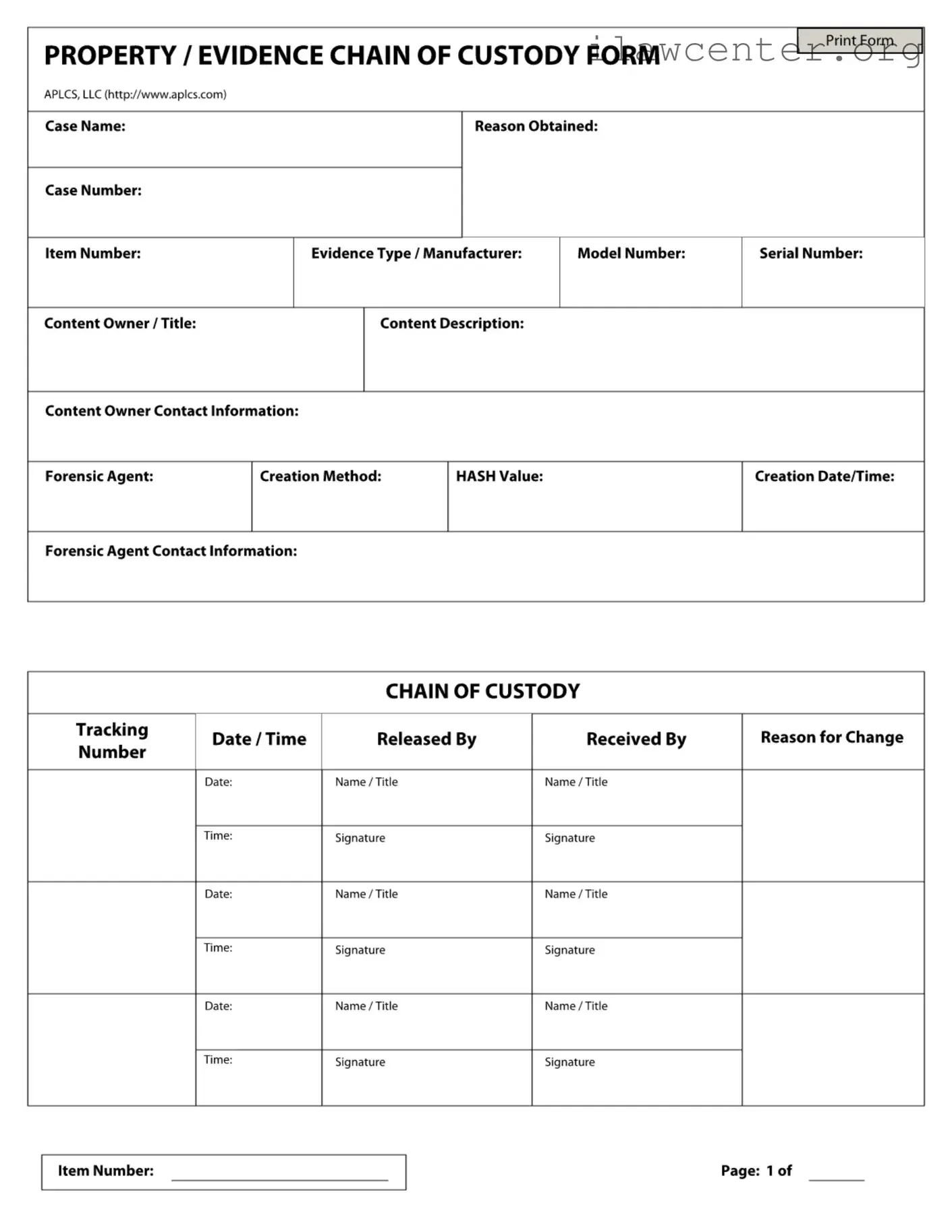
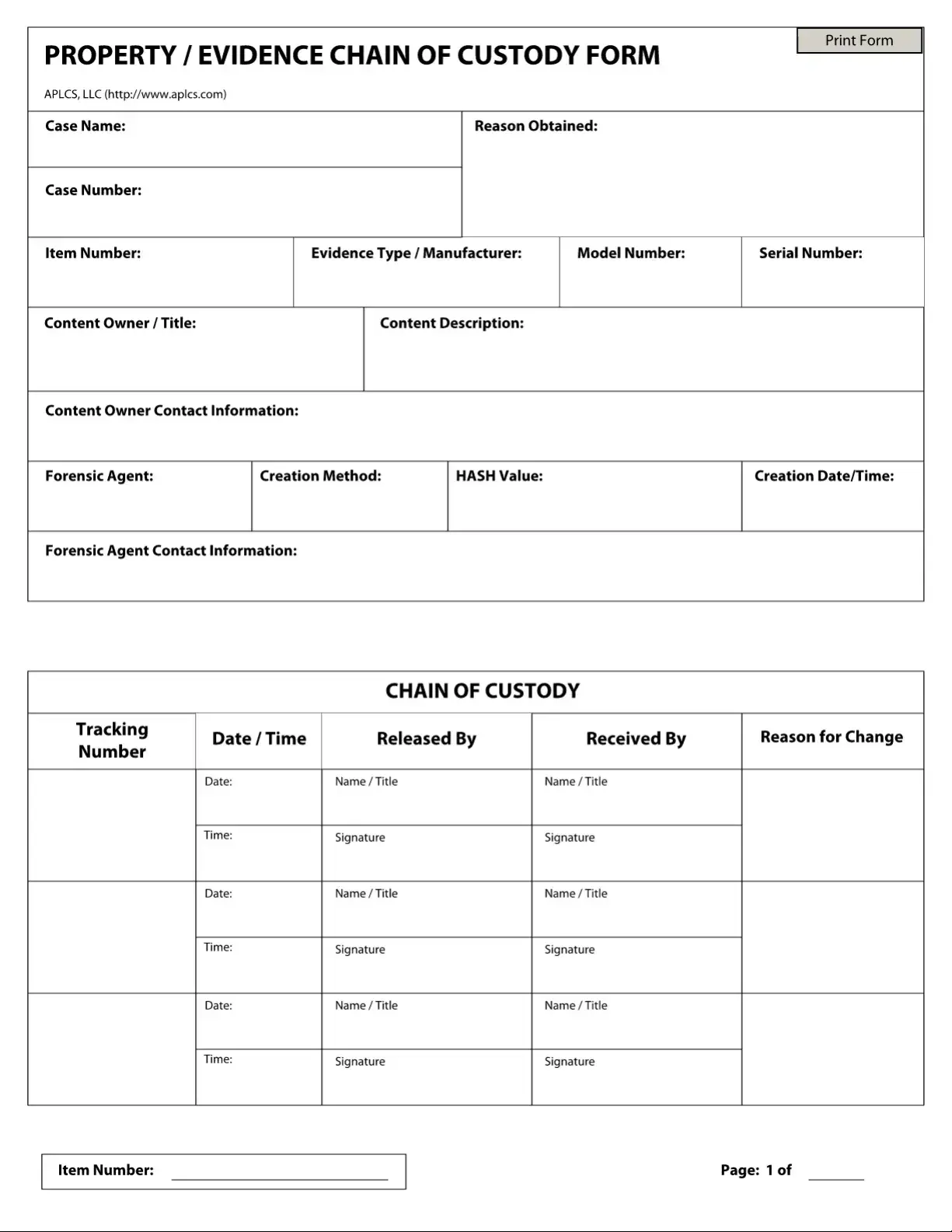
The Chain of Custody form plays a crucial role in maintaining the integrity of evidence throughout legal proceedings. This document ensures that every piece of evidence is accounted for, detailing its journey from collection to presentation in court. Key elements of the form include the case name, case number, and item number, which help identify and track specific evidence. Additionally, it captures vital information about the evidence type, manufacturer, model number, and serial number, providing a clear description of the item. The form also includes contact information for the content owner and forensic agent, which aids in communication and accountability. Importantly, the Chain of Custody form records the date and time of each transfer of evidence, along with the names, titles, and signatures of individuals involved in the release and receipt of the evidence. This meticulous documentation helps prevent tampering or loss and reinforces the reliability of the evidence presented in legal contexts.

Chain Of Custody Preview

File Properties

Fact Name Description Governing Law
Purpose The Chain of Custody form is used to document the handling of evidence from the time it is collected until it is presented in court. Federal Rules of Evidence, State-specific laws may apply.
Key Information This form includes essential details such as case name, case number, item number, and descriptions of the evidence. State-specific laws regarding evidence handling.
Signature Requirements Each person who handles the evidence must sign the form, indicating their role and the date/time of transfer. State-specific laws may dictate signature requirements.
Tracking The form includes a tracking number to ensure that evidence can be traced throughout its lifecycle. Federal and state laws regarding evidence tracking.

Instructions on Utilizing Chain Of Custody

Completing the Chain of Custody form is essential for documenting the handling of evidence. This ensures that all parties involved maintain accountability and transparency throughout the process. The following steps will guide you through filling out the form accurately.

  1. Begin by entering the Case Name at the top of the form.
  2. Fill in the Reason Obtained field to explain why the evidence was collected.
  3. Input the Case Number associated with the evidence.
  4. Assign an Item Number for the specific piece of evidence.
  5. Specify the Evidence Type / Manufacturer and include the Model Number and Serial Number of the item.
  6. Provide the Content Owner / Title to identify who the evidence belongs to.
  7. Detail the Content Description to give a brief overview of the evidence.
  8. Enter the Content Owner Contact Information for further communication if necessary.
  9. Identify the Forensic Agent responsible for handling the evidence.
  10. Describe the Creation Method used to obtain the evidence.
  11. Include the HASH Value to ensure the integrity of the evidence.
  12. Document the Creation Date/Time of the evidence.
  13. Provide the Forensic Agent Contact Information for any follow-up inquiries.
  14. Assign a Tracking Number for reference purposes.

Next, you will need to complete the Chain of Custody section. This involves documenting the transfer of evidence between individuals, ensuring that each party's involvement is recorded meticulously.

  1. Record the Date/Time when the evidence is released.
  2. Fill in the name and title of the person who Released By.
  3. Enter the name and title of the person who Received By.
  4. State the Reason for Change if applicable.
  5. Repeat the process for each transfer, ensuring to include the Date, Name/Title, Time, and Signature for all involved parties.

Ensure that all sections are completed thoroughly to maintain the integrity of the evidence documentation process.

Important Facts about Chain Of Custody

What is a Chain of Custody form and why is it important?

The Chain of Custody form is a critical document used in legal and forensic contexts to track the handling of evidence. It records every person who has had possession of the evidence, along with the date and time of each transfer. This meticulous documentation is vital because it helps establish the integrity of the evidence. If evidence is mishandled or its chain is broken, it may be deemed inadmissible in court. Therefore, maintaining a clear and accurate Chain of Custody is essential for ensuring that justice is served.

What information is typically included in a Chain of Custody form?

A Chain of Custody form usually contains several key pieces of information. First, it identifies the case name and number, which helps link the evidence to a specific investigation. It also includes details about the evidence itself, such as its type, manufacturer, model number, and serial number. Additionally, the form captures the contact information for the content owner and the forensic agent responsible for handling the evidence. Most importantly, it tracks the dates and times when the evidence is released and received, along with the signatures of the individuals involved in each transfer. This comprehensive documentation is crucial for maintaining the evidence's authenticity.

How can I ensure that the Chain of Custody is properly maintained?

To ensure proper maintenance of the Chain of Custody, follow a few best practices. First, always document each transfer of evidence immediately, noting the date, time, and names of individuals involved. Use a standardized Chain of Custody form to keep information consistent and clear. Store evidence in a secure location to prevent unauthorized access. Additionally, train all personnel involved in handling evidence on the importance of the Chain of Custody and how to fill out the form correctly. By adhering to these practices, you can help safeguard the integrity of the evidence throughout the legal process.

What happens if there is a break in the Chain of Custody?

If there is a break in the Chain of Custody, it can have serious implications for the case. A break may lead to questions about the authenticity and integrity of the evidence, potentially rendering it inadmissible in court. This means that the evidence may not be used to support claims or defenses, weakening the overall case. In some situations, a break can even result in the dismissal of charges. Therefore, it is crucial to maintain a continuous and documented Chain of Custody to protect the validity of the evidence and ensure a fair legal process.

Common mistakes

Filling out a Chain of Custody form is a critical step in maintaining the integrity of evidence. Yet, many individuals make common mistakes that can compromise the entire process. Understanding these pitfalls is essential for anyone involved in evidence handling.

One frequent error is incomplete information. Failing to fill out all required fields can lead to confusion and complications later on. Each section, from the case name to the content owner’s contact information, plays a vital role in tracking the evidence. Omitting even a small detail can create gaps that may be exploited in legal proceedings.

Another mistake involves illegible handwriting. If the form is not filled out clearly, it can result in misinterpretation of crucial details. This is especially problematic when it comes to serial numbers or tracking numbers, which must be accurate for proper identification. Always take the time to write neatly or consider using a digital format if available.

People often neglect to document the chain of custody properly. Each transfer of evidence should be logged meticulously. This includes noting the date, time, and reason for the change, as well as the names and titles of individuals involved. Incomplete logs can raise questions about the evidence’s reliability and authenticity.

Another common oversight is failing to update the form promptly. If evidence changes hands, it’s crucial to record this information immediately. Delays in updating the Chain of Custody can lead to inconsistencies and potential disputes about who handled the evidence and when.

Additionally, many people overlook the importance of signatures. Each individual who handles the evidence should sign the form to confirm their involvement. Without these signatures, the chain may appear broken, which can undermine the evidence's credibility in court.

Finally, a lack of training or understanding about the form itself can lead to numerous errors. It’s essential for everyone involved in evidence handling to be educated on the Chain of Custody process. Regular training sessions can help ensure that all personnel understand their responsibilities and the significance of accurate documentation.

Documents used along the form

The Chain of Custody form is essential in maintaining the integrity of evidence throughout legal proceedings. However, it is often accompanied by several other documents that help provide a comprehensive understanding of the evidence and its handling. Below is a list of commonly used forms and documents that work in conjunction with the Chain of Custody form.

  • Evidence Submission Form: This document outlines the details of the evidence being submitted for analysis. It includes information such as the case number, item description, and the person submitting the evidence.
  • Forensic Analysis Report: This report summarizes the findings of forensic examinations conducted on the evidence. It details the methods used, results obtained, and conclusions drawn by the forensic expert.
  • Incident Report: This document provides a narrative of the events leading up to the collection of evidence. It typically includes information about the incident, involved parties, and any actions taken by law enforcement.
  • Inventory List: An inventory list catalogs all items collected during an investigation. It serves as a comprehensive record that can be referenced throughout the legal process.
  • Witness Statement: This document contains the accounts of individuals who witnessed the events related to the case. It can provide context and support for the evidence presented.
  • Search Warrant: A search warrant is a legal document that authorizes law enforcement to search a specific location for evidence. It must be obtained before conducting a search to ensure the legality of the evidence collection.
  • Lab Request Form: This form is used to formally request forensic analysis of the collected evidence. It includes details about the evidence and the specific tests requested.
  • Return of Evidence Form: This document records the return of evidence to its owner or another party. It ensures that there is a clear record of who received the evidence and when.

Each of these documents plays a vital role in the evidentiary process. They help to ensure that evidence is handled properly, documented thoroughly, and available for review during legal proceedings. Together, they support the Chain of Custody form in maintaining the integrity of the judicial process.

Similar forms

The Chain of Custody form is essential for maintaining the integrity of evidence in various contexts. Several other documents share similarities with this form, each serving a specific purpose in tracking and managing items. Below are four documents that resemble the Chain of Custody form:

  • Evidence Log: An Evidence Log records the details of evidence collected during an investigation. Like the Chain of Custody form, it includes information about the item, the date of collection, and the individuals involved in the process. Both documents aim to ensure accurate tracking and accountability.
  • Inventory List: An Inventory List catalogs items held by an organization. Similar to the Chain of Custody form, it details item descriptions, quantities, and locations. This document helps maintain an organized record of items, ensuring transparency and proper management.
  • Transfer Receipt: A Transfer Receipt is used when items are transferred between parties. It includes information about the item, the sender, and the recipient. This document mirrors the Chain of Custody form by documenting the movement of evidence and ensuring that all parties acknowledge the transfer.
  • Forensic Report: A Forensic Report outlines the findings from an examination of evidence. While it focuses on analysis and conclusions, it often references the Chain of Custody to verify the integrity of the evidence examined. Both documents work together to uphold the credibility of the evidence in legal proceedings.

Dos and Don'ts

When filling out the Chain of Custody form, it is essential to follow certain guidelines to ensure accuracy and reliability. Here are five things you should and shouldn't do:

  • Do ensure all fields are filled out completely and accurately.
  • Do use clear and legible handwriting or type the information.
  • Do double-check the dates and times for accuracy.
  • Do maintain a consistent format for names and titles.
  • Do keep a copy of the completed form for your records.
  • Don't leave any fields blank unless specifically instructed.
  • Don't use abbreviations that may cause confusion.
  • Don't alter any information after it has been entered.
  • Don't forget to include signatures where required.
  • Don't submit the form without verifying all information is correct.

Misconceptions

Understanding the Chain of Custody form is crucial for anyone involved in legal proceedings, particularly in cases involving evidence. However, several misconceptions often arise regarding its purpose and use. Here are eight common misunderstandings:

  • It is only necessary for criminal cases. Many believe that the Chain of Custody form is only relevant in criminal matters. In reality, it is also important in civil cases, especially those involving evidence that could impact the outcome of a lawsuit.
  • Once filled out, the form is permanent. Some think that the Chain of Custody form cannot be altered once completed. However, it can be updated to reflect any changes in the handling of evidence, as long as these changes are properly documented.
  • Only law enforcement can fill out the form. While law enforcement often handles evidence, anyone involved in the collection or transfer of evidence can complete the Chain of Custody form. This includes forensic agents and other authorized personnel.
  • The form is only about signatures. A common belief is that the Chain of Custody form is primarily for signatures. In truth, it serves as a comprehensive record that includes details like item descriptions, handling dates, and reasons for transfers, which are all essential for maintaining the integrity of the evidence.
  • It is not necessary if evidence is stored securely. Some may think that secure storage negates the need for a Chain of Custody form. However, proper documentation is always essential, regardless of how secure the storage may be. It helps to establish a clear history of the evidence.
  • One form suffices for all evidence. There is a misconception that a single Chain of Custody form can cover multiple pieces of evidence. Each item should have its own form to ensure that every piece is accounted for and tracked individually.
  • It is only relevant at the trial stage. Many assume that the Chain of Custody form is only important during the trial. In fact, it plays a critical role throughout the entire legal process, from evidence collection to presentation in court.
  • Digital evidence does not require a Chain of Custody form. Some people believe that digital evidence is exempt from the Chain of Custody requirements. This is incorrect; digital evidence must also be documented and tracked meticulously to preserve its integrity.

Addressing these misconceptions can help ensure that evidence is handled properly, which is vital for upholding the justice system.

Key takeaways

When filling out and using the Chain of Custody form, it is essential to follow specific guidelines to ensure accuracy and integrity. Here are nine key takeaways:

  • Complete All Fields: Ensure every section of the form is filled out completely, including case name, case number, and item details.
  • Accurate Descriptions: Provide a clear and precise description of the evidence. This includes the type, manufacturer, model number, and serial number.
  • Document Ownership: Clearly identify the content owner and include their contact information for future reference.
  • Forensic Agent Information: Include the name and contact details of the forensic agent responsible for handling the evidence.
  • Use of HASH Value: Record the HASH value of the evidence to ensure its integrity. This value acts as a digital fingerprint.
  • Tracking Changes: Whenever evidence changes hands, document the date, time, and reason for the change, along with the signatures of both the releasing and receiving parties.
  • Multiple Signatures: Ensure that all individuals involved in the chain of custody sign the form. This includes all who release or receive the evidence.
  • Maintain Copies: Keep copies of the completed form for your records and ensure that all parties involved have access to it.
  • Review Regularly: Periodically review the chain of custody documentation to ensure compliance and address any discrepancies promptly.