Check Register PDF Template

Check Register PDF Template

The Check Register form is a vital tool for tracking your financial transactions, helping you manage your checking account with ease. By recording each check written, deposit made, and any fees incurred, this form ensures that you maintain an accurate overview of your account balance. Ready to take control of your finances? Fill out the form by clicking the button below!

Article Guide

The Check Register form serves as an essential tool for individuals and businesses alike, providing a systematic way to track and manage financial transactions. This form typically includes fields for recording the date of each transaction, the check number, the payee, and the amount paid. In addition, it often features sections for noting deposits and maintaining a running balance, which helps users monitor their available funds. By diligently filling out the Check Register, users can avoid overdrafts and ensure that their financial records remain accurate and up-to-date. Furthermore, this form can assist in reconciling bank statements, offering a clear overview of all outgoing and incoming funds. Overall, the Check Register form is invaluable for promoting responsible financial management and fostering a deeper understanding of one’s monetary activities.

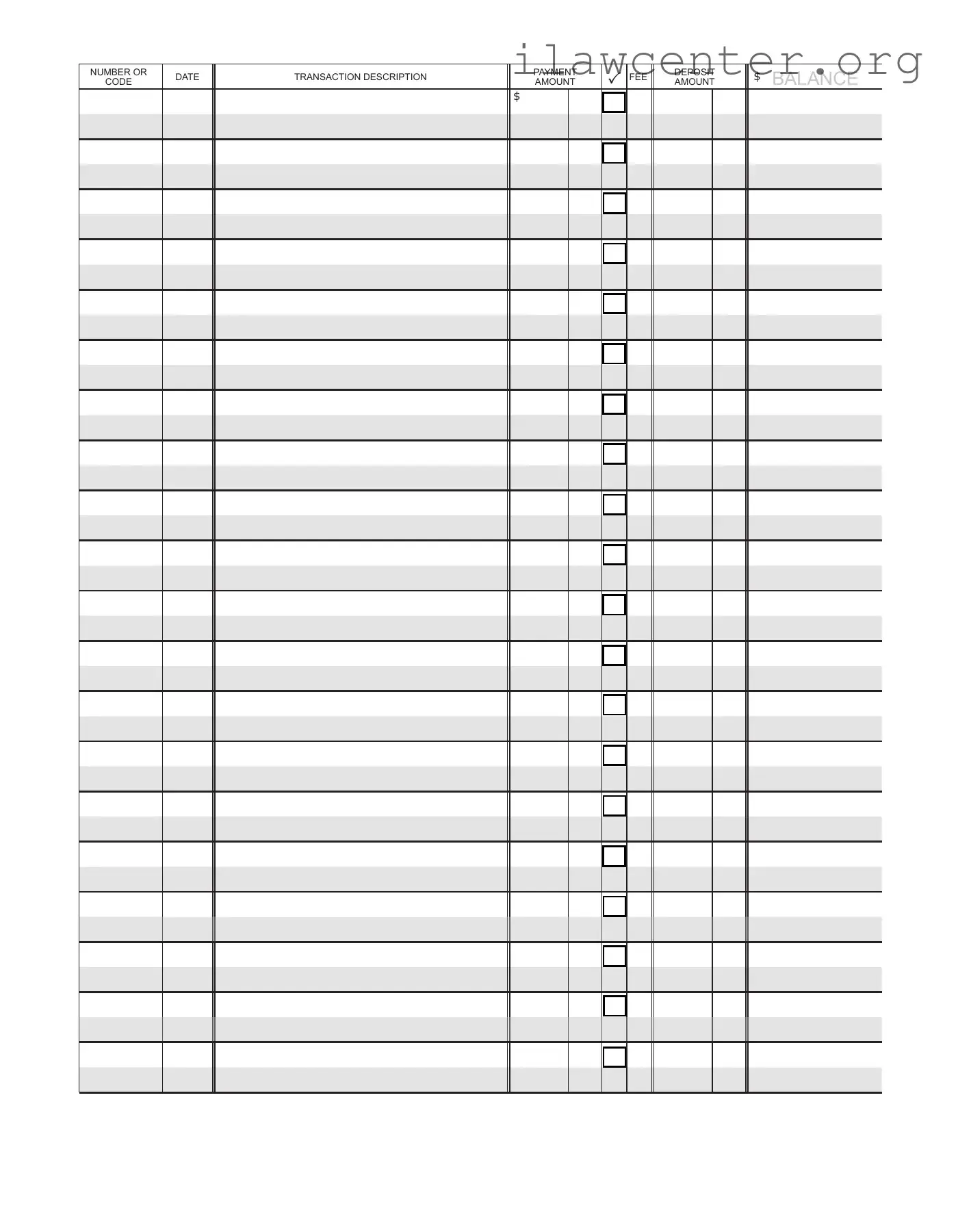
Check Register Preview

NUMBER OR PAYMENT
DEPOSIT
DATE TRANSACTION DESCRIPTION
FEE
CODE
AMOUNT
AMOUNT
$
BALANCE
$

File Properties

Fact Name Details
Purpose The Check Register form is used to track all checks written, including dates, amounts, and payees.
Importance Maintaining an accurate check register helps in managing finances and preventing overdrafts.
Frequency of Use It should be updated regularly, ideally after each transaction, to ensure accuracy.
State-Specific Forms Some states may have specific requirements for check registers, governed by state banking laws.
Record Keeping Check registers serve as an important record for tax purposes and financial audits.

Instructions on Utilizing Check Register

After obtaining the Check Register form, you will be ready to track your financial transactions effectively. This form allows you to record details about each check, deposit, and withdrawal, ensuring you maintain accurate financial records. Follow the steps below to fill out the form correctly.

  1. Locate the date field at the top of the form. Enter the date of the transaction.
  2. In the next field, write the check number or the reference number for the transaction.
  3. Fill in the name of the payee or the individual or organization receiving the payment.
  4. Record the amount of the transaction in the designated field.
  5. If applicable, note the type of transaction, such as “Deposit” or “Withdrawal.”
  6. In the memo section, briefly describe the purpose of the transaction.
  7. Finally, calculate the running balance after each entry and write it in the balance column.

Important Facts about Check Register

What is a Check Register form?

A Check Register form is a tool used to track all transactions made through a checking account. It helps you record deposits, withdrawals, and any fees associated with your account. By maintaining an accurate check register, you can monitor your account balance and ensure that you do not overspend.

How do I fill out a Check Register form?

To fill out a Check Register form, start by entering the date of each transaction. Next, note the check number or transaction type (like debit or deposit). Record the description of the transaction, such as the payee or purpose. Then, enter the amount of the transaction in the appropriate column—either as a withdrawal or a deposit. Finally, calculate your running balance after each entry to keep track of your available funds.

Why is it important to keep a Check Register?

Keeping a Check Register is crucial for several reasons. It helps you stay organized and aware of your spending habits. It prevents overdrafts by allowing you to see your available balance in real-time. Additionally, it can help identify any discrepancies or unauthorized transactions quickly, ensuring your financial security.

How often should I update my Check Register?

You should update your Check Register immediately after each transaction. This practice ensures that your records are always current and accurate. Regular updates help you avoid confusion and mistakes that can lead to overspending or overdrafts.

Can I use a digital format for my Check Register?

Yes, you can certainly use a digital format for your Check Register. Many banking apps and personal finance software offer digital check registers that automatically update with your transactions. However, if you prefer a paper format, a printed Check Register form is also effective. Choose the method that works best for your financial management style.
Common mistakes

When managing finances, accuracy is essential. One common mistake individuals make while filling out the Check Register form is neglecting to update the register after each transaction. This oversight can lead to confusion about available funds and may result in overdrafts. It’s crucial to record each deposit and withdrawal promptly to maintain an accurate balance.

Another frequent error is failing to double-check entries for accuracy. Simple mistakes, such as transposing numbers or miscalculating totals, can create significant discrepancies. Individuals should take a moment to review each entry before moving on to the next transaction. This practice can help avoid larger financial issues down the line.

People often forget to include fees and charges in their Check Register. Bank fees, ATM charges, and other expenses can add up quickly. By not accounting for these costs, individuals may believe they have more money available than they actually do. It’s important to consider all aspects of banking transactions to ensure a true reflection of one’s finances.

Lastly, some individuals fail to reconcile their Check Register with bank statements regularly. This step is vital for identifying errors and discrepancies. By comparing the register with the bank statement, one can catch mistakes early and make necessary corrections. Regular reconciliation fosters better financial habits and helps maintain a clear understanding of one’s financial situation.

Documents used along the form

The Check Register form is an essential tool for tracking financial transactions, particularly those involving checks. It helps individuals and businesses maintain an accurate record of payments and deposits. Alongside the Check Register, several other forms and documents are commonly utilized to ensure comprehensive financial management. Below are six such documents that often accompany the Check Register.

  • Bank Statement: This document is issued by a bank and provides a summary of all transactions in an account over a specific period. It includes deposits, withdrawals, and any fees charged, allowing account holders to reconcile their records with the bank's records.
  • Deposit Slip: A deposit slip is used when making a deposit into a bank account. It details the amount being deposited and can include checks and cash. This slip serves as proof of the transaction and is often retained for record-keeping purposes.
  • Checkbook Ledger: This is a personal record-keeping tool that helps individuals track their check transactions. It includes spaces to record the check number, date, payee, amount, and balance after each transaction, facilitating better budgeting and financial oversight.
  • Invoice: An invoice is a document issued by a seller to a buyer, detailing the products or services provided and the amount due. It serves as a formal request for payment and is crucial for maintaining accurate accounts receivable records.
  • Expense Report: This document is used to track and report business-related expenses incurred by employees. It typically includes details about the nature of the expense, the amount, and any supporting receipts, aiding in financial accountability and reimbursement processes.
  • Payment Voucher: A payment voucher is a document that authorizes payment to a vendor or service provider. It includes details such as the amount, purpose, and payment method, ensuring that all necessary approvals are in place before funds are disbursed.

These documents, when used in conjunction with the Check Register form, enhance financial clarity and accountability. Together, they create a comprehensive framework for managing finances effectively.

Similar forms

  • Bank Statement: A bank statement provides a summary of all transactions in a bank account over a specific period, similar to how a check register tracks all checks and deposits.
  • Cash Flow Statement: This document outlines the inflow and outflow of cash within a business, akin to the check register's function of monitoring cash transactions.
  • Expense Report: An expense report details all expenditures incurred, much like a check register records all payments made through checks or electronic transfers.
  • Account Ledger: An account ledger serves as a comprehensive record of all financial transactions for an account, paralleling the check register’s role in documenting checks and deposits.
  • Transaction History: This document lists all transactions related to an account, similar to how a check register captures each transaction in chronological order.
  • General Journal: A general journal records all financial transactions of a business, reflecting the same thoroughness as a check register in documenting monetary exchanges.
  • Financial Statement: Financial statements summarize the financial status of an entity, while a check register provides a detailed view of cash movements.
  • Budget Tracking Sheet: A budget tracking sheet monitors spending against a budget, resembling the check register’s role in keeping track of funds available after each transaction.

Dos and Don'ts

Filling out a Check Register form can seem daunting, but it is a straightforward process if you keep a few essential tips in mind. Here are five things you should and shouldn't do when completing this important document.

  • Do write clearly and legibly. This ensures that anyone reviewing the register can easily read your entries.
  • Do record all transactions promptly. Keeping your check register up-to-date helps you maintain an accurate account balance.
  • Do double-check your entries. A simple mistake in numbers can lead to confusion and financial discrepancies.
  • Don't leave blank spaces in the register. This can lead to errors and make it difficult to track your transactions.
  • Don't forget to categorize your transactions. This will help you understand your spending habits better and manage your finances more effectively.

By following these guidelines, you can ensure that your Check Register form is filled out accurately and efficiently, providing you with a clear view of your financial situation.

Misconceptions

When it comes to the Check Register form, there are several misconceptions that people often have. Understanding the truth behind these misconceptions can help individuals use the form more effectively. Below is a list of common misunderstandings.

  • Misconception 1: The Check Register form is only for businesses.
  • This is not true. While businesses often use check registers to track their transactions, individuals can also benefit from maintaining a check register. It helps anyone keep track of their spending and manage their finances more effectively.

  • Misconception 2: A Check Register form is only needed if you write a lot of checks.
  • Even if you rarely write checks, a check register can still be useful. It allows you to track electronic payments, withdrawals, and deposits, providing a comprehensive view of your financial activity.

  • Misconception 3: You can only record checks in the Check Register.
  • This is misleading. The Check Register is designed to record all types of transactions, including debit card purchases, ATM withdrawals, and direct deposits. This makes it a versatile tool for managing your finances.

  • Misconception 4: You need to have a separate Check Register for each bank account.
  • While it can be helpful to maintain separate registers for different accounts, it is not a requirement. Many people choose to keep a single register that includes all their accounts, which can simplify tracking and reconciliation.

  • Misconception 5: Once you fill out the Check Register, you don’t need to check it again.
  • This is a common error. Regularly reviewing your check register is crucial. It helps ensure that your records match your bank statements and allows you to catch any discrepancies early.

Key takeaways

When it comes to managing your finances, using a Check Register form can be incredibly helpful. Here are some key takeaways to keep in mind:

  • Track Your Spending: A Check Register allows you to record every transaction, helping you see where your money goes.
  • Maintain Accurate Balances: Regularly updating your Check Register ensures that you always know your current account balance, preventing overdrafts.
  • Identify Patterns: By reviewing your entries, you can spot spending habits and make adjustments if necessary.
  • Record Deposits and Withdrawals: It's essential to note not just checks written but also any deposits made to get a full picture of your finances.
  • Prepare for Reconciliation: Using a Check Register makes it easier to reconcile your bank statements each month, ensuring accuracy in your financial records.

By consistently using a Check Register, you can gain better control over your finances and make informed decisions about your spending.