Fillable Closing Date Extension Addendum Form Document

Fillable Closing Date Extension Addendum Form Document

The Closing Date Extension Addendum Form is a crucial document used in real estate transactions to extend the closing date agreed upon by both parties. This form helps ensure that all necessary conditions are met before finalizing the sale, providing flexibility when unexpected delays arise. If you need to extend your closing date, consider filling out the form by clicking the button below.

Article Guide

In the world of real estate transactions, timing can be everything. Buyers and sellers often find themselves in situations where they need a bit more time to finalize the details of their agreement. This is where the Closing Date Extension Addendum Form comes into play. Designed to provide flexibility, this addendum allows parties to extend the original closing date outlined in their purchase agreement. It serves as a formal document that not only specifies the new closing date but also ensures that all parties involved are on the same page regarding the change. By using this form, both buyers and sellers can avoid potential misunderstandings and maintain a smooth transaction process. Additionally, it helps to protect the interests of all parties, ensuring that any necessary contingencies or conditions are still met before the new closing date arrives. Understanding the nuances of this addendum can empower individuals to navigate their real estate dealings with confidence and clarity.

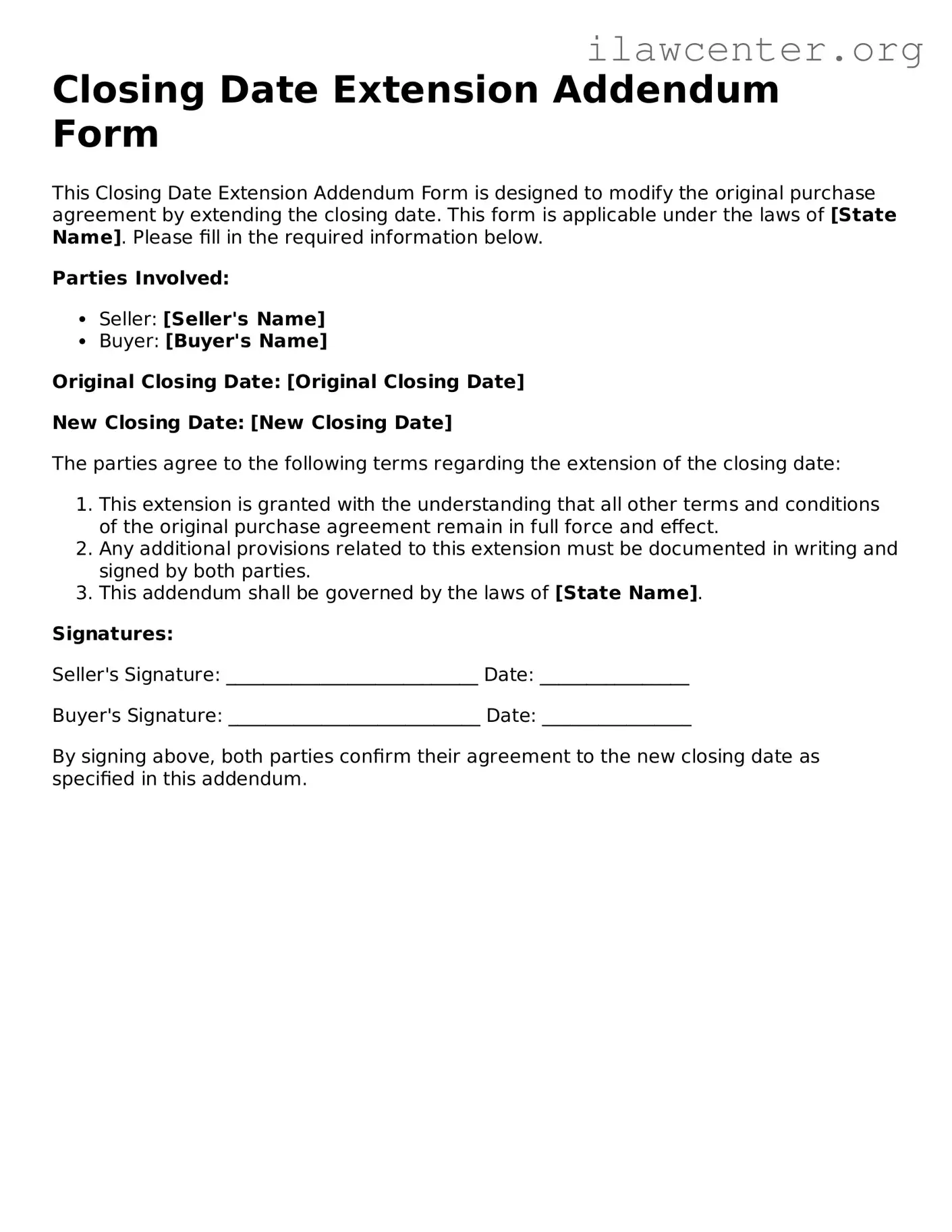
Closing Date Extension Addendum Form Preview

Closing Date Extension Addendum Form

This Closing Date Extension Addendum Form is designed to modify the original purchase agreement by extending the closing date. This form is applicable under the laws of [State Name]. Please fill in the required information below.

Parties Involved:

  • Seller: [Seller's Name]
  • Buyer: [Buyer's Name]

Original Closing Date: [Original Closing Date]

New Closing Date: [New Closing Date]

The parties agree to the following terms regarding the extension of the closing date:

  1. This extension is granted with the understanding that all other terms and conditions of the original purchase agreement remain in full force and effect.
  2. Any additional provisions related to this extension must be documented in writing and signed by both parties.
  3. This addendum shall be governed by the laws of [State Name].

Signatures:

Seller's Signature: ___________________________ Date: ________________

Buyer's Signature: ___________________________ Date: ________________

By signing above, both parties confirm their agreement to the new closing date as specified in this addendum.

PDF Form Characteristics

Fact Name Description
Purpose The Closing Date Extension Addendum Form is used to modify the closing date of a real estate transaction, allowing parties to agree on a new date if needed.
Governing Law This form is governed by the laws of the state in which the property is located. For example, in California, the California Civil Code applies.
Parties Involved The addendum typically involves the buyer and seller, ensuring both parties consent to the new closing date.
Importance Using this form helps prevent misunderstandings and potential legal issues that could arise from missed deadlines in the closing process.

Instructions on Utilizing Closing Date Extension Addendum Form

After obtaining the Closing Date Extension Addendum Form, you are ready to proceed with filling it out. This form is essential for extending the closing date of a real estate transaction. Ensure you have all necessary information at hand to complete the form accurately.

  1. Begin by entering the date of the original agreement at the top of the form.
  2. Identify the parties involved in the transaction. Fill in the names of the buyer and seller as they appear in the original agreement.
  3. Next, specify the new proposed closing date. Make sure this date is realistic and agreed upon by all parties.
  4. Include any additional terms or conditions related to the extension, if necessary. This could involve stipulations regarding inspections or financing.
  5. Both the buyer and seller must sign the form. Ensure that each party dates their signature.
  6. Finally, provide a copy of the completed form to all parties involved. Keep a copy for your records as well.

Important Facts about Closing Date Extension Addendum Form

What is a Closing Date Extension Addendum Form?

The Closing Date Extension Addendum Form is a legal document used in real estate transactions. It allows parties involved in a sale to extend the closing date of the transaction. This form is particularly useful when unforeseen circumstances arise, such as delays in financing, inspections, or other contingencies that may prevent the original closing date from being met.

When should I consider using this form?

You should consider using the Closing Date Extension Addendum Form if you anticipate that you will not be able to close on the property by the originally agreed-upon date. Common reasons for needing an extension include delays in loan approvals, issues with property inspections, or the need for additional time to complete necessary repairs. It’s important to communicate with all parties involved as soon as you recognize a potential delay.

How do I fill out the form correctly?

What happens after the form is signed?

Once the Closing Date Extension Addendum Form is signed by both parties, it becomes a part of the original purchase agreement. This means that the new closing date is now legally binding. It is advisable to distribute copies of the signed addendum to all parties involved, including lenders and real estate agents, to ensure everyone is informed of the change. Keeping clear communication throughout the process will help prevent any misunderstandings.

Common mistakes

Filling out a Closing Date Extension Addendum Form can be a straightforward process, but many people make common mistakes that can lead to confusion or delays. One frequent error is neglecting to include all necessary parties' signatures. When multiple parties are involved in a real estate transaction, each person must sign the addendum for it to be valid. Omitting a signature can render the document ineffective, causing headaches down the line.

Another mistake is failing to specify the new closing date clearly. It’s not enough to simply state that the closing date is being extended; the exact date must be provided. Vague language can lead to misunderstandings, and you don’t want to leave any room for interpretation. Clarity is key in these documents.

Some individuals also forget to provide a reason for the extension. While it may seem unnecessary, including a brief explanation can help clarify the situation for all parties involved. This can also serve as a record of the circumstances that led to the extension, which may be useful in future discussions.

Additionally, people often overlook the importance of checking for consistency with the original contract. The terms of the extension should align with the original agreement. If there are discrepancies, it could lead to disputes later on. Always compare the addendum to the original contract to ensure that everything matches up.

Moreover, another common error is neglecting to date the addendum. A lack of a date can create confusion about when the extension was agreed upon. This is especially important if any disputes arise regarding the timeline of the transaction. Always include the date when the addendum is signed.

Some individuals may also fail to provide a copy of the signed addendum to all parties involved. After the form is completed, ensure that everyone receives a copy. This fosters transparency and helps avoid any misunderstandings about the terms of the extension.

People sometimes forget to consult their real estate agent or attorney before finalizing the addendum. While it might seem like a simple form, having a professional review it can help catch mistakes and ensure compliance with local laws. Don’t skip this important step.

Another mistake is not keeping a copy of the addendum for personal records. It’s essential to maintain documentation of all transactions, including extensions. This can be invaluable for future reference or if any issues arise later.

Lastly, individuals may rush through the process without reading the entire form carefully. Take the time to review each section. Understanding what you are signing is crucial. Rushing can lead to errors that could have been easily avoided.
Documents used along the form

The Closing Date Extension Addendum Form is an important document that modifies the original closing date of a real estate transaction. When using this form, several other documents may also be necessary to ensure all parties are in agreement and that the transaction proceeds smoothly. Below is a list of commonly used forms that often accompany the Closing Date Extension Addendum Form.

  • Purchase Agreement: This document outlines the terms and conditions of the sale, including the original closing date. It serves as the foundation for the transaction.
  • Amendment to Purchase Agreement: If changes are needed beyond just extending the closing date, this form allows for modifications to the original purchase agreement.
  • Disclosure Statements: These documents provide vital information about the property, including any known issues or defects. They ensure transparency between the buyer and seller.
  • Financing Addendum: If the buyer is obtaining financing, this document details the terms of the loan and any contingencies related to financing that may affect the closing date.
  • Inspection Report: This report summarizes the findings of any inspections conducted on the property. It can influence the decision to extend the closing date based on any necessary repairs or concerns.

Using these documents together with the Closing Date Extension Addendum Form helps facilitate a clear and organized process. It is essential to ensure all parties are informed and in agreement to prevent any delays or misunderstandings.

Similar forms

The Closing Date Extension Addendum Form is a document that serves to modify the original closing date of a real estate transaction. Several other documents share similarities with this form, particularly in their purpose of amending or clarifying aspects of agreements. Below are seven documents that are similar to the Closing Date Extension Addendum Form:

  • Amendment Agreement: This document modifies specific terms of an existing contract, such as price, closing date, or contingencies, similar to how the Closing Date Extension Addendum adjusts the closing timeline.
  • Letter of Intent: Often used in real estate transactions, this document outlines the preliminary understanding between parties. It can include proposed changes to timelines, akin to the extension of a closing date.
  • Contract Modification Agreement: This formal document is used to change certain provisions of a contract, including deadlines. It serves a similar function as the Closing Date Extension Addendum by ensuring all parties are informed of the new terms.
  • Contingency Removal Addendum: This document is used to remove specific contingencies from a contract, which can affect the closing date. Like the Closing Date Extension Addendum, it alters the original agreement to reflect current conditions.
  • Termination Agreement: If a party wishes to end a contract, this document outlines the terms of termination. While it serves a different purpose, it also modifies the original agreement, similar to how an extension addendum changes the closing date.
  • Escrow Instructions: These instructions can be amended to reflect changes in the closing process or timeline, paralleling the purpose of the Closing Date Extension Addendum.
  • Release of Liability: This document can be used to release one party from obligations under a contract, potentially affecting the closing date. It modifies the original agreement, similar to the extension addendum.

Dos and Don'ts

When filling out the Closing Date Extension Addendum Form, it's essential to approach the process with care. Here are ten important do's and don'ts to keep in mind.

  • Do read the entire form carefully before starting.
  • Don't leave any required fields blank.
  • Do clearly state the reason for the extension.
  • Don't use vague language; be specific about the new closing date.
  • Do check for any additional signatures required from all parties involved.
  • Don't forget to date the form when you complete it.
  • Do keep a copy of the completed form for your records.
  • Don't submit the form without confirming that all parties agree to the extension.
  • Do follow up with the other parties after submission to ensure everything is in order.
  • Don't assume the extension is valid until all parties have signed and acknowledged it.

Misconceptions

The Closing Date Extension Addendum Form is often misunderstood. Here are five common misconceptions about this important document:

  • It is only used in real estate transactions. Many believe that this form is exclusive to real estate. However, it can also apply to various contracts and agreements where deadlines are crucial.
  • It automatically extends the closing date. Some think that simply filling out this form guarantees an extension. In reality, both parties must agree to the new terms for it to be valid.
  • It is a legally binding document. While the form can create binding obligations, it only does so if properly executed by all parties involved. Without signatures, it holds no legal weight.
  • It can be used without any reason. Many assume that an extension can be requested at any time without justification. However, parties typically need to provide a valid reason for the extension to be considered.
  • Once signed, it cannot be changed. Some people think that after signing the addendum, the terms are set in stone. In fact, parties can negotiate further changes if all agree to the modifications.

Understanding these misconceptions can help parties navigate the closing process more effectively. Clarity about the Closing Date Extension Addendum Form ensures smoother transactions and better communication between all involved.

Key takeaways

When dealing with real estate transactions, understanding the Closing Date Extension Addendum Form is crucial. Here are some key takeaways to keep in mind:

  • Purpose: This form is used to extend the closing date of a real estate transaction, allowing more time for necessary conditions to be met.
  • Mutual Agreement: Both the buyer and seller must agree to the extension. Communication is key to ensure both parties are on the same page.
  • Specific Dates: Clearly specify the new closing date on the form. Ambiguity can lead to confusion and potential disputes.
  • Timeframe: Extensions should be reasonable. Consider the implications of a longer delay on financing, inspections, and other related processes.
  • Documentation: Keep a copy of the signed addendum with the original purchase agreement. This ensures that all parties have access to the updated terms.
  • Legal Review: If unsure about the terms or implications of the extension, consult a real estate attorney for guidance.
  • Impact on Contingencies: Be aware that extending the closing date may affect any contingencies outlined in the original contract.
  • Communication with Lenders: Inform your lender about the extension, as it may impact loan processing and approval timelines.

Understanding these points can help ensure a smoother transaction process and minimize potential issues down the line.