Fillable Closing Date Extension Addendum Document

Fillable Closing Date Extension Addendum Document

The Closing Date Extension Addendum is a document used in real estate transactions to officially extend the closing date of a property sale. This form is essential for both buyers and sellers, ensuring that all parties agree to the new timeline. To facilitate the process, consider filling out the form by clicking the button below.

Article Guide

The Closing Date Extension Addendum form plays a crucial role in real estate transactions, particularly when unforeseen circumstances arise that necessitate a delay in closing. This document serves as an agreement between the buyer and seller to extend the original closing date, ensuring both parties have ample time to fulfill their obligations. It outlines the new closing date and may include specific conditions that must be met before the extension takes effect. By clearly defining the terms of the extension, the addendum helps prevent misunderstandings and protects the interests of both parties. Additionally, it can address potential consequences for failing to meet the extended closing date, providing a framework for resolving any issues that may arise. Understanding the nuances of this form is essential for anyone involved in real estate transactions, as it can significantly impact the overall process and outcome.

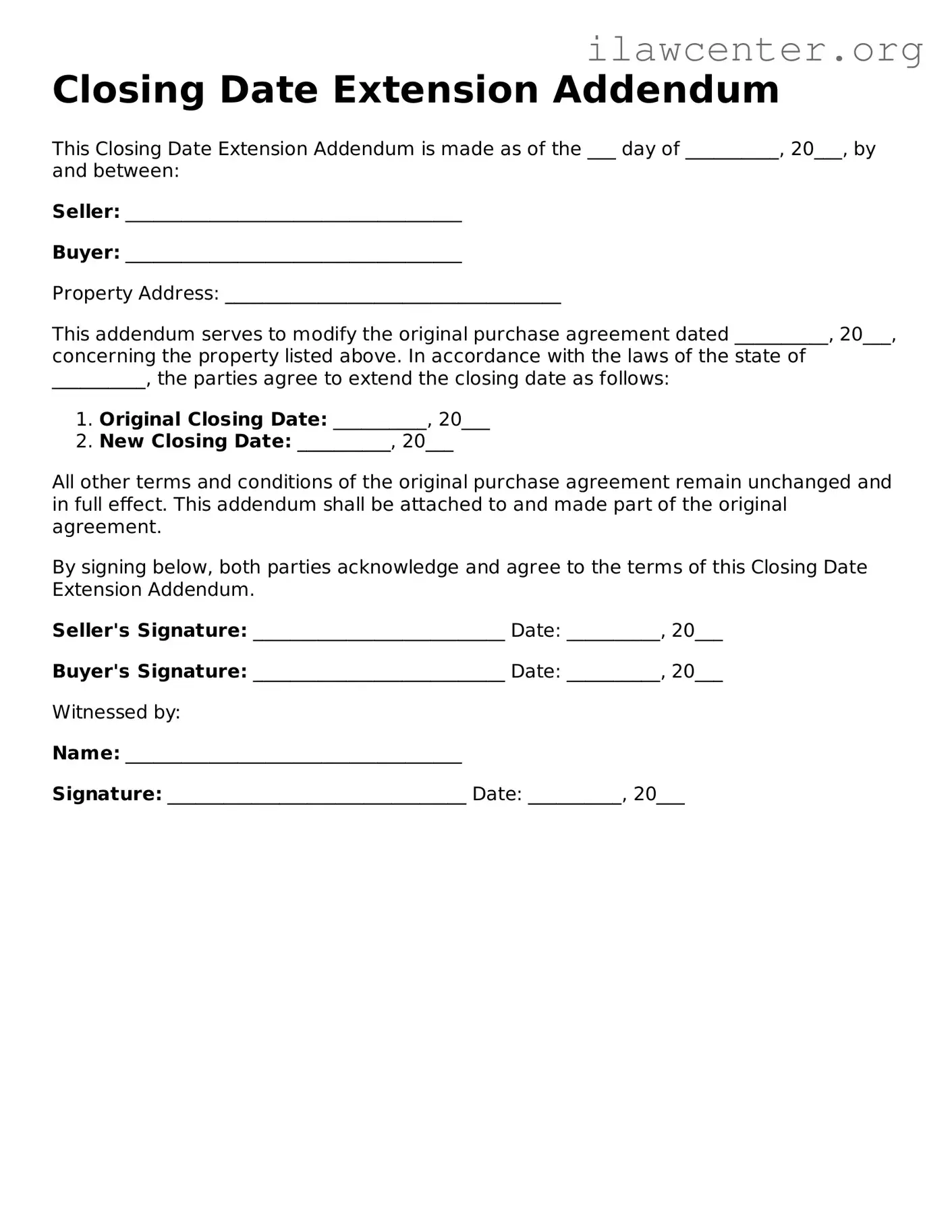
Closing Date Extension Addendum Preview

Closing Date Extension Addendum

This Closing Date Extension Addendum is made as of the ___ day of __________, 20___, by and between:

Seller: ____________________________________

Buyer: ____________________________________

Property Address: ____________________________________

This addendum serves to modify the original purchase agreement dated __________, 20___, concerning the property listed above. In accordance with the laws of the state of __________, the parties agree to extend the closing date as follows:

  1. Original Closing Date: __________, 20___
  2. New Closing Date: __________, 20___

All other terms and conditions of the original purchase agreement remain unchanged and in full effect. This addendum shall be attached to and made part of the original agreement.

By signing below, both parties acknowledge and agree to the terms of this Closing Date Extension Addendum.

Seller's Signature: ___________________________ Date: __________, 20___

Buyer's Signature: ___________________________ Date: __________, 20___

Witnessed by:

Name: ____________________________________

Signature: ________________________________ Date: __________, 20___

PDF Form Characteristics

Fact Name Description
Purpose The Closing Date Extension Addendum is used to extend the closing date of a real estate transaction, allowing both parties more time to fulfill their obligations.
Parties Involved This form is typically signed by both the buyer and the seller to confirm their mutual agreement on the new closing date.
State-Specific Forms Many states have their own versions of this addendum. For example, California and Texas have specific forms governed by their respective real estate laws.
Legal Binding Once signed, the addendum becomes a legally binding part of the purchase agreement, modifying the original terms.
Governing Laws The governing laws for these forms vary by state, with each state’s real estate regulations applying to the use of the addendum.

Instructions on Utilizing Closing Date Extension Addendum

Once you have gathered all necessary information, you can proceed to fill out the Closing Date Extension Addendum form. This form is essential for modifying the closing date of a real estate transaction. It is important to ensure that all details are accurate and complete to avoid any delays or complications in the process.

  1. Begin by entering the date at the top of the form. This should be the date you are completing the addendum.
  2. Next, provide the names of all parties involved in the transaction. Include both the buyer and the seller's full names as they appear on the original contract.
  3. Identify the original closing date. Clearly state the date that was initially agreed upon for the closing.
  4. Specify the new proposed closing date. Make sure this date is agreeable to all parties and allows sufficient time for any necessary preparations.
  5. Include any additional terms or conditions that may apply to the extension. This could involve stipulations regarding inspections, financing, or other relevant factors.
  6. Ensure that all parties sign and date the form. Each party should sign in the designated area to indicate their agreement to the new closing date.
  7. Finally, make copies of the completed form for all parties involved. Distributing these copies ensures that everyone has a record of the agreement.

Important Facts about Closing Date Extension Addendum

What is a Closing Date Extension Addendum?

A Closing Date Extension Addendum is a legal document that modifies the original purchase agreement by extending the closing date. This addendum allows both the buyer and seller to agree on a new closing date, ensuring that all necessary conditions are met before the transaction is finalized.

When should I use a Closing Date Extension Addendum?

This addendum is typically used when unforeseen circumstances arise that prevent the closing from occurring on the originally agreed date. These circumstances can include delays in financing, issues with the property title, or necessary repairs that have not been completed. If both parties agree to the extension, this document formalizes the new timeline.

Who needs to sign the Closing Date Extension Addendum?

Both the buyer and seller must sign the Closing Date Extension Addendum. This ensures that both parties are in agreement regarding the new closing date. Additionally, if there are real estate agents involved, they may also need to acknowledge the addendum, depending on the terms of the original agreement.

How long can the closing date be extended?

The length of the extension can vary based on the specific needs of both parties. It is important to negotiate a reasonable timeframe that allows sufficient time to address any outstanding issues. The new closing date should be clearly stated in the addendum to avoid any confusion.

Does the Closing Date Extension Addendum affect other terms of the original agreement?

No, the Closing Date Extension Addendum only modifies the closing date. All other terms and conditions of the original purchase agreement remain unchanged unless explicitly stated otherwise in the addendum. This means that the obligations of both parties, including price and contingencies, still apply.

What happens if the closing date is extended multiple times?

If the closing date needs to be extended multiple times, each extension should be documented with a new Closing Date Extension Addendum. This ensures that all parties are aware of the current closing date and can track any changes made throughout the transaction process.

Is it necessary to file the Closing Date Extension Addendum with the county?

Filing the Closing Date Extension Addendum with the county is not typically required. However, it is advisable to keep a copy of the signed addendum for your records. This ensures that all parties have a clear understanding of the agreed-upon terms and can reference it if needed in the future.

Common mistakes

When filling out the Closing Date Extension Addendum form, it’s easy to overlook some important details. One common mistake is failing to include the correct names of all parties involved. Each person’s name should be listed exactly as it appears on the original contract. Missing or incorrect names can lead to confusion and may delay the closing process.

Another frequent error is neglecting to specify the new closing date clearly. It is essential to provide a specific date rather than a vague timeframe. A precise date helps everyone stay on the same page and avoids misunderstandings about when the closing will actually occur.

Some individuals forget to sign the addendum. Even if all other information is correctly filled out, an unsigned document is not valid. All parties must sign the form to ensure that everyone agrees to the new terms.

In addition, people sometimes fail to provide adequate consideration for the extension. This means that if there are any additional terms or conditions related to the extension, they should be clearly stated. Without this information, the addendum may lack the necessary legal weight.

Another mistake is not keeping a copy of the completed addendum. After filling out the form, it’s important to retain a copy for personal records. This can be helpful in case any disputes arise later regarding the closing date.

Some individuals overlook the need for a date on the addendum itself. Including the date when the addendum is signed is crucial. This helps establish a timeline and can be important for record-keeping purposes.

Additionally, people may not review the original contract before making changes. The addendum should align with the terms of the original agreement. If there are discrepancies, it can lead to complications down the line.

Another common oversight is failing to notify all parties involved about the extension. Communication is key in real estate transactions. Ensure that everyone who needs to know about the new closing date is informed promptly.

Lastly, some individuals may not seek legal advice if they are unsure about how to fill out the form. While it’s possible to complete the addendum independently, consulting with a legal professional can provide clarity and help avoid potential pitfalls.

Documents used along the form

The Closing Date Extension Addendum form is an important document that allows parties to adjust the closing date of a real estate transaction. It is often accompanied by several other forms and documents that help ensure a smooth process. Below is a list of commonly used documents that may accompany the Closing Date Extension Addendum.

  • Purchase Agreement: This is the main contract between the buyer and seller outlining the terms of the sale, including the original closing date.
  • Disclosure Statements: These documents provide essential information about the property, including any known issues or defects that could affect the buyer's decision.
  • Amendment Agreement: This form is used to formally change specific terms of the original purchase agreement, including the closing date, if needed.
  • Financing Contingency Addendum: This document outlines the buyer's need for financing and any conditions that must be met for the sale to proceed, which can impact the closing date.
  • Inspection Report: This report details the findings from a property inspection, helping both parties understand any repairs or issues that may affect the transaction timeline.
  • Title Commitment: This document provides information about the property's title status and any liens or claims against it, ensuring that the closing can proceed without legal issues.

These documents work together to provide clarity and protect the interests of all parties involved in the transaction. Understanding each of them can help facilitate a successful closing process.

Similar forms

  • Amendment Agreement: This document modifies specific terms of an existing contract, similar to how a Closing Date Extension Addendum adjusts the timeline for closing a real estate transaction.
  • Extension of Time Agreement: Like the Closing Date Extension Addendum, this document allows parties to extend deadlines within a contract, providing flexibility in timelines.
  • Letter of Intent: This document outlines the preliminary understanding between parties before finalizing a deal, akin to the Closing Date Extension Addendum's role in clarifying terms before closing.
  • Purchase Agreement Addendum: This addendum modifies the original purchase agreement, just as the Closing Date Extension Addendum changes the closing date within the same framework.
  • Release of Liability: While primarily focused on relieving one party from obligations, it can be similar in function to the Closing Date Extension Addendum by altering the responsibilities of the parties involved.

Dos and Don'ts

When filling out the Closing Date Extension Addendum form, it’s important to approach the task with care. Here are some essential do's and don'ts to keep in mind:

  • Do review the original contract thoroughly before making any changes.
  • Do ensure that all parties involved agree to the extension before submitting the form.
  • Do clearly specify the new closing date to avoid any confusion.
  • Do sign and date the addendum to validate the agreement.
  • Don't leave any sections blank; complete every required field.
  • Don't forget to keep a copy of the signed addendum for your records.

By following these guidelines, you can help ensure a smooth extension process and maintain clear communication among all parties involved.

Misconceptions

The Closing Date Extension Addendum is a document often misunderstood in real estate transactions. Here are some common misconceptions about this form:

  • It automatically extends the closing date. Many believe that simply signing the addendum will extend the closing date. In reality, both parties must agree to the new date for it to be valid.
  • It is only used for buyer delays. Some think this addendum is only applicable if the buyer needs more time. However, it can also be used if the seller requires an extension.
  • There are no consequences for delaying closing. A common belief is that extending the closing date has no repercussions. In fact, it may affect financing, inspections, or other contractual obligations.
  • It can be used without a valid reason. Some assume that any reason can justify an extension. While reasons can vary, both parties typically need to agree on the rationale behind the extension.
  • It is a standard procedure in every transaction. Many people think that closing date extensions are routine. In truth, they are situational and depend on the specifics of each transaction.
  • Once signed, it cannot be changed. There is a misconception that the addendum is final once executed. In fact, parties can negotiate further changes if necessary.
  • It does not require legal review. Some individuals believe that the addendum is straightforward enough to avoid legal scrutiny. However, having legal counsel review it can help prevent potential issues.
  • It guarantees the sale will go through. There is a belief that an extension ensures the transaction will close successfully. Unfortunately, an extension does not eliminate the possibility of future complications.

Understanding these misconceptions can lead to better decision-making and smoother transactions in real estate. Always consider consulting a professional for guidance tailored to your specific situation.

Key takeaways

When dealing with the Closing Date Extension Addendum form, it is essential to understand its purpose and how to fill it out correctly. Here are some key takeaways to consider:

  • The addendum is used to officially extend the closing date of a real estate transaction.
  • Both the buyer and seller must agree to the new closing date and sign the addendum for it to be valid.
  • Clearly state the new closing date in the designated section to avoid any confusion.
  • Keep a copy of the signed addendum for your records, as it serves as proof of the agreed-upon changes.