Fillable College Recommendation Letter Document

Fillable College Recommendation Letter Document

The College Recommendation Letter form is a crucial document that allows educators and mentors to provide insights into a student's character and achievements. This form plays a significant role in the college application process, helping admissions committees understand the applicant beyond their grades and test scores. To contribute to a student's future success, please fill out the form by clicking the button below.

Article Guide

The College Recommendation Letter form plays a crucial role in the college admissions process, serving as a vital tool for students seeking to present their qualifications and character to prospective institutions. This form typically includes sections for the recommender's personal information, such as their name, title, and relationship to the student, as well as a detailed assessment of the student's academic abilities, extracurricular involvement, and personal qualities. Recommenders are often asked to provide specific examples that illustrate the student's strengths and potential for success in a college environment. The form may also contain prompts that guide the recommender in addressing key attributes that colleges value, such as leadership, resilience, and teamwork. Additionally, it often requires a signature and date to validate the authenticity of the recommendation. By completing this form, recommenders contribute to a holistic view of the student, enhancing their application and helping admissions committees make informed decisions.

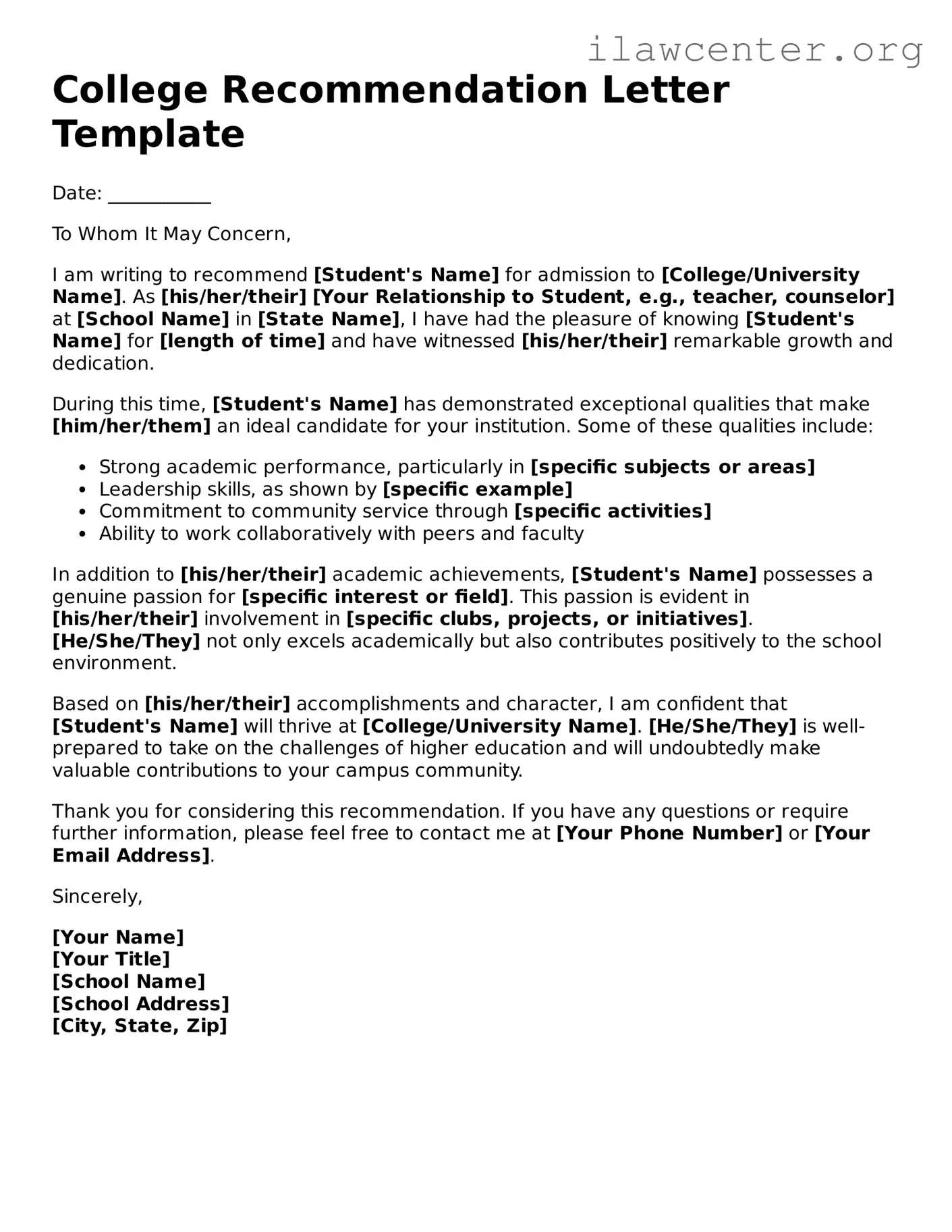
College Recommendation Letter Preview

College Recommendation Letter Template

Date: ___________

To Whom It May Concern,

I am writing to recommend [Student's Name] for admission to [College/University Name]. As [his/her/their] [Your Relationship to Student, e.g., teacher, counselor] at [School Name] in [State Name], I have had the pleasure of knowing [Student's Name] for [length of time] and have witnessed [his/her/their] remarkable growth and dedication.

During this time, [Student's Name] has demonstrated exceptional qualities that make [him/her/them] an ideal candidate for your institution. Some of these qualities include:

  • Strong academic performance, particularly in [specific subjects or areas]
  • Leadership skills, as shown by [specific example]
  • Commitment to community service through [specific activities]
  • Ability to work collaboratively with peers and faculty

In addition to [his/her/their] academic achievements, [Student's Name] possesses a genuine passion for [specific interest or field]. This passion is evident in [his/her/their] involvement in [specific clubs, projects, or initiatives]. [He/She/They] not only excels academically but also contributes positively to the school environment.

Based on [his/her/their] accomplishments and character, I am confident that [Student's Name] will thrive at [College/University Name]. [He/She/They] is well-prepared to take on the challenges of higher education and will undoubtedly make valuable contributions to your campus community.

Thank you for considering this recommendation. If you have any questions or require further information, please feel free to contact me at [Your Phone Number] or [Your Email Address].

Sincerely,

[Your Name]
[Your Title]
[School Name]
[School Address]
[City, State, Zip]

PDF Form Characteristics

Fact Name Description
Purpose of the Letter A college recommendation letter serves to provide insight into a student's character, achievements, and potential for success in higher education.
Common Components Typically, these letters include the recommender's relationship with the student, specific examples of the student's skills, and an overall endorsement of the student's application.
State-Specific Forms Some states may have specific guidelines or forms for recommendation letters, but generally, no formal state law governs the content of these letters.
Importance in Admissions Colleges often consider recommendation letters as a vital part of the admissions process, helping to differentiate applicants in a competitive landscape.

Instructions on Utilizing College Recommendation Letter

Filling out the College Recommendation Letter form is an important step in supporting a student's application. By providing thoughtful insights and specific examples, you can help highlight their strengths and potential. Follow the steps below to ensure the form is completed accurately and effectively.

  1. Start by reading the instructions carefully. Make sure you understand what information is required.
  2. Gather necessary information about the student, including their academic achievements, extracurricular activities, and personal qualities.
  3. Begin filling out the form with your contact information. This may include your name, position, and institution.
  4. Provide your relationship to the student. Be specific about how long you have known them and in what capacity.
  5. Describe the student's strengths and skills. Use specific examples to illustrate your points.
  6. Discuss the student’s character and work ethic. Highlight any instances that showcase their determination and integrity.
  7. Complete any additional sections of the form as required, such as ranking the student or providing a summary of your recommendation.
  8. Review your responses for clarity and completeness. Make sure all sections are filled out as needed.
  9. Sign and date the form, if required. This adds authenticity to your recommendation.
  10. Submit the form according to the provided instructions, ensuring it reaches the intended recipient on time.

Important Facts about College Recommendation Letter

What is a College Recommendation Letter?

A College Recommendation Letter is a document written by a teacher, counselor, or another individual who can provide insight into a student's character, academic performance, and potential for success in college. This letter supports the student's application by highlighting their strengths and achievements.

Who should write my recommendation letter?

Ideally, your recommendation letter should come from someone who knows you well and can speak positively about your abilities. Common choices include teachers from relevant subjects, school counselors, or mentors who have observed your growth and accomplishments.

How many recommendation letters do I need?

Most colleges require one to three recommendation letters as part of the application process. Check the specific requirements of each college to ensure you meet their guidelines.

What information should I provide to my recommender?

Provide your recommender with details about your academic achievements, extracurricular activities, and future goals. It can be helpful to share your resume or a personal statement to give them a clearer picture of your aspirations and character.

How much time should I give my recommender?

It is courteous to ask your recommender at least four to six weeks before the application deadline. This allows them ample time to write a thoughtful and detailed letter without feeling rushed.

Can I read my recommendation letter?

Typically, recommendation letters are confidential. You can ask your recommender if they would be comfortable sharing it with you. However, many colleges prefer that these letters remain private to ensure authenticity.

What if my recommender misses the deadline?

If your recommender misses the deadline, reach out to them promptly and politely remind them of the approaching due date. If necessary, consider having a backup recommender in mind to avoid any last-minute issues.

Can I submit a recommendation letter after the application deadline?

Most colleges will not accept recommendation letters submitted after the application deadline. It is crucial to ensure all materials are submitted on time to avoid jeopardizing your application.

What should I do if I have a negative relationship with a teacher?

If you have a negative relationship with a teacher, it is best to seek a recommendation from someone else who can provide a positive perspective on your abilities and character. Choose someone who can advocate for you effectively.

Common mistakes

Filling out a College Recommendation Letter form can be a daunting task. Many individuals make common mistakes that can impact the effectiveness of the recommendation. Awareness of these pitfalls can lead to a more compelling letter.

One frequent mistake is failing to provide specific examples of the candidate’s achievements. Generic praise does not stand out. Instead, concrete instances of the candidate’s skills or accomplishments offer a clearer picture of their capabilities. Specific anecdotes can illustrate the candidate's strengths more vividly.

Another error involves neglecting to tailor the letter to the specific college or program. Each institution has unique values and expectations. A one-size-fits-all approach can undermine the letter's impact. Researching the college’s mission and aligning the recommendation accordingly can enhance its relevance.

Some recommenders also make the mistake of using overly formal language. While professionalism is important, a conversational tone can make the letter more relatable. A personal touch can engage the admissions committee and convey authenticity.

Additionally, focusing too much on academic performance can be limiting. While grades and test scores are important, colleges seek well-rounded individuals. Including insights into the candidate’s character, leadership, and extracurricular involvement can provide a more holistic view.

Many individuals forget to proofread the letter. Spelling and grammatical errors can distract from the content. A polished letter reflects attention to detail and respect for the admissions process. Taking the time to review the document can prevent these oversights.

Another common mistake is not meeting deadlines. Late submissions can jeopardize a candidate's application. It is essential to keep track of deadlines and plan ahead to ensure timely delivery of the recommendation letter.

Some recommenders may also overlook the importance of a strong opening and closing. The first impression matters. A compelling introduction can grab attention, while a thoughtful conclusion can leave a lasting impact. Both elements should encapsulate the candidate's strengths effectively.

Moreover, failing to communicate with the candidate can lead to missed opportunities. Understanding the candidate’s goals and aspirations can help in crafting a more personalized recommendation. Open dialogue can enrich the content of the letter.

Lastly, not following the submission guidelines can result in complications. Each college may have specific requirements regarding format and content. Adhering to these guidelines ensures that the letter meets the expectations of the admissions committee.

Documents used along the form

When applying to college, several important documents often accompany the College Recommendation Letter. Each of these forms plays a crucial role in presenting a complete picture of the applicant. Below is a list of commonly used documents that enhance the college application process.

  • College Application Form: This is the primary document that students fill out to apply to a college. It includes personal information, academic history, extracurricular activities, and other relevant details.
  • Personal Statement or Essay: This essay allows applicants to express their individuality, experiences, and motivations for attending college. It provides insight into the applicant's personality and goals.
  • High School Transcript: This official record of a student's academic performance includes grades, courses taken, and overall GPA. Colleges use this to assess academic readiness.
  • Standardized Test Scores: Many colleges require scores from tests like the SAT or ACT. These scores help colleges evaluate a student's academic abilities in comparison to other applicants.
  • Resume: A resume outlines the applicant's achievements, work experience, volunteer activities, and skills. It provides a snapshot of the student’s involvement outside of academics.
  • Financial Aid Forms: Documents such as the FAFSA (Free Application for Federal Student Aid) are essential for students seeking financial assistance. They help colleges determine the financial needs of applicants.
  • Additional Recommendation Letters: Some colleges allow or encourage additional letters from teachers, coaches, or employers. These letters can provide further insights into the applicant's character and abilities.

Collectively, these documents create a comprehensive application package. Each form serves a specific purpose, helping admissions committees make informed decisions about prospective students.

Similar forms

  • Job Recommendation Letter: Similar to a college recommendation letter, this document provides insight into an individual's qualifications and character, often highlighting their skills and experiences relevant to a specific job role.
  • Character Reference Letter: This letter focuses on an individual's personal qualities and moral character. It serves to vouch for someone's integrity and reliability, much like a college recommendation letter emphasizes a student's character and potential.
  • Scholarship Recommendation Letter: This type of letter supports a student's application for financial aid by detailing their achievements and suitability for the scholarship, paralleling the college recommendation letter's purpose of endorsing a student's academic capabilities.
  • Graduate School Recommendation Letter: Similar in function to the college recommendation letter, this document is tailored for students applying to graduate programs, providing an assessment of their readiness for advanced study.
  • Internship Recommendation Letter: This letter focuses on a candidate's suitability for an internship, highlighting relevant skills and experiences, akin to how a college recommendation letter showcases a student's qualifications for college admission.
  • Professional Reference Letter: Often used in job applications, this letter provides a potential employer with an overview of a candidate's professional skills and work ethic, paralleling the college recommendation letter's role in presenting a student's academic and personal strengths.
  • Personal Statement: While not a letter, a personal statement serves a similar purpose by allowing individuals to express their motivations, goals, and qualifications in their own words, much like how a recommendation letter conveys these aspects through another's perspective.
  • Volunteer Reference Letter: This document supports an individual's application for volunteer opportunities, emphasizing their commitment and suitability, similar to how a college recommendation letter highlights a student's dedication and potential for success in higher education.

Dos and Don'ts

When filling out a College Recommendation Letter form, it’s important to approach the task thoughtfully. Here are some key dos and don’ts to keep in mind:

  • Do provide specific examples of the student's achievements and character.
  • Do highlight the student's strengths and potential for success in college.
  • Do keep your tone positive and supportive throughout the letter.
  • Don't include irrelevant information that doesn't pertain to the student's abilities or experiences.
  • Don't use generic phrases that could apply to any student; personalize your letter.

By following these guidelines, you can create a compelling recommendation that truly reflects the student's capabilities and aspirations.

Misconceptions

Many students and parents have misunderstandings about the College Recommendation Letter form. Here are ten common misconceptions, along with clarifications to help you navigate the process more easily.

  1. All colleges require recommendation letters.

    Not every college asks for recommendation letters. Some schools may have a more streamlined application process that does not include them.

  2. Teachers must write the letters.

    While teachers are common recommenders, other individuals like counselors or community leaders can also provide valuable insights.

  3. Recommendation letters do not impact admissions decisions.

    These letters can significantly influence admissions committees by providing context about a student’s character and achievements.

  4. All recommendation letters are the same.

    Each letter should be personalized to reflect the student’s unique qualities and experiences, making them distinct.

  5. Students should not ask for specific content.

    It is perfectly acceptable for students to discuss their strengths and experiences with recommenders to guide the content of the letter.

  6. There is a standard format for recommendation letters.

    While some guidelines exist, recommenders have the freedom to express their thoughts in their own style.

  7. Only academic performance matters.

    Recommendation letters often highlight personal qualities, leadership skills, and extracurricular involvement, not just grades.

  8. Students should only ask teachers they are close to.

    It’s important to choose recommenders who know you well academically and personally, even if you aren’t close friends.

  9. Recommenders should submit letters without input from the student.

    Students can provide their recommenders with a resume or a list of achievements to help frame the letter.

  10. Once submitted, letters cannot be changed.

    While it is best to finalize letters before submission, recommenders can update or revise their letters if necessary.

Understanding these misconceptions can help students and their families approach the recommendation letter process with confidence. Clear communication with recommenders is key to obtaining strong letters that truly reflect the student’s abilities and character.

Key takeaways

When it comes to filling out and using the College Recommendation Letter form, there are several important points to keep in mind. Here are key takeaways that can help streamline the process and ensure a positive experience:

  1. Choose the Right Recommender: Select someone who knows you well and can speak to your strengths and accomplishments.
  2. Provide Relevant Information: Share your resume, personal statement, and details about the college or program you are applying to.
  3. Be Mindful of Deadlines: Ensure your recommender is aware of submission deadlines to avoid last-minute issues.
  4. Request Early: Ask for your recommendation well in advance, ideally several weeks before the deadline.
  5. Follow Up Politely: A gentle reminder a week or two before the deadline can help keep things on track.
  6. Thank Your Recommender: Show appreciation for their time and effort, whether through a thank-you note or a small gesture.
  7. Check Submission Guidelines: Understand how the recommendation should be submitted—online, by mail, or in person.
  8. Review the Form: Ensure that all sections of the recommendation letter form are filled out completely and accurately.
  9. Be Open to Feedback: If your recommender suggests changes or additional information, be receptive to their insights.

By following these guidelines, you can help ensure that your recommendation letters enhance your college application and reflect your best qualities.