Fillable Commercial Lease Agreement Document

Fillable Commercial Lease Agreement Document

A Commercial Lease Agreement is a legally binding contract between a landlord and a business tenant, outlining the terms and conditions for renting commercial property. This document serves as a crucial framework for both parties, detailing aspects such as rent, duration, and responsibilities. To ensure a smooth leasing process, consider filling out the form by clicking the button below.

Article Guide

A Commercial Lease Agreement is a crucial document that outlines the terms and conditions under which a tenant can occupy a commercial property. It serves as a binding contract between the landlord and the tenant, detailing essential aspects such as the duration of the lease, rental payment amounts, and any additional fees or expenses associated with the property. The agreement typically specifies the permitted uses of the space, maintenance responsibilities, and conditions for renewal or termination. Furthermore, it may include clauses addressing alterations to the property, insurance requirements, and dispute resolution procedures. Understanding these components is vital for both parties to ensure a clear and mutually beneficial arrangement.

Commercial Lease Agreement Preview

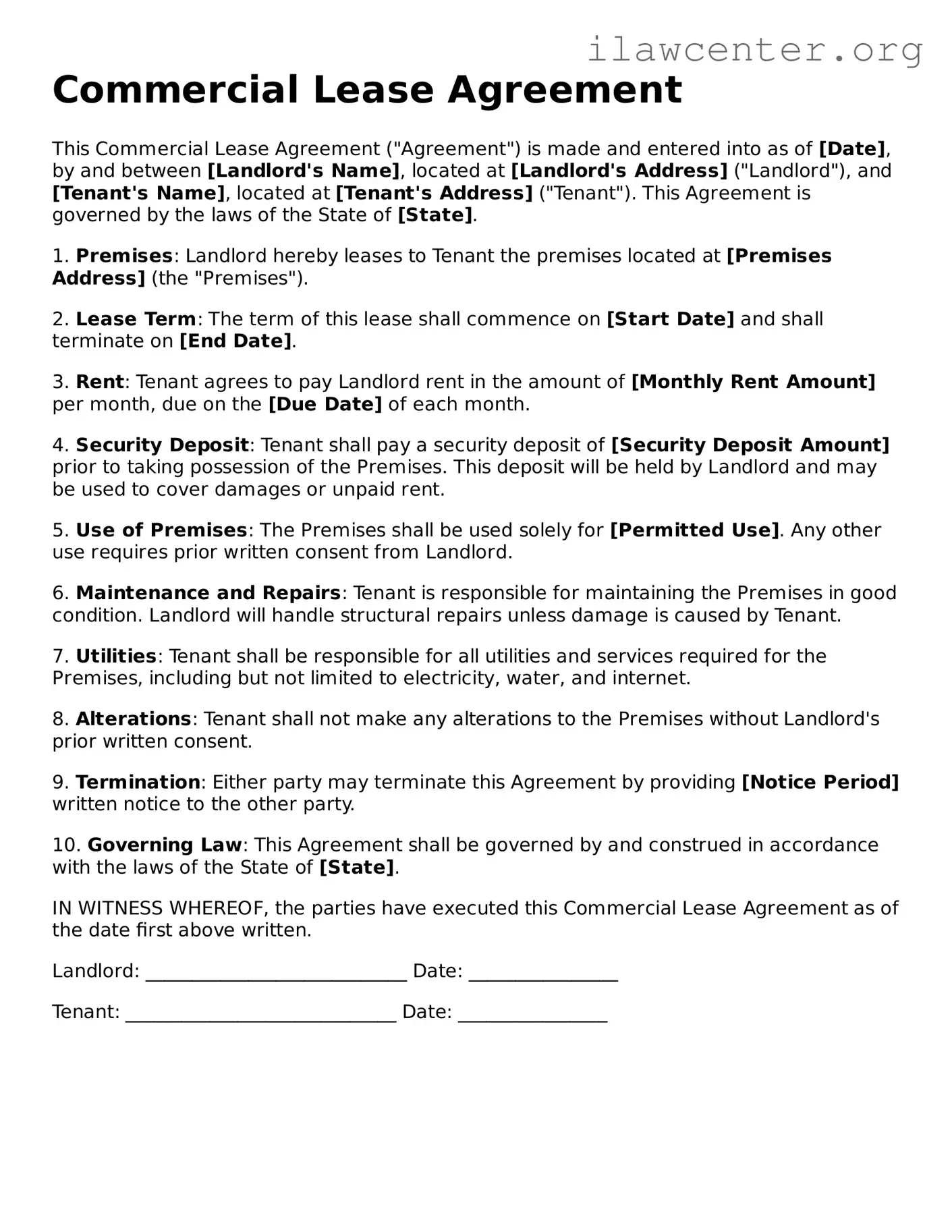
Commercial Lease Agreement

This Commercial Lease Agreement ("Agreement") is made and entered into as of [Date], by and between [Landlord's Name], located at [Landlord's Address] ("Landlord"), and [Tenant's Name], located at [Tenant's Address] ("Tenant"). This Agreement is governed by the laws of the State of [State].

1. Premises: Landlord hereby leases to Tenant the premises located at [Premises Address] (the "Premises").

2. Lease Term: The term of this lease shall commence on [Start Date] and shall terminate on [End Date].

3. Rent: Tenant agrees to pay Landlord rent in the amount of [Monthly Rent Amount] per month, due on the [Due Date] of each month.

4. Security Deposit: Tenant shall pay a security deposit of [Security Deposit Amount] prior to taking possession of the Premises. This deposit will be held by Landlord and may be used to cover damages or unpaid rent.

5. Use of Premises: The Premises shall be used solely for [Permitted Use]. Any other use requires prior written consent from Landlord.

6. Maintenance and Repairs: Tenant is responsible for maintaining the Premises in good condition. Landlord will handle structural repairs unless damage is caused by Tenant.

7. Utilities: Tenant shall be responsible for all utilities and services required for the Premises, including but not limited to electricity, water, and internet.

8. Alterations: Tenant shall not make any alterations to the Premises without Landlord's prior written consent.

9. Termination: Either party may terminate this Agreement by providing [Notice Period] written notice to the other party.

10. Governing Law: This Agreement shall be governed by and construed in accordance with the laws of the State of [State].

IN WITNESS WHEREOF, the parties have executed this Commercial Lease Agreement as of the date first above written.

Landlord: ____________________________ Date: ________________

Tenant: _____________________________ Date: ________________

PDF Form Characteristics

Fact Name Description
Purpose A Commercial Lease Agreement outlines the terms under which a tenant can rent commercial property from a landlord.
Parties Involved The agreement involves two main parties: the landlord (property owner) and the tenant (business renting the space).
Lease Duration The lease specifies the length of time the tenant will occupy the property, which can range from months to years.
Rent Amount The agreement details the rent amount, payment schedule, and any additional fees the tenant may incur.
Governing Law Each state has its own laws governing commercial leases. For example, California law applies to leases executed in California.
Maintenance Responsibilities The agreement clarifies who is responsible for maintenance and repairs of the property, whether it's the landlord or tenant.
Termination Clause The lease includes conditions under which either party can terminate the agreement, ensuring clarity on exit strategies.

Instructions on Utilizing Commercial Lease Agreement

Filling out a Commercial Lease Agreement form requires careful attention to detail. It is important to provide accurate information to ensure clarity and avoid misunderstandings. The following steps will guide you through the process.

  1. Read the form thoroughly. Understand each section and what information is required.
  2. Fill in the date. Write the date on which the lease agreement is being signed.
  3. Enter the landlord's information. Provide the full name and contact details of the landlord or property owner.
  4. Provide tenant information. Include the full name and contact details of the tenant or business leasing the property.
  5. Describe the property. Clearly state the address and any specific details about the commercial space being leased.
  6. Specify the lease term. Indicate the start and end dates of the lease agreement.
  7. Outline the rent amount. State the monthly rent and any additional fees or deposits required.
  8. Detail the payment terms. Include information on when rent is due and acceptable payment methods.
  9. Include maintenance responsibilities. Clarify who is responsible for maintenance and repairs of the property.
  10. Sign and date the form. Both the landlord and tenant should sign and date the agreement to make it official.

Important Facts about Commercial Lease Agreement

What is a Commercial Lease Agreement?

A Commercial Lease Agreement is a legally binding contract between a landlord and a business tenant. It outlines the terms under which the tenant can occupy and use a commercial property. This agreement typically includes details such as the duration of the lease, the amount of rent, payment terms, and the responsibilities of both parties regarding maintenance and repairs. It's essential for both landlords and tenants to understand their rights and obligations as specified in the agreement.

What should be included in a Commercial Lease Agreement?

Key components of a Commercial Lease Agreement typically include the following: the names of the landlord and tenant, a detailed description of the leased property, the lease term (start and end dates), the rental amount and payment schedule, security deposit requirements, and provisions for maintenance and repairs. Additionally, clauses addressing renewal options, termination rights, and permitted uses of the property are crucial. Each of these elements helps ensure clarity and protects both parties' interests.

How long does a Commercial Lease Agreement usually last?

The duration of a Commercial Lease Agreement can vary widely, depending on the needs of the business and the landlord's preferences. Common lease terms range from one to five years, but longer leases are not uncommon, especially for established businesses. Some agreements may even include options for renewal, allowing tenants to extend their stay under agreed-upon conditions. It's important for tenants to consider their business plans and growth potential when negotiating the lease term.

Can a Commercial Lease Agreement be modified?

Yes, a Commercial Lease Agreement can be modified, but changes must be agreed upon by both the landlord and the tenant. Any amendments should be documented in writing and signed by both parties to ensure clarity and enforceability. Common reasons for modifications include changes in rental rates, adjustments to the lease term, or updates to maintenance responsibilities. Open communication between both parties is key to successfully navigating any necessary changes.

What happens if a tenant breaches the Commercial Lease Agreement?

If a tenant breaches the Commercial Lease Agreement, the landlord may have several options depending on the severity of the breach. Common breaches include failure to pay rent, unauthorized alterations to the property, or violating terms of use. Depending on the agreement, the landlord may issue a notice to the tenant, allowing them time to rectify the situation. If the issue is not resolved, the landlord may pursue eviction or seek damages through legal channels. It’s crucial for tenants to understand their obligations to avoid potential disputes.
Common mistakes

When filling out a Commercial Lease Agreement form, many individuals make common mistakes that can lead to complications later on. One frequent error is failing to read the entire document thoroughly. This can result in misunderstandings about the terms of the lease, such as the length of the lease or the responsibilities for maintenance. Taking the time to read each section carefully helps ensure that all parties are on the same page.

Another mistake is not providing complete and accurate information. Landlords and tenants must include specific details like names, addresses, and the exact description of the property. Omitting any of this information can create confusion and may even affect the validity of the lease. Double-checking all entries before submission can prevent these issues.

People often overlook the importance of understanding the financial obligations outlined in the lease. This includes not only the rent amount but also other costs such as utilities, property taxes, and maintenance fees. Misunderstanding these financial responsibilities can lead to unexpected expenses, so it is essential to clarify these points before signing.

Lastly, failing to negotiate terms can be a significant oversight. Many tenants assume that the lease terms are set in stone. However, there is often room for negotiation on aspects like rent, lease duration, and renewal options. Engaging in discussions can lead to a more favorable agreement for both parties. Being proactive in this area can ultimately create a better leasing experience.

Documents used along the form

A Commercial Lease Agreement is a crucial document for businesses renting commercial space. However, several other forms and documents often accompany it to ensure clarity and compliance throughout the leasing process. Below is a list of common documents that may be used alongside a Commercial Lease Agreement.

  • Letter of Intent (LOI): This document outlines the preliminary agreement between the landlord and tenant, detailing the basic terms of the lease before formal negotiations begin.
  • Personal Guarantee: A personal guarantee is a document where an individual agrees to be personally responsible for the lease obligations if the business fails to meet them.
  • Security Deposit Receipt: This receipt serves as proof of the security deposit paid by the tenant, which protects the landlord against potential damages or unpaid rent.
  • Tenant Application: A tenant application collects essential information about the prospective tenant, including their financial background and business history, helping landlords assess risk.
  • Disclosure Statements: These statements inform tenants about any known issues with the property, such as environmental hazards or zoning restrictions, ensuring transparency.
  • Sublease Agreement: If a tenant wishes to lease the space to another party, a sublease agreement outlines the terms under which the subtenant will occupy the property.
  • Addendum: An addendum is an additional document that modifies or adds terms to the original lease agreement, clarifying specific conditions or agreements made after the initial signing.
  • Move-In/Move-Out Checklist: This checklist helps document the condition of the property at the beginning and end of the lease term, protecting both parties from disputes regarding damages.

Understanding these documents can help both landlords and tenants navigate the leasing process more effectively. Each document serves a specific purpose, contributing to a clear and organized leasing experience.

Similar forms

The Commercial Lease Agreement is a vital document for landlords and tenants in the business world. However, it shares similarities with several other important documents. Here’s a look at six documents that are akin to a Commercial Lease Agreement and how they relate:

  • Residential Lease Agreement: Like a commercial lease, this document outlines the terms and conditions between a landlord and a tenant, but it specifically pertains to residential properties. Both agreements detail rental terms, payment schedules, and responsibilities of each party.
  • Sublease Agreement: This document allows a tenant to lease out their rented space to another party. Similar to a commercial lease, it includes terms of occupancy and financial obligations, ensuring that all parties understand their rights and responsibilities.
  • Real Estate Purchase Agreement: While this document is focused on the sale of property rather than leasing, it still outlines terms such as price, contingencies, and responsibilities of the buyer and seller. Both agreements aim to protect the interests of the involved parties.
  • Property Management Agreement: This document establishes the relationship between a property owner and a management company. It outlines duties, fees, and expectations, much like a commercial lease defines the responsibilities of landlords and tenants.
  • Service Agreement: Often used in business settings, this document details the terms under which services will be provided. Similar to a commercial lease, it defines the scope of work, payment terms, and duration, ensuring clarity in the business relationship.
  • Confidentiality Agreement: While primarily focused on protecting sensitive information, this document can be related to commercial leases when confidentiality regarding business operations is necessary. Both agreements aim to safeguard the interests of the parties involved.

Understanding these documents can help navigate the complexities of business relationships and ensure that all parties are on the same page.

Dos and Don'ts

When it comes to filling out a Commercial Lease Agreement form, attention to detail is crucial. Here are six essential tips to guide you through the process:

  • Do read the entire agreement carefully before signing. Understanding all terms is key.
  • Don't rush through the form. Take your time to ensure accuracy and completeness.
  • Do include all necessary information, such as your business name, contact details, and property address.
  • Don't leave any blank spaces. If a section doesn’t apply, write “N/A” to avoid confusion.
  • Do consult with a legal professional if you have any questions or concerns about the terms.
  • Don't forget to keep a copy of the signed agreement for your records. It's important to have it on hand.

By following these guidelines, you can navigate the Commercial Lease Agreement process with confidence. Remember, a well-completed form can pave the way for a successful leasing experience.

Misconceptions

Understanding a Commercial Lease Agreement is crucial for both landlords and tenants. However, several misconceptions can lead to confusion. Here are four common misconceptions explained:

  • All lease agreements are the same. Many people believe that all commercial lease agreements are identical. In reality, each lease can vary significantly based on the specific needs of the landlord and tenant. Custom terms can be negotiated to fit unique situations.
  • Only the rent amount matters. Some individuals think that the only important aspect of a commercial lease is the rent. While the rent is a significant factor, other terms such as maintenance responsibilities, duration of the lease, and options for renewal are equally important. These elements can greatly affect the overall success of the lease.
  • Once signed, a lease cannot be changed. There is a belief that once a commercial lease is signed, it is set in stone. However, leases can often be modified if both parties agree. It is essential to communicate openly and document any changes properly.
  • Legal advice is unnecessary. Some tenants and landlords think they can navigate a commercial lease without professional help. Seeking legal advice can provide valuable insights and help avoid potential pitfalls. It is wise to consult with a professional to ensure all terms are clear and fair.

Addressing these misconceptions can lead to better understanding and more successful leasing experiences for everyone involved.

Key takeaways

When filling out and using a Commercial Lease Agreement form, several key points can help ensure a smooth process. Understanding these takeaways can protect your interests and clarify expectations between landlords and tenants.

  • Understand the Basics: Familiarize yourself with the essential components of a Commercial Lease Agreement. This includes the property description, lease term, rent amount, and payment schedule.
  • Specify Use of the Property: Clearly outline how the property can be used. This avoids disputes later on regarding permitted activities or business operations.
  • Negotiate Terms: Don’t hesitate to negotiate terms that suit both parties. This may include rent increases, maintenance responsibilities, and renewal options.
  • Review Maintenance Responsibilities: Determine who is responsible for repairs and maintenance. This can significantly impact your costs and responsibilities during the lease term.
  • Include an Exit Strategy: Plan for the end of the lease. Include terms for renewal, termination, and any penalties for early exit.
  • Seek Legal Advice: Consult with a legal professional before signing. They can help clarify complex terms and ensure your rights are protected.
  • Keep a Copy: After signing the agreement, keep a signed copy for your records. This document will be crucial in case of any disputes or misunderstandings.