Fillable Consent Document

Fillable Consent Document

A consent form is a document that individuals sign to indicate their agreement to participate in a specific activity, often related to medical procedures, research, or other personal matters. It ensures that participants understand what they are agreeing to and acknowledges their rights. To learn more and fill out the form, click the button below.

Article Guide

The Consent form is an essential document that serves to protect the rights and interests of individuals in various situations, such as medical procedures, research participation, or legal agreements. By signing this form, individuals acknowledge that they understand the purpose and potential risks involved, and they agree to proceed with the specified actions. It typically outlines the information being shared, the parties involved, and any potential consequences of participation. Furthermore, the form often includes sections for individuals to ask questions and receive clarifications, ensuring that they are fully informed before making a decision. This process fosters transparency and trust between the involved parties, as it emphasizes the importance of voluntary participation and informed consent. In many cases, the Consent form also provides an opportunity for individuals to withdraw their consent at any time, reinforcing their autonomy and control over their personal choices.

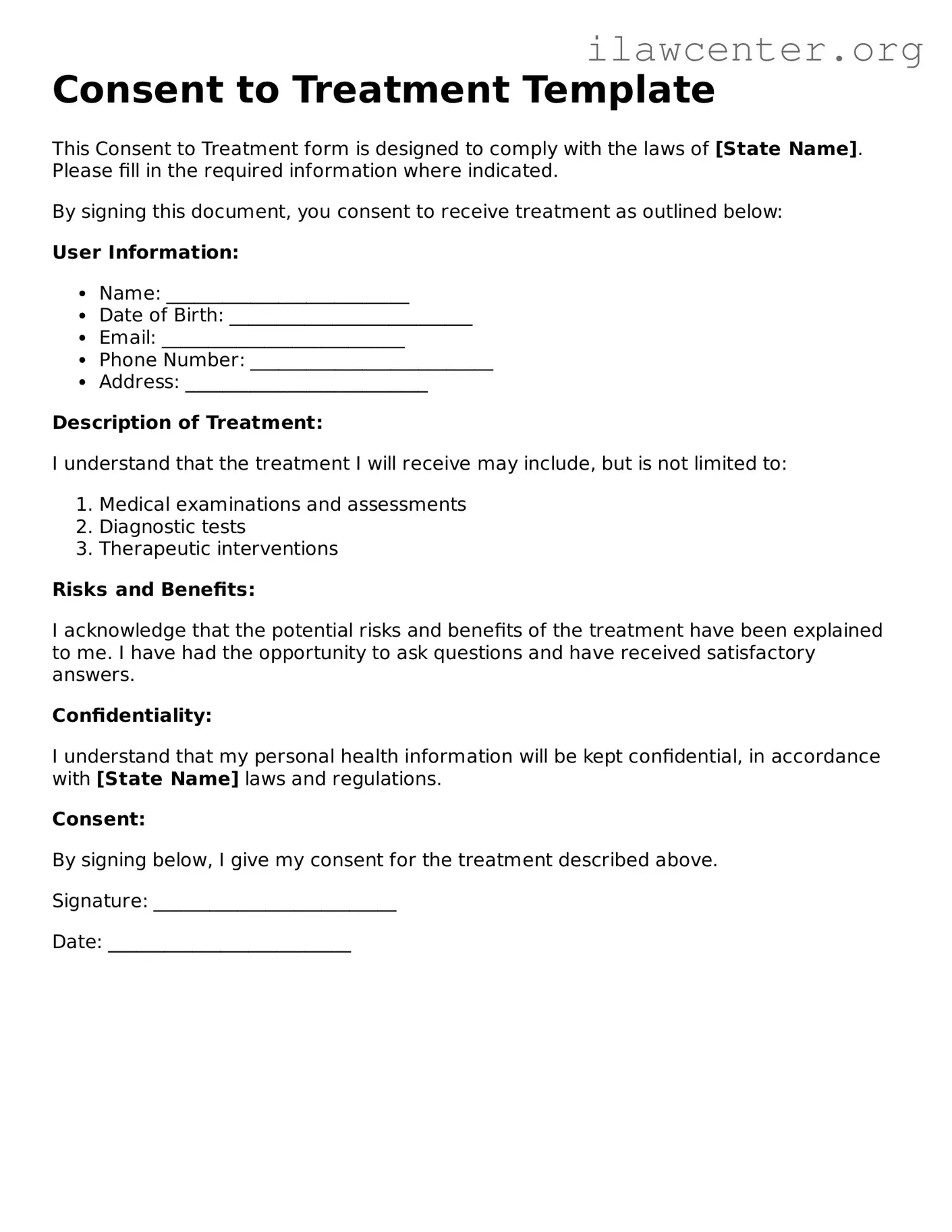
Consent to Treatment Template

This Consent to Treatment form is designed to comply with the laws of [State Name]. Please fill in the required information where indicated.

By signing this document, you consent to receive treatment as outlined below:

User Information:

  • Name: __________________________
  • Date of Birth: __________________________
  • Email: __________________________
  • Phone Number: __________________________
  • Address: __________________________

Description of Treatment:

I understand that the treatment I will receive may include, but is not limited to:

  1. Medical examinations and assessments
  2. Diagnostic tests
  3. Therapeutic interventions

Risks and Benefits:

I acknowledge that the potential risks and benefits of the treatment have been explained to me. I have had the opportunity to ask questions and have received satisfactory answers.

Confidentiality:

I understand that my personal health information will be kept confidential, in accordance with [State Name] laws and regulations.

Consent:

By signing below, I give my consent for the treatment described above.

Signature: __________________________

Date: __________________________

PDF Form Characteristics

Fact Name Description Governing Law
Purpose A consent form is used to obtain permission from an individual before proceeding with an action that affects them. Varies by state
Requirements The form must clearly outline what the individual is consenting to and any potential risks involved. State-specific regulations
Signatures Both parties must sign the form for it to be legally binding. Applicable state laws
Revocation Individuals have the right to revoke their consent at any time, depending on state law. State-specific provisions

Filling out the Consent form is straightforward. Once completed, you will be ready to move forward with the next steps in your process. Ensure all information is accurate to avoid any delays.

  1. Begin by reading the entire form carefully.
  2. Fill in your full name in the designated space.
  3. Provide your current address, including city, state, and zip code.
  4. Enter your date of birth in the specified format.
  5. Sign the form in the designated area to indicate your consent.
  6. Date your signature in the space provided.
  7. Review the completed form for any errors or missing information.
  8. Submit the form as instructed, either electronically or by mail.

What is a consent form?

A consent form is a document that allows individuals to give permission for specific actions or processes to take place. This can include medical procedures, participation in research studies, or sharing personal information. It ensures that individuals understand what they are agreeing to and that their rights are protected.

Why do I need to sign a consent form?

Signing a consent form is essential because it demonstrates that you have been informed about the relevant details and potential risks associated with the action or procedure. It protects both you and the organization or individual seeking your consent. Without your signature, they cannot proceed legally or ethically.

What information is typically included in a consent form?

A consent form generally includes information about the purpose of the action, the procedures involved, potential risks and benefits, and your rights. It may also outline how your information will be used and shared, as well as any alternatives to the proposed action.

Can I withdraw my consent after signing the form?

Yes, you have the right to withdraw your consent at any time. If you decide to do so, it is important to communicate your decision clearly to the relevant party. They should provide you with information on how to withdraw your consent and what that means for your situation.

What happens if I do not sign the consent form?

If you choose not to sign the consent form, the action or procedure cannot proceed. This is because your consent is necessary to ensure that your rights are respected and that you have a choice in what happens to you. You should discuss any concerns you have with the person or organization requesting your consent.

Is my information protected after I sign the consent form?

Yes, your information should be protected according to privacy laws and regulations. The organization or individual that collects your consent is responsible for safeguarding your personal information. They should inform you about how they will protect your data and what measures are in place to ensure confidentiality.
Common mistakes

Filling out a consent form is an important step in various processes, yet many individuals make common mistakes that can lead to complications. One frequent error is failing to read the entire form carefully before signing. Skimming through the document may result in misunderstandings about what is being consented to. It is essential to take the time to understand all the terms and conditions outlined in the form.

Another mistake often made is neglecting to provide accurate personal information. This includes not only names but also addresses, phone numbers, and other identifying details. Inaccurate information can lead to delays or issues in processing the consent, which can be frustrating for everyone involved. Always double-check to ensure that all personal details are correct.

Some individuals forget to ask questions if they do not understand certain sections of the form. It is perfectly acceptable to seek clarification from the administering party. Ignoring confusing language or complex terms can lead to unintended consequences. Asking questions can provide peace of mind and ensure that the consent is informed.

Additionally, people sometimes overlook the importance of signing and dating the form properly. A signature without a date can render the consent invalid. It is crucial to ensure that all required fields are completed, including the date, to avoid any potential issues down the line.

Finally, individuals may not keep a copy of the signed consent form for their records. Retaining a copy is important for future reference, especially if questions arise later regarding the consent. By keeping a personal record, individuals can ensure they have access to the details of what they agreed to, which can be invaluable in various situations.

Documents used along the form

In many situations where consent is required, various forms and documents complement the Consent form. These documents help clarify the terms of agreement, outline responsibilities, and ensure that all parties are informed. Below is a list of commonly used forms that often accompany a Consent form.

  • Information Sheet: This document provides detailed information about the procedure, study, or service for which consent is being sought. It ensures that individuals have a clear understanding of what to expect.
  • Waiver of Liability: This form outlines the risks involved in an activity and releases the organization or individual from legal responsibility in case of injury or damages, provided the participant agrees to the terms.
  • Confidentiality Agreement: This document ensures that any sensitive information shared during the process remains private. It is essential in settings where personal data is collected or discussed.
  • Release Form: Often used to grant permission for the use of images, videos, or testimonials, this form protects the rights of both the individual and the organization regarding the use of personal content.
  • Health Questionnaire: This form collects relevant health information from participants, which may be necessary to assess eligibility or to ensure safety during the procedure or study.
  • Follow-Up Agreement: This document outlines any post-consent obligations, such as follow-up appointments or additional information that may be required from the participant.

Understanding these forms can help individuals navigate the consent process more effectively. Each document serves a specific purpose and contributes to a transparent and informed agreement between parties.

Similar forms

The Consent form is a crucial document in various legal and medical contexts. Here are ten documents that share similarities with a Consent form, along with an explanation of how they relate:

  • Release of Liability: This document allows individuals to waive their right to sue for any injuries or damages that may occur during an activity. Like a Consent form, it requires the individual to acknowledge the risks involved.
  • Waiver: A Waiver is similar in that it involves relinquishing a right or claim. Both documents are designed to protect an organization from legal claims by ensuring that the individual understands and accepts the associated risks.
  • Informed Consent: Often used in medical settings, Informed Consent ensures that patients understand the risks and benefits of a treatment. This is akin to a Consent form in that both require clear communication and understanding between parties.
  • Authorization Form: This document grants permission for a specific action, such as releasing medical records. Like a Consent form, it signifies that the individual is aware of what they are permitting.
  • Agreement to Terms: Common in online services, this document outlines the terms and conditions of use. Both require individuals to agree to specific terms, indicating their understanding and acceptance.
  • Medical Release Form: This allows healthcare providers to share a patient’s medical information with third parties. Similar to a Consent form, it involves obtaining permission from the individual for a specific purpose.
  • Participation Agreement: This document outlines the expectations and responsibilities of participants in a program or activity. Like a Consent form, it emphasizes understanding the conditions of participation.
  • Confidentiality Agreement: Often used in business settings, this document ensures that sensitive information remains private. It shares similarities with a Consent form by requiring parties to acknowledge their responsibilities regarding information sharing.
  • Power of Attorney: This legal document allows one person to act on behalf of another. Both require informed consent, ensuring that the individual understands the authority being granted.
  • Employment Agreement: This outlines the terms of employment, including duties and responsibilities. Like a Consent form, it requires both parties to agree to the terms, ensuring mutual understanding.

Dos and Don'ts

When filling out a consent form, it’s essential to approach the process with care. Here’s a list of six important dos and don’ts to help ensure that everything goes smoothly.

  • Do read the entire consent form carefully before signing it.
  • Do ask questions if you don’t understand any part of the form.
  • Do ensure that all your personal information is accurate and up to date.
  • Don’t rush through the form; take your time to understand what you are consenting to.
  • Don’t sign the form if you feel pressured or unsure about the consent.
  • Don’t leave any required fields blank; complete all sections as instructed.

By following these guidelines, you can ensure that you are making informed decisions and that your consent is valid and meaningful.

Misconceptions

When it comes to consent forms, many people have misunderstandings. Here are four common misconceptions that can lead to confusion.

  1. All consent forms are the same. This is not true. Consent forms vary widely depending on the situation. A medical consent form looks different from a consent form for photography or research. Each form serves a specific purpose and must meet particular legal requirements.

  2. Signing a consent form means you waive all your rights. Many believe that signing a consent form means they give up all their rights. In reality, consent forms typically outline what you agree to and what your rights remain. Always read the fine print to understand what you are consenting to.

  3. Consent can be implied. While there are situations where consent can be implied, many require explicit consent. For example, in medical settings, clear verbal or written consent is often necessary. Relying on implied consent can lead to misunderstandings and legal issues.

  4. Once consent is given, it cannot be revoked. This is a common myth. In many cases, individuals have the right to withdraw their consent at any time. It's important to know that consent is an ongoing process, not a one-time event.

Understanding these misconceptions can help you navigate consent forms more effectively. Always take the time to read and ask questions if something is unclear.

Key takeaways

When filling out and using a consent form, it is important to keep several key points in mind. These takeaways can help ensure that the process goes smoothly and that all parties involved understand their rights and responsibilities.

  • Always read the consent form thoroughly before signing. Understanding what you are consenting to is crucial.
  • Ensure that all information provided on the form is accurate and complete. Inaccuracies can lead to complications later.
  • Consent should be given voluntarily. If you feel pressured to sign, take a step back and reassess your decision.
  • Keep a copy of the signed consent form for your records. This can be important for future reference.
  • Ask questions if anything is unclear. It is your right to fully understand the implications of your consent.