Construction proposal form PDF Template

Construction proposal form PDF Template

The Construction Proposal Form is a crucial document that outlines the details of a construction project, including scope, timeline, and cost estimates. This form serves as a formal proposal from contractors to clients, ensuring transparency and clarity in the bidding process. To get started on your project, please fill out the form by clicking the button below.

Article Guide

The Construction Proposal Form serves as a critical document in the construction industry, streamlining the process of project bidding and contract negotiation. This form typically includes essential details such as the project scope, estimated costs, timelines, and specific terms and conditions that govern the agreement between contractors and clients. By outlining the responsibilities of each party, it fosters clarity and sets expectations from the outset. Additionally, the form often requires the inclusion of necessary permits, insurance information, and compliance with local regulations, ensuring that all legal and safety standards are met. A well-structured proposal not only enhances the chances of securing a contract but also lays the groundwork for a successful project execution. Understanding the nuances of this form is vital for both contractors seeking to present competitive bids and clients aiming to make informed decisions.

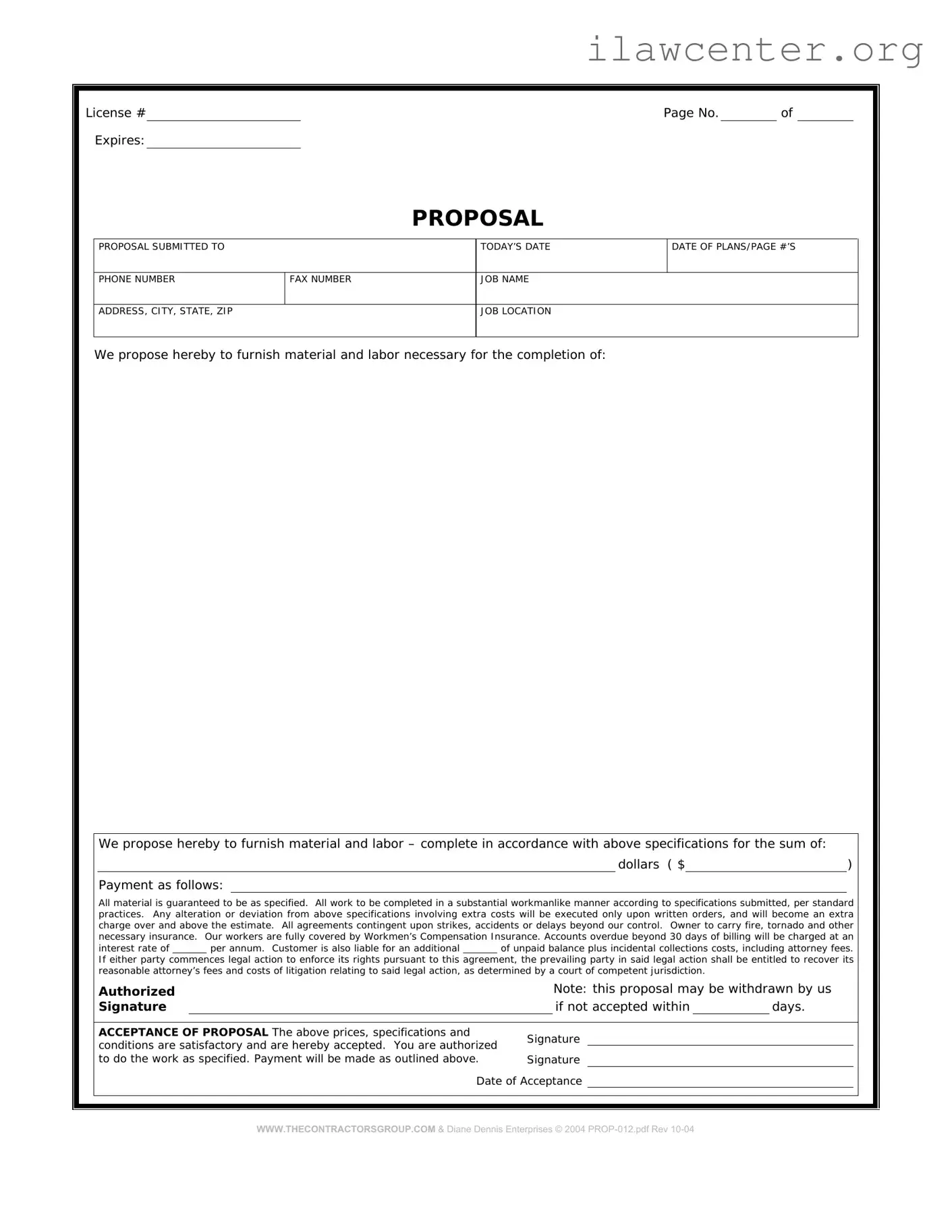
Construction proposal form Preview

License #


Page No.


of

Expires:


PROPOSAL

PROPOSAL SUBMITTED TO

TODAY’S DATE

DATE OF PLANS/PAGE #’S

PHONE NUMBER

FAX NUMBER

JOB NAME

ADDRESS, CITY, STATE, ZIP

JOB LOCATION

We propose hereby to furnish material and labor necessary for the completion of:

We propose hereby to furnish material and labor – complete in accordance with above specifications for the sum of:


dollars ( $


)

Payment as follows:


All material is guaranteed to be as specified. All work to be completed in a substantial workmanlike manner according to specifications submitted, per standard practices. Any alteration or deviation from above specifications involving extra costs will be executed only upon written orders, and will become an extra charge over and above the estimate. All agreements contingent upon strikes, accidents or delays beyond our control. Owner to carry fire, tornado and other necessary insurance. Our workers are fully covered by Workmen’s Compensation Insurance. Accounts overdue beyond 30 days of billing will be charged at an

interest rate of per annum. Customer is also liable for an additional of unpaid balance plus incidental collections costs, including attorney fees. If either party commences legal action to enforce its rights pursuant to this agreement, the prevailing party in said legal action shall be entitled to recover its reasonable attorney’s fees and costs of litigation relating to said legal action, as determined by a court of competent jurisdiction.

Authorized


Note: this proposal may be withdrawn by us

Signature


if not accepted within


days.


ACCEPTANCE OF PROPOSAL The above prices, specifications and

Signature


conditions are satisfactory and are hereby accepted. You are authorized


to do the work as specified. Payment will be made as outlined above.

Signature


Date of Acceptance

WWW.THECONTRACTORSGROUP.COM & Diane Dennis Enterprises © 2004 PROP-012.pdf Rev 10-04

File Properties

Fact Name Description
Purpose The construction proposal form is used to outline project details and bid amounts for construction projects.
Components Typical components include project scope, timelines, materials, labor costs, and payment terms.
Submission Process Contractors must complete and submit the form to the project owner or developer for consideration.
State-Specific Forms Each state may have its own version of the form, which complies with local regulations and standards.
Governing Laws For example, California's construction proposals are governed by the California Civil Code.
Evaluation Criteria Proposals are often evaluated based on cost, experience, and project approach.
Legal Binding Once accepted, the proposal can form a binding contract between the contractor and the project owner.

Instructions on Utilizing Construction proposal form

Filling out a construction proposal form is a crucial step in the process of securing a project. By providing clear and accurate information, you set the stage for effective communication and project execution. Follow these steps to ensure that your proposal is completed correctly and efficiently.

  1. Gather necessary information: Before you start, collect all relevant details about the project, including the scope of work, timelines, and budget estimates.
  2. Start with your contact information: Fill in your name, company name, address, phone number, and email at the top of the form.
  3. Provide client details: Enter the client’s name, address, and contact information in the designated section.
  4. Describe the project: Clearly outline the project scope, including specific tasks and services you will provide.
  5. Include project timelines: Specify the start and completion dates for the project, ensuring they align with client expectations.
  6. Detail your pricing: Provide a breakdown of costs, including labor, materials, and any additional expenses.
  7. Review terms and conditions: Include any relevant terms, such as payment schedules, warranties, and liability clauses.
  8. Sign and date the form: Ensure that you sign and date the proposal to confirm your commitment to the project.
  9. Submit the proposal: Send the completed form to the client, either electronically or in hard copy, as per their preference.

Important Facts about Construction proposal form

What is a Construction Proposal Form?

A Construction Proposal Form is a document used to outline the details of a construction project. It includes information such as project scope, estimated costs, timelines, and terms of service. This form helps both the contractor and the client understand the expectations and requirements of the project.

Why do I need to fill out a Construction Proposal Form?

Filling out a Construction Proposal Form is essential for establishing clear communication between you and your contractor. It helps ensure that all parties are on the same page regarding the project details, which can prevent misunderstandings and disputes later on.

What information is typically required on the form?

The form usually requires information such as the project address, a description of the work to be performed, materials needed, estimated costs, and a proposed timeline. You may also need to include your contact information and any relevant permits or licenses.

How do I submit the Construction Proposal Form?

You can submit the Construction Proposal Form either electronically or in paper format, depending on the contractor's preferences. Ensure that you follow any specific submission guidelines provided by the contractor or the construction company.

Is there a deadline for submitting the form?

Deadlines for submitting the Construction Proposal Form can vary based on the contractor and the nature of the project. It is best to ask the contractor for their timeline to ensure that your proposal is considered in a timely manner.

What happens after I submit the form?

After submission, the contractor will review your proposal. They may contact you for clarification or additional information. Once everything is in order, the contractor will provide you with a formal agreement based on the proposal you submitted.

Can I modify my proposal after submission?

Yes, you can modify your proposal after submission. However, it is important to communicate any changes to the contractor as soon as possible. This ensures that both parties remain informed and can adjust their plans accordingly.

What if my proposal is rejected?

If your proposal is rejected, the contractor should provide you with feedback on why it was not accepted. You can then make necessary adjustments and resubmit the proposal if desired. Open communication can help you understand the contractor's expectations better.

Are there any costs associated with submitting the form?

Typically, there are no fees associated with submitting a Construction Proposal Form itself. However, costs may arise from the project once it is approved, such as materials and labor. Always clarify any potential costs with your contractor beforehand.

Can I use the form for different types of construction projects?

Yes, the Construction Proposal Form can be adapted for various types of construction projects, including residential, commercial, or renovation work. Ensure that you provide specific details relevant to the type of project you are proposing.
Common mistakes

Filling out a construction proposal form can seem straightforward, but many people make common mistakes that can lead to misunderstandings or delays. One frequent error is failing to provide complete contact information. When contractors do not include a phone number or email address, it becomes difficult for clients to reach them for follow-up questions or clarifications. Always ensure that your contact details are accurate and up-to-date.

Another mistake involves overlooking project details. A vague description of the work to be performed can lead to confusion about the scope of the project. It’s essential to clearly outline the tasks, materials, and any special requirements. By doing so, you set clear expectations for both parties, which can prevent disputes down the line.

Additionally, some individuals forget to include a timeline for the project. Without a clear schedule, clients may feel uncertain about when the work will start and finish. Including estimated start and completion dates can help manage expectations and provide a framework for accountability.

Lastly, many people neglect to review the proposal for accuracy before submission. Typos, incorrect figures, or missing signatures can undermine the professionalism of the proposal. Taking a moment to double-check all entries can save time and prevent potential issues. By being thorough and careful, you demonstrate your commitment to quality and professionalism.

Documents used along the form

When preparing a construction proposal, several other forms and documents may be required to ensure clarity and compliance. Each of these documents serves a specific purpose in the construction process, helping to outline expectations, responsibilities, and legal obligations.

  • Contract Agreement: This document outlines the terms and conditions agreed upon by the parties involved. It includes details such as project scope, timelines, and payment schedules.
  • Scope of Work: This document provides a detailed description of the work to be performed. It helps to define the project boundaries and deliverables.
  • Change Order: A change order is used to document any changes to the original construction agreement. It outlines the modifications and any adjustments to cost or schedule.
  • Bid Form: This form is submitted by contractors in response to a request for proposals. It details the pricing and terms under which the contractor is willing to perform the work.
  • Schedule of Values: This document breaks down the total contract price into various components. It helps track progress and payments throughout the project.
  • Insurance Certificates: These certificates provide proof of insurance coverage for the contractor. They protect all parties involved from potential liabilities.
  • Permits and Licenses: Required permits and licenses must be obtained before construction begins. They ensure that the project complies with local regulations.
  • Project Timeline: This document outlines the schedule for the project, including key milestones and deadlines. It helps keep the project on track.
  • Final Inspection Report: This report is generated upon project completion. It details the findings of the final inspection and confirms that the work meets all requirements.

Utilizing these documents alongside the construction proposal form can help streamline the construction process and reduce misunderstandings. Each document plays a vital role in ensuring that all parties are aligned and that the project runs smoothly.

Similar forms

The Construction proposal form is similar to several other documents used in the construction industry. Each serves a specific purpose but shares common features. Below are four documents that are comparable to the Construction proposal form:

  • Bid Proposal: A bid proposal outlines the contractor's offer to complete a project for a specified price. Like the construction proposal form, it includes project details, timelines, and costs.
  • Contract Agreement: A contract agreement formalizes the terms of the project between the contractor and the client. It includes similar information regarding scope, costs, and timelines, ensuring both parties understand their obligations.
  • Change Order: A change order documents any modifications to the original construction agreement. It specifies changes in scope, cost, or schedule, similar to how a construction proposal form outlines initial project parameters.
  • Scope of Work: The scope of work defines the specific tasks and deliverables for a project. This document, like the construction proposal form, clarifies expectations and responsibilities for all parties involved.

Dos and Don'ts

When filling out a construction proposal form, it's important to approach the task with care and attention. Here are some key dos and don'ts to keep in mind:

  • Do read the instructions carefully before starting.
  • Do provide clear and accurate information about the project scope.
  • Do include all necessary documentation, such as permits or plans.
  • Do double-check your calculations and estimates for accuracy.
  • Don't leave any sections blank unless instructed to do so.
  • Don't use vague language; be specific about your services and costs.
  • Don't forget to proofread for spelling and grammatical errors.

By following these guidelines, you can ensure that your proposal is professional and complete, which can increase your chances of securing the project.

Misconceptions

Misconceptions about the construction proposal form can lead to misunderstandings and inefficiencies in the bidding process. Here are six common misconceptions:

  1. The construction proposal form is optional. Many believe that submitting a proposal form is not necessary. However, it is typically a required document in formal bidding processes, ensuring all bidders provide the same information for evaluation.

  2. Only large contractors need to use the form. Some think that only major construction firms are required to submit a proposal form. In reality, all contractors, regardless of size, should use the form to maintain consistency and professionalism.

  3. The form is only for price quotes. A common belief is that the proposal form serves solely to present pricing. In fact, it also includes important details about the project approach, timelines, and qualifications, which are crucial for decision-making.

  4. Once submitted, the proposal cannot be changed. Some contractors feel that once they submit their proposal, it is final. However, revisions can often be made before the submission deadline, allowing for adjustments based on feedback or new information.

  5. The form is the same for every project. There is a misconception that all construction proposal forms are identical. In truth, each project may have specific requirements, and it is essential to tailor the proposal to meet those needs.

  6. Submitting a proposal guarantees the contract. Many assume that completing and submitting the form will secure the contract. However, the proposal is just one part of a competitive process, and other factors will influence the final decision.

Key takeaways

Filling out and using a construction proposal form can significantly impact the success of a construction project. Here are some key takeaways to consider:

  • Clarity is Crucial: Ensure that all sections of the proposal are filled out clearly and accurately. Ambiguity can lead to misunderstandings later on.
  • Detail Your Scope: Clearly define the scope of work. This helps all parties understand what is included in the project and what is not.
  • Include Timelines: Specify project timelines and deadlines. This sets expectations for both the contractor and the client.
  • Break Down Costs: Provide a detailed breakdown of costs. Transparency in pricing builds trust and helps prevent disputes over expenses.
  • Highlight Experience: Include relevant experience and qualifications. This can enhance your credibility and increase your chances of being selected.
  • Review for Completeness: Before submitting the proposal, review it for completeness. Missing information can lead to delays or rejection.
  • Follow Up: After submission, follow up with the client. This shows your interest in the project and can help you stand out among competitors.