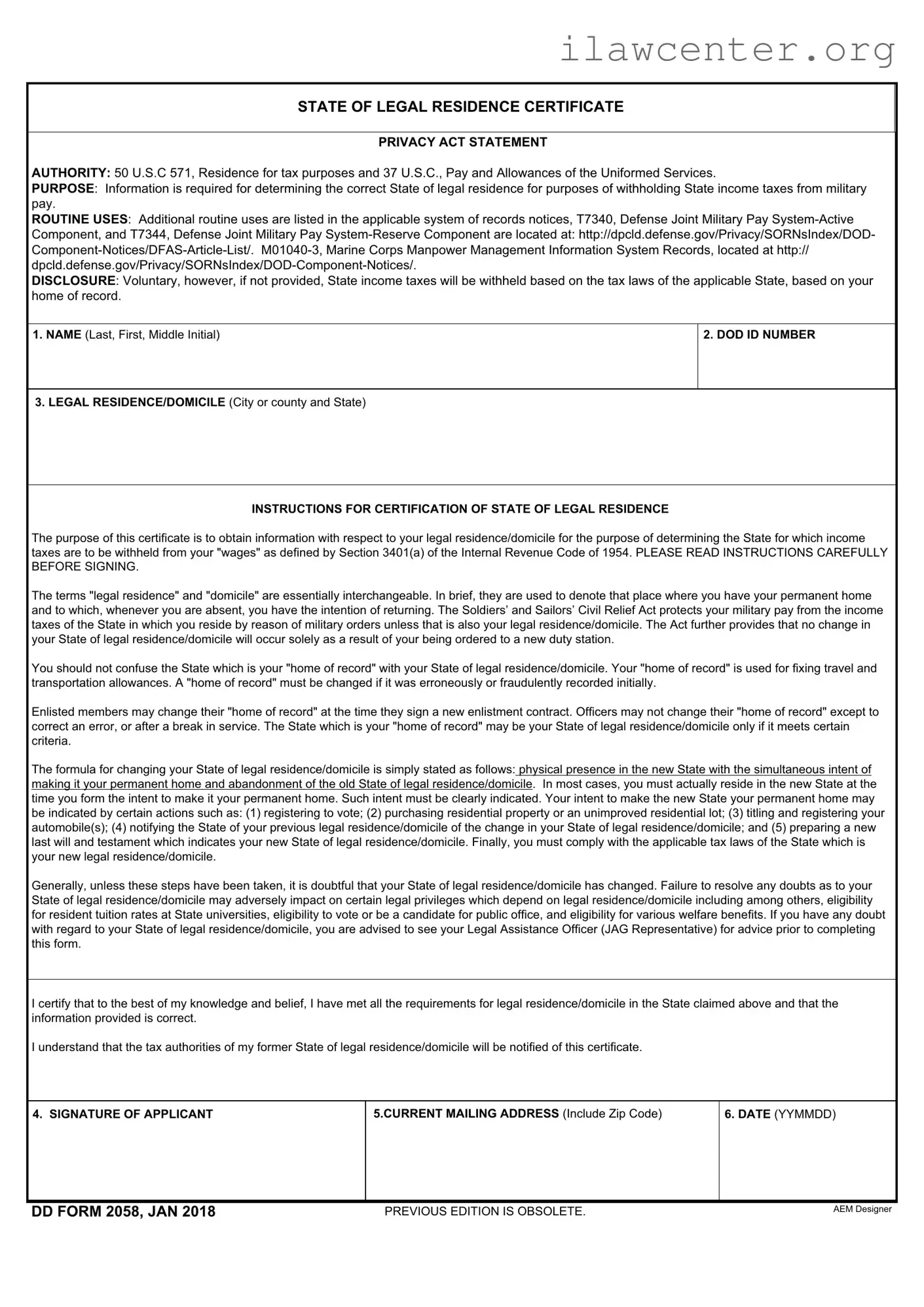
What is the purpose of the DD Form 2058?
The DD Form 2058, also known as the State of Legal Residence Certificate, is used to determine the correct state for withholding state income taxes from military pay. This form helps ensure that military personnel are taxed appropriately based on their legal residence rather than their home of record, which can differ.
Who is required to complete the DD Form 2058?
Active duty military members and reservists are required to complete the DD Form 2058. It is essential for those who want to establish or confirm their state of legal residence for tax purposes. Completing this form is especially important for service members who may be stationed in different states due to military orders.
What information is needed to fill out the DD Form 2058?
To complete the DD Form 2058, you will need to provide your name, DOD ID number, legal residence or domicile (city or county and state), current mailing address, and your signature. Additionally, you must date the form to confirm when it was completed.
What does "legal residence" mean in the context of the DD Form 2058?
Legal residence refers to the place where you have established your permanent home. It is the state to which you intend to return whenever you are absent. This is distinct from your "home of record," which is used for travel and transportation allowances.
Can I change my state of legal residence while on active duty?
Yes, you can change your state of legal residence while on active duty. However, certain criteria must be met. You need to physically reside in the new state and demonstrate intent to make it your permanent home. Actions such as registering to vote or purchasing property can help indicate this intent.
What happens if I do not complete the DD Form 2058?
If you do not complete the DD Form 2058, state income taxes will be withheld based on the tax laws of your home of record. This may not reflect your actual legal residence, which could lead to incorrect tax withholdings and potential financial implications.
What are the consequences of incorrectly claiming my state of legal residence?
Incorrectly claiming your state of legal residence can lead to various issues, including ineligibility for resident tuition rates at state universities, difficulties voting or running for public office, and complications with welfare benefits. It is crucial to ensure the accuracy of the information provided on the form.
How can I establish my intent to change my legal residence?
Intent to change your legal residence can be established through several actions. These include registering to vote in the new state, purchasing or leasing a home, titling your vehicles in the new state, notifying your previous state of residence, and creating a new will that reflects your new legal residence.
What should I do if I have doubts about my legal residence?
If you have any doubts regarding your legal residence, it is advisable to consult with your Legal Assistance Officer or a JAG representative. They can provide guidance and help clarify your situation before you complete the DD Form 2058.