Delivery Receipt PDF Template

Delivery Receipt PDF Template

A Delivery Receipt form serves as a record of goods received, confirming that a delivery has taken place. This document typically includes essential details such as the date, purchase order number, job number, and a description of the items delivered. To ensure accurate tracking and acknowledgment, it is important to fill out the form correctly; you can start by clicking the button below.

Article Guide

The Delivery Receipt form plays a crucial role in the logistics and supply chain process, serving as a key document to confirm the receipt of goods. This form includes essential details such as the date of delivery, the recipient's name, and the purchase order number, ensuring that all parties have a clear record of the transaction. Additionally, it specifies whether the delivery is partial or complete, which helps in tracking outstanding items. The form also requires a description of the goods delivered, along with the quantity and number of pieces received. This information is vital for inventory management and reconciliation purposes. By having a designated space for the signature of the person receiving the items, the form provides a reliable acknowledgment of receipt, which can be referenced in case of disputes or discrepancies. Overall, the Delivery Receipt form is an indispensable tool for maintaining accurate records in any business transaction involving the transfer of goods.

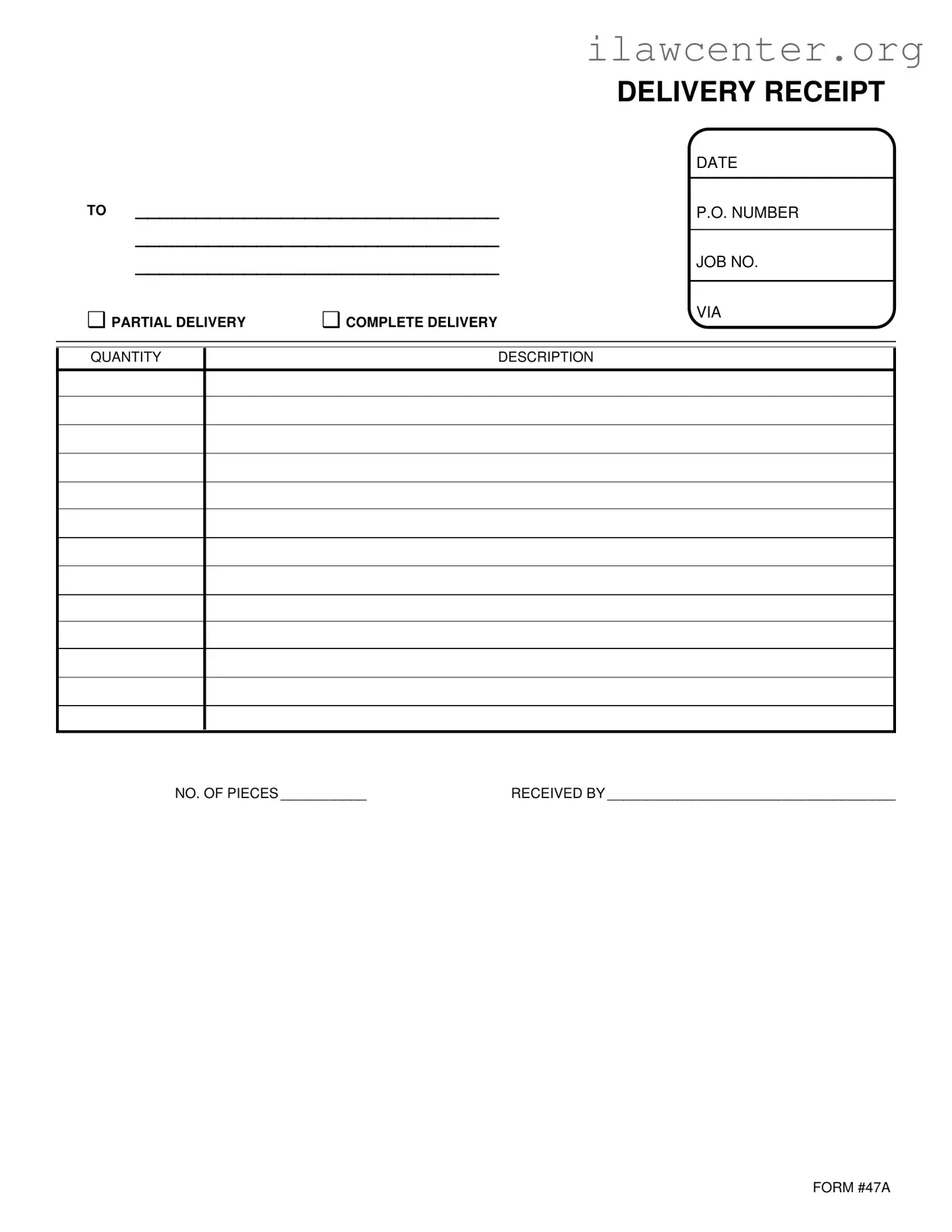
Delivery Receipt Preview

QUANTITY DESCRIPTION
FORM #47A
DATE
P.O. NUMBER
JOB NO.
VIA
DELIVERY RECEIPT
TO ______________________________
______________________________
______________________________
PARTIAL DELIVERY COMPLETE DELIVERY
NO. OF PIECES ___________ RECEIVED BY _____________________________________

File Properties

Fact Name Description
Purpose The Delivery Receipt form serves as a record confirming the receipt of goods or services. It is crucial for tracking deliveries and ensuring accountability.
Key Components This form includes essential information such as the delivery date, purchase order number, job number, and the details of the items delivered.
Delivery Status It provides options for indicating whether the delivery is partial or complete, which helps in managing inventory and expectations.
Governing Law In many states, the use of delivery receipts is governed by the Uniform Commercial Code (UCC), which outlines the rights and obligations of parties in commercial transactions.

Instructions on Utilizing Delivery Receipt

After you have gathered all necessary information, you can begin filling out the Delivery Receipt form. Make sure to provide accurate details to ensure proper record-keeping. Once completed, this form will be essential for confirming the delivery of goods.

  1. Locate the section labeled DATE and enter the current date.
  2. In the TO field, write the name of the person or company receiving the delivery.
  3. Fill in the P.O. NUMBER with the purchase order number associated with the delivery.
  4. In the blank space below the P.O. number, add any additional relevant information, such as the address or contact details.
  5. Enter the JOB NO. if applicable. This may relate to a specific project or task.
  6. Check the box for PARTIAL DELIVERY or COMPLETE DELIVERY to indicate the status of the delivery.
  7. In the VIA section, specify the method of delivery, such as truck, air, or freight.
  8. In the QUANTITY field, write the number of items being delivered.
  9. In the DESCRIPTION section, provide a brief description of the items received.
  10. Fill in the NO. OF PIECES with the total number of individual pieces included in the delivery.
  11. Finally, have the person receiving the delivery sign their name in the RECEIVED BY field.

Important Facts about Delivery Receipt

What is a Delivery Receipt form?

A Delivery Receipt form is a document used to confirm the receipt of goods or services. It includes important details such as the date of delivery, purchase order number, job number, and the quantity of items received. This form serves as proof that the recipient has received the items listed, and it can be important for record-keeping and inventory management.

What information do I need to fill out on the Delivery Receipt form?

When completing the Delivery Receipt form, you will need to provide several key pieces of information. This includes the date of delivery, the purchase order number (P.O. number), the job number, and whether the delivery is partial or complete. Additionally, you should include a description of the items delivered, the quantity received, and the name of the person who received the items. Ensuring all fields are filled out accurately helps maintain clear records.

Why is it important to have a Delivery Receipt?

A Delivery Receipt is important for several reasons. First, it acts as a legal record of the transaction, proving that the goods were delivered. Second, it helps to prevent disputes over whether items were received or not. Third, it assists in inventory management, allowing businesses to keep track of what has been delivered and what remains outstanding. Having this documentation can be crucial for both accounting and operational purposes.

Who should sign the Delivery Receipt?

The Delivery Receipt should be signed by the person who physically receives the goods. This could be a warehouse employee, a manager, or any designated individual responsible for receiving deliveries. The signature indicates that the items have been checked and received in the condition expected. It is a good practice for the recipient to review the items before signing to ensure everything is accounted for.

What should I do if there are discrepancies on the Delivery Receipt?

If you notice any discrepancies, such as missing items or damaged goods, you should address them immediately. Document the issues on the Delivery Receipt before signing it, and make a note of the discrepancies. It is also advisable to contact the supplier or delivery service as soon as possible to resolve the issue. Keeping a record of all communications regarding the discrepancy can be helpful for future reference.

Common mistakes

Filling out a Delivery Receipt form may seem straightforward, yet many individuals encounter common pitfalls that can lead to complications. One frequent mistake is neglecting to include the date on the form. The date serves as a crucial reference point for both the sender and the recipient. Without it, tracking deliveries becomes challenging, and disputes may arise regarding when the goods were received.

Another common error is failing to specify the P.O. number. The Purchase Order number links the delivery to a specific transaction. Omitting this number can cause confusion and delays in processing the delivery, as it may be difficult to match the receipt to the original order.

Many people also overlook the importance of clearly marking whether the delivery is partial or complete. This distinction is vital for inventory management and future orders. If this section is left unchecked, it can lead to misunderstandings about what has been delivered and what remains outstanding.

Inaccuracies in the quantity field are another common mistake. When individuals miscount or misreport the number of items received, it can create discrepancies in inventory records. Ensuring that the quantity matches what was ordered is essential for accurate accounting and stock management.

Additionally, the description of the items must be detailed and accurate. Vague descriptions can lead to confusion about what was delivered. Each item should be listed clearly, as this information is vital for both the sender and the recipient in confirming that the correct items were received.

Another area where mistakes often occur is in the section for the number of pieces. This field should reflect the total count of individual items within the delivery. Misunderstanding this requirement can result in reporting errors that affect inventory and financial records.

Finally, the signature of the person receiving the delivery is crucial. Failing to obtain a signature can leave the sender without proof of delivery. It is essential that the recipient signs the form to confirm that they have received the items in the specified condition.

Documents used along the form

The Delivery Receipt form is an essential document that confirms the receipt of goods. It serves as proof that items were delivered and accepted by the recipient. Along with the Delivery Receipt, several other forms and documents are commonly used to ensure smooth operations in the delivery process. Below is a list of these related documents.

  • Bill of Lading: This document serves as a contract between the shipper and the carrier. It outlines the details of the shipment, including the type of goods, their quantity, and the destination. It also acts as a receipt for the goods once they are loaded onto the transport vehicle.
  • Packing List: A packing list details the contents of a shipment. It includes information about each item, such as descriptions, quantities, and weights. This document helps both the sender and receiver verify that the correct items have been shipped and received.
  • Invoice: An invoice is a request for payment for goods or services provided. It includes details such as the seller’s information, a description of the items sold, their prices, and payment terms. The invoice is crucial for accounting and record-keeping purposes.
  • Purchase Order: A purchase order is a document issued by a buyer to a seller, indicating the types, quantities, and agreed prices for products or services. It serves as a formal agreement before the delivery takes place and helps in tracking orders and managing inventory.
  • Return Authorization: This document is used when items need to be returned to the seller. It provides the necessary details and approval for the return process, ensuring that the seller is aware of the return and can process it accordingly.
  • Shipping Manifest: A shipping manifest is a comprehensive list of all the items being shipped. It is typically used by carriers to keep track of the cargo during transit. This document can also assist in customs clearance when shipping internationally.

These documents work together to facilitate the delivery process, ensuring that all parties have the necessary information for smooth transactions. Understanding each document's role can enhance efficiency and reduce the likelihood of errors in the delivery process.

Similar forms

The Delivery Receipt form is an important document used to confirm the receipt of goods. It shares similarities with several other documents in logistics and delivery processes. Here are five documents that are similar to the Delivery Receipt form:

  • Bill of Lading: This document serves as a contract between the shipper and the carrier. It details the type, quantity, and destination of the goods being transported, similar to how a Delivery Receipt confirms what has been received.
  • Shipping Manifest: A shipping manifest lists all the items being shipped. Like the Delivery Receipt, it helps track what has been sent and received, ensuring accountability in the delivery process.
  • Packing Slip: This document accompanies a shipment and details the items included in the package. Both the Packing Slip and Delivery Receipt help verify that the correct items have been delivered.
  • Proof of Delivery (POD): A POD confirms that the recipient has received the goods. It often includes a signature, similar to the section on the Delivery Receipt where the recipient acknowledges receipt.
  • Return Receipt: This document is used when goods are returned to the sender. It provides confirmation that the items have been received back, much like the Delivery Receipt confirms receipt of goods initially sent.

Dos and Don'ts

When filling out the Delivery Receipt form, attention to detail is crucial. Here’s a list of things you should and shouldn’t do:

  • Do ensure that the date is clearly written at the top of the form.
  • Do accurately fill in the P.O. number to avoid confusion.
  • Do specify the job number if applicable, as it helps in tracking deliveries.
  • Do indicate whether the delivery is partial or complete by checking the appropriate box.
  • Do count the quantity of items received and record it correctly.
  • Don't leave any fields blank; incomplete information can lead to issues later.
  • Don't forget to include a detailed description of the items received.
  • Don't sign the form without verifying that all information is accurate.
  • Don't use abbreviations that may not be understood by others reviewing the document.

Misconceptions

There are several misconceptions regarding the Delivery Receipt form. Understanding these can help ensure proper use and compliance.

  • Misconception 1: The Delivery Receipt is only for complete deliveries.
  • This is not true. The form can also be used for partial deliveries. Indicating whether the delivery is complete or partial is essential for accurate record-keeping.

  • Misconception 2: The Delivery Receipt does not require a signature.
  • In fact, a signature is crucial. The person receiving the items must sign the form to confirm receipt. This serves as proof that the items were delivered.

  • Misconception 3: The Delivery Receipt is unnecessary if the items are already on-site.
  • This is incorrect. Even if items are physically present, the Delivery Receipt serves as an official record of what was received and when.

  • Misconception 4: The Delivery Receipt can be filled out at any time after delivery.
  • Timeliness is important. The Delivery Receipt should be completed immediately upon receipt of the items to ensure accuracy and accountability.

Key takeaways

Filling out and using the Delivery Receipt form is straightforward, but attention to detail is essential. Here are some key takeaways to keep in mind:

  • Complete All Fields: Ensure every section of the form is filled out, including the date, P.O. number, job number, and delivery status.
  • Specify Delivery Type: Clearly indicate whether the delivery is partial or complete to avoid confusion.
  • Accurate Quantity and Description: List the correct quantity and description of items received. This helps in inventory tracking and reconciliation.
  • Signature Required: The form must be signed by the person receiving the delivery to confirm receipt. This signature serves as proof of delivery.