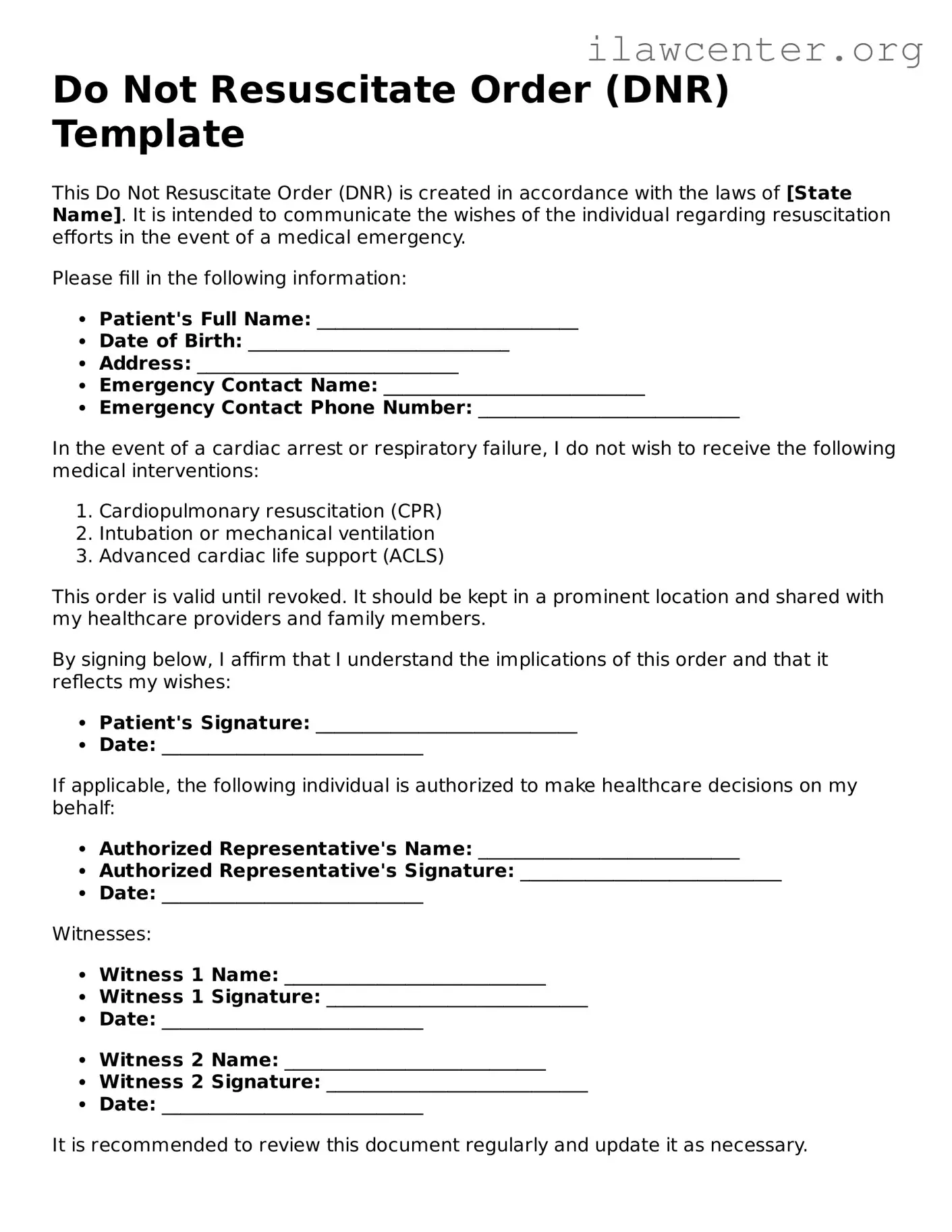
What is a Do Not Resuscitate Order (DNR)?
A Do Not Resuscitate Order (DNR) is a legal document that instructs medical personnel not to perform cardiopulmonary resuscitation (CPR) in the event of cardiac or respiratory arrest. This order is typically used by individuals who wish to avoid aggressive medical interventions at the end of life, allowing for a more peaceful passing.
Who can request a DNR order?
Generally, a DNR order can be requested by a patient who is of sound mind and understands the implications of the order. If the patient is unable to make decisions, a legally authorized representative, such as a family member or healthcare proxy, may request the DNR on their behalf. It’s important that the person making the request is familiar with the patient’s wishes regarding end-of-life care.
How do I obtain a DNR order?
To obtain a DNR order, you typically need to consult with a healthcare provider. They can help you understand the process and complete the necessary paperwork. In some states, specific forms are required, while in others, a verbal order from a physician may suffice. Make sure to check your state’s regulations regarding DNR orders.
Is a DNR order valid in all medical situations?
A DNR order is specifically focused on resuscitation efforts in the event of cardiac or respiratory arrest. It does not affect other types of medical treatment. Patients can still receive necessary medical care, including pain management and comfort measures. It’s essential to communicate your wishes clearly to your healthcare team.
Can a DNR order be revoked?
Yes, a DNR order can be revoked at any time. If a patient changes their mind, they should inform their healthcare provider and any family members involved in their care. It’s advisable to document the revocation in writing to ensure that all medical staff are aware of the change in wishes.
What should I do with my DNR order once it is completed?
Once you have completed your DNR order, keep a copy in an easily accessible place. It’s recommended to share copies with your healthcare provider, family members, and anyone involved in your care. Some states also allow you to carry a DNR card in your wallet for quick reference in emergencies.