Fillable Dog Bill of Sale Document

Fillable Dog Bill of Sale Document

A Dog Bill of Sale form is a legal document that records the transfer of ownership of a dog from one party to another. This form serves as proof of the transaction and includes essential details about the dog, such as breed, age, and any health information. For those looking to buy or sell a dog, completing this form is a crucial step in ensuring a smooth and transparent process.

To fill out the form, click the button below.

Article Guide

When purchasing or selling a dog, a Dog Bill of Sale form serves as an important document that outlines the transaction details. This form typically includes the names and contact information of both the seller and the buyer, ensuring that both parties are clearly identified. It also specifies the dog's breed, age, color, and any identifying marks, which helps to confirm the specific animal being sold. Additionally, the form often addresses the sale price and payment method, providing clarity on the financial aspect of the transaction. Some versions of the form may include a section for health guarantees, vaccination records, and any other pertinent information regarding the dog's history. By having this document in place, both the seller and the buyer can protect their interests and establish a clear understanding of the sale, reducing the likelihood of disputes in the future.

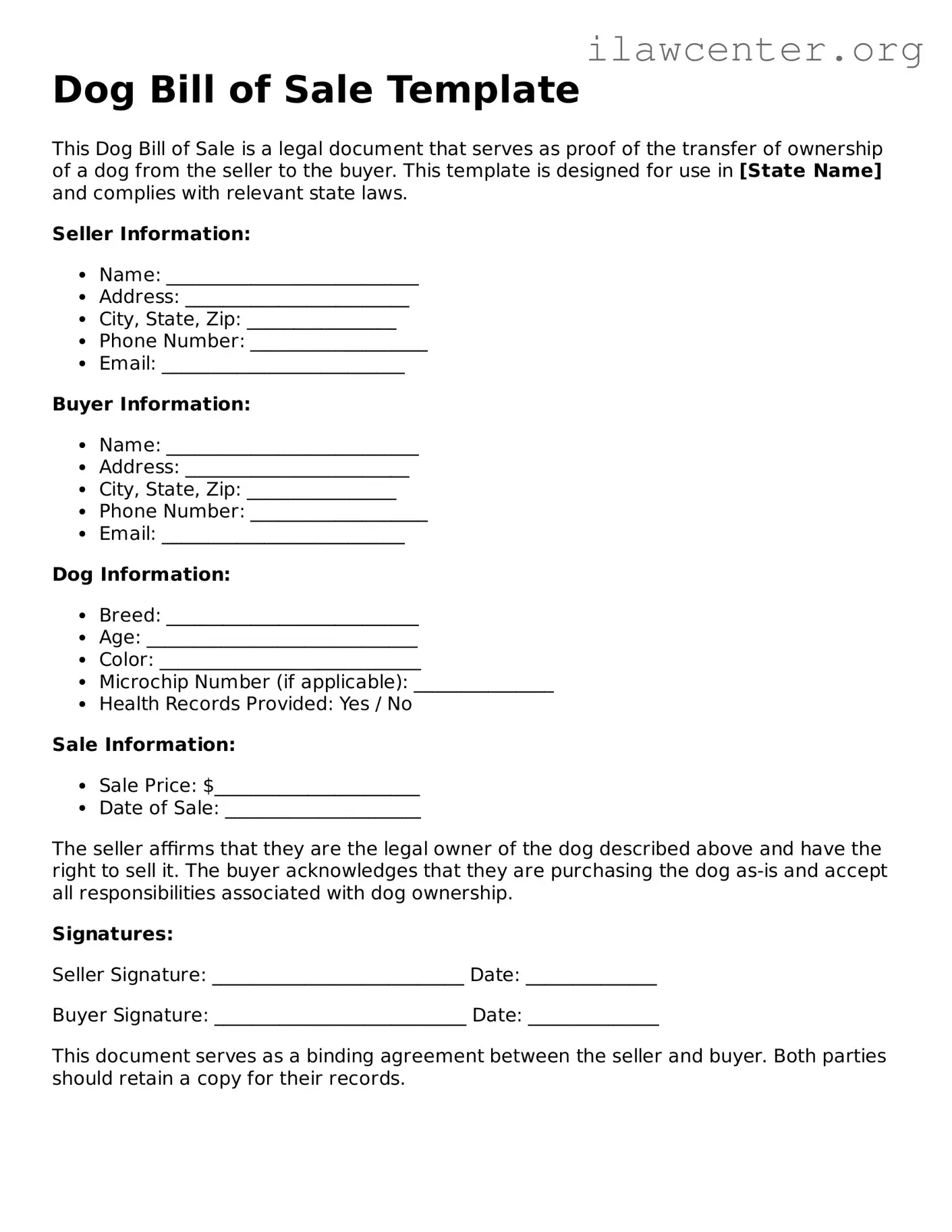
Dog Bill of Sale Preview

Dog Bill of Sale Template

This Dog Bill of Sale is a legal document that serves as proof of the transfer of ownership of a dog from the seller to the buyer. This template is designed for use in [State Name] and complies with relevant state laws.

Seller Information:

  • Name: ___________________________
  • Address: ________________________
  • City, State, Zip: ________________
  • Phone Number: ___________________
  • Email: __________________________

Buyer Information:

  • Name: ___________________________
  • Address: ________________________
  • City, State, Zip: ________________
  • Phone Number: ___________________
  • Email: __________________________

Dog Information:

  • Breed: ___________________________
  • Age: _____________________________
  • Color: ____________________________
  • Microchip Number (if applicable): _______________
  • Health Records Provided: Yes / No

Sale Information:

  • Sale Price: $______________________
  • Date of Sale: _____________________

The seller affirms that they are the legal owner of the dog described above and have the right to sell it. The buyer acknowledges that they are purchasing the dog as-is and accept all responsibilities associated with dog ownership.

Signatures:

Seller Signature: ___________________________ Date: ______________

Buyer Signature: ___________________________ Date: ______________

This document serves as a binding agreement between the seller and buyer. Both parties should retain a copy for their records.

PDF Form Characteristics

Fact Name Description
Purpose A Dog Bill of Sale form is used to document the sale or transfer of ownership of a dog between a seller and a buyer.
Legal Requirement While not always legally required, having a bill of sale helps protect both parties in the transaction.
State-Specific Forms Some states may have specific requirements or forms for dog sales; check local laws for compliance.
Governing Laws In many states, the sale of pets is governed by consumer protection laws and animal welfare statutes.
Information Included The form typically includes details such as the dog's breed, age, health status, and any warranties or guarantees.
Signature Requirement Both the seller and buyer should sign the form to validate the transaction and acknowledge its terms.
Transfer of Ownership Completing the bill of sale signifies the legal transfer of ownership from the seller to the buyer.
Record Keeping Both parties should retain a copy of the signed bill of sale for their records, which may be useful in future disputes.

Instructions on Utilizing Dog Bill of Sale

Filling out the Dog Bill of Sale form is a straightforward process that ensures both the buyer and seller have a clear understanding of the transaction. Once the form is completed, it can serve as a record of the sale, which may be useful for future reference. Follow these steps to accurately fill out the form.

  1. Gather necessary information: Before you start, collect all relevant details about the dog, including breed, age, color, and any identifying marks.
  2. Identify the seller: Write down the full name and contact information of the seller. This includes address, phone number, and email.
  3. Identify the buyer: Similarly, provide the full name and contact information of the buyer, including address, phone number, and email.
  4. Detail the dog: Fill in the specifics about the dog being sold. Include breed, age, color, and any registration numbers if applicable.
  5. State the sale price: Clearly indicate the amount for which the dog is being sold. This should be in numerical form and can also be written out in words.
  6. Include terms of sale: Specify any terms or conditions related to the sale, such as whether the dog is sold "as is" or if there are any warranties.
  7. Signatures: Both the seller and buyer should sign and date the form to validate the agreement.

Once these steps are completed, ensure that both parties keep a copy of the signed form for their records. This documentation will help in any future dealings regarding the dog.

Important Facts about Dog Bill of Sale

What is a Dog Bill of Sale form?

A Dog Bill of Sale form is a legal document that records the transfer of ownership of a dog from one person to another. This form includes important details such as the dog's breed, age, and health information, as well as the seller's and buyer's contact information. It serves as proof of the transaction and can be useful for future reference, especially for registration or veterinary purposes.

Why is it important to use a Dog Bill of Sale?

Using a Dog Bill of Sale is important because it protects both the buyer and the seller. For the buyer, it provides proof of ownership and can help establish a record in case of disputes. For the seller, it protects against liability issues related to the dog after the sale. This document also ensures that all parties are clear on the terms of the sale, including any agreements regarding health guarantees or return policies.

What information should be included in a Dog Bill of Sale?

A Dog Bill of Sale should include the following information: the full names and addresses of both the seller and buyer, the dog's breed, age, color, and any identifying marks or microchip information. Additionally, the sale price and date of the transaction should be noted. Any warranties or guarantees related to the dog's health should also be included to avoid misunderstandings later on.

Do I need to have the Dog Bill of Sale notarized?

Notarization of a Dog Bill of Sale is not typically required, but it can add an extra layer of security and legitimacy to the document. If both parties agree, having the form notarized can help ensure that the transaction is recognized by third parties. It can also be beneficial if there are any disputes in the future regarding the sale.

Can I create my own Dog Bill of Sale?

Yes, you can create your own Dog Bill of Sale. However, it is essential to ensure that all necessary information is included and that the language is clear and unambiguous. Many templates are available online that can help guide you in drafting your document. Just make sure it meets your state's requirements and adequately protects both parties involved in the sale.

Common mistakes

When completing a Dog Bill of Sale form, individuals often overlook critical details that can lead to complications down the line. One common mistake is failing to provide accurate information about the dog. This includes the breed, age, and any identifying features like microchip numbers or unique markings. Without precise details, future disputes regarding ownership or breed can arise, creating unnecessary stress for both parties involved.

Another frequent error is neglecting to include the sale price. While it may seem trivial, documenting the agreed-upon price is essential for establishing the transaction's legitimacy. This information can protect both the seller and the buyer in case of any disagreements or misunderstandings later. Always ensure the price is clearly stated in the form.

People also often forget to include the date of the sale. This detail may seem minor, but it plays a significant role in tracking ownership and any potential health issues that may arise after the sale. A clear timeline helps both the seller and the buyer understand their responsibilities and rights regarding the dog.

Additionally, many individuals fail to sign the form. A signature is a crucial element of any legal document, and without it, the Dog Bill of Sale may not hold up if challenged. Both the seller and the buyer should sign the document to confirm their agreement to the terms laid out within.

Another common mistake is not providing a health guarantee or warranty. Buyers often appreciate knowing that the dog is in good health at the time of sale. Including a clause that outlines any health guarantees can foster trust and transparency between both parties. It also helps the buyer feel more secure in their purchase.

People sometimes overlook the importance of including contact information. Providing a phone number or email address allows for easy communication between the seller and the buyer after the sale. This can be particularly important if the new owner has questions about the dog's care or needs to discuss any issues that may arise.

Lastly, individuals may forget to keep a copy of the completed Dog Bill of Sale. Retaining a copy is essential for both parties. It serves as proof of the transaction and can be referenced if any disputes occur in the future. Always ensure that both the buyer and seller have a signed copy for their records.

Documents used along the form

When buying or selling a dog, having the right documentation is crucial. The Dog Bill of Sale form is an important piece of paperwork, but it's often accompanied by other forms that help protect both the buyer and the seller. Below is a list of additional documents that can be beneficial in these transactions.

  • Health Certificate: This document is issued by a veterinarian and confirms that the dog is healthy and free from contagious diseases. It often includes vaccination records, ensuring the buyer knows the dog's health status.
  • Registration Papers: If the dog is purebred, registration papers from a recognized kennel club can prove the dog's lineage. This document can be important for buyers interested in showing or breeding the dog.
  • Microchip Registration: If the dog has been microchipped, this document provides information on how to register the chip in the new owner's name. It is essential for identification and recovery if the dog gets lost.
  • Purchase Agreement: This is a more detailed contract that outlines the terms of the sale, including price, payment methods, and any warranties or guarantees about the dog’s health or behavior.
  • Return Policy: A return policy document specifies the conditions under which the buyer can return the dog. This can help alleviate concerns for buyers and provide peace of mind.
  • Training Records: If the dog has undergone any training, these records can be valuable. They may include details about obedience training or specialized skills, helping the new owner understand the dog's capabilities.

Having these documents on hand not only streamlines the transaction but also fosters trust between the parties involved. Being well-prepared can make the experience of acquiring a new furry friend much smoother and more enjoyable.

Similar forms

The Dog Bill of Sale form serves an important purpose in the transfer of ownership of a dog. It is similar to several other documents that also facilitate the exchange of ownership or rights. Here are six documents that share similarities with the Dog Bill of Sale form:

  • Vehicle Bill of Sale: This document records the sale of a vehicle. Like the Dog Bill of Sale, it includes details about the buyer, seller, and the item being sold, ensuring that ownership is officially transferred.
  • Real Estate Purchase Agreement: This agreement outlines the terms of a property sale. Similar to the Dog Bill of Sale, it includes information about the parties involved and the property being transferred, providing legal protection for both sides.
  • Boat Bill of Sale: Just as the Dog Bill of Sale is used for pets, this document is used for the sale of boats. It includes key details about the buyer, seller, and the boat, ensuring a clear transfer of ownership.
  • Personal Property Bill of Sale: This document covers the sale of personal items, such as furniture or electronics. Like the Dog Bill of Sale, it serves to confirm the transaction and protect the interests of both the buyer and seller.
  • Business Asset Purchase Agreement: This agreement is used when purchasing business assets. It shares similarities with the Dog Bill of Sale in that it details the assets being sold and the parties involved, ensuring clarity in the transaction.
  • Pet Adoption Agreement: This document is used when adopting a pet from a shelter or rescue. It outlines the responsibilities of the new owner and includes information about the pet, similar to what is found in a Dog Bill of Sale.

Each of these documents plays a crucial role in formalizing transactions, protecting the rights of both parties, and ensuring that ownership is clearly defined.

Dos and Don'ts

When filling out the Dog Bill of Sale form, it's important to follow certain guidelines to ensure everything is done correctly. Here are seven things you should and shouldn't do:

  • Do provide accurate information about the dog, including breed, age, and health status.
  • Don't leave any fields blank. All sections should be completed to avoid confusion.
  • Do include both the seller's and buyer's contact information.
  • Don't rush through the form. Take your time to review all details before submitting.
  • Do sign and date the form to make it legally binding.
  • Don't forget to provide a copy of the form to the buyer for their records.
  • Do keep a copy of the signed form for your own records.

Misconceptions

The Dog Bill of Sale form is an important document for anyone involved in the buying or selling of dogs. However, several misconceptions surround its purpose and use. Here are five common misunderstandings:

  • It is not legally required. Many people believe that a Dog Bill of Sale is mandatory for every dog transaction. While it's not required by law in all states, having one can protect both the buyer and the seller.
  • It only benefits the seller. Some think that only the seller gains from this document. In reality, it provides essential protection for both parties, ensuring that the buyer has proof of ownership and the seller has a record of the sale.
  • It is only for purebred dogs. There's a misconception that a Dog Bill of Sale is only necessary for purebred animals. In truth, it is beneficial for any dog transaction, regardless of the dog's breed or lineage.
  • It is a complicated document. Many assume that creating a Dog Bill of Sale is a complex process. In fact, it is a straightforward form that requires basic information about the buyer, seller, and dog.
  • It covers health guarantees. Some believe that the Dog Bill of Sale includes health guarantees for the dog. While it can mention health conditions, it does not automatically provide any warranties or guarantees regarding the dog's health.

Understanding these misconceptions can help ensure a smoother transaction when buying or selling a dog.

Key takeaways

When filling out and using the Dog Bill of Sale form, keep these key takeaways in mind:

  1. Complete all required fields: Ensure that you fill in all necessary information, including the dog's breed, age, and any identifying details like microchip numbers.
  2. Include seller and buyer information: Clearly state the names and contact details of both the seller and the buyer to establish accountability.
  3. Specify the sale price: Clearly outline the agreed-upon price for the dog. This helps prevent misunderstandings later on.
  4. Document any health guarantees: If the dog comes with health guarantees or warranties, make sure to include those terms in the bill of sale.
  5. Keep a copy for your records: After the sale, both parties should retain a copy of the signed bill of sale for their records. This serves as proof of the transaction.