Fillable Eagle Scout Letter of Recommendation Document

Fillable Eagle Scout Letter of Recommendation Document

The Eagle Scout Letter of Recommendation form is a crucial document in the Eagle Scout advancement process. It allows individuals to provide insight into a candidate's character, leadership skills, and contributions to the community. Completing this form is an important step in supporting a scout's journey, so be sure to fill it out by clicking the button below.

Article Guide

The Eagle Scout Letter of Recommendation form plays a crucial role in the journey of a young scout aspiring to achieve the prestigious rank of Eagle Scout. This form is designed to gather insights from individuals who know the scout well, providing a comprehensive view of their character, leadership skills, and commitment to the values of scouting. Typically, references include teachers, employers, community leaders, or family friends who can speak to the scout’s accomplishments and personal growth. The form requires detailed responses that reflect the scout's contributions to their community, their ability to work with others, and their dedication to service. Each recommendation is an opportunity to highlight the scout's unique qualities and achievements, helping to create a well-rounded picture that supports their application. Ultimately, the letters submitted through this form are not just endorsements; they are a testament to the scout's journey and readiness to embrace the responsibilities that come with being an Eagle Scout.

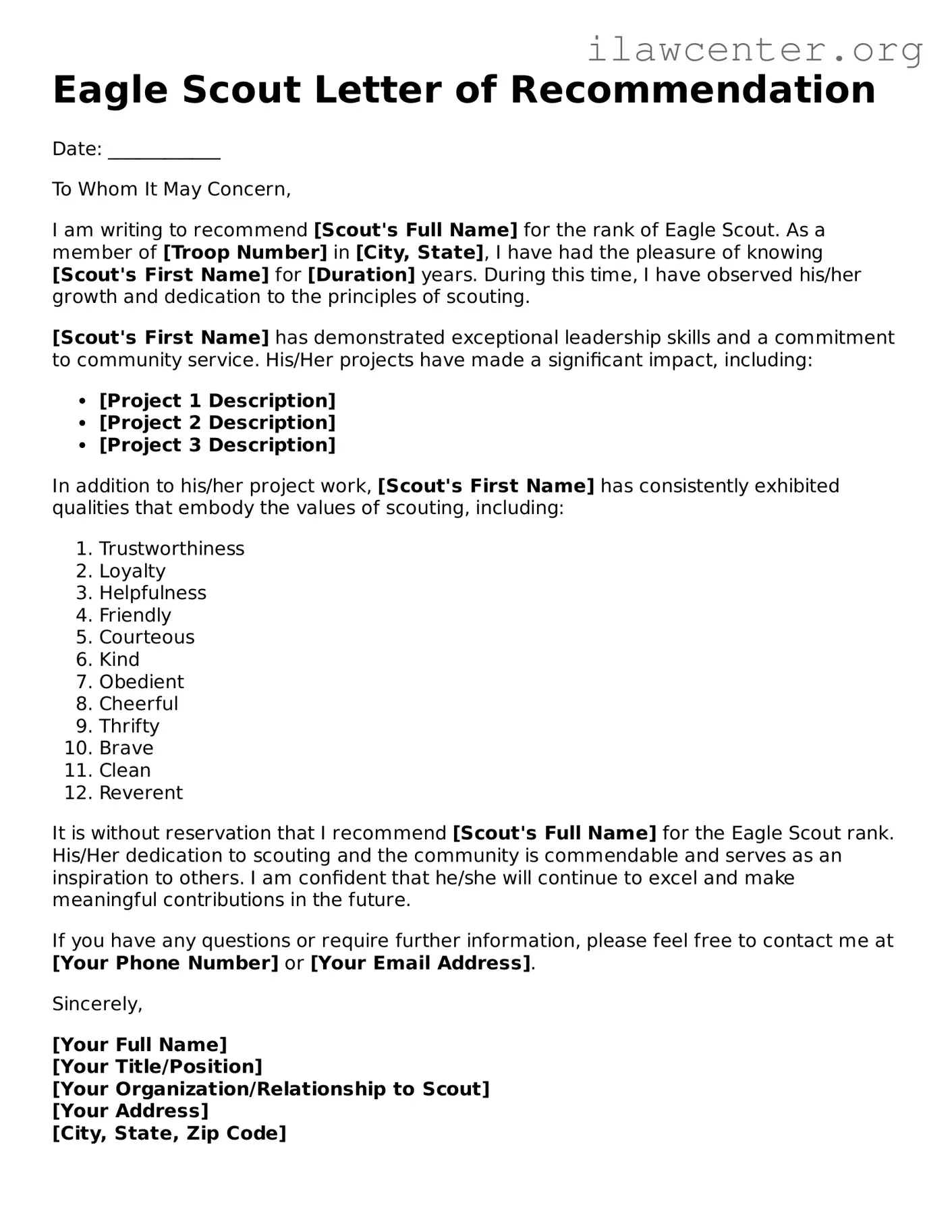
Eagle Scout Letter of Recommendation Preview

Eagle Scout Letter of Recommendation

Date: ____________

To Whom It May Concern,

I am writing to recommend [Scout's Full Name] for the rank of Eagle Scout. As a member of [Troop Number] in [City, State], I have had the pleasure of knowing [Scout's First Name] for [Duration] years. During this time, I have observed his/her growth and dedication to the principles of scouting.

[Scout's First Name] has demonstrated exceptional leadership skills and a commitment to community service. His/Her projects have made a significant impact, including:

  • [Project 1 Description]
  • [Project 2 Description]
  • [Project 3 Description]

In addition to his/her project work, [Scout's First Name] has consistently exhibited qualities that embody the values of scouting, including:

  1. Trustworthiness
  2. Loyalty
  3. Helpfulness
  4. Friendly
  5. Courteous
  6. Kind
  7. Obedient
  8. Cheerful
  9. Thrifty
  10. Brave
  11. Clean
  12. Reverent

It is without reservation that I recommend [Scout's Full Name] for the Eagle Scout rank. His/Her dedication to scouting and the community is commendable and serves as an inspiration to others. I am confident that he/she will continue to excel and make meaningful contributions in the future.

If you have any questions or require further information, please feel free to contact me at [Your Phone Number] or [Your Email Address].

Sincerely,

[Your Full Name]
[Your Title/Position]
[Your Organization/Relationship to Scout]
[Your Address]
[City, State, Zip Code]

PDF Form Characteristics

Fact Name Description
Purpose The Eagle Scout Letter of Recommendation form is used to gather endorsements from individuals who can speak to a scout's character and achievements.
Eligibility Only individuals who are familiar with the scout's work and character, such as teachers, employers, or community leaders, should provide recommendations.
Submission Process Recommendations are typically submitted directly to the scout's Eagle Scout board of review, ensuring confidentiality and integrity of the process.
State-Specific Forms Some states may have specific requirements or forms that align with local laws regarding youth programs and endorsements.
Governing Laws In states like California, the governing law includes the California Youth Bill of Rights, which emphasizes the importance of positive youth development.
Completion Guidelines It is crucial that recommenders provide honest and constructive feedback, focusing on the scout's skills, leadership, and community involvement.

Instructions on Utilizing Eagle Scout Letter of Recommendation

Completing the Eagle Scout Letter of Recommendation form is an important step in supporting a Scout's journey towards achieving the rank of Eagle Scout. This form requires careful attention to detail and thoughtful responses to ensure it accurately reflects the Scout's character and achievements. Follow these steps to fill it out correctly.

  1. Begin by gathering all necessary information about the Scout, including their full name, troop number, and contact details.
  2. Review the form to understand the sections that need to be filled out, including personal reflections and specific examples of the Scout's leadership and community service.
  3. In the first section, provide your name, title, and relationship to the Scout. This helps establish your credibility as a recommender.
  4. Next, describe your experiences with the Scout. Focus on their leadership skills, dedication, and personal qualities that make them a strong candidate for Eagle Scout.
  5. Use specific examples to illustrate your points. Highlight any significant projects or community service the Scout has completed.
  6. In the final section, offer your overall recommendation. Be honest and supportive, emphasizing your belief in the Scout's potential.
  7. Review the completed form for any errors or omissions. Ensure that all required fields are filled out clearly.
  8. Once satisfied, sign and date the form. This adds authenticity to your recommendation.
  9. Submit the form according to the instructions provided, whether by mail or electronically, ensuring it reaches the appropriate recipient in a timely manner.

Important Facts about Eagle Scout Letter of Recommendation

What is the purpose of the Eagle Scout Letter of Recommendation form?

The Eagle Scout Letter of Recommendation form serves as a vital component in the Eagle Scout application process. It allows individuals who know the Scout well—such as teachers, community leaders, or family friends—to provide insights into the Scout's character, leadership skills, and commitment to the values of Scouting. This letter helps the Eagle Scout board of review assess the Scout's qualifications and readiness for this prestigious rank.

Who should I ask to write my letter of recommendation?

Choosing the right individuals to write your letters of recommendation is essential. Ideally, you should select people who can speak to different aspects of your character and achievements. Consider asking a teacher who can highlight your academic dedication, a community leader who knows about your service projects, or a Scout leader familiar with your Scouting journey. Ensure that the individuals you approach are supportive of your goals and can provide specific examples of your strengths.

How many letters of recommendation do I need to submit?

Typically, you will need to submit a minimum of three letters of recommendation. However, some Scouts choose to include additional letters to provide a broader perspective on their character and accomplishments. It’s important to check with your local council or troop for any specific requirements regarding the number of letters needed, as these can vary.

What should be included in the letter of recommendation?

A strong letter of recommendation should include several key elements. The writer should introduce themselves and explain their relationship with you. They should then discuss your character traits, leadership abilities, and commitment to community service. Specific examples that illustrate your achievements and contributions will make the letter more impactful. Finally, the writer should express their overall support for your Eagle Scout application, affirming their belief in your readiness for this honor.

Common mistakes

Completing the Eagle Scout Letter of Recommendation form can be a significant task, and many individuals make mistakes that can hinder the process. One common error is failing to provide specific examples of the candidate's achievements. Rather than listing general traits, it is crucial to include detailed instances that showcase the scout's leadership, community service, and personal growth.

Another frequent mistake is neglecting to adhere to the word limit. Each section of the form typically has a specified length, and exceeding this limit can lead to the omission of important information. It is essential to be concise yet thorough, ensuring that every word counts.

Some recommenders mistakenly focus too much on the scout's past accomplishments without discussing their potential for future success. While it is important to acknowledge what the candidate has done, highlighting their ability to lead and contribute in the future adds significant value to the recommendation.

Additionally, using vague language can undermine the impact of the recommendation. Phrases like "good leader" or "nice person" lack substance. Instead, using descriptive adjectives and strong verbs can create a more compelling narrative about the candidate's character and abilities.

Another common oversight is failing to proofread the document. Spelling errors and grammatical mistakes can distract from the content and may give the impression of carelessness. Taking the time to review the letter ensures clarity and professionalism.

Some individuals overlook the importance of the relationship between the recommender and the candidate. It is vital to clearly state how long and in what capacity the recommender knows the scout. This context helps the review committee understand the perspective from which the recommendation is made.

Additionally, many recommenders forget to sign and date the form. A missing signature can render the recommendation invalid, so it is crucial to ensure that all necessary signatures are present before submission.

In some cases, recommenders may not take the time to reflect on the scout's values and ethics. Discussing these attributes can provide insight into the candidate's character, which is essential for an Eagle Scout. The recommendation should paint a complete picture of who the scout is beyond their achievements.

Lastly, failing to submit the recommendation on time can jeopardize the entire Eagle Scout application process. It is important to be aware of deadlines and plan accordingly to ensure that the letter is submitted promptly.

Documents used along the form

The Eagle Scout Letter of Recommendation form is an important document in the Eagle Scout application process. It serves as a testament to the candidate's character, leadership, and commitment to the values of Scouting. Alongside this form, several other documents are often required to ensure a comprehensive evaluation of the candidate. Below is a list of these essential forms and documents.

  • Eagle Scout Application: This is the primary form that outlines the Scout's achievements, leadership roles, and community service. It provides a complete picture of the candidate's journey through Scouting.
  • Project Proposal: Before beginning the Eagle Scout service project, the candidate must submit a proposal. This document details the project’s goals, the plan for execution, and how it will benefit the community.
  • Service Project Workbook: This workbook serves as a record of the Eagle Scout service project. It includes planning notes, a timeline, and documentation of hours worked and materials used.
  • Scoutmaster Conference Record: This form confirms that the candidate has met with their Scoutmaster to discuss their progress and readiness for the Eagle Scout rank. It captures key points from the conversation.
  • Board of Review Documentation: This document summarizes the results of the Board of Review, where a panel evaluates the candidate’s qualifications and readiness to become an Eagle Scout.
  • Letters of Recommendation: In addition to the formal Letter of Recommendation form, candidates may submit additional letters from community members, teachers, or leaders who can speak to their character and achievements.
  • Eagle Scout Rank Requirements: This document outlines the specific requirements a Scout must fulfill to earn the Eagle Scout rank, including merit badges, leadership roles, and service hours.

Each of these documents plays a crucial role in the Eagle Scout application process. Together, they provide a comprehensive overview of the candidate's qualifications and commitment to the principles of Scouting. Properly completing and submitting these forms can significantly impact the outcome of the Eagle Scout journey.

Similar forms

  • College Recommendation Letter: Similar to the Eagle Scout Letter of Recommendation, this document is often required for college applications. It showcases the applicant's character, achievements, and potential from the perspective of a mentor or teacher.
  • Job Reference Letter: This type of letter is used in the employment process. It highlights an individual's skills, work ethic, and accomplishments, providing potential employers with insight into the candidate's qualifications.
  • Scholarship Recommendation Letter: Much like the Eagle Scout Letter, this document supports a candidate's application for financial aid. It emphasizes the applicant's strengths and contributions to their community or field of study.
  • Graduate School Recommendation Letter: This letter serves a similar purpose in academic advancement. It is written by a professor or professional who can attest to the applicant's readiness for further study and research capabilities.
  • Character Reference Letter: Often used in various situations, this letter focuses on an individual's personal qualities. It can be beneficial for legal matters, job applications, or community involvement, similar to the Eagle Scout form.
  • Professional Membership Recommendation: This document is essential when applying for membership in professional organizations. It highlights the applicant's qualifications and contributions to their field, akin to the Eagle Scout recommendation.
  • Volunteer Position Recommendation Letter: Similar in nature, this letter supports an individual's application for volunteer roles. It emphasizes the applicant's commitment, skills, and impact on the community, much like the Eagle Scout Letter of Recommendation.

Dos and Don'ts

Filling out the Eagle Scout Letter of Recommendation form is an important task that can greatly impact a Scout's journey. Here are some key dos and don'ts to keep in mind:

  • Do provide honest and thoughtful feedback about the Scout's character and achievements.
  • Do use specific examples to illustrate your points. This helps paint a clearer picture.
  • Do ensure that your letter is typed or neatly handwritten. Clarity matters.
  • Do keep your letter to one page. Brevity is appreciated.
  • Do submit the letter before the deadline. Timeliness is crucial.
  • Don't use vague statements. Be direct and specific in your praise.
  • Don't include personal opinions unrelated to the Scout's qualifications.
  • Don't forget to proofread for spelling and grammatical errors.
  • Don't write the letter without knowing the Scout well. Authenticity is key.
  • Don't leave out your contact information. The review committee may want to reach you.

By following these guidelines, you can create a meaningful recommendation that truly reflects the Scout's accomplishments and character.

Misconceptions

Many people hold misconceptions about the Eagle Scout Letter of Recommendation form. Understanding the truth behind these beliefs can help clarify the process for aspiring Eagle Scouts and their recommenders. Here are six common misconceptions:

  • It is only a formality. Some believe that the letter of recommendation is merely a box to check off in the Eagle Scout application process. In reality, it serves as a crucial endorsement of the candidate’s character and leadership abilities.
  • Anyone can write a letter. While it may seem that any adult can provide a recommendation, the form specifically requires letters from individuals who know the Scout well, such as teachers, employers, or community leaders. This ensures that the recommendation is meaningful and credible.
  • Letters must be overly formal. Many think that the letter must adhere to a strict formal structure. In truth, a personal and heartfelt letter that reflects the writer’s genuine impressions of the Scout is often more impactful.
  • Only adults can write letters. Some believe that only adults are eligible to provide recommendations. However, older Scouts or young adults who have worked closely with the candidate can also offer valuable insights.
  • Letters need to be lengthy. There is a misconception that longer letters carry more weight. In fact, concise letters that clearly articulate the Scout’s qualities and achievements can be just as effective.
  • Submission is optional. A common misunderstanding is that submitting the letter of recommendation is optional. In reality, it is a required component of the Eagle Scout application and must be included for the application to be complete.

By addressing these misconceptions, candidates and their recommenders can approach the Eagle Scout Letter of Recommendation process with clarity and confidence.

Key takeaways

Filling out and using the Eagle Scout Letter of Recommendation form is an important step in the Eagle Scout process. Here are some key takeaways to keep in mind:

  • Understand the Purpose: The letter serves as a testament to the Scout's character, leadership skills, and commitment to Scouting values. It plays a crucial role in the evaluation process.
  • Choose the Right References: Select individuals who know the Scout well and can provide specific examples of their achievements and character. This could include teachers, community leaders, or Scout leaders.
  • Follow the Guidelines: Ensure that the letter adheres to the format and content requirements outlined in the Eagle Scout application. This includes providing relevant details about the Scout's contributions and character.
  • Be Timely: Submit the letter of recommendation promptly to avoid delays in the Eagle Scout review process. Timeliness reflects the Scout's respect for others' time and commitments.
  • Review for Clarity: Before submitting, review the letter for clarity and coherence. A well-written letter enhances the Scout's chances of achieving their Eagle Scout rank.

By keeping these points in mind, the process of filling out and utilizing the Eagle Scout Letter of Recommendation form can be streamlined and effective.