Electrical Panel Schedule PDF Template

Electrical Panel Schedule PDF Template

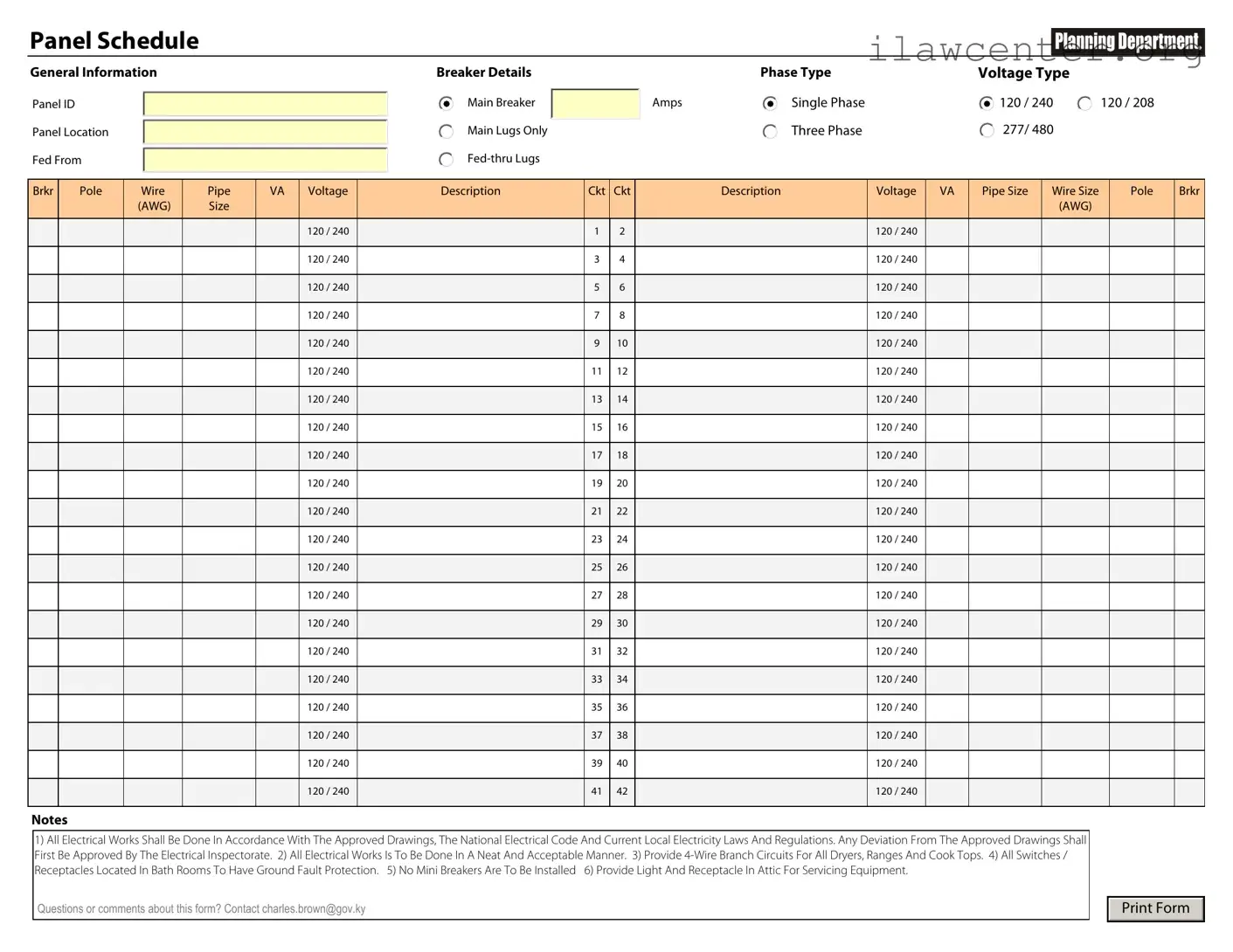
The Electrical Panel Schedule form is a crucial document that outlines the electrical circuits and their corresponding loads within a building. This form helps ensure that electrical systems are properly organized and maintained, promoting safety and efficiency. For those looking to streamline their electrical management, consider filling out the form by clicking the button below.

Article Guide

The Electrical Panel Schedule form is a vital tool in managing and organizing electrical systems within residential, commercial, and industrial settings. This form serves as a comprehensive guide that details the distribution of electrical circuits, helping to ensure safety and efficiency. It typically includes information such as the circuit number, the amperage rating, and the designated loads for each circuit, allowing for easy identification and management of electrical resources. By clearly outlining the connections and capacities of various circuits, the schedule aids in troubleshooting and maintenance, ultimately preventing potential overloads and electrical hazards. Additionally, it plays a crucial role during inspections and upgrades, providing essential documentation for compliance with safety standards and regulations. Understanding the components and layout of the Electrical Panel Schedule form can empower property owners, electricians, and facility managers to make informed decisions regarding their electrical systems.

Electrical Panel Schedule Preview

Panel Schedule
Panel ID
Panel Location
Fed From
Amps
Single Phase
Three Phase
Main Breaker
Main Lugs Only
Fed-thru Lugs
Breaker Details Phase TypeGeneral Information
Notes
Brkr
Pole Wire
(AWG)
Pipe
Size
VA Voltage Description Ckt Ckt Description Voltage VA Pipe Size Wire Size
(AWG)
Pole Brkr
120 / 240 120 / 208
277/ 480
Voltage Type
Questions or comments about this form? Contact charles.brown@gov.ky
1) All Electrical Works Shall Be Done In Accordance With The Approved Drawings, The National Electrical Code And Current Local Electricity Laws And Regulations. Any Deviation From The Approved Drawings Shall
First Be Approved By The Electrical Inspectorate. 2) All Electrical Works Is To Be Done In A Neat And Acceptable Manner. 3) Provide 4-Wire Branch Circuits For All Dryers, Ranges And Cook Tops. 4) All Switches /
Receptacles Located In Bath Rooms To Have Ground Fault Protection. 5) No Mini Breakers Are To Be Installed 6) Provide Light And Receptacle In Attic For Servicing Equipment.
120 / 240
1
120 / 240
3
120 / 240
5
120 / 240
7
120 / 240
9
120 / 240
11
120 / 240
13
120 / 240
15
120 / 240
17
120 / 240
19
120 / 240
21
120 / 240
23
120 / 240
25
120 / 240
27
120 / 240
29
120 / 240
31
120 / 240
33
120 / 240
35
120 / 240
37
120 / 240
39
120 / 240
41
2
120 / 240
4
120 / 240
6
120 / 240
8
120 / 240
10
120 / 240
12
120 / 240
14
120 / 240
16
120 / 240
18
120 / 240
20
120 / 240
22
120 / 240
24
120 / 240
26
120 / 240
28
120 / 240
30
120 / 240
32
120 / 240
34
120 / 240
36
120 / 240
38
120 / 240
40
120 / 240
42
120 / 240
Print Form
120 / 240

File Properties

Fact Name Description
Purpose The Electrical Panel Schedule form is used to outline the electrical distribution system in a building, detailing circuit assignments and load calculations.
Components This form typically includes information on circuit breakers, panel ratings, and the loads connected to each circuit.
Importance Having a well-organized panel schedule helps ensure safety, facilitates maintenance, and simplifies troubleshooting in electrical systems.
State-Specific Requirements In many states, local building codes may dictate specific requirements for the panel schedule, ensuring compliance with safety standards.
Governing Laws In California, for example, the California Electrical Code governs the requirements for electrical installations, including panel schedules.

Instructions on Utilizing Electrical Panel Schedule

Completing the Electrical Panel Schedule form is an essential step in organizing and managing electrical systems within a facility. This process ensures that all necessary information is accurately recorded, facilitating future maintenance and inspections. Follow these steps to fill out the form correctly.

  1. Begin by entering the date at the top of the form. This helps track when the schedule was created or updated.
  2. Next, fill in the location of the electrical panel. Specify the exact area or room where the panel is situated.
  3. Provide the panel name or number. This identifier helps distinguish this panel from others in the facility.
  4. List the feeder size in amperes. This information is crucial for understanding the capacity of the electrical system.
  5. Document the voltage rating of the panel. Indicate whether it is 120V, 240V, or another voltage level.
  6. In the next section, detail the circuit numbers and corresponding load types. This includes identifying circuits for lighting, outlets, and specialized equipment.
  7. Record the load calculations for each circuit. This may involve calculating the total amperage and wattage to ensure compliance with safety standards.
  8. Finally, review all entries for accuracy and completeness before submitting the form. Double-checking helps prevent errors that could lead to safety issues.

Important Facts about Electrical Panel Schedule

What is an Electrical Panel Schedule form?

An Electrical Panel Schedule form is a document that lists all the circuits in an electrical panel. It provides important information such as the circuit number, the load it supports, and the breaker size. This form helps electricians and homeowners understand the distribution of electrical power throughout a building.

Why is it important to have an Electrical Panel Schedule?

Having an Electrical Panel Schedule is crucial for safety and efficiency. It allows for easy identification of circuits, making it simpler to troubleshoot issues. In addition, it helps ensure that circuits are not overloaded, which can prevent electrical fires and other hazards.

Who should complete the Electrical Panel Schedule form?

The Electrical Panel Schedule should be completed by a qualified electrician or electrical engineer. They have the expertise to accurately assess the electrical load and ensure that all circuits are properly documented. This is especially important for new installations or major renovations.

How often should the Electrical Panel Schedule be updated?

It’s a good practice to update the Electrical Panel Schedule whenever changes are made to the electrical system. This includes adding new circuits, changing breaker sizes, or modifying existing loads. Keeping the schedule current helps maintain safety and efficiency.

What information is typically included in an Electrical Panel Schedule?

An Electrical Panel Schedule usually includes the circuit number, description of the load, amperage rating of the breaker, and the location of the circuit. Some schedules may also include notes on the type of equipment connected to each circuit.

Can I create my own Electrical Panel Schedule?

While you can create your own Electrical Panel Schedule, it’s recommended to consult with a professional. They can provide the necessary expertise to ensure accuracy and safety. An incorrect schedule can lead to serious electrical issues.

What should I do if I find discrepancies in my Electrical Panel Schedule?

If you notice any discrepancies, such as incorrect circuit descriptions or missing information, contact a licensed electrician immediately. They can assess the situation and make the necessary corrections to ensure your electrical system is safe and up to code.

How can I obtain an Electrical Panel Schedule form?

You can obtain an Electrical Panel Schedule form from various sources. Many electrical supply stores provide templates, and there are also online resources where you can download customizable forms. Just ensure that the template meets your specific needs.

Common mistakes

Completing the Electrical Panel Schedule form can seem straightforward, but many individuals make common mistakes that can lead to confusion or delays. One frequent error is failing to include all necessary information. Each circuit must be clearly identified with its corresponding load. Omitting even a single circuit can create discrepancies in the overall electrical design, which could result in safety hazards or code violations.

Another mistake often seen is incorrect labeling. Proper labeling is crucial for the safety and efficiency of an electrical system. If circuits are labeled inaccurately, it can lead to significant issues during maintenance or emergency situations. Technicians rely on accurate labels to quickly identify circuits, and any errors could result in dangerous conditions.

In addition, some people neglect to double-check their calculations. The Electrical Panel Schedule requires precise load calculations for each circuit. If these calculations are incorrect, it can lead to overloading the panel, which poses a serious fire risk. Always ensure that the total load does not exceed the panel’s capacity.

Another common oversight is not updating the schedule when changes are made. Electrical systems can evolve over time, and it’s essential to keep the panel schedule current. Failing to update the form after adding or removing circuits can lead to confusion and potential safety hazards. Regular reviews of the schedule can help maintain accuracy.

Lastly, many individuals forget to include the date of completion on the form. This simple detail is often overlooked, but it is vital for record-keeping and compliance purposes. Including the date ensures that all parties are aware of when the information was last verified, which can be crucial during inspections or audits.

Documents used along the form

The Electrical Panel Schedule form is an essential document for managing electrical systems in buildings. It outlines the distribution of electrical loads and provides crucial information for maintenance and safety. Several other forms and documents complement this schedule, ensuring a comprehensive approach to electrical management.

  • Load Calculation Worksheet: This document helps determine the total electrical load requirements for a building. It considers various factors, such as lighting, appliances, and HVAC systems, to ensure the electrical panel is adequately sized.
  • One-Line Diagram: A one-line diagram visually represents the electrical system's layout. It simplifies complex wiring and shows how different components, such as transformers and circuit breakers, are interconnected.
  • Electrical Service Application: This form is often required by utility companies to request electrical service for a new building or renovation. It includes details about the expected load, service entrance, and other relevant information.
  • Inspection Checklist: This checklist is used during inspections to ensure compliance with local electrical codes and standards. It helps identify any deficiencies or areas needing attention before the system is approved for use.
  • Maintenance Log: A maintenance log tracks routine inspections and repairs performed on the electrical system. Keeping this log up to date is crucial for safety and compliance with regulations.
  • As-Built Drawings: These drawings reflect the final installed condition of the electrical system. They provide valuable information for future renovations or repairs, ensuring that any changes are based on accurate data.

Each of these documents plays a vital role in the overall management of electrical systems. Together, they contribute to safety, efficiency, and compliance with relevant codes and standards.

Similar forms

The Electrical Panel Schedule form serves as a critical tool in electrical planning and management. Its structure and purpose align closely with several other important documents in the electrical and construction fields. Here are eight documents that share similarities with the Electrical Panel Schedule form:

  • Load Calculation Sheet: This document outlines the expected electrical load for a building, similar to how the panel schedule details the distribution of that load across various circuits.
  • Wiring Diagram: A wiring diagram provides a visual representation of the electrical system, much like the panel schedule organizes and categorizes circuit information.
  • Single Line Diagram: This document simplifies the electrical system into a single line representation, similar to how the panel schedule condenses complex circuit data into an easy-to-read format.
  • Circuit Breaker Schedule: This schedule lists all circuit breakers and their specifications, paralleling the panel schedule’s function of detailing circuit assignments and ratings.
  • Service Entrance Schedule: This document outlines the main service equipment, much like the panel schedule provides an overview of the electrical panel’s components and their configurations.
  • Panelboard Directory: A panelboard directory lists the circuits and their respective loads, akin to the detailed information presented in the panel schedule.
  • Energy Management Plan: This plan includes strategies for monitoring and managing energy use, similar to how the panel schedule helps in planning electrical distribution effectively.
  • Inspection Report: An inspection report documents the findings of an electrical system review, sharing the panel schedule's purpose of ensuring safety and compliance in electrical installations.

Dos and Don'ts

When filling out the Electrical Panel Schedule form, careful attention to detail is crucial. Here are five essential do's and don'ts to keep in mind:

  • Do verify all electrical loads before entering them on the form.
  • Do ensure that each circuit is clearly labeled for easy identification.
  • Do double-check the total amperage to avoid overloading the panel.
  • Don't leave any sections of the form blank; incomplete information can lead to issues.
  • Don't use abbreviations that may cause confusion; clarity is key.

Misconceptions

Understanding the Electrical Panel Schedule form can be tricky. Here are four common misconceptions that people often have about it:

  1. It’s only for electricians. Many people believe that only licensed electricians need to use the Electrical Panel Schedule form. In reality, anyone involved in home renovations or electrical planning can benefit from understanding this form. It helps in organizing and managing electrical loads effectively.
  2. It’s too complicated to fill out. Some think that the form is overly complex and difficult to complete. However, with clear instructions and a basic understanding of your electrical system, filling out the form can be straightforward. It’s all about knowing where to find the necessary information.
  3. It’s not necessary for small projects. A common belief is that small projects do not require an Electrical Panel Schedule. However, even minor electrical work can benefit from this form. It ensures that all circuits are properly documented and helps prevent overloads.
  4. It’s only needed during installation. Some people think the form is only relevant when installing new electrical systems. In truth, it’s useful throughout the life of the electrical system. Regular updates to the schedule can help track changes and maintain safety.

By clearing up these misconceptions, you can better understand the importance of the Electrical Panel Schedule form and how it can assist in managing your electrical system effectively.

Key takeaways

When filling out and using the Electrical Panel Schedule form, keep the following key takeaways in mind:

  1. Understand the Purpose: The Electrical Panel Schedule provides a detailed overview of the electrical distribution in a building.
  2. Identify Panel Location: Clearly indicate where the electrical panel is located within the building for easy access.
  3. List Circuit Breakers: Document each circuit breaker, including its rating and purpose, to ensure proper identification.
  4. Record Load Information: Include the load calculations for each circuit to verify that the panel can handle the electrical demand.
  5. Use Correct Terminology: Familiarize yourself with standard electrical terms to avoid confusion when filling out the form.
  6. Include Safety Features: Note any safety devices, such as GFCI or AFCI breakers, to enhance safety awareness.
  7. Review Regularly: Update the schedule periodically to reflect any changes in the electrical system or load requirements.
  8. Consult with Professionals: If unsure, seek assistance from a licensed electrician to ensure accuracy and compliance with local codes.
  9. Keep Accessible: Store the completed schedule in a location that is easy to access for maintenance and emergency purposes.

By following these guidelines, you can effectively fill out and utilize the Electrical Panel Schedule form.