Fillable Employee Drug Test Consent Document

Fillable Employee Drug Test Consent Document

The Employee Drug Test Consent form is a document that allows employers to obtain permission from employees to conduct drug testing as part of their workplace policies. This form ensures that employees are aware of the testing procedures and their rights regarding the process. Understanding this form is crucial for maintaining a safe and compliant work environment, so take the next step by filling it out below.

Article Guide

In today's workplace, maintaining a safe and productive environment is a top priority for employers. One key component in achieving this goal is the implementation of drug testing policies. The Employee Drug Test Consent form plays a crucial role in this process, as it outlines the rights and responsibilities of both the employer and the employee regarding drug testing procedures. This form typically includes sections that explain the purpose of the drug test, the types of substances being screened, and the potential consequences of a positive test result. Additionally, it ensures that employees are informed about their right to privacy and the confidentiality of their test results. By signing this consent form, employees acknowledge their understanding of the testing process and agree to comply with the company's drug testing policy. Overall, this document serves not only as a legal safeguard for employers but also as a means to foster transparency and trust within the workplace.

Employee Drug Test Consent Form

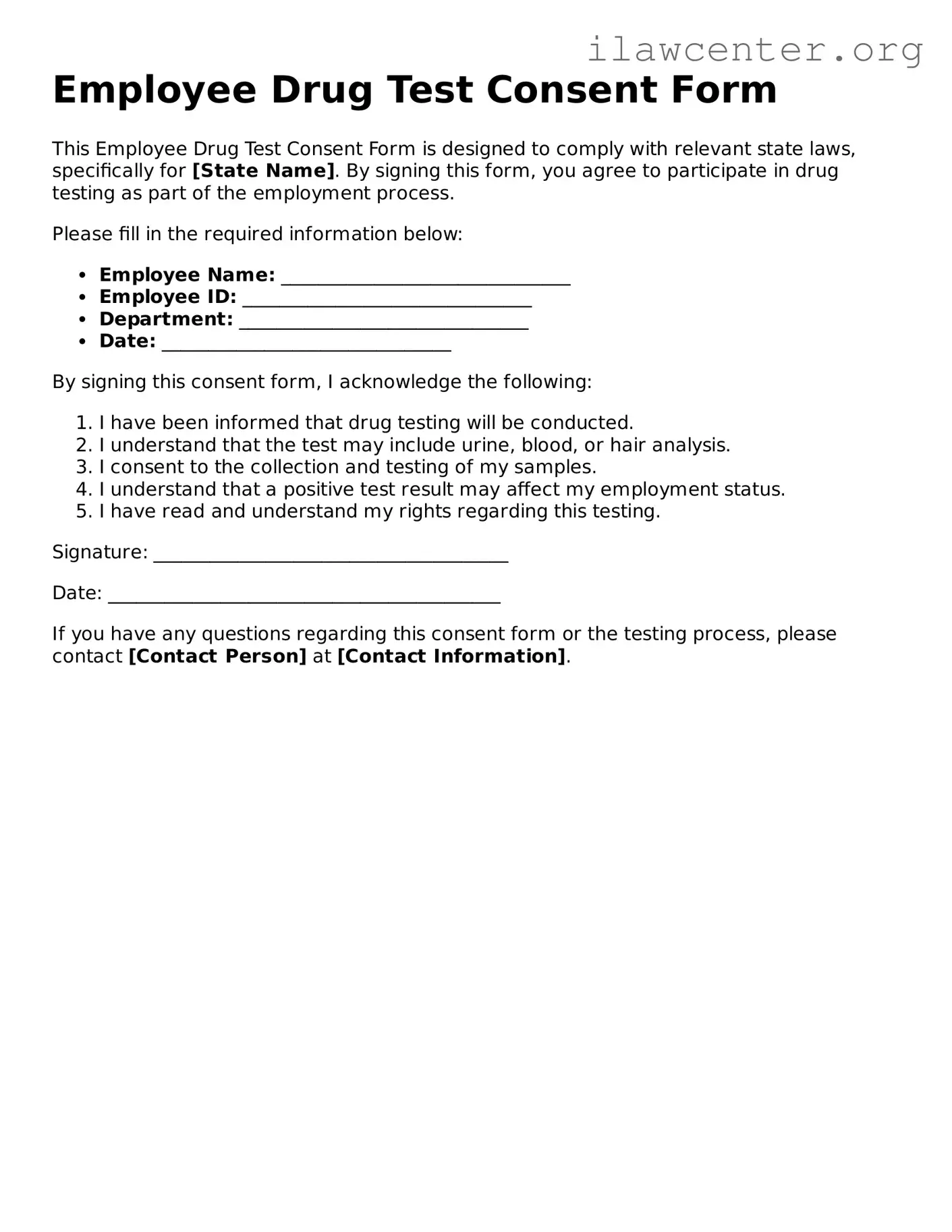
This Employee Drug Test Consent Form is designed to comply with relevant state laws, specifically for [State Name]. By signing this form, you agree to participate in drug testing as part of the employment process.

Please fill in the required information below:

  • Employee Name: _______________________________
  • Employee ID: _______________________________
  • Department: _______________________________
  • Date: _______________________________

By signing this consent form, I acknowledge the following:

  1. I have been informed that drug testing will be conducted.
  2. I understand that the test may include urine, blood, or hair analysis.
  3. I consent to the collection and testing of my samples.
  4. I understand that a positive test result may affect my employment status.
  5. I have read and understand my rights regarding this testing.

Signature: ______________________________________

Date: __________________________________________

If you have any questions regarding this consent form or the testing process, please contact [Contact Person] at [Contact Information].

PDF Form Characteristics

Fact Name Description
Purpose of the Form The Employee Drug Test Consent form is used to obtain permission from employees to conduct drug testing as part of the hiring process or ongoing employment requirements.
Confidentiality Results from drug tests are confidential and should only be shared with authorized personnel to protect employee privacy.
State-Specific Laws Different states have specific regulations governing drug testing. For instance, California requires employers to provide a written policy on drug testing.
Employee Rights Employees have the right to refuse testing, but this may result in disciplinary action or termination, depending on company policy.
Testing Methods Common methods of drug testing include urine, blood, and saliva tests. The method used may vary based on company policy and state regulations.

Filling out the Employee Drug Test Consent form is an important step in the process of ensuring a safe and healthy workplace. Once you have completed this form, it will be submitted for review, and the next steps in the testing process will follow. Make sure to provide accurate information to avoid any delays.

  1. Begin by entering your full name in the designated space at the top of the form.
  2. Provide your employee identification number or Social Security number, as required.
  3. Fill in your job title and department to help identify your position within the organization.
  4. Next, enter the date of your consent. This is typically the date you are filling out the form.
  5. Read through the consent statement carefully. Ensure you understand what you are agreeing to.
  6. Sign your name in the signature line to indicate your consent.
  7. Finally, provide your contact information, including a phone number and email address, if requested.

What is an Employee Drug Test Consent form?

An Employee Drug Test Consent form is a document that employees sign to give their consent for drug testing as part of their employment process. This form outlines the procedures, types of tests that may be administered, and the potential consequences of a positive test result. It ensures that employees are aware of their rights and responsibilities regarding drug testing in the workplace.

Why is drug testing important in the workplace?

Drug testing plays a crucial role in maintaining a safe and productive work environment. It helps employers identify substance abuse issues that could affect job performance, safety, and overall company culture. By implementing drug testing policies, organizations can reduce workplace accidents, lower healthcare costs, and improve employee morale.

What types of drug tests are typically conducted?

Employers may choose from various types of drug tests, including urine tests, saliva tests, hair follicle tests, and blood tests. Each method has its advantages and limitations. Urine tests are the most common due to their cost-effectiveness and reliability. However, some employers may opt for hair tests for a longer detection window, while saliva tests are often used for immediate results.

What happens if an employee refuses to sign the consent form?

If an employee refuses to sign the consent form, it may lead to consequences depending on the employer's policies. In many cases, refusal to consent to drug testing can result in disqualification from employment or termination of current employment. Employers typically outline these policies in their employee handbooks or drug testing policies, ensuring that employees understand the implications of their refusal.

Are there any privacy concerns related to drug testing?

Yes, privacy is a significant concern for many employees when it comes to drug testing. Employers must handle all test results confidentially and share them only with authorized personnel. The Employee Drug Test Consent form usually includes information on how the results will be used and stored, ensuring that employees feel secure about their privacy rights during the testing process.

Can employees contest a positive drug test result?

Yes, employees have the right to contest a positive drug test result. Most employers provide a process for employees to appeal or request a retest if they believe the initial result was inaccurate. This process is typically outlined in the company's drug testing policy. Employees should be aware of their rights and the steps they can take to ensure a fair review of their situation.
Common mistakes

When completing the Employee Drug Test Consent form, individuals often overlook important details that can lead to complications. One common mistake is failing to provide accurate personal information. This includes not listing the correct name, address, or contact number. Inaccurate details can cause delays in processing the test results.

Another frequent error is not signing the form. A signature is typically required to validate consent. Without it, the form may be considered incomplete, which can result in the inability to proceed with the drug test.

Some people forget to read the entire form before signing. Important information regarding rights and responsibilities may be included in the fine print. Skipping this step can lead to misunderstandings about the testing process and what to expect.

Additionally, individuals may neglect to check the date on the form. Submitting an outdated form can create confusion and may lead to the test being invalidated. Keeping track of dates is essential for ensuring compliance with testing protocols.

Another mistake is not disclosing relevant medical information. If a person is taking prescription medications that could affect test results, this should be noted. Failing to do so might lead to false positives and unnecessary complications.

Some individuals may also misinterpret the consent options. The form may include various choices regarding privacy and the sharing of results. Not understanding these options can lead to unintended consequences regarding confidentiality.

People sometimes rush through the process, leading to incomplete sections on the form. Each part of the form is important and should be filled out carefully. Omitting information can cause delays or issues with the testing process.

Additionally, not asking questions when uncertain can be a mistake. If there is confusion about any part of the form, seeking clarification is advisable. This can prevent future problems and ensure that the form is filled out correctly.

Finally, failing to keep a copy of the completed form can be problematic. Having a record of what was submitted can be helpful if any questions arise later. It is always a good practice to retain documentation for personal records.

Documents used along the form

When employers implement drug testing policies, they often utilize several forms and documents to ensure compliance and clarity throughout the process. These documents serve various purposes, from informing employees about their rights to detailing the procedures involved. Below is a list of common forms that accompany the Employee Drug Test Consent form.

  • Employee Handbook: This document outlines the company’s policies, including those related to drug testing. It provides employees with an understanding of the expectations and consequences regarding substance use.
  • Drug Testing Policy: This policy details the specific procedures for drug testing, including the types of tests conducted, the substances tested for, and the circumstances under which testing may occur. It ensures transparency and consistency in how drug tests are administered.
  • Pre-Employment Screening Consent Form: Before an employee undergoes drug testing as part of the hiring process, this form must be signed. It grants the employer permission to conduct the necessary background checks and drug tests.
  • Results Notification Form: After the drug test is completed, this form communicates the results to the employee. It ensures that the individual is informed about their test results and provides an opportunity for them to discuss any discrepancies.
  • Employee Rights and Responsibilities Document: This document informs employees of their rights regarding drug testing, including their right to confidentiality and the steps they can take if they believe they have been unfairly treated.

These documents work together to create a comprehensive framework for drug testing in the workplace. They help maintain a fair and transparent process, ensuring that both employers and employees understand their rights and responsibilities. By utilizing these forms, companies can foster a safer and more productive work environment.

Similar forms

  • Medical Consent Form: This document allows healthcare providers to perform medical procedures or treatments. Like the drug test consent form, it requires the individual's agreement and outlines the purpose of the procedures.
  • Background Check Authorization: Individuals sign this form to permit employers to conduct background checks. It shares similarities with the drug test consent form in that both require explicit consent and inform the individual about the process.
  • Release of Information Form: This form authorizes the sharing of personal information with third parties. Both documents seek consent from the individual and explain how the information will be used.
  • Health Insurance Portability and Accountability Act (HIPAA) Release: This document allows healthcare providers to share medical information. Similar to the drug test consent form, it requires consent and ensures the individual is aware of their rights regarding their information.
  • Employment Application: An employment application gathers personal information from job applicants. Like the drug test consent form, it requires the applicant's signature, indicating their agreement to provide accurate information and comply with company policies.

Dos and Don'ts

When filling out the Employee Drug Test Consent form, it’s important to approach the process thoughtfully. Here’s a list of five things you should and shouldn’t do to ensure everything goes smoothly.

  • Do read the entire form carefully before signing it. Understanding what you are consenting to is crucial.
  • Do provide accurate personal information. This includes your name, address, and any identification numbers required.
  • Do ask questions if anything is unclear. It’s better to seek clarification than to make assumptions.
  • Don’t rush through the form. Take your time to ensure all information is complete and correct.
  • Don’t sign the form if you feel pressured or uncomfortable. Consent should always be given freely.

By following these guidelines, you can navigate the consent form process with confidence and clarity.

Misconceptions

Understanding the Employee Drug Test Consent form is essential for both employers and employees. However, several misconceptions can lead to confusion. Here are seven common misconceptions:

  1. Employees must consent to drug testing at all times.

    This is not true. Employees can refuse to consent, but this may result in disciplinary action or termination, depending on company policy.

  2. Drug tests can be conducted without notice.

    While random testing is allowed, employers typically must provide notice for scheduled tests. This ensures transparency and fairness.

  3. Only illegal drugs are tested for.

    Drug tests can screen for both illegal substances and prescription medications. Employees should be aware of what substances are included in the testing panel.

  4. Consent forms are the same for all employers.

    Each company may have different policies and forms. It is important to review the specific consent form provided by your employer.

  5. Testing is only for new hires.

    Drug testing can occur at various times, including random checks and post-accident situations, not just during the hiring process.

  6. Results are always shared with coworkers.

    Results are confidential. Employers must protect the privacy of individuals and share results only with authorized personnel.

  7. Refusing to sign the consent form is harmless.

    Refusal to sign can have serious consequences, including loss of job opportunities or disciplinary actions, depending on company policy.

Awareness of these misconceptions can help foster a better understanding of the Employee Drug Test Consent form and its implications.

Key takeaways

Filling out and using the Employee Drug Test Consent form is an important process for both employers and employees. Here are some key takeaways to consider:

  1. Understand the Purpose: The form is designed to obtain consent from employees for drug testing, ensuring compliance with workplace policies.
  2. Complete Accuracy: Fill out the form completely and accurately. Missing information can delay the testing process.
  3. Review Company Policy: Familiarize yourself with the company's drug testing policy before signing. This provides clarity on what to expect.
  4. Confidentiality Matters: The results of the drug test are confidential. Employers must handle the information with discretion.
  5. Know Your Rights: Employees have the right to refuse a drug test, but this may lead to disciplinary action depending on company policy.
  6. Timing is Key: Be aware of the timing of the test. Testing should occur as soon as possible after the consent form is signed.
  7. Seek Clarification: If there are any questions about the form or the testing process, don’t hesitate to ask HR for clarification.
  8. Document Everything: Keep a copy of the signed consent form for your records. This can be important for future reference.
  9. Follow Up: After the test, follow up with HR to understand the next steps and when results will be available.

By keeping these takeaways in mind, both employees and employers can navigate the drug testing process more effectively.