Fillable Employee Handbook Document

Fillable Employee Handbook Document

The Employee Handbook form is a crucial document that outlines company policies, procedures, and expectations for employees. It serves as a guide to help employees understand their rights and responsibilities within the workplace. To ensure you have the most up-to-date information, please fill out the form by clicking the button below.

Article Guide

An Employee Handbook is an essential tool for any organization, serving as a comprehensive guide for employees regarding company policies, procedures, and expectations. It outlines important topics such as workplace conduct, attendance policies, and benefits, ensuring that everyone is on the same page. Additionally, it covers critical areas like anti-discrimination policies, safety protocols, and disciplinary actions, which help foster a respectful and productive work environment. The handbook also provides information about employee rights, resources for conflict resolution, and the process for addressing grievances. By clearly communicating these guidelines, the Employee Handbook not only protects the organization but also empowers employees to understand their roles and responsibilities. A well-structured handbook can significantly reduce misunderstandings and promote a culture of transparency and accountability within the workplace.

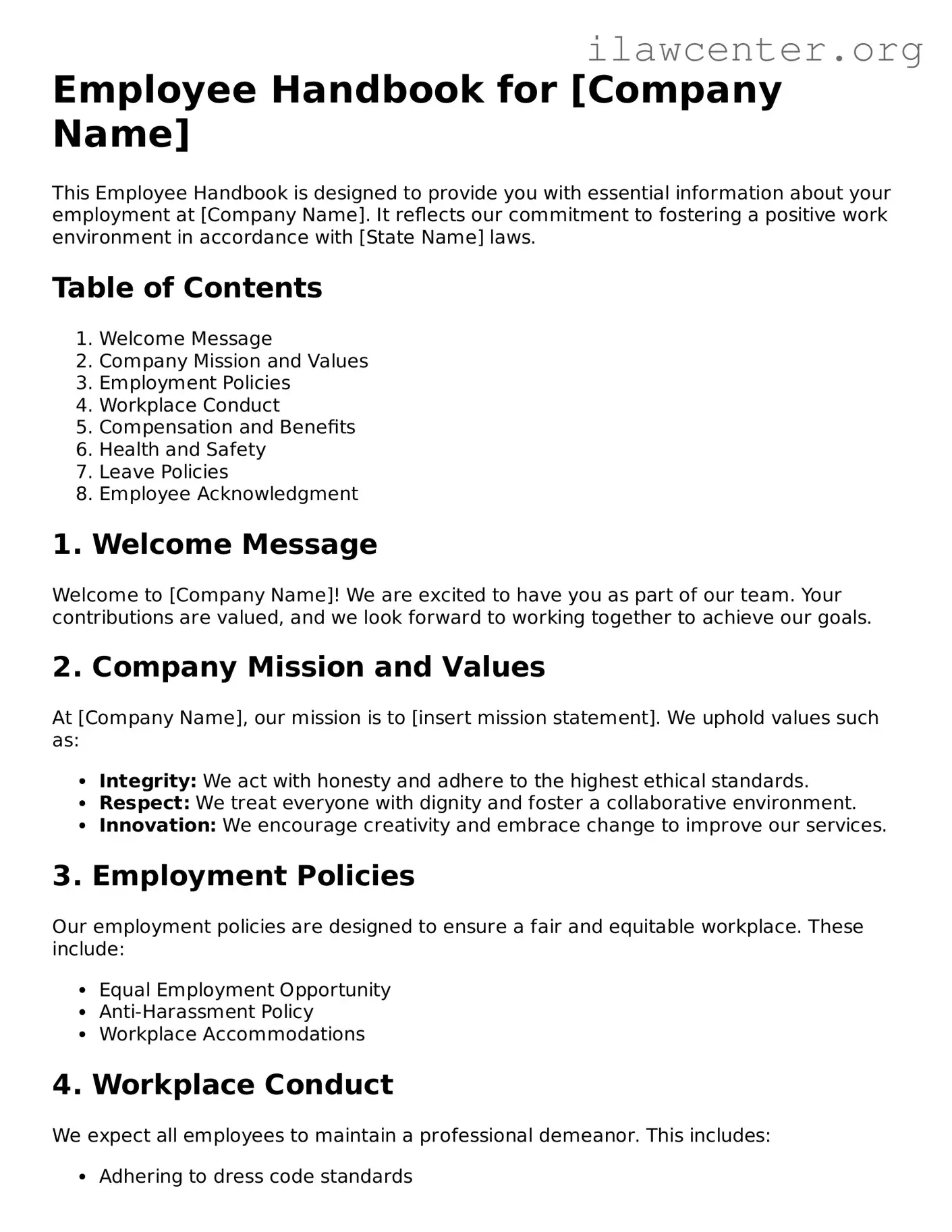
Employee Handbook Preview

Employee Handbook for [Company Name]

This Employee Handbook is designed to provide you with essential information about your employment at [Company Name]. It reflects our commitment to fostering a positive work environment in accordance with [State Name] laws.

Table of Contents

  1. Welcome Message
  2. Company Mission and Values
  3. Employment Policies
  4. Workplace Conduct
  5. Compensation and Benefits
  6. Health and Safety
  7. Leave Policies
  8. Employee Acknowledgment

1. Welcome Message

Welcome to [Company Name]! We are excited to have you as part of our team. Your contributions are valued, and we look forward to working together to achieve our goals.

2. Company Mission and Values

At [Company Name], our mission is to [insert mission statement]. We uphold values such as:

  • Integrity: We act with honesty and adhere to the highest ethical standards.
  • Respect: We treat everyone with dignity and foster a collaborative environment.
  • Innovation: We encourage creativity and embrace change to improve our services.

3. Employment Policies

Our employment policies are designed to ensure a fair and equitable workplace. These include:

  • Equal Employment Opportunity
  • Anti-Harassment Policy
  • Workplace Accommodations

4. Workplace Conduct

We expect all employees to maintain a professional demeanor. This includes:

  • Adhering to dress code standards
  • Communicating respectfully with colleagues
  • Following the company's code of conduct

5. Compensation and Benefits

Employees are entitled to fair compensation and benefits. Key points include:

  • Pay schedule and overtime policies
  • Health insurance options
  • Retirement savings plans

6. Health and Safety

Your safety is our priority. Please familiarize yourself with our health and safety protocols:

  • Emergency procedures
  • Reporting workplace injuries
  • Maintaining a clean and safe workspace

7. Leave Policies

We offer various leave options to support your work-life balance, including:

  • Sick leave
  • Vacation leave
  • Family and medical leave

8. Employee Acknowledgment

By signing below, you acknowledge that you have received, read, and understood the Employee Handbook.

Employee Name: ________________________

Employee Signature: _____________________

Date: _________________________________

Thank you for being a part of [Company Name]. We are thrilled to have you on our team and look forward to your success!

PDF Form Characteristics

Fact Name Description
Purpose The Employee Handbook serves as a guide for employees, outlining company policies, procedures, and expectations.
Legal Compliance Handbooks help ensure compliance with federal, state, and local employment laws, reducing legal risks for the employer.
State-Specific Requirements Some states require specific policies to be included, such as anti-discrimination and harassment policies.
Governing Laws In California, for example, the Fair Employment and Housing Act (FEHA) governs employee rights and employer obligations.
Updates Regular updates to the handbook are essential to reflect changes in laws or company policies.
Employee Acknowledgment Employees are often required to sign an acknowledgment form to confirm they have received and understood the handbook.

Instructions on Utilizing Employee Handbook

Once you have the Employee Handbook form in hand, it's important to complete it accurately. This form is essential for ensuring that all employees are aware of the company policies and procedures. Follow the steps below to fill out the form correctly.

  1. Begin by entering your full name in the designated space at the top of the form.
  2. Provide your job title and department. This information helps to categorize your role within the company.
  3. Next, write the date when you are completing the form. This date should reflect the current day.
  4. Read through the Employee Handbook carefully. It is crucial to understand the policies outlined.
  5. After reading, indicate your acknowledgment of the handbook by signing your name in the specified area.
  6. Finally, submit the completed form to your supervisor or the HR department as instructed.

Important Facts about Employee Handbook

What is the purpose of the Employee Handbook?

The Employee Handbook serves as a comprehensive guide for employees, outlining the company's policies, procedures, and expectations. It helps ensure that everyone is on the same page regarding workplace standards, benefits, and employee rights. This document is crucial for fostering a positive work environment and ensuring compliance with legal regulations.

Who should complete the Employee Handbook form?

All employees are required to complete the Employee Handbook form. This includes new hires as part of their onboarding process and current employees during updates to the handbook. Completing the form signifies that employees have read, understood, and agreed to the policies outlined in the handbook.

What information is required on the Employee Handbook form?

The Employee Handbook form typically requires basic information such as the employee's name, position, and department. Additionally, employees must acknowledge receipt of the handbook and confirm their understanding of its contents. This ensures that the company has a record of compliance and acknowledgment.

How often is the Employee Handbook updated?

The Employee Handbook is reviewed and updated regularly, typically on an annual basis or as needed. Changes may occur due to new laws, company policy adjustments, or feedback from employees. It is essential for employees to stay informed about these updates to understand their rights and responsibilities.

What should I do if I have questions about the Employee Handbook?

If you have questions about the Employee Handbook, it is important to reach out to your supervisor or the Human Resources department. They can provide clarification on specific policies or procedures. Open communication is encouraged to ensure that all employees fully understand the handbook's contents.

What happens if I do not complete the Employee Handbook form?

Failure to complete the Employee Handbook form may lead to misunderstandings regarding company policies and could result in disciplinary action. It is vital for employees to acknowledge receipt of the handbook to demonstrate their commitment to adhering to company standards.

Can the Employee Handbook be revised after I sign the form?

Yes, the Employee Handbook can be revised even after an employee signs the form. Employees will be notified of any changes, and they may be required to complete a new acknowledgment form. Staying updated with the latest version of the handbook is crucial for understanding any new policies or changes in procedures.
Common mistakes

Filling out an Employee Handbook form is an important step for any new employee. However, many individuals make common mistakes that can lead to confusion or issues down the line. Understanding these pitfalls can help ensure a smoother onboarding process.

One frequent error is not reading the entire handbook before signing. Employees often rush through the document, missing key policies and procedures. Taking the time to review the handbook thoroughly can prevent misunderstandings later.

Another mistake is failing to ask questions. If something is unclear, it’s essential to seek clarification. Ignoring uncertainties can lead to misinterpretations of company policies, which might affect job performance or compliance.

Some individuals neglect to update their personal information. When moving, changing phone numbers, or updating emergency contacts, it’s crucial to inform HR. Outdated information can hinder communication and affect workplace safety.

Additionally, employees sometimes overlook the importance of acknowledging receipt of the handbook. Simply signing a form without understanding its contents can lead to legal implications. Acknowledgment signifies that the employee is aware of the policies in place.

Many also fail to note the specific policies that may differ from previous jobs. Each company has its own culture and rules. Assuming that all workplaces operate the same way can result in unintentional violations of company policy.

Another common mistake is not keeping a copy of the signed form. Employees should retain a copy for their records. This can serve as a reference point if any disputes arise regarding policies or procedures.

Some individuals forget to review the handbook periodically. Policies can change, and staying informed is crucial. Regularly checking for updates ensures compliance with the latest company rules.

Finally, a lack of attention to detail can lead to incomplete forms. Missing signatures or failing to fill in required fields can delay processing. Taking the time to double-check the form can save time and avoid unnecessary complications.

By avoiding these mistakes, employees can better navigate their new workplace. A thorough understanding of the Employee Handbook fosters a positive work environment and ensures compliance with company policies.

Documents used along the form

An Employee Handbook is a crucial document for any workplace, outlining policies, procedures, and expectations for employees. However, it is often accompanied by other important forms and documents that help clarify roles and responsibilities within the organization. Here are seven commonly used forms and documents that complement the Employee Handbook.

  • Job Description: This document details the specific responsibilities, qualifications, and expectations for each position within the organization. It serves as a guide for both employees and managers.
  • Onboarding Checklist: This list helps new employees navigate their first days on the job. It includes tasks such as completing paperwork, meeting team members, and receiving necessary training.
  • Performance Evaluation Form: This form is used to assess employee performance over a specific period. It provides a structured way for managers to give feedback and set future goals.
  • Incident Report Form: This document is used to record any workplace incidents, accidents, or injuries. It helps ensure that issues are documented and addressed promptly.
  • Leave of Absence Request Form: Employees use this form to formally request time off for personal reasons, medical issues, or other circumstances. It helps manage staffing and ensures compliance with company policies.
  • Non-Disclosure Agreement (NDA): This agreement protects sensitive company information. Employees sign it to acknowledge their responsibility to keep confidential information private.
  • Employee Acknowledgment Form: This form is signed by employees to confirm they have received and understood the Employee Handbook and other relevant policies.

These documents work together with the Employee Handbook to create a comprehensive framework for workplace policies and employee expectations. Having clear, accessible forms ensures that everyone understands their roles and responsibilities, fostering a positive work environment.

Similar forms

The Employee Handbook serves as a crucial document for any organization, outlining policies, procedures, and expectations for employees. There are several other documents that share similarities with the Employee Handbook. Below is a list of these documents and how they relate to the Employee Handbook.

  • Company Policy Manual: Like the Employee Handbook, this document outlines the rules and regulations that employees must follow. It focuses on specific policies related to workplace behavior, safety, and compliance.
  • Onboarding Guide: This document is designed for new employees, providing essential information about the company culture, job expectations, and initial training. Both documents aim to help employees understand their roles and responsibilities.
  • Code of Conduct: Similar to the Employee Handbook, the Code of Conduct sets the standards for acceptable behavior within the workplace. It emphasizes ethical practices and outlines the consequences for violations.
  • Employee Manual: Often used interchangeably with the Employee Handbook, the Employee Manual serves the same purpose of communicating company policies and procedures. Both documents are essential for ensuring that employees are informed about their rights and obligations.
  • Training Materials: These materials provide employees with the knowledge and skills necessary for their jobs. While training materials focus on specific tasks, the Employee Handbook offers a broader overview of workplace policies and culture.
  • Job Descriptions: Job descriptions detail the responsibilities and qualifications for specific roles within the company. The Employee Handbook complements these descriptions by providing context about company policies that affect all employees.
  • Performance Review Guidelines: These guidelines outline the criteria for evaluating employee performance. Like the Employee Handbook, they help employees understand how their work will be assessed and what is expected of them.

Each of these documents plays a vital role in creating a well-informed workforce. Together, they contribute to a positive work environment where employees feel supported and understand their responsibilities.

Dos and Don'ts

When filling out the Employee Handbook form, it's important to approach the task with care. Here’s a helpful list of things to do and avoid.

  • Do read the entire handbook before filling out the form. Understanding the policies will help you answer accurately.
  • Do provide accurate personal information. Ensure your name, address, and contact details are correct.
  • Do ask questions if you’re unsure about any section. Clarifying doubts can prevent mistakes.
  • Do keep a copy of the completed form for your records. This can be useful for future reference.
  • Don't rush through the form. Taking your time helps avoid errors that could lead to misunderstandings.
  • Don't leave any required fields blank. Incomplete forms may delay processing and could lead to issues down the line.

By following these guidelines, you can ensure that your Employee Handbook form is filled out correctly and efficiently.

Misconceptions

When it comes to employee handbooks, there are several misconceptions that can lead to confusion for both employers and employees. Understanding these myths is crucial for fostering a positive workplace environment.

  • Misconception 1: An employee handbook is not necessary.
  • Some believe that an employee handbook is optional. However, having a well-structured handbook is essential. It outlines company policies, expectations, and employee rights, helping to prevent misunderstandings.

  • Misconception 2: The handbook is a legal contract.
  • Many think that the employee handbook serves as a legally binding contract between the employer and the employee. In reality, while it provides guidelines, it typically includes disclaimers stating that it is not a contract, allowing for flexibility in policies.

  • Misconception 3: Handbooks are only for new employees.
  • It’s common to assume that handbooks are only relevant for new hires. In truth, they should be a resource for all employees, offering ongoing guidance about workplace policies and procedures.

  • Misconception 4: Once created, the handbook doesn’t need updates.
  • Some may think that a handbook is a one-and-done document. However, it should be reviewed and updated regularly to reflect changes in laws, company policies, or workplace culture.

Key takeaways

When filling out and using the Employee Handbook form, keep these key takeaways in mind:

  • Ensure all sections are completed accurately to reflect company policies.
  • Review the handbook regularly to stay updated on any changes to policies or procedures.
  • Provide clear examples in the handbook to illustrate company expectations and standards.
  • Encourage employees to ask questions if they do not understand any part of the handbook.
  • Maintain a signed acknowledgment form from each employee to confirm they have read and understood the handbook.
  • Store the handbook in a readily accessible location for employees to reference as needed.