Fillable Employee Photo Release Document

Fillable Employee Photo Release Document

An Employee Photo Release form is a document that grants permission for an employer to use an employee's image in promotional materials or other company-related purposes. This form ensures that employees understand how their photos may be used and protects both parties legally. To proceed, please fill out the form by clicking the button below.

Article Guide

The Employee Photo Release form plays a crucial role in protecting both employers and employees when it comes to the use of photographs in a professional setting. This form grants permission for employers to use an employee's likeness in various contexts, such as marketing materials, company websites, or social media platforms. It ensures that employees are aware of how their images may be used and provides a clear framework for consent. By signing this form, employees relinquish certain rights to their images, which can help prevent misunderstandings or legal disputes in the future. Additionally, the form typically outlines the scope of usage, duration of consent, and any compensation that may be involved. Clarity and transparency are essential, as they foster trust between employees and employers while safeguarding individual rights. Understanding the nuances of this form is vital for both parties to navigate the complexities of image rights in the workplace.

Employee Photo Release Preview

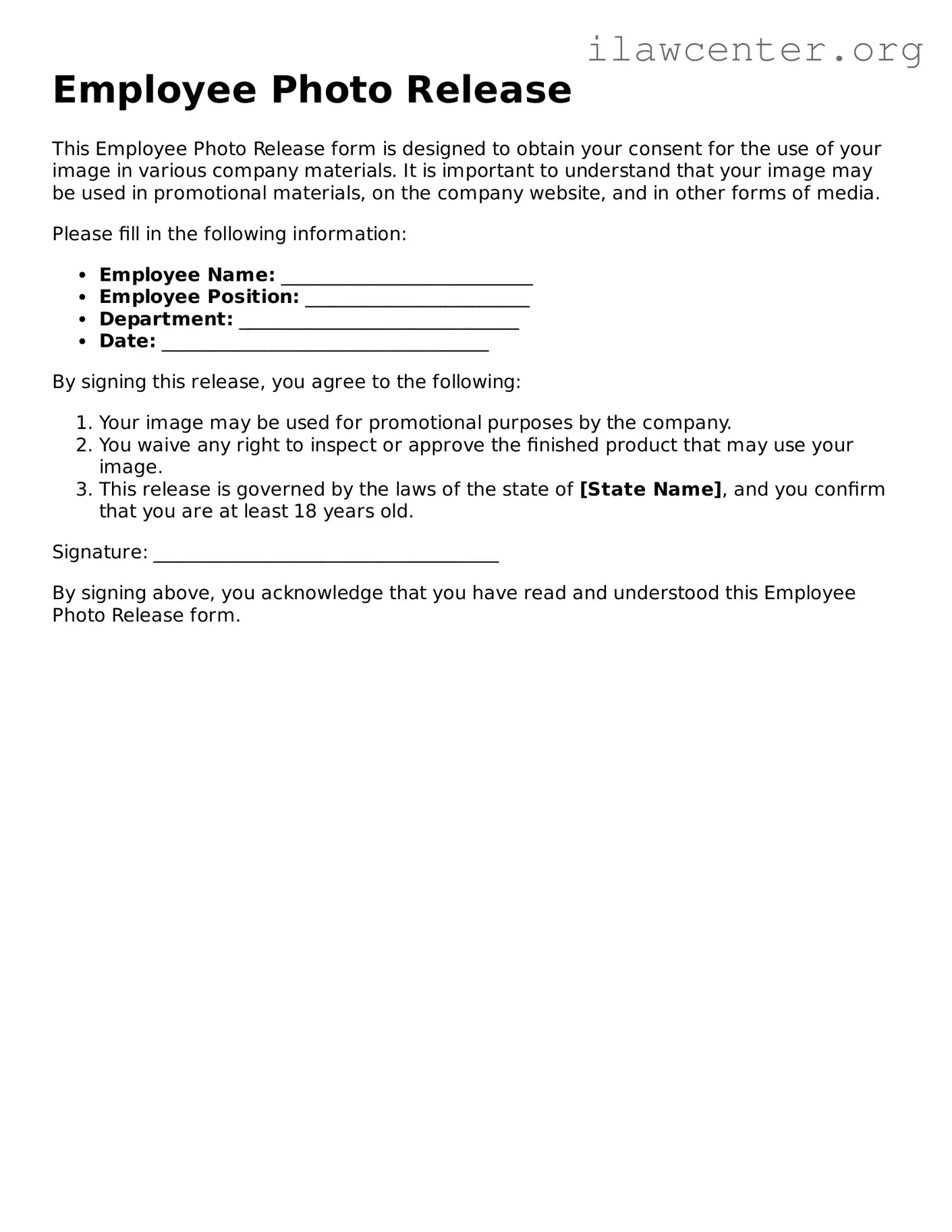
Employee Photo Release

This Employee Photo Release form is designed to obtain your consent for the use of your image in various company materials. It is important to understand that your image may be used in promotional materials, on the company website, and in other forms of media.

Please fill in the following information:

  • Employee Name: ___________________________
  • Employee Position: ________________________
  • Department: ______________________________
  • Date: ___________________________________

By signing this release, you agree to the following:

  1. Your image may be used for promotional purposes by the company.
  2. You waive any right to inspect or approve the finished product that may use your image.
  3. This release is governed by the laws of the state of [State Name], and you confirm that you are at least 18 years old.

Signature: _____________________________________

By signing above, you acknowledge that you have read and understood this Employee Photo Release form.

PDF Form Characteristics

Fact Name Description
Purpose The Employee Photo Release form allows employers to obtain permission from employees to use their photographs for promotional or marketing purposes.
Consent By signing the form, employees give explicit consent for their images to be used, ensuring that their rights are respected.
Scope of Use The form typically outlines how and where the photos may be used, such as on websites, brochures, or social media platforms.
Revocation Employees can usually revoke their consent at any time, though this may not apply to materials already published.
State-Specific Forms Some states may have specific requirements for photo release forms, so it's important to consult local laws.
Governing Laws In California, for example, the California Civil Code Section 3344 governs the use of an individual's likeness for commercial purposes.
Consideration Employers may offer compensation or other benefits in exchange for the use of an employee's image, which can enhance the validity of the release.
Record Keeping Employers should maintain a copy of the signed release form in the employee's personnel file for legal protection.

Instructions on Utilizing Employee Photo Release

Filling out the Employee Photo Release form is straightforward. This document allows your employer to use your image for various purposes, such as marketing or promotional materials. To ensure everything is completed correctly, follow the steps below.

  1. Begin by entering your full name in the designated space at the top of the form.
  2. Next, provide your job title or position within the company.
  3. Fill in the date when you are completing the form.
  4. Read through the release statement carefully. It outlines how your photo may be used.
  5. Sign the form to indicate your consent. Make sure your signature is clear and legible.
  6. Print your name below your signature to confirm your identity.
  7. If required, include your contact information, such as your email address or phone number.
  8. Finally, submit the completed form to your supervisor or the designated HR representative.

Important Facts about Employee Photo Release

What is an Employee Photo Release form?

An Employee Photo Release form is a document that allows an employer to obtain permission from an employee to use their image or likeness in various media. This could include photographs, videos, or other visual representations taken during work-related activities. By signing this form, the employee grants the employer the right to use these images for promotional, marketing, or other business purposes.

Why is it important to have an Employee Photo Release form?

Having an Employee Photo Release form is crucial for several reasons. First, it protects the employer legally by ensuring that they have permission to use the employee's image. Second, it clarifies the scope of use, so employees know how their images may be utilized. Lastly, it fosters trust between the employer and employees, as it shows that the company values consent and transparency.

Do employees have to sign the Employee Photo Release form?

No, employees are not obligated to sign the Employee Photo Release form. Participation is voluntary. If an employee chooses not to sign, the employer must respect that decision and should not use the employee's image without consent.

What happens if an employee does not sign the form?

If an employee does not sign the Employee Photo Release form, the employer cannot use that employee's likeness in any promotional materials or media. It is essential for employers to adhere to this to avoid potential legal issues related to unauthorized use of an individual's image.

Can an employee revoke their consent after signing the form?

Yes, an employee can revoke their consent at any time after signing the form. However, it is important to note that revoking consent may not apply retroactively. This means that if the employer has already used the images before the revocation, they may not be required to remove those images from previously published materials.

What should be included in an Employee Photo Release form?

An effective Employee Photo Release form should include several key elements. These include the employee's name, the purpose of the photo usage, the types of media in which the images may appear, and a clear statement of consent. It should also specify that the employee will not receive compensation for the use of their image and include a signature line with the date for the employee to sign.

Is there a standard format for an Employee Photo Release form?

While there is no one-size-fits-all format for an Employee Photo Release form, many organizations use a simple template that covers the essential elements. It is important to ensure that the language is clear and understandable. Employers may also want to consult with legal professionals to ensure compliance with local laws and regulations regarding image rights and privacy.
Common mistakes

Filling out an Employee Photo Release form may seem straightforward, but many individuals make common mistakes that can lead to confusion or even legal issues. Understanding these pitfalls can help ensure that the form is completed correctly and serves its intended purpose.

One frequent error is failing to read the entire form before signing. This can result in misunderstanding the scope of the release. The language may specify how the photos will be used, whether for marketing, internal communications, or other purposes. Ignoring these details can lead to unexpected consequences.

Another common mistake is neglecting to provide complete contact information. This information is crucial for the organization to reach the individual in case of any questions or clarifications regarding the use of their image. Without accurate contact details, important communications may be missed.

Some individuals may also forget to date the form. A date is essential as it indicates when the consent was given. This can be important for record-keeping and ensures that the release is valid during the specified time frame.

In some cases, people may not understand that they have the right to ask questions. If any part of the form is unclear, it is advisable to seek clarification. This proactive approach can prevent misunderstandings and ensure that the individual is fully informed about what they are consenting to.

Additionally, failing to keep a copy of the signed form is a common oversight. Individuals should always retain a copy for their records. This can serve as proof of consent and may be useful if any disputes arise in the future.

Another mistake involves not considering the implications of the release. Employees should think about how their image may be used and whether they are comfortable with it. It is important to weigh the benefits against potential privacy concerns.

Some may also overlook the need for parental or guardian consent when minors are involved. If the employee is underage, a parent or guardian must sign the form. This step is crucial to ensure that the minor’s rights are protected.

Finally, individuals sometimes fail to discuss the release with their colleagues. Sharing insights about the form can provide clarity and foster a better understanding among employees about their rights and responsibilities. Open dialogue can lead to a more informed workplace.

By being aware of these common mistakes, individuals can approach the Employee Photo Release form with greater confidence and ensure that their rights are respected. Taking the time to carefully complete the form can prevent misunderstandings and protect both the employee and the organization.

Documents used along the form

When managing employee-related documentation, several forms and documents often accompany the Employee Photo Release form. Each of these documents serves a specific purpose and helps ensure clear communication and compliance within the workplace. Below is a list of common forms that you may encounter.

  • Employment Agreement: This document outlines the terms of employment, including job responsibilities, compensation, and other essential conditions of employment.
  • Non-Disclosure Agreement (NDA): An NDA protects confidential information shared between the employee and employer. It ensures that sensitive company information remains private.
  • Consent to Background Check: This form allows the employer to conduct background checks on the employee. It typically includes a signature granting permission for the employer to access personal information.
  • W-4 Form: Employees complete this form to indicate their tax withholding preferences. It helps employers determine the correct amount of federal income tax to withhold from an employee's paycheck.
  • I-9 Form: This form verifies an employee's eligibility to work in the United States. Employers must complete it within three days of hiring an employee.
  • Direct Deposit Authorization Form: Employees use this form to authorize their employer to deposit their paychecks directly into their bank accounts, making the payment process more convenient.
  • Employee Handbook Acknowledgment: This document confirms that the employee has received and understands the company's policies and procedures as outlined in the employee handbook.
  • Performance Evaluation Form: This form is used to assess an employee's performance over a specific period. It often includes feedback from supervisors and can help guide future development.
  • Exit Interview Form: When an employee leaves the company, this form is used to gather feedback about their experience. It can provide valuable insights for improving workplace culture.

Having these documents in place alongside the Employee Photo Release form can streamline processes and protect both the employee and employer. Each form plays a role in fostering a professional and transparent work environment.

Similar forms

  • Media Release Form: This document allows individuals to grant permission for their image or likeness to be used in various media. Like the Employee Photo Release form, it ensures that the subject understands how their image will be used.

  • Model Release Form: Often used in photography and modeling, this form gives photographers the right to use a model's images for promotional purposes. Similar to the Employee Photo Release, it protects the rights of both the model and the photographer.

  • Video Release Form: This document permits the use of a person’s likeness in video recordings. It serves a similar purpose to the Employee Photo Release by ensuring that consent is obtained before the video is distributed.

  • Social Media Release Form: This form is used when individuals allow their images or content to be shared on social media platforms. Like the Employee Photo Release, it clarifies how and where the content will be used.

  • Testimonial Release Form: This document allows companies to use a person's testimonial in marketing materials. It shares similarities with the Employee Photo Release by ensuring that the individual agrees to the use of their words and likeness.

Dos and Don'ts

When filling out an Employee Photo Release form, it is essential to approach the task thoughtfully. Here are nine things to consider, including both actions you should take and those you should avoid.

  • Do read the entire form carefully. Understanding the terms is crucial before signing.
  • Do provide accurate information. Ensure that your name and contact details are correct.
  • Do clarify any uncertainties. If you have questions, ask your HR representative for guidance.
  • Do keep a copy of the signed form. This serves as a record of your consent.
  • Do consider the implications of your consent. Think about how your image may be used in the future.
  • Don't rush through the form. Taking your time helps prevent mistakes.
  • Don't ignore the privacy policy. Familiarize yourself with how your image will be used and protected.
  • Don't sign if you feel uncomfortable. It's important to feel secure about your decision.
  • Don't forget to update the form if your information changes. Keeping your details current is vital for communication.

Misconceptions

Understanding the Employee Photo Release form can be tricky, and misconceptions often arise. Here are eight common misunderstandings about this important document:

  • It's only for marketing purposes. Many believe that the form is solely for promotional materials. In reality, it can also cover internal uses, such as training or team-building activities.
  • Employees have no say in how their photos are used. This is incorrect. The form typically allows employees to specify how their images can be utilized, ensuring they have a voice in the process.
  • Signing the form means giving up all rights to my image. While the release grants permission for specific uses, it does not mean that employees lose all rights. They retain the right to control their image outside the agreed-upon uses.
  • Once signed, the release is permanent. This is a common belief, but many companies allow employees to revoke their consent under certain conditions. It's essential to check the terms outlined in the form.
  • Only full-time employees need to sign it. This is a misconception. Part-time employees, interns, and even volunteers may also be required to sign a photo release, depending on the organization's policies.
  • The form is not legally binding. Some think that because it’s a simple document, it holds no legal weight. In fact, a properly executed photo release can be enforceable in a court of law.
  • It’s not necessary if the photo is taken in a public space. Even if a photo is taken in a public setting, obtaining a release protects the organization and ensures respect for the individual’s privacy rights.
  • All photo releases are the same. This is misleading. Each photo release can vary significantly based on the organization’s needs, the intended use of the images, and local laws.

By clearing up these misconceptions, employees can better understand their rights and the purpose of the Employee Photo Release form. Awareness leads to informed decisions and a more comfortable working environment.

Key takeaways

When it comes to using an Employee Photo Release form, understanding its purpose and proper execution is essential. Here are some key takeaways to consider:

  1. Understand the Purpose: This form grants permission for an employer to use an employee's image for promotional or organizational purposes. Knowing this helps set clear expectations.
  2. Read the Terms Carefully: Before signing, employees should thoroughly review the terms. This ensures they understand how their images may be used and for what duration.
  3. Consent is Key: Signing the form indicates that the employee consents to the use of their photo. Without this consent, employers cannot legally use the images.
  4. Consider the Scope: The form may specify where and how the images will be used—such as in marketing materials or on the company website. Employees should be aware of these details.
  5. Revocation of Consent: Employees should know that they have the right to revoke their consent at any time. However, this may not apply retroactively to images already used.
  6. Keep a Copy: After completing the form, employees should retain a copy for their records. This can be useful for future reference regarding consent and usage.

By keeping these points in mind, both employers and employees can navigate the process of photo release with clarity and confidence.